What causes a sore throat with no other symptoms? Related conditions and treatments


Overview: What does a sore throat with no other symptoms feel like?
When a cold, strep throat, or mononucleosis (mono) causes a sore throat, they usually cause other symptoms such as runny nose, cough, swollen lymph nodes, sinus congestion, or fever. These other symptoms are vital diagnostic clues in discovering the cause. Sometimes, however, people just have a sore throat, nothing else. The back of the throat feels scratchy and uncomfortable. It may feel dry, painful, or burning. The soreness or pain often feels worse when swallowing. Throat clearing, hoarseness, and an occasional cough can also be sore throat symptoms since they’re brought on when the back of the throat is dry or raspy. Unfortunately, a sore throat alone doesn’t point to a definite cause. So what should be made of a sore throat with no other symptoms? Is it something to worry about? Can something be done about it?
Key takeaways:
A sore throat with no other symptoms is a common symptom that may be caused by smoking, air pollution, irritants, dry air, mouth breathing, acid reflux, shouting, or some viral infections.
Typically, a sore throat with no other symptoms does not require immediate medical attention. However, if there are other symptoms, such as high fever, difficulty breathing, or difficulty swallowing, get immediate medical treatment.
A sore throat with no other symptoms generally does not require treatment. It typically resolves without treatment within a few hours or days.
Treatment of a sore throat with no other symptoms may include gargling with salt water, throat lozenges, OTC pain relievers, or other over-the-counter or home remedies.
A sore throat with no other symptoms can be managed with home remedies such as gargling with salt water or using an air purifier or humidifier.
Use coupons for a sore throat with no other symptoms treatments, like Cepacol Extra Strength Sore Throat (benzocaine and menthol), Chloraseptic (phenol), and Tylenol (acetaminophen), to save up to 80%.
What causes a sore throat with no other symptoms?
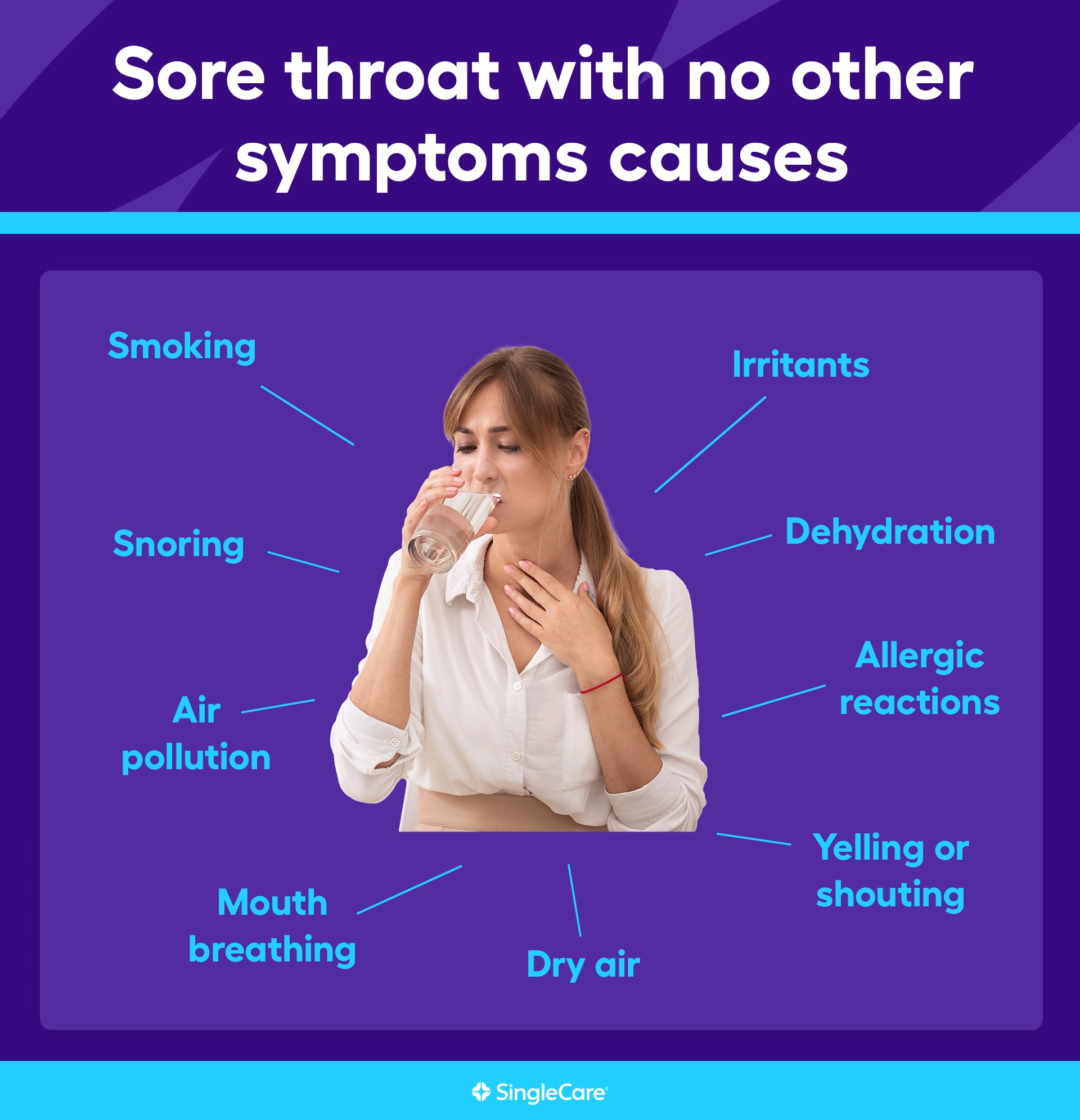
The causes of a sore throat and no other symptoms are usually environmental or mechanical. These include:
Smoking
Air pollution
Irritants
Allergic reactions
Yelling or shouting
Talking excessively
Dry air
Mouth breathing
Snoring
Dehydration
Some viral infections, particularly cold infections, and acid reflux, are causes of a sore throat and no other symptoms, though this is uncommon. It’s more usual for a sore throat to be one of the first symptoms of a viral infection, but it will be followed in a day or two by other symptoms such as runny nose, postnasal drip, nasal congestion, and sneezing. People with acid reflux (GERD) commonly experience a sore throat. However, they may not associate sore throat with symptoms of GERD because the throat problems may appear hours after typical GERD symptoms. It’s also common for people with GERD to wake up with a sore throat and not realize they’ve had acid reflux overnight.
RELATED: What are the stages of a cold?
Should I be worried about a sore throat with no other symptoms?
A sore throat with no other symptoms should not cause worry. It’s usually due to a temporary or fixable problem, such as dry air, pollution, or simply raising one’s voice too much.
See a healthcare provider if the sore throat is severe, lasts for more than a week, or other symptoms appear as minor breathing difficulties, trouble swallowing, drooling, or fever greater than 101˚ Fahrenheit. Emergency department assessment is t required if there are symptoms of a very high fever, difficulty swallowing, or trouble breathing.
How is the cause of sore throat with no other symptoms diagnosed?
A healthcare professional diagnoses the cause of sore throat through a medical history, physical examination, and some tests if other symptoms are present or one’s history points to a possible bacterial or viral infection. Be prepared to tell the clinician when the sore throat started, any other symptoms experienced, heartburn issues, past experience with a sore throat, exposure to sick contacts, and daily habits such as smoking, medication use, and breathing or sleep habits.
The clinician will look at the throat and tonsils using a tongue depressor and feel the neck for swollen nodes or other clues. If the exam is benign and there are no other symptoms, tests such as a throat swab and culture may not be performed.
Is sore throat with no other symptoms contagious?
A sore throat with no other symptoms may be contagious if it is caused by a viral or bacterial infection.. Some viral infections start with only a sore throat as a symptom. Other symptoms could appear later.
Sometimes people can associate an activity with their sore throat. Smoking, yelling, talking a lot, or snoring may be the most obvious cause. Fortunately, none of these are contagious.
How long does a sore throat with no other symptoms last?
How long a sore throat with no other symptoms lasts depends on the cause:
If the cause is mechanical, like talking, yelling, or snoring, a sore throat should improve in a few hours of rest and simple remedies like throat lozenges or gargling with salt water
If sore throat is due to dryness, gargling with salt water, drinking liquids, and using a humidifier should help it clear up within hours, but expect dry or sore throat to happen again in warm, dry weather
For air pollution or smoking, it should clear up quickly if the air clears or smoking stops
When a sore throat is associated with a viral illness or a cold, expect the sore throat to last seven to 10 days
RELATED: How long does mono last? Duration and stages of mono
How to stop a sore throat with no other symptoms
How to get rid of a sore throat with no other symptoms? It depends on the cause:
Take over-the-counter throat lozenges, throat sprays, and pain medications such as acetaminophen or ibuprofen to relieve the soreness and scratchiness—some of these products relieve throat pain through counter-irritants like menthol or topical anesthetics like benzocaine
Gargle with salt water to reduce swelling, soothe symptoms, and relieve dryness
Suck on ice or popsicles to both numb the back of the throat and relieve dryness and stay hydrated
To soothe a sore throat, try herbal remedies such as chamomile tea, fenugreek tea, peppermint tea, or marshmallow root
Drink warm liquids to soothe sore throat pain and relieve dryness
Use an air purifier to remove pollution, allergens, and irritants from living areas, giving the throat a chance to settle down
Use a humidifier to fix dry air
Give talking a rest can help if the throat is sore from overusing the voice
If the cause of a sore throat is postnasal drip, use a Neti Pot nasal rinse or take an antihistamine. If acid reflux is the cause, consider taking antacids, H-2 blockers, or PPI medications.
RELATED: 24 sore throat remedies
Living with a sore throat with no other symptoms
If a sore throat accompanied by no other symptoms is a recurrent problem, the cause is probably related to an untreated medical condition, the environment, or your actions. That means recurrent sore throat is preventable:
Install and use an air purifier in living areas if pollution, irritation, or allergens are a problem
Install and use humidifiers in living areas if dry air is a problem
Suck on hard candy or popsicles to increase saliva production, to decrease throat dryness
Drink liquids to keep the throat hydrated
Avoid second-hand smoke
Avoid overusing your voice
Avoid viral infections by regularly washing hands, wearing a mask, and not getting close to people with cold or flu symptoms
Try different sleep positions to avoid snoring or mouth breathing at night
Most importantly, don’t worry
A sore throat is one of the most common reasons people seek healthcare, even if It only involves buying over-the-counter symptom relief products. A sore throat is not a dire symptom if there are no other symptoms and it resolves within one week. Chances are it’s due to an environmental cause or something you’ve done, like shouting too much. Give it time. The sore throat will improve, usually in a few hours or days. However, if a sore throat doesn’t go away after a week or other symptoms develop, the underlying cause could be more serious. Schedule a visit with a doctor or other healthcare professional.
FAQs about the causes of sore throat with no other symptoms
Can a sore throat with no other symptoms be caused by strep?
Clinicians will not run a strep test if the only symptom is a sore throat and your exam shows no enlarged tonsils, pus on the tonsils, or enlarged lymph nodes. Physicians use a scoring system based on the symptoms and physical examination to determine the likelihood of strep infection. Based on that system, a sore throat alone adds up to a score of 0, the lowest score on the scale. If you have a fever, pus on the tonsils, tender lymph nodes, or no cough, you get points that may require a rapid strep swab to rule out strep throat.
What virus causes just a sore throat?
Sometimes cold viruses can cause just a sore throat. Many viruses cause sore throats, but adenovirus is the most likely to cause just throat or tonsil symptoms. Rhinoviruses, the most common cause of colds, infect the nasal passages. They typically cause sore throat because of postnasal drip. Remember that some viral infections may start with just a sore throat, with other symptoms following later.
RELATED: Cold symptoms: what are the early signs of a cold?
What causes a sudden sore throat?
A sudden sore throat can be brought on by many causes, including environmental reasons, overusing the voice, GERD, and allergies. However, viral or bacterial infections are the most common causes of sudden sore throats.
What’s next? Additional resources for people with a sore throat and no other symptoms
Test and diagnostics
Pharyngitis, American Family Physician
Pharyngitis, StatPearls
Sore throat, Centers for Disease Control and Prevention (CDC)
Treatments
24 sore throat remedies, SingleCare
Adenovirus: prevention and treatment, Centers for Disease Control and Prevention (CDC)
Sore throat treatments and medications, SingleCare
Scientific studies and clinical trials
Environmental and non-infectious factors in the etiology of acute pharyngitis (sore throat), Inflammation Research
Worldwide comparison of treatment guidelines for sore throat, International Journal of Clinical Practice
More information on related health conditions
Common cold treatments and medications, SingleCare
Influenza treatments and medications, SingleCare
Strep throat treatments and medications, SingleCare




 4.8 calificación promedio4.8 calificación



