Cold symptoms: What are the early signs of a cold?


Overview: What does a cold feel like?
The common cold is one of the most commonly experienced illnesses in the world. The average person in the U.S. catches three to four colds per year. Also called an upper respiratory tract infection, a cold is a viral infection that takes hold in the nasal passages, throat, and larynx (windpipe). Most people know exactly what a cold feels like: runny nose, stuffy nose, cough, sore throat, and just plain feeling sick. There is no cure for the common cold. However, the body fights off the infection pretty efficiently. Though unpleasant, symptoms last only about seven to 10 days.
Key takeaways:
A cold is a common health condition that can affect anyone, regardless of age, sex, race, or ethnicity.
Early signs of a cold include a runny nose, sore throat, and cough.
Serious symptoms of a cold, such as difficulty breathing, high fever, or any worsening of a chronic illness, may require immediate medical attention.
A cold is caused by several types of different viruses, but rhinoviruses (“nose viruses”) cause the most colds. You may be at risk for developing cold symptoms if you are a young child, in a childcare or school setting, have a weakened immune system, or smoke.
A cold is usually self-diagnosable.
Symptoms of a cold generally do not require treatment. They typically resolve without treatment within seven to 10 days.
Treatment of a cold may include over-the-counter symptom relief medications. Read more about cold treatments here.
A common cold could result in complications like other infections, which may require treatment.
Use coupons for cold treatments like dextromethorphan, acetaminophen, and guaifenesin to save up to 80%.
What are the early signs of a cold?
A common cold usually starts with symptoms like a sore throat, low fever, and generally feeling sick. Other signs of a cold start appearing about a day or two later.
Other cold symptoms
Within a day or two of the initial symptoms of a cold, additional common cold symptoms may appear, including:
Runny nose
Nasal congestion
Cough
Sneezing
Possible, but uncommon symptoms of a cold include:
Muscle aches
Headache
Fatigue
These uncommon cold symptoms are all common flu symptoms, so having these symptoms may be a sign of an infection caused by the flu or another virus.
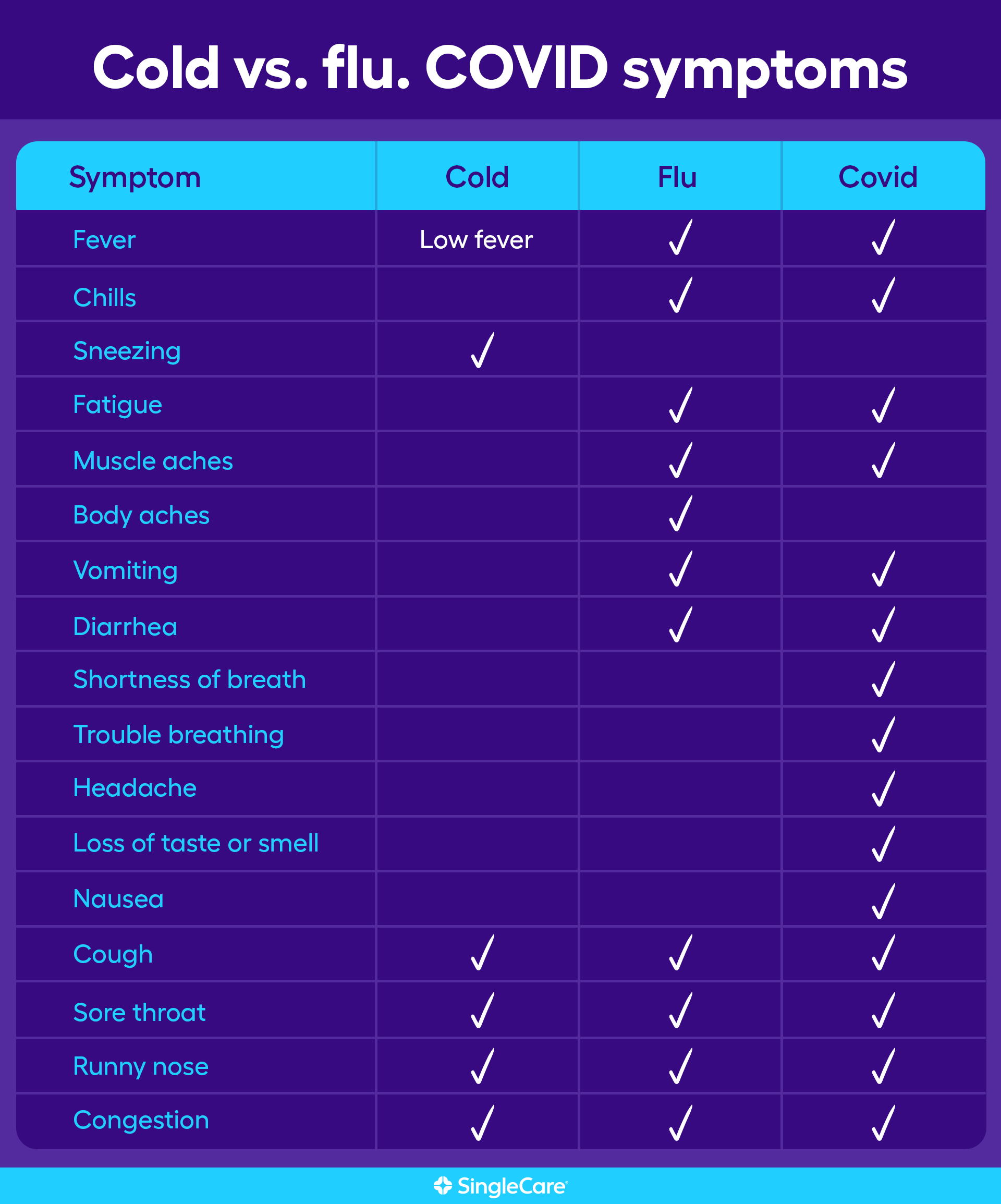
Cold vs. flu vs. COVID symptoms
It is easy to confuse a cold with the flu or a COVID infection. Like colds, the flu and COVID typically start as upper respiratory infections. Sometimes they go no further than that. However, unlike a cold, a flu or COVID infection could migrate to the lungs and cause serious illness.
| Cold | Flu | COVID | |
| Shared symptoms |
|
||
| Unique symptoms |
|
|
|
RELATED: Coronavirus vs. the flu vs. a cold, Cold vs. flu: what’s the difference
Stages of cold: How can I tell which one I have?
As a general rule, a cold follows a predictable pattern, no matter what virus is behind it. When the virus first infects the nasal passages, it begins to grow and spread. This is the incubation period, which lasts from one to three days, depending on the virus. There are typically no symptoms. However, the cold is contagious during this subclinical phase. This initial period is followed by a peak infection period that lasts about three days, sometimes longer. Symptoms are at their worst during this part of the infection. After that, symptoms begin to gradually fade, usually taking another seven days to go away completely. In a few cases, symptoms can hang on for up to three weeks, particularly coughing. Even after all other symptoms have faded, a cough could persist for several weeks. This is usually due to postnasal drip, but it could be caused by another infection.
RELATED: How long does a cold last?
When to see a doctor for cold symptoms
For the most part, the best way to handle a cold is to wait it out and manage the symptoms. Sometimes, however, medical help is needed for a cold. See a doctor in any of the following scenarios:
Symptoms last longer than three weeks
Symptoms get better and then get worse
High fever
Fever that lasts longer than three days
It hurts to swallow
Emergency medical care may be needed if it becomes difficult to breathe or the chest starts to hurt. In that case, there may be an infection of the lungs (pneumonia), or the cold may worsen an underlying medical condition, such as COPD (chronic bronchitis or emphysema), asthma, or heart disease.
Complications of a cold
Complications of a cold are uncommon. Serious complications are rare. Most of the time, the cold goes away and causes nothing more than a few rotten days. The most common complication of a cold is other infections, particularly bacterial infections. The most common infections that complicate a cold are ear infections (30%) and sinus infections (8%). A cold may cause problems in people with existing medical conditions like COPD or heart disease. In those cases, consult with a healthcare professional.
How to treat cold symptoms
A cold does not require treatment. However, over-the-counter symptom relievers may help make it more bearable. The most common cold remedies include:
Cough medicines: Most over-the-counter antitussives seem to have little effect on relieving coughs, but dextromethorphan can help reduce the frequency and severity of coughs caused by a cold.
Analgesics: Over-the-counter pain relievers, such as acetaminophen or NSAIDs (aspirin or ibuprofen), can help relieve aches and pains, as well as bring down a fever. Do not give aspirin to a child with a viral infection because of the risk of a serious and even life-threatening medical condition called Reye’s syndrome.
Nasal decongestants: Nasal decongestants reduce the swelling of blood vessels in the nose, relieving the “stuffiness” that is typical of a cold. The most effective nasal decongestant is the over-the-counter nasal spray, oxymetazoline. Decongestants used for allergies are less successful, but they do help a little.
Antihistamines: Commonly used to treat runny nose and nasal congestion, antihistamines have only a modest effect on cold symptoms.
Expectorants: These are drugs that loosen mucus. Guaifenesin is the most popular expectorant found in combination cold medications. Healthcare professionals, however, don’t believe that these drugs have a significant effect on cold symptoms.
Prescription medications: Healthcare professionals are discouraged from prescribing cough medicines like codeine for a cold. However, the anticholinergic drug, ipratropium, can be prescribed to reduce a runny nose and cough caused by a postnasal drip.
Alternative remedies: Zinc, vitamin C, echinacea, humidified air, and fluid intake can help reduce the severity and duration of cold symptoms.
RELATED: Find the best cold medicine based on your symptoms
Living with a cold
There is no cure for the common cold. Some over-the-counter medications can help alleviate symptoms, but the best way to live with a cold is by trying a few simple home remedies:
Drink plenty of fluids
Rest and take it easy
Use a humidifier
Use a neti pot to clear out mucus in the nasal passages
Gargle with salt water to relieve a scratchy throat
RELATED: Mucus-killing foods
Most importantly, don’t overdo it
The best treatments for the common cold are rest and drinking fluids. Purchasing over-the-counter cold remedies may or may not help. Some, like pain relievers or zinc supplements, might help. Many of these drugs could cause side effects, especially if too much is taken. Therefore, it is important to read the labels closely and to not deviate from the instructions without talking to a healthcare professional. The best solution, though, is to take it easy, get plenty of rest, drink fluids, keep warm, and wait it out.
RELATED: 17 home remedies for a cold
FAQs about cold symptoms
Why do I suddenly have cold symptoms?
Depending on the cold virus responsible, cold symptoms typically start one to three days after exposure. This period, called the incubation period, typically involves no symptoms at all. When an infection grows, symptoms such as a scratchy throat, a low-grade fever, and general malaise appear quickly.
How long does it take for cold symptoms to appear?
Cold symptoms typically appear within one to three days after exposure to a cold virus. The earliest symptoms are usually a sore throat, low fever, and malaise.
How long does a cold last?
Colds typically last seven to 10 days after symptoms first appear, but some people can have cold symptoms for as long as three weeks. If cold symptoms last longer than three weeks or steadily worsen over time, see a healthcare provider.
When do cold symptoms peak?
Cold symptoms typically peak about three days after exposure. This peak symptom period could last anywhere from three days to a week. Most cold symptoms start improving after three days.
Can I go to work with cold symptoms?
A cold is not so debilitating that people can’t work. However, anyone going to work with a cold will probably infect other people at work. If work is essential, then wear a mask, avoid close contact, wash your hands, use hand sanitizer, move away from people before coughing or sneezing, and cough or sneeze into a hand tissue or your upper shirt sleeve. Immediately throw away any tissue used for coughing, sneezing, or blowing your nose.
RELATED: Why going to work sick is a bad idea
What’s next? Additional resources for people with cold symptoms
Test and diagnostics
Common cold treatment and medications, SingleCare
The common cold, Mandell, Douglas, and Bennett’s Principles and Practice of Infectious Diseases
Treatments
17 home remedies for a cold, SingleCare
Find the best cold medicine based on your symptoms, SingleCare
Treatment of the common cold, American Family Physician
Scientific studies and clinical trials
Antihistamines for the common cold, Cochrane Database of Systematic Reviews
Nasal decongestants for the common cold, Cochrane Database of Systematic Reviews
Over-the-counter (OTC) medications for acute cough in children and adults in ambulatory settings, Cochrane Database of Systematic Reviews
More information on related health conditions
Flu symptoms & diagnosis, Centers for Disease Control and Prevention (CDC.gov)
How to tell if your covid symptoms are mild, moderate, or severe, SingleCare
Influenza treatments and medications, SingleCare
Symptoms of COVID-19, Centers for Disease Control and Prevention (CDC.gov)
Subscribe to our savings newsletter
Health education, drug info, wellness & more
By clicking 'Subscribe', I agree to SingleCare's Terms & Conditions.








