Report: The rise and fall of prescription drug popularity during the COVID-19 pandemic
The spread of the novel coronavirus has changed everyday life around the world—and across the U.S. With many businesses temporarily closed and others restricting access to only small numbers of shoppers, buying habits are different. Americans are stocking up on supplies in each delivery order or trip to the store to limit exposure to COVID-19.
As the pandemic stretches on, and researchers around the world search for a cure, there are spikes in demand for certain drugs—and then shortages. This roller coaster of demand is driven by social and political factors, including White House press briefings and news of clinical drug trials for what might be effective to help treat COVID-19.
Over the past two months, since the virus began spreading across the U.S., SingleCare analyzed the rise and fall of three medications tied to the potential coronavirus treatment:
This is what’s happening on the front lines at the pharmacy.
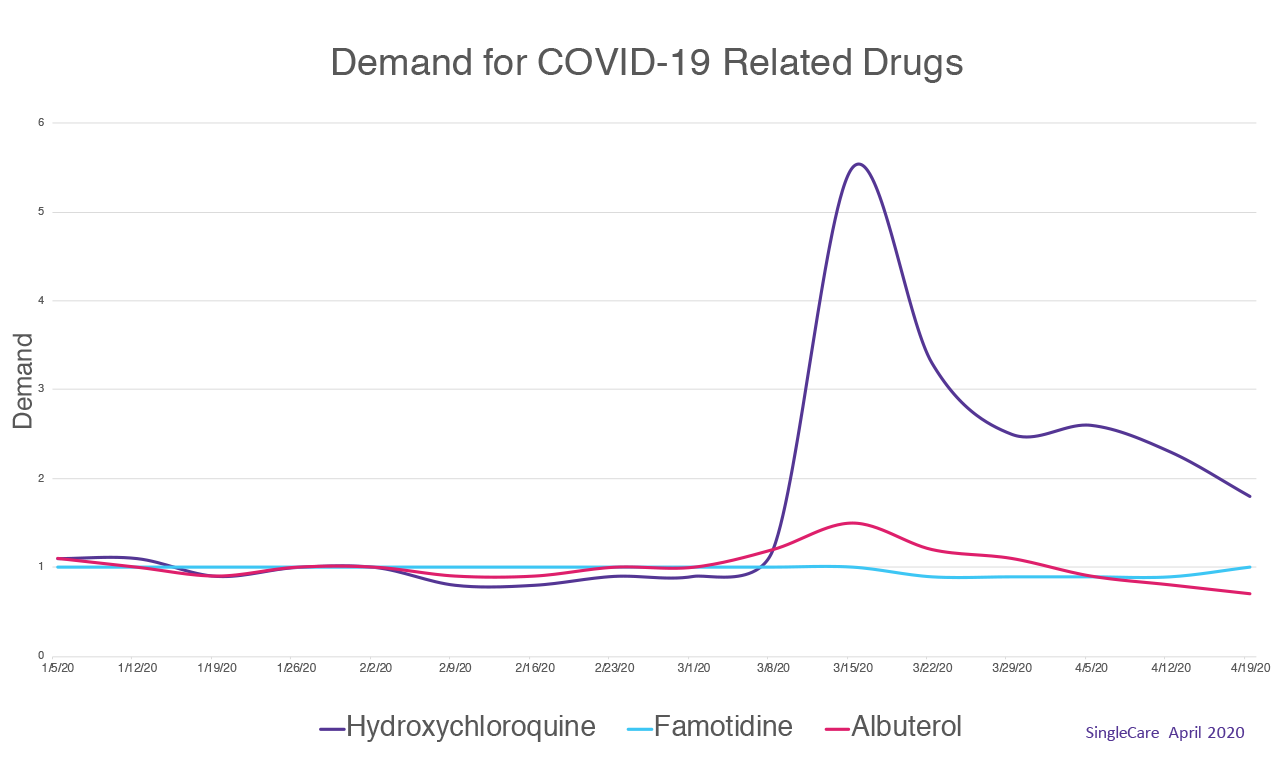
*Changes in volume shown relative to a 6-week baseline starting Jan. 5, 2020.
Hydroxychloroquine
Hydroxychloroquine (generic Plaquenil), and other chloroquine drugs, are immunosuppressive and anti-parasite medications. Typically they are used to treat inflammatory conditions, such as lupus and rheumatoid arthritis, and to prevent malaria.
Since the beginning of the pandemic, there was a 227% increase in demand for hydroxychloroquine (HCQ), and a 207% increase in demand for anti-malarials, according to SingleCare data. The spike in demand correlates with times President Trump mentioned treatments.
On Mar. 19, the first time the president discussed the benefits of HCQ at his press briefing, SingleCare data showed nearly six times the demand for the drug compared to the first six weeks of the year.
On Apr. 13, President Trump mentioned the drug for the last time in the White House press briefing.
On Apr. 24, the Food and Drug Administration (FDA) cautioned against taking the medication due to the potential for “serious heart rhythm problems.” After that, SingleCare’s data showed a decline in demand for hydroxychloroquine.
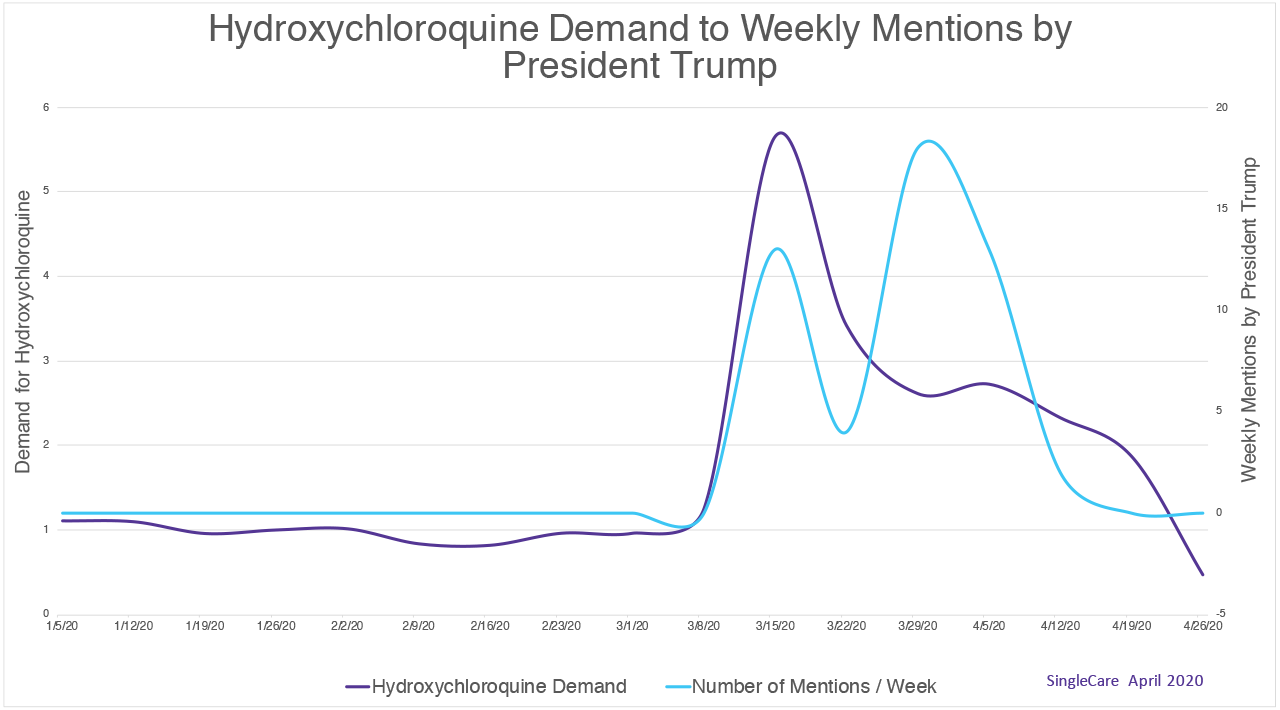
*Changes in volume shown relative to a 6-week baseline starting Jan. 5, 2020
*President Trump weekly mentions source: CNN, Washington Post
Albuterol
Albuterol is a type of inhaler that treats wheezing, shortness of breath, coughing, and chest tightness caused by lung diseases, such as asthma, emphysema, and chronic obstructive pulmonary disease. COVID-19 is a respiratory illness that can be even more dangerous for those with preexisting breathing problems.
SingleCare data showed an overall increase of 36% in demand for antiasthmatic and bronchodilator agents since the beginning of the outbreak. People with respiratory conditions refilled or purchased extra medication to make sure that symptoms were well-managed—especially if they could be exacerbated by coronavirus.
In the month of March, there was a 37% increase in demand for albuterol sulfate compared to February this year, according to SingleCare data. In the week of Mar. 15 alone, there was a 25% increase in demand for albuterol.
The surge in prescription fills coincided with regional shortages of the drug in late March, reported by the Asthma and Allergy Foundation of America. The FDA recognized the increased need and recently approved a new first generic of the commonly used albuterol inhaler.
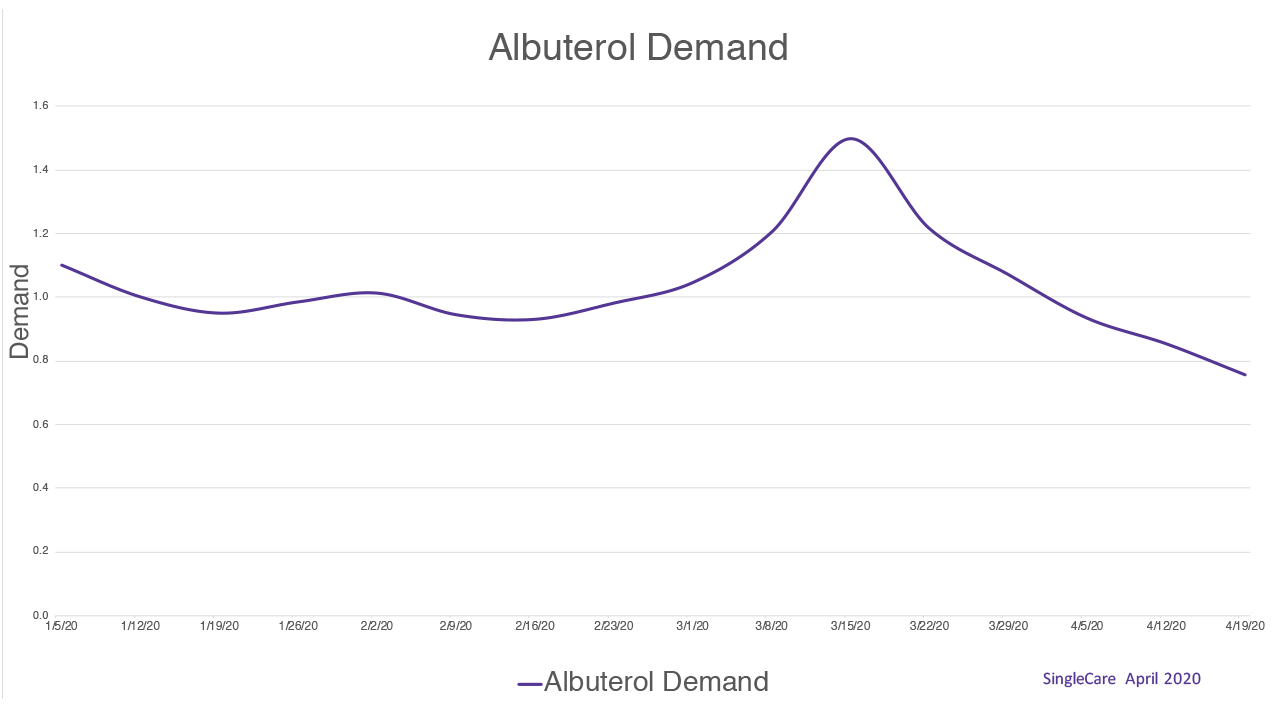
*Changes in volume shown relative to a 6-week baseline starting Jan. 5, 2020
Famotidine
Famotidine is the generic name for the common antacid Pepcid. It’s used to treat heartburn from indigestion, gastroesophageal reflux disease (GERD), and ulcers.
On Apr. 26, the media reported that the state of New York was conducting a clinical trial of this popular over-the-counter drug as a potential treatment option for COVID-19. Immediately after this news broke, SingleCare data showed a 60% increase in demand for the medication.
The impact of COVID-19 on prescription popularity
In uncertain times, it’s natural to want to be prepared. When a deadly virus is circulating, staying healthy is a common goal. The current pandemic has created a unique situation—the virus is causing widespread illness, and there’s no confirmed treatment besides fever reducers and breathing aids, like ventilators.
As Americans grasp for anything that might help, there have been significant changes in the fills for prescription drugs with speculated benefits to treating COVID-19 symptoms. We recommend continuing to follow the FDA and CDC for the latest news and guidelines regarding COVID-19 developments and the efficacy of drugs.
Subscribe to our savings newsletter
Health education, drug info, wellness & more








