Americans weather the worst flu season in decades as consumer fills for flu medications surge 9x, according to SingleCare data
For the past two years, the United States has experienced unusually mild flu seasons ostensibly due to the adoption of social distancing and masking protocols during the COVID-19 pandemic. Now, as more Americans return to their pre-pandemic lifestyles, the flu virus is returning with a vengeance. Recently, the Centers of Disease Control and Prevention (CDC) reported that the U.S. has already seen a significant increase in flu cases across the country with hospitalization rates for the flu the highest it's been in the past decade. Additionally, the organization noted that through the week of Dec. 31, 2022, the flu the flu positivity rate is 15%, compared to 7% in December 2021 when the flu season typically begins to peak. However, the flu positivity rate has decreased since the week of Nov. 26, 2022 when the rate was 25%.
Despite the early rise in cases and record hospitalization rates, some Americans intend to forgo receiving the annual flu vaccine. According to a recent SingleCare survey of 1,076 U.S. respondents, over a quarter (26%) of Americans said they do not plan to get the flu vaccine this year, and of those individuals, 38% said that they don’t believe the flu vaccine prevents them from getting the flu. With the uptick in flu cases in the U.S., SingleCare reviewed its data to see the latest trends in flu medications and flu vaccine as well as surveyed Americans to understand their sentiment on the virus this fall and winter.
Flu medications surge 9x in Fall 2022
Typically, the flu season peaks between December through February. This year, however, the flu season began earlier than usual and continues to spread across the country – according to recent CDC data, so far this season, there have been at least 22 million illnesses, 230,000 hospitalizations, and 14,000 deaths from flu. This is a stark difference from the entire 2021-2022 flu season where the CDC estimates that the flu was associated with 9 million illnesses, 10,000 hospitalizations, and 5,000 deaths.
SingleCare reviewed its own consumer prescription fill data for flu medications revealing the following insights:
Comparing October to December 2022 to the same time period in 2021, SingleCare saw a 386% increase in fills for Tamiflu and its generic, oseltamivir phosphate, a commonly filled flu antiviral medication.
Comparing December 2022 to December 2021, SingleCare saw a 204% increase in fills for Tamiflu and oseltamivir phosphate.
When comparing September through November 2022 to the same time period in 2021, SingleCare saw a 9x increase in fills for Tamiflu and oseltamivir phosphate.
Additionally, SingleCare reviewed its data for oseltamivir phosphate and Tamiflu in November 2022 compared to pre-pandemic levels in November 2019 and saw a 104% increase in fills for the medication.

“With widespread relaxing of COVID-related public health guidelines, this translates to fewer people social distancing and masking, which in turn increases the likelihood of the flu spreading,” said Jennifer Bourgeois, Pharm.D., and SingleCare Pharmacy Expert. “The past two years, the flu was virtually non-existent, suppressed by measures to mitigate the transmission of COVID. As we have resumed normal social routines, I anticipate flu cases to return with a vengeance, likely to exceed typical pre-pandemic levels.”
Along record high flu cases, flu vaccinations have seen a 30% increase—yet are still below usual pre-pandemic levels
According to our survey, nearly three quarters of Americans (74%) said they have received, or plan to get, the flu vaccine this fall/winter, up from 65% last year. In conjunction with the high flu cases circulating across the county, SingleCare continues to see an increase in flu vaccination fills.
When comparing flu vaccination fills by SingleCare consumers from October through December 2022 to the same time period in 2021, SingleCare saw a 30% increase in fills.
However, these numbers still lag behind pre-pandemic rates: when comparing SingleCare vaccination fills from October to November 2022 to the same time period in 2019, there is a 8% decrease in fills for the flu vaccine.
Most recently, when comparing flu vaccination fills by SingleCare consumers from December 2022 to the same time period in 2021, SingleCare saw a 33% increase in fills.
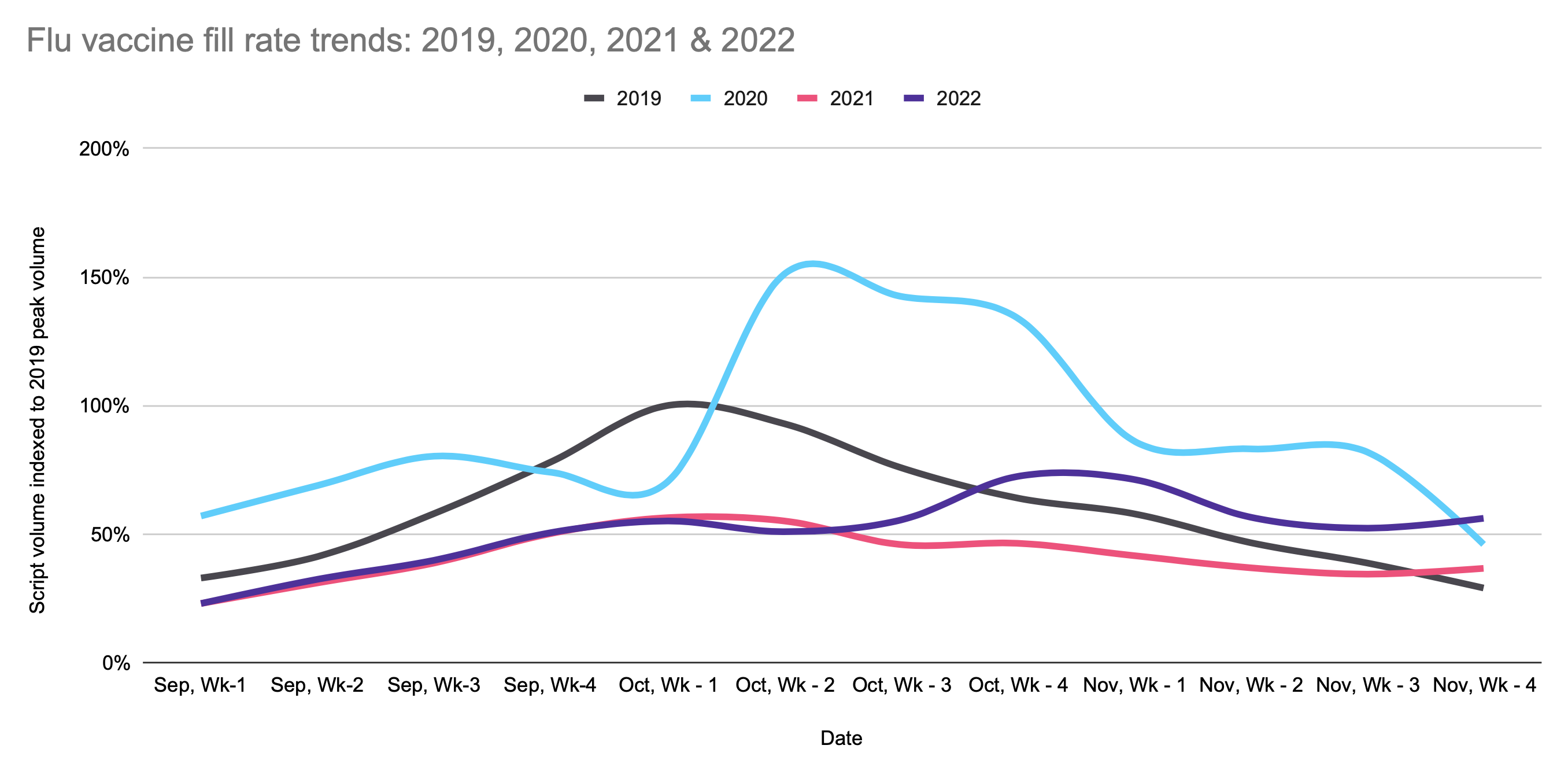
SingleCare also analyzed its flu vaccination fills from September through November in 2019, 2020, 2021, and 2022 to see if this year’s fills outpaced the previous three years. SingleCare found that 2022 fills have seen a moderate lift compared to 2021, however, lower than 2020 and 2019 flu vaccination fills.
How to prevent the flu
“The flu vaccine offers the best protection against the flu virus, especially if you are immunocompromised or over the age of 65,” Dr. Bourgeois said. “These groups of people are at risk of serious flu complications compared to healthy adults. If you haven’t already, it’s never too late to get the flu vaccine. It’s the best way to protect yourself and minimize the risk of severe illness.”
In addition to protecting yourself and others by getting the flu vaccine, Dr. Bourgeois offers the following tips to help stop the spread of the flu virus:
Support your immune system by sleeping at least seven hours per night, consuming adequate water to keep yourself hydrated, eating a diet primarily of whole foods (minimizing processed food intake), and moving your body daily (a good goal is to aim for at least 30 minutes of walking.)
Work with your healthcare provider to determine if immune system enhancing supplements are right for you. Some of these are Zinc, Vitamin C, Vitamin D, and Quercetin.
Be vigilant about washing and sanitizing your hands, for at least 20 seconds.
Avoid touching your eyes, nose, and mouth.
Wear a mask when going into public places.
Always cover your cough or sneeze.
Most importantly, if you are feeling sick, stay home.
Flu statistics methodology
Data Methodology: Data analyzed include flu vaccines and flu medications filled by SingleCare consumers in September, October, November, December 2019, 2020, 2021 and 2022. Data was reviewed and analyzed by the SingleCare team as of Jan. 11, 2022.
Survey Methodology: SingleCare conducted a 2021 flu vaccine survey online through SurveyMonkey on Oct. 21, 2022. This survey includes 1,076 United States adults ages 18+. Age and gender were census-balanced to match the U.S. population in age, gender, and U.S. region.
Subscribe to our savings newsletter
Health education, drug info, wellness & more








