Fibromyalgia symptoms: What are the early signs of fibromyalgia?


Overview: What does fibromyalgia feel like?
Fibromyalgia is a medical condition characterized by muscle and joint pain in many places, along with other symptoms such as fatigue and memory problems. The cause and what is going wrong in the body are poorly understood. Still, healthcare professionals believe that the central nervous system loses some ability to control pain. For this reason, it’s considered a pain disorder, like chronic back pain.
These facts are all academic to people with fibromyalgia. Why? Because fibromyalgia hurts. It hurts all over. Muscles and joints above and below the waist are affected on both sides of the body. The pain can be dull and achy or very severe. People with fibromyalgia often feel worn out and tired, even after they wake after a full night’s sleep. Unfortunately, because fibromyalgia is not well understood, drugs and other treatments may be disappointing. The first-line treatment involves lifestyle changes and therapy, but prescription drugs are commonly used.
Key takeaways:
Fibromyalgia is a health condition that affects about 2% of adults. It can affect anyone regardless of age, sex, race, or ethnicity. It is more common in women, with increasing age, and in individuals with autoimmune conditions.
Early signs of fibromyalgia include generalized muscle and joint pain on both sides of the body above and below the waist.
Serious fibromyalgia symptoms, such as severe pain, may require immediate medical attention.
Fibromyalgia has no certain cause. You may be at increased risk for developing fibromyalgia symptoms if you are female or middle-aged, have post-traumatic stress disorder (45% of fibromyalgia patients have PTSD), irritable bowel syndrome (30% to 70% of fibromyalgia patients have IBS), chronic back pain, interstitial cystitis, temporomandibular joint pain (TMJ), endometriosis, or noncardiac chest pain.
Fibromyalgia requires a medical diagnosis.
Symptoms of fibromyalgia generally do require treatment. They may partially resolve with treatment, but this is not always certain.
Treatment of fibromyalgia may include self-care, psychological therapy, physical therapy, and prescription medications. Read more about fibromyalgia treatments here.
Untreated fibromyalgia could result in complications like low quality of life, increased hospitalizations, and suicide.
Save on prescriptions for fibromyalgia with a free SingleCare prescription discount card.
What are the early signs of fibromyalgia?
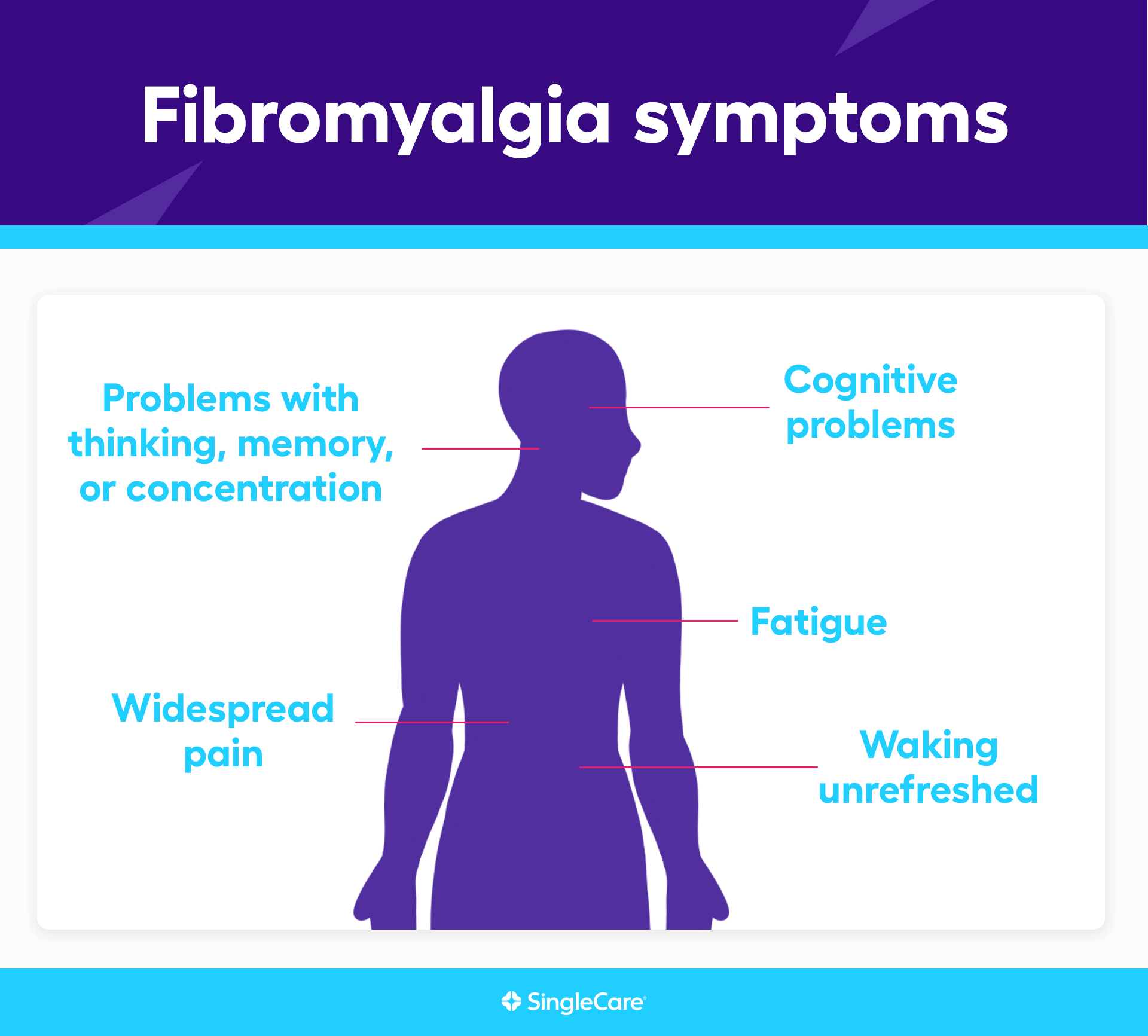
The core symptoms of fibromyalgia are:
Widespread pain
Fatigue
Waking unrefreshed
Problems with thinking, memory, or concentration
Other fibromyalgia symptoms
The most common symptoms of fibromyalgia are:
Widespread pain
Fatigue
Waking unrefreshed
Cognitive problems (“fibro fog”)
Other symptoms include:
Poor sleep quality
Depression (50% to 60% of people diagnosed with fibromyalgia)
Headaches (50%)
Anxiety (30% to 50%)
Numbness or tingling
Dry eyes
Shortness of breath
Trouble swallowing
Heart palpitations
Jaw pain or jaw disorders (temporomandibular disorders)
Digestive system complaints such as constipation, nausea, vomiting, and bloating
The number of health problems that are considered symptoms of fibromyalgia is quite extensive. The Symptom Severity Score used as part of the American College of Rheumatology (ACR) fibromyalgia diagnostic criteria lists 41 symptoms, including gastroesophageal syndrome (GERD), Raynaud’s, and hearing difficulties.
Fibromyalgia vs. lupus symptoms
Some people with fibromyalgia symptoms may think they have lupus or another rheumatic condition, chronic fatigue syndrome, or other conditions. Many of the symptoms of these conditions are similar to each other. Lupus is particularly concerning. However, symptoms of fibromyalgia and lupus are qualitatively so different that physicians will usually not test for lupus if someone only has the core symptoms of fibromyalgia. In people with lupus, pain tends to be more focused and usually involves the joints. Here’s a chart to help keep them distinct:
| Fibromyalgia | Lupus | |
| Shared symptoms |
|
|
| Unique symptoms |
|
|
When to see a doctor for fibromyalgia symptoms
If fibromyalgia symptoms, such as widespread pain and fatigue, are being experienced, visit a healthcare provider. Although the diagnosis of fibromyalgia is primarily based on the symptoms, don’t self-diagnose or self-treat symptoms of fibromyalgia. Only a healthcare professional can ensure there isn’t another health problem, such as a thyroid problem, causing the symptoms. A healthcare professional must also identify common illnesses that often occur with fibromyalgia, such as lupus, rheumatic disorders, restless leg syndrome, or IBS.
Fibromyalgia is mostly diagnosed from the symptoms, severity, and duration. The healthcare provider will take a detailed history and spend a lot of time reviewing the symptoms and filling out a symptom worksheet. Be prepared to tell the doctor what parts of the body have been painful in the last week, what symptoms have been experienced in the last week, and the severity of the core symptoms of fibromyalgia. If the score is high enough and the symptoms have lasted for three months or more, that’s enough to make a diagnosis if no other cause is found.
Some doctors may test “tender points” on the body to see if slight pressure on those points causes pain. That used to be required for the diagnosis of fibromyalgia but is no longer part of the diagnostic guidelines.
In some cases, a doctor may ask for blood tests to either rule out other causes or determine if there are other health problems.
Complications of fibromyalgia
Complications of fibromyalgia include:
Reduced quality of life
Increased hospitalization
Depression
Suicide
How to treat fibromyalgia symptoms
Because the cause of fibromyalgia and the exact nature of how it affects the body is poorly understood, treatment is equally uncertain. Some people will see improvements in their symptoms, but others may not. Because drug treatment is not certain, fibromyalgia typically focuses on other interventions. These could include:
Treatment of associated conditions such as lupus, rheumatoid arthritis, IBS, depression, or anxiety
Education about fibromyalgia
Self-care lifestyle changes including exercise, good sleep hygiene, stress management, and other self-care habits
Cognitive behavior therapy (CBT) to improve mental health and help manage the condition
Physical therapy
The standard drugs used to treat fibromyalgia are:
Serotonin and norepinephrine reuptake inhibitors (SNRIs) such as Cymbalta (duloxetine) or Savella (milnacipran)
Selective serotonin reuptake inhibitors (SSRIs)
The anticonvulsants Neurontin (gabapentin) and Lyrica (pregabalin)
The prescribing healthcare provider will typically start with one of these drugs. If drug treatment has little effect, a second drug may be added.
Over-the-counter pain relievers are generally considered ineffectiveat controlling fibromyalgia pain. Complementary therapies that reduce stress, like meditation, yoga, and Tai Chi, have improved fibromyalgia pain. Acupuncture is sometimes advised, but there is no solid evidence it provides pain relief in people with fibromyalgia.
RELATED: What are your chronic pain management options?
Living with fibromyalgia
Fibromyalgia is a chronic condition. Treatment can help, but the cornerstone of treatment is self-care:
Educate yourself about fibromyalgia
Take all drugs as instructed
Keep a symptom diary to identify what might trigger pain and to keep a record of any drug side effects
Exercise as tolerated
Eat a healthy diet
Practice good sleep hygiene by going to bed at the same time each night and waking up at the same time each morning, relaxing before bedtime, and removing all distractions when going to bed
Manage stress by scheduling time each day to relax
Join a support group
Most importantly, exercise, relax, and sleep
Drugs can help manage fibromyalgia pain, but the key to improving fibromyalgia symptoms is to exercise, sleep, and relax. Some doctors will even write prescriptions for physical activity, aerobic exercise, or relaxation techniques. First, exercise every day. There’s no need to overdo it. Second, learn good sleeping habits, like following a sleep schedule and going to bed not to read or watch TV but to go to sleep. It may not sound like much, but simply turning off all the lights and electronic devices at the same time each night substantially improves the quality of sleep. Finally, to avoid stress that can trigger pain, schedule time throughout the day to practice relaxation techniques such as meditation, Tai Chi, or yoga.
FAQs about fibromyalgia symptoms
What are the first signs of fibromyalgia?
The core symptoms of fibromyalgia are generalized muscle and joint pain in several areas of the body, fatigue, waking up unrefreshed, and having trouble thinking or remembering.
What does fibromyalgia pain feel like?
Fibromyalgia pain can feel like any other kind of pain. It’s usually in the muscles, back, neck, chest, legs, or abdominal area. It can be dull, achy, hard to pinpoint, sharp, burning, throbbing, or severe. It could be worse in the morning, at night, or last all day.
How can I test myself for fibromyalgia?
If you think you have fibromyalgia, visit a healthcare professional. It’s possible to use the diagnostic worksheet to score your symptoms, but only a doctor can tell if some other condition may be causing the pain.
What’s next? Additional resources for people with fibromyalgia symptoms
Test and diagnostics
American College of Rheumatology (ACR) preliminary diagnostic criteria for fibromyalgia, PfizerPro
Common questions about the diagnosis and treatment of fibromyalgia, American Family Physician
Fibromyalgia, National Institute of Arthritis and Musculoskeletal and Skin Diseases (NIAMS)
Treatments
Common questions about the diagnosis and treatment of fibromyalgia, American Family Physician
Fibromyalgia, Centers for Disease Control and Prevention (CDC)
Fibromyalgia treatments and medications, SingleCare
Scientific studies and clinical trials
High prevalence of restless legs syndrome among patients with fibromyalgia: a controlled cross-sectional study, Journal of Clinical Sleep Medicine
Passive transfer of fibromyalgia symptoms from patients to mice, The Journal of Clinical Investigation
More information on related health conditions
IBS treatment and medications, SingleCare
Lupus treatments and medications, SingleCare
Restless legs syndrome treatments and medications, SingleCare
What are your chronic pain management options?, SingleCare




 4.8 calificación promedio4.8 calificación



