




 Search for articles or Rx savings


Key takeaways
The Dexcom G7 is one of the leading continuous glucose monitoring (CGM) systems on the market today, helping people with Type 1 and Type 2 diabetes maintain their blood glucose levels within their target range.
Many commercial insurance plans cover the cost of the Dexcom G7, but it’s important to check with your insurance plan.
Prescription discount cards and patient assistance programs may help people without insurance save money when using the Dexcom G7.


Advancements in diabetes technologies, such as continuous glucose monitoring (CGM), have enabled people with diabetes to better manage their condition and minimize adverse effects. However, insurance coverage for CGM can vary widely, so it’s important for people who want to use this type of technology to be prepared. Here’s what you need to know if you plan to use the Dexcom G7, one of the newer and more popular CGM systems on the market.
The Dexcom G7: What’s included and how it works
In recent years, continuous glucose monitors, which are devices that employ a sensor to measure a person’s blood glucose levels so they can track their blood sugar levels in real time, have become increasingly common. In fact, a 2025 report from the American Diabetes Association (ADA) has logged a steady increase in the use of CGM among Medicare and Medicaid recipients since 2017, and even more people with Type 2 diabetes are using CGM than people with Type 1 diabetes.
According to the ADA’s “Standards of Care in Diabetes,” which includes the ADA’s current clinical practice recommendations, all people with diabetes should now be offered diabetes devices. Additionally, the standards recommend that the “initiation of continuous glucose monitoring (CGM) should be offered to people with Type 1 diabetes early in the disease, even at the time of diagnosis.”
As George Huntley, CEO of the Diabetes Patient Advocacy Coalition (DPAC), puts it, “If you have diabetes and you are on insulin, you need a CGM. It’s not a ‘nice to have’ in 2025. It’s a ‘need to have.’”
Dexcom is one of the leading manufacturers of CGM systems, and the Dexcom G7 Continuous Glucose Monitoring System is the latest CGM system manufactured by Dexcom. Approved by the U.S. Food and Drug Administration (FDA) in 2022, the Dexcom G7 can be used by patients of any age with any type of diabetes, as long as they are at least two years old. It can even be used by pregnant people. Dexcom also manufactures the G6 CGM, which will eventually be phased out, and the Stelo CGM.
Other personal CGMs on the market include:
- Abbott FreeStyle Libre 2 Plus
- FreeStyle Libre 14 Day
- FreeStyle Libre 3 Plus
- Medtronic Guardian Connect
- Eversense 365 CGM system
The models have variations, including differences in the frequency of glucose readings, the recommended placement of sensors, and the recommended age range for users.
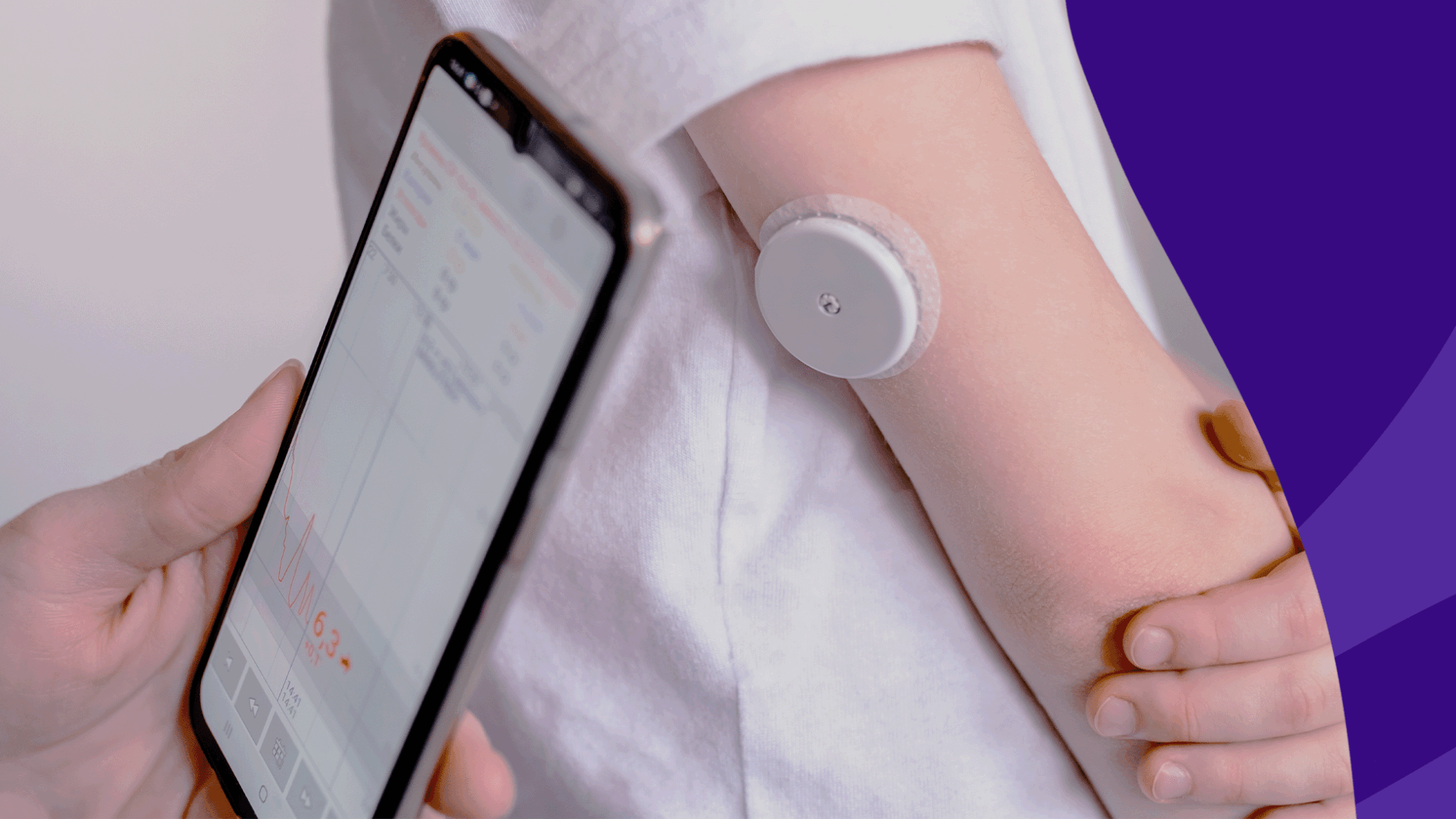
How the Dexcom G7 works: the user applies a small wearable sensor to their upper arm. Because the sensor and transmitter are combined, the sensor sends real-time blood glucose readings every five minutes to the CGM receiver or the user’s smartphone. The user can customize alerts to notify them when their blood sugar is outside their target range.
How often do you replace the sensor?
A major advantage of using a CGM like the Dexcom G7 is that it eliminates the need for finger sticks. The sensors for the Dexcom G6 can be applied to and worn on the abdomen, but the sensors for the Dexcom G7 are indicated for wear on the back of the upper arm (or the buttocks for children aged 2-6 years).
However, each sensor is only designed to be used for a finite amount of time. According to Dexcom, you can wear a sensor for up to 10 days, although there is a 12-hour grace period at the end of the 10 days. That means that if users insert the sensor and apply the overpatch correctly, they should only need three sensors per month.
“Here’s your problem,” says Huntley. “They fall off. Life happens.”
However, he adds, users can contact the manufacturer to ask for a replacement sensor. Most of the time, it’s no questions asked, but “they have put a limit on how many of those replacement sensors you can have” at times.
Dexcom G7 cost per month: A detailed breakdown
The cost of having and using CGM can vary widely.
“The costs to the patient depend greatly on the type of insurance they have—commercial versus Medicaid—and for Medicaid, it depends greatly on the state that they live in,” explains Dr. Mark DeBoer, MD, MSc, MCR, a pediatric endocrinologist at UVA Health Children’s in Charlottesville, Virginia.
However, the G7 device’s transmitter is integrated with the sensor, which helps to simplify the calculation.
The sensor cost
Users do need to factor the cost of sensors into their budget when using any CGM, including the Dexcom G7.
Without insurance, the average cost of a 30-day supply, which is a package containing three Dexcom G7 sensors, at a pharmacy is about $572. Using a SingleCare prescription discount card can reduce the cost to as little as $321 at some pharmacies.
Without insurance, the cost of a package of five Dexcom G7 15-day sensors is about $1,084, but a SingleCare prescription discount card can lower the price to about $961.
The receiver cost (optional)
One way to save is by not purchasing a separate receiver to use with the Dexcom G7. The receiver is optional, and many users prefer to just use their compatible smartphone as a display device along with the Dexcom G7 app.
However, users can purchase and use a Dexcom G7 receiver if they prefer not to use their smartphone for this purpose, and that is a one-time-only cost. Without insurance coverage, the average price of the receiver is about $431. Depending on the pharmacy, you can get a receiver for as low as $228 with a SingleCare discount card.
Total cost without insurance
A rough estimate of the total cost without insurance is approximately $ 1,000—that includes the receiver and one 30-day supply of sensors. However, because purchasing the receiver is optional, a person without insurance coverage can save on that aspect and just use the app with their smartphone. They will need to budget for the ongoing monthly cost of sensors.
Is Dexcom G7 covered by insurance?
Typically, the cost of the Dexcom G7 is covered by commercial health insurance for individuals with Type 1 diabetes. According to Huntley, the Dexcom G7 tends to be covered by more insurance plans’ formularies than the Freestyle Libre 3 because the manufacturer offers a rebate on the sensors.
“When they cover only one, it tends to be the Dexcom,” says Huntley.
The manufacturer notes that the Dexcom CGM is “widely covered by most insurance plans, and most covered patients pay $0.” However, they caution that this does not include a smart device, which is sold separately. The manufacturer offers a pharmacy savings program to individuals with high copay plans or those who must pay for their CGM out of pocket, which can help them save more than half of their monthly cash price.
Medicare also covers the G7, as well as the G6, for eligible patients, according to Dexcom.
You can use the drug manufacturer’s online tool to find out if your insurance plan covers Dexcom. Your plan may also require prior authorization from your healthcare provider.
How to save on Dexcom G7
People with diabetes who wish to use a Dexcom G7 system but are concerned about the potential cost, especially out-of-pocket costs, can explore the following options:
Manufacturer savings program
Users can take advantage of financial assistance through the Dexcom Savings program.
SingleCare discounts
If your insurance does not cover the cost of a Dexcom G7 CGM system, you can also save on the Dexcom G7 sensors via the SingleCare discount card.
Is Dexcom G7 worth the cost?
“Overall, my take is that CGMs have brought a fantastic transformation in diabetes management and—along with automated insulin delivery pumps that rely on CGM—are responsible for recent improvements in how well we can achieve blood sugars in the target ranges,” DeBoer says.
He notes that the main benefits of using CGM are:
- Alerting users to triggers that are responsible for the unexpected high blood glucose levels.
- Alerting users to low blood sugar levels so they can be proactive and act before the levels get so low that they develop symptoms of hypoglycemia.
- Having the ability for remote monitoring, so the user’s loved ones can see how their blood glucose levels are doing and take action if they notice a very low blood sugar level reading.
Your insurance may cover the cost of a Dexcom G7. However, if you don’t have insurance coverage, you may still be able to afford the cost of the Dexcom G7, with help from discount cards or financial or patient assistance programs.
You may also find that you enjoy significant benefits from the Dexcom G7, making it a worthwhile investment. Many people do prefer the Dexcom G7 for the purposes outlined by DeBoer. For example, one reviewer noted that the Dexcom G7 has a shorter warm-up time, smaller and flatter sensors, improved accuracy over the earlier G6, and the ability to customize high- and low-blood glucose level alerts.
However, before you choose, you may want to seek medical advice from your healthcare provider and discuss which CGM is right for you.
The SingleCare prices in this article are accurate as of December 19, 2025, for the ZIP code 23666 at the time of publication. Prices vary by pharmacy. Visit our Dexcom G7 coupon page for updated Dexcom G7 prices near you.
- AACE guide to continuous glucose monitoring (CGM), American Association of Clinical Endocrinology
- Changing your Dexcom sensor, Dexcom
- Continuous glucose monitoring, Cleveland Clinic
- Continuous glucose monitors, American Diabetes Association
- Continuous glucose monitor coverage: The patient and health care professional
- experience of access and choice, American Diabetes Association (2025)
- Coverage and ordering, Dexcom
- A critical review & comparison of the Dexcom G7, Integrated Diabetes Services
- Diabetes technology: Standards of care in diabetes—2025, Diabetes Care (2025)
- Do patients still need to buy the receiver? Dexcom
- G7 System overview, Dexcom
- Insurance and Medicare coverage, Dexcom