




 Search for articles or Rx savings


Key takeaways
Saxenda and Ozempic are GLP-1 medications that can help with weight loss.
Ozempic tends to produce more significant weight loss results than Saxenda.
The cheapest option is generic Saxenda (liraglutide), which costs less than $500 with a free SingleCare discount card.
- What’s the difference between Saxenda and Ozempic?
- FDA-approved uses for liraglutide and semaglutide
- How much weight can you lose on Saxenda?
- How much weight can you lose on Ozempic?
- Is Saxenda better than Ozempic for weight loss?
- Saxenda vs. Ozempic side effects
- Saxenda vs. Ozempic cost and coverage
- Saxenda vs. Ozempic: Final thoughts


- What’s the difference between Saxenda and Ozempic?
- FDA-approved uses for liraglutide and semaglutide
- How much weight can you lose on Saxenda?
- How much weight can you lose on Ozempic?
- Is Saxenda better than Ozempic for weight loss?
- Saxenda vs. Ozempic side effects
- Saxenda vs. Ozempic cost and coverage
- Saxenda vs. Ozempic: Final thoughts
Saxenda (liraglutide) and Ozempic (semaglutide) are name-brand prescription medications that can help people lose weight. They’re both self-injected glucagon-like peptide 1 (GLP-1) receptor agonists, so they work in similar ways. Some people wonder which is better for weight loss, so let’s take a closer look at the key differences between Saxenda and Ozempic.
What’s the difference between Saxenda and Ozempic?
Saxenda and Ozempic belong to the same drug class (GLP-1), but they have different active ingredients: liraglutide in Saxenda and semaglutide in Ozempic.
On a molecular level, liraglutide and semaglutide are nearly identical to each other and to the GLP-1 hormone that the body naturally produces. Tiny differences in structure end up making a significant impact on how long each drug lasts in the body and the average amount of weight people lose while taking them.
Dosage differences
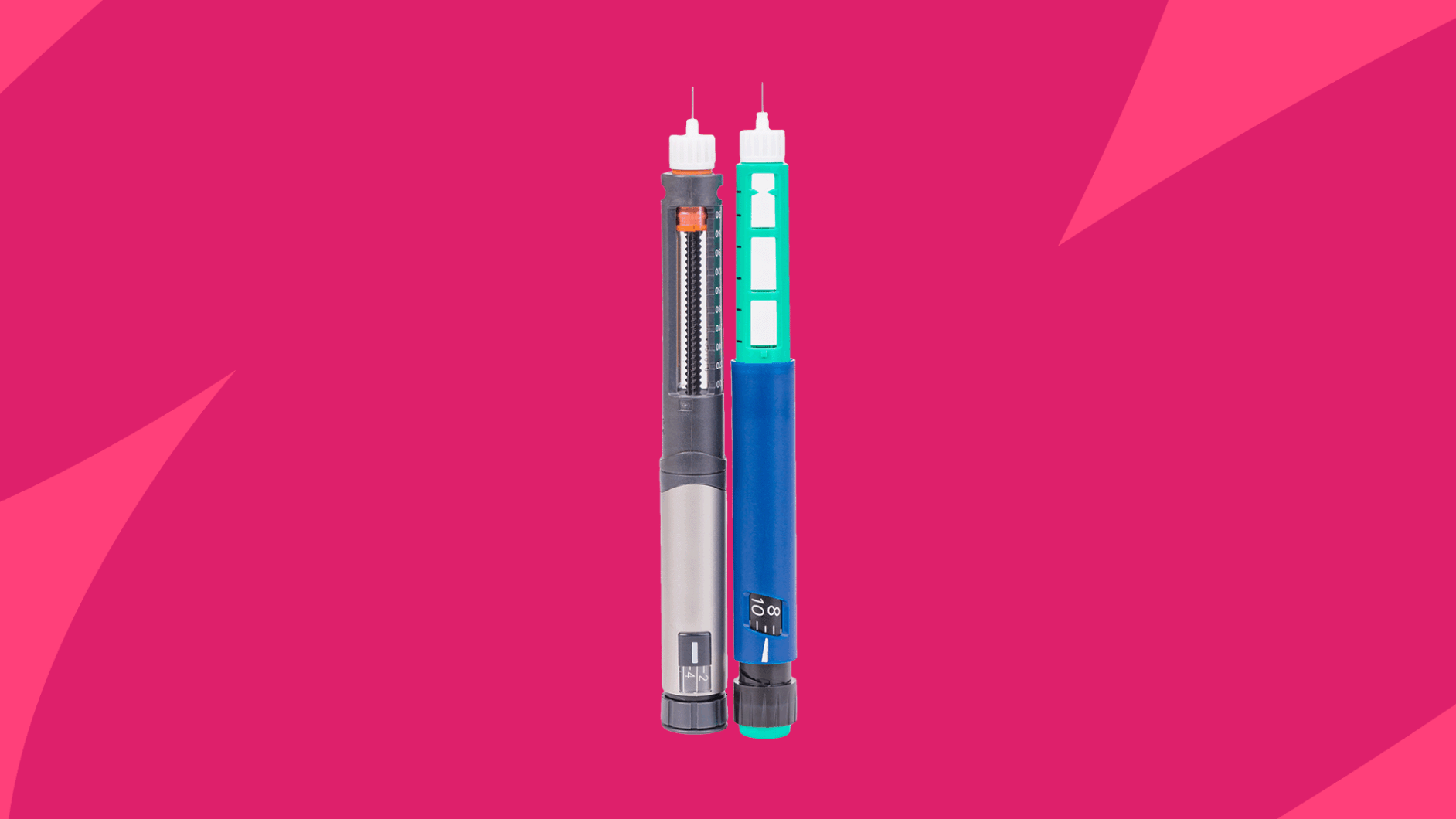
The body metabolizes Saxenda much faster than it metabolizes Ozempic. Therefore, Saxenda is taken as a daily injection, whereas Ozempic is a weekly one. Both are self-administered under the skin via an injection pen.
“A once-weekly injection of semaglutide is easier for many, but a once daily liraglutide dose could be best for people who’ve had issues with side effects from semaglutide or prefer more flexibility,” says Rekha Kumar, MD, an endocrinologist and obesity medicine specialist.
As with all GLP-1s, Saxenda and Ozempic start at a low dose to reduce side effects. The dose is gradually increased under the guidance of the healthcare provider until the maximum tolerable dose is reached.
RELATED: Ozempic dosage chart
For Saxenda, that means starting at 0.6 mg per day for one week and increasing the dose by 0.6 mg every week thereafter. The maximum dose is 3 mg, so it’s possible to reach this quantity in five weeks.
Ozempic is titrated at a much slower pace because it stays in the body longer. The starting dose is 0.25 mg each week. The healthcare provider will gradually increase the dose, with at least one month in between dosage increases. It takes at least four months to reach the maximum dose of 2 mg, although some people continue to take a smaller dose, such as 1 mg weekly.
With either medication, your healthcare provider may recommend a slower dosing schedule if your body needs a little more time to adjust.
RELATED: What happens if you miss a dose of Ozempic?
FDA-approved uses
The Food and Drug Administration (FDA) has approved Saxenda for weight loss and chronic weight management. Specifically, Saxenda is approved to treat adults with obesity and adolescents 12 years and older who weigh more than 60 kilograms (about 132 pounds) and have been diagnosed with obesity. It’s also approved for adults who are considered overweight if they also have a weight-related health condition, such as high blood pressure, obstructive sleep apnea, gallstones, osteoarthritis, or heart disease.
Ozempic is approved to control blood sugar levels in adults with Type 2 diabetes when used with a healthy diet and exercise. The FDA has also approved Ozempic for the prevention of major adverse cardiovascular events (MACE), including heart attack and stroke, in adults with both cardiovascular disease and Type 2 diabetes. Adults with chronic kidney disease and Type 2 diabetes can also be prescribed Ozempic to reduce the risk of cardiovascular death and further kidney damage. Ozempic is not FDA approved for weight loss, but healthcare providers often prescribe it off-label for this use.
It’s also important to note that Saxenda isn’t the only liraglutide product available, nor is Ozempic the only option for semaglutide.
Under the brand name Victoza, liraglutide is FDA approved for blood sugar control in adults with Type 2 diabetes, along with diet and exercise, and to reduce the risk of MACE in adults with both Type 2 diabetes and cardiovascular disease.
Semaglutide is FDA approved under the brand name Wegovy for weight loss and weight maintenance (along with diet and exercise) in people 12 years and older who have been diagnosed with obesity and in adults who are considered overweight and have at least one weight-related medical condition. It’s also approved to reduce the risk of MACE in adults with heart disease who are considered overweight or obese, and to treat adults with a type of fatty liver disease called noncirrhotic metabolic dysfunction-associated steatohepatitis (MASH) with moderate to advanced fibrosis.
FDA-approved uses for liraglutide and semaglutide |
||
|---|---|---|
| Condition | Liraglutide | Semaglutide |
| Weight loss in people 12 years and older | Saxenda | Wegovy |
| Adults who are overweight with a weight-related condition | Saxenda | Wegovy |
| Control blood sugar levels in adults with Type 2 diabetes | Victoza | Ozempic |
| Reduce the risk of MACE in adults with cardiovascular disease and Type 2 diabetes | Victoza | Ozempic |
| Reduce the risk of certain outcomes in adults with chronic kidney disease and Type 2 diabetes | N/A | Ozempic |
| Treat MASH in adults | N/A | Wegovy |
Generic availability
Generic Saxenda became available in 2025. Known simply as liraglutide, generic Saxenda is much more affordable than the brand-name medication. We’ll discuss costs in more detail below.
Generic Ozempic is not yet available and may not hit the market until its U.S. patent expires in 2032. The patent for Wegovy is also set to expire in 2032.
How much weight can you lose on Saxenda?
Several studies have concluded that liraglutide (Saxenda) results in an average of 9 to 13 pounds of weight loss over 56 weeks.
In 2015, the SCALE Obesity and Prediabetes study group found that two-thirds of participants lost at least 5% of their body weight while taking liraglutide, and one-third lost at least 10%. An additional SCALE study confirmed that finding, recording an average weight loss of about 6% after 56 weeks of taking liraglutide.
The greatest amount of weight loss recorded by liraglutide researchers occurred in a 2024 Turkish study, where participants lost an average of about 41 pounds over 24 weeks.
How much weight can you lose on Ozempic?
According to researchers from Mayo Clinic, nearly 9 out of every 10 people can expect to lose at least 5% of their body weight after taking semaglutide (Ozempic) for six months, and about half will lose 10% or more.
Higher doses of semaglutide given over a longer period of time tended to result in the most weight loss. Participants in a 68-week study lost an average of about 34 pounds while on 2.4 mg of semaglutide. This equaled a weight loss of about 15%–17%. In contrast, the placebo (inactive treatment) group lost about 6 pounds on average, or about 2% of their body weight.
Another study found that people taking semaglutide lost an average of 10% of their body weight in the first 65 weeks, and the loss was maintained until the study ended at more than 200 weeks. In contrast, the placebo group lost 1.5% of their body weight, and the weight loss plateaued at about 26 weeks.
Oral semaglutide (sold under the brand name Rybelsus) has also been studied, but it tends to result in less weight loss than injectable semaglutide. For example, one study found that 14 mg of oral semaglutide per week for 52 weeks resulted in an average of 10 pounds lost.
Is Saxenda better than Ozempic for weight loss?
Studies tend to conclude that Ozempic (semaglutide) is more effective for weight loss than Saxenda (liraglutide):
- A 2022 study found that people typically lost around 16% of their body weight on semaglutide compared to 6% body weight on liraglutide.
- Cleveland Clinic researchers found that people lost an average of 5% body weight with semaglutide and 2% with liraglutide after one year.
- The results of a 2023 study suggest that semaglutide is about twice as effective as liraglutide for weight loss.
- A 2025 Frontiers in Pharmacology meta-analysis noted a “significant weight reduction” when people switched from liraglutide to semaglutide.
Occasionally, studies find no meaningful difference in weight loss between the two drugs. For example, a 2025 Hospital Pharmacy study found people lost an average of 9 pounds on liraglutide and 7 pounds on semaglutide. That said, most evidence tips in Ozempic’s favor.
“A final point most people overlook: Semaglutide has demonstrated sustained weight reduction benefits even after treatment ends, provided lifestyle changes are maintained, whereas weight regain tends to be faster after liraglutide discontinuation,” says Rasoul Montazeri, MD, a triple board-certified physician based in Irvine, California. “This durability of effect makes semaglutide a transformative tool in long-term obesity care.”
Saxenda vs. Ozempic side effects
Gastrointestinal issues are the most common side effects of GLP-1 medications like Saxenda and Ozempic.
“Both can cause nausea, GI upset, or constipation, but I see liraglutide patients more often report daily low-grade nausea, whereas semaglutide tends to cause more pronounced symptoms early on that taper with dose titration. Individual tolerance plays a large role here,” Dr. Montazeri says.
In clinical trials, GI side effects were typically reported more often with Saxenda versus with Ozempic. “With liraglutide, side effects can feel a little milder but happen more consistently since it’s taken daily,” Dr. Kumar explains. “Patients should always feel comfortable expressing concerns about side effects because there is a lot your provider can do to support you.”
Saxenda and Ozempic share some serious side effects, such as allergic reactions, gallbladder problems, and acute pancreatitis. Animal studies have shown an increased risk of thyroid cancer with these drugs, but it is not known if the risk applies to humans. Because of this, people with Multiple Endocrine Neoplasia syndrome type 2 (MEN 2), as well as people with a history or family history of medullary thyroid carcinoma, should not use Saxenda or Ozempic.
Read more on SingleCare:
Saxenda vs. Ozempic side effects comparison |
||
|---|---|---|
| Side effect | Saxenda frequency | Ozempic frequency |
| Nausea | 39.3% | 20.3% |
| Vomiting | 15.7% | 9.2% |
| Constipation | 19.4% | 3.1% |
| Diarrhea | 20.9% | 8.8% |
| Indigestion | 9.6% | 2.7% |
| Abdominal pain | 5.4% | 5.7% |
Frequency is not based on data from a head-to-head trial. This may not be a complete list of adverse effects that can occur. Please refer to your healthcare provider to learn more.
Source: DailyMed (Saxenda), DailyMed (Ozempic)
Saxenda vs. Ozempic cost and coverage
Without insurance coverage or discounts, brand-name Saxenda and Ozempic are expensive, with Saxenda averaging $1,895 per month and Ozempic averaging $1,396 per month.
With a free SingleCare prescription discount card or coupon, the most affordable option is generic liraglutide for weight management, which averages $496 for 5, 3 mL pens, depending on the pharmacy you choose. You can also use SingleCare coupons for brand-name Saxenda or Ozempic and save about $600 per month on each.
Does insurance cover Saxenda?
Saxenda isn’t always covered by insurance. It’s best to check your plan’s specific formulary, but here’s some general information:
- Some insurance companies and plans don’t cover any weight loss medications.
- Plans that do cover weight loss medications may not cover Saxenda specifically.
- Plans that do cover Saxenda may consider it a nonpreferred drug, which means you may have a higher copay or coinsurance.
- In some cases, the insurance company may require proof that you’ve tried other weight loss medications and follow a low-calorie diet and exercise routine before they’ll cover Saxenda.
Note that federal law prevents Medicare from covering any weight loss drug, including Saxenda. However, Medicare may cover Ozempic for its FDA-approved uses. Medicaid coverage varies by state.
RELATED: Does United Healthcare cover Saxenda?
Does insurance cover Ozempic?
Insurance plans typically cover Ozempic for its FDA-approved uses, including Type 2 diabetes treatment. Coverage for off-label uses, including weight loss, is unlikely.
Check to see if your health insurance plan covers Wegovy, the brand-name version of semaglutide that’s approved for weight loss. If it’s not covered, your healthcare provider can submit an exception request to the insurance company on your behalf. If semaglutide is medically necessary and covered alternatives won’t work in its place, the insurance company may cover it.
RELATED: Does United Healthcare cover Ozempic?
Saxenda vs. Ozempic: Final thoughts
Saxenda and Ozempic are related medications with different dosing frequencies, costs, and FDA-approved uses. If you’re interested in Saxenda or Ozempic for weight loss, a healthcare professional can help you decide which one (if any) is right for you based on your medical history, current medications, and goals. A low-calorie diet and routine physical activity are important for weight loss regardless of which medication you choose.
The SingleCare prices in this article are the most accurate at the time of publishing in ZIP code 23666 as of Dec. 15, 2025. Prices vary by pharmacy. Visit our Saxenda and Ozempic coupon pages for updated prices near you.
- Molecular mechanisms of semaglutide and liraglutide as a therapeutic option for obesity, Frontiers in Nutrition (2024)
- Obesity and comorbid conditions, StatPearls (2024)
- FDA approves generic liraglutide to address GLP-1 drug shortage, Journal of the American Medical Association (2024)
- Annual report, Novo Nordisk (2024)
- Liraglutide for weight management: a critical review of the evidence, Obesity Science & Practice (2016)
- Weight maintenance and additional weight loss with liraglutide after low-calorie-diet-induced weight loss: The SCALE Maintenance randomized study, International Journal of Obesity (2013)
- Real-world clinical effectiveness of liraglutide for weight management in Türkiye: insights from the LIRA-TR study, Journal of Clinical Medicine (2024)
- Weight loss outcomes associated with semaglutide treatment for patients with overweight or obesity, JAMA Network Open (2022)
- Efficacy of semaglutide in treating obesity: a systematic review of randomized controlled trials (RCTs), Cureus (2022)
- Once-weekly semaglutide in adults with overweight or obesity, The New England Journal of Medicine (2021)
- Long-term weight loss effects of semaglutide in obesity without diabetes in the SELECT trial, Nature Medicine (2024)
- Oral semaglutide versus empagliflozin in patients with Type 2 diabetes uncontrolled on metformin: the PIONEER 2 trial, Diabetes Care (2019)
- Effect of weekly subcutaneous semaglutide vs daily liraglutide on body weight in adults with overweight or obesity without diabetes: the STEP 8 randomized clinical trial, Journal of the American Medical Association (2022)
- One-year weight reduction with semaglutide or liraglutide in clinical practice, JAMA Network Open (2024)
- Liraglutide versus semaglutide for weight reduction-a cost needed to treat analysis, Obesity (2023)
- Comparative effectiveness of semaglutide versus liraglutide, dulaglutide or tirzepatide: a systematic review and meta-analysis, Frontiers in Pharmacology (2025)
- Comparing the efficacy of liraglutide and semaglutide on weight loss: Experience from the Middle East Gulf region and literature review, Hospital Pharmacy (2025)
- Saxenda label, DailyMed (2025)
- Ozempic label, DailyMed (2025)