





Key takeaways
The most effective exercise to lower cholesterol levels is to follow a routine that includes aerobic activity and resistance training.
Physical activity has both direct and indirect impacts on your cholesterol levels, contributing to your overall health.
Exercise acts as a complement to cholesterol medications as well as other lifestyle changes.


Do you have ideal cholesterol levels? That is, is your total cholesterol below 200, with your “good” cholesterol between 40 (men) or 50 (women) and 80, and your “bad” cholesterol below 100?
It is possible to have high cholesterol and not even know it. Fortunately, the condition is treatable through a combination of medication and exercise. Physical activity, especially aerobic exercise, can lower your cholesterol and reduce the risk of related medical complications.
Does exercise lower cholesterol?
Yes, exercise lowers your cholesterol. To understand the effects that movement has on your levels, you need to know several types of fat or fat-like substances in your body:
- High-density lipoprotein (HDL): The “good” cholesterol that helps dispose of the “bad” cholesterol.
- Low-density lipoprotein (LDL): The “bad” cholesterol that, when there is too much, can lead to cardiovascular disease, heart attack, and stroke.
- Triglycerides: A type of fat that, if you have too much of it in combination with either too much LDL or too little HDL, can lead to buildup in your arteries.
Exercise affects your cholesterol by raising your good cholesterol and lowering your bad cholesterol and triglycerides.
“Exercise is not a replacement for medication in patients who meet treatment criteria, but it remains a powerful non-pharmacologic tool for improving cholesterol biology,” says
Sam Setareh, MD, director of cardiology and cardiovascular performance at Beverly Hills Cardiovascular and Longevity Institute in California.
How does exercise lower cholesterol?
There are three ways exercise has a direct impact on your cholesterol levels.
1. Raising HDL levels
One of the most significant ways that exercise affects cholesterol is by increasing the amount of HDL, or “good” cholesterol, in your body. HDL cholesterol is like a cleanup crew in your arteries. It moves excess cholesterol in your bloodstream to your liver, where it is converted into bile salts and removed from your body.
Exercise, particularly aerobic exercise, raises your HDL levels as it lowers your body fat percentage, lowers your blood pressure, and helps you reach and maintain a healthy body weight. When you have healthy HDL levels, you’re able to clear excess cholesterol from your system, thus leading to a better total cholesterol number.
“The strongest and most consistent benefit of exercise is its ability to raise HDL levels,” explains Dr. Sam Setareh. “However, aerobic and resistance exercise do not consistently increase HDL in all individuals, which suggests that the cardiovascular benefits go beyond HDL.” Improvements include better function of the cells lining blood vessels, insulin sensitivity, inflammation reduction, and a shift in LDL particle size so that there is less likelihood of forming plaques in arteries.
2. Lowering LDL levels
Exercise alone reduces your LDL cholesterol levels because it improves lipid metabolism, which is your body’s ability to use fat for energy. As your body becomes more efficient at using fat for energy, your liver is prompted to create more LDL receptors. These receptors work to remove LDL from your system, thus lowering your LDL numbers.
3. Reducing triglycerides
High triglyceride levels prompt your body to make smaller, denser LDL particles. These smaller particles are more atherogenic—or likely to cause plaque buildup in the arteries—than larger particles.
When you exercise, you increase hepatic lipase and lipoprotein lipase (enzymes that help your body process fats in the bloodstream), both of which break down triglycerides. With fewer small triglycerides in your system, the average size of LDL particles changes, creating more “fluffy” particles, which are less likely to cause you problems.
The broader benefits of movement
Aside from its direct impact on cholesterol, exercise also offers significant health benefits. It plays a role in both your physical and mental health, both of which may have indirect impacts on your LDL and HDL levels.
Maintaining a healthy body weight
Obesity is linked to unhealthy cholesterol levels. A study found that LDL functions differently in people with obesity, which means arterial plaque forms more easily.
Exercise has a powerful relationship with weight management. Physical activity burns calories, which can help create a caloric deficit that leads to weight loss. Once you reach a healthy body weight, exercise helps maintain it.
Reduced inflammation
Inflammation occurs when your body experiences an injury or an illness. Immune cells rush to the affected area, leading to side effects like swelling and redness. This activity is a necessary part of the healing process, but long-term inflammation can lead to lower levels of HDL and denser LDL particles.
Exercise has anti-inflammatory effects; in fact, researchers have found that people experience reduced inflammation in as little as two weeks after starting an exercise regimen.
Better insulin sensitivity
Exercise improves insulin sensitivity, which means your body does a better job of absorbing glucose (sugars) from the blood.
“This helps regulate blood sugar and reduces the metabolic strain that contributes to unfavorable cholesterol patterns,” says Supatra Tovar, PsyD, licensed clinical psychologist and registered dietitian.
Healthy insulin sensitivity prevents LDL particles from becoming small and dense, regulates cholesterol absorption, and supports HDL levels.
Lower stress levels
Managing stress levels may help keep your cholesterol levels in check. Studies have shown that acute stress can lead to elevated serum cholesterol concentration. This means that there is too much LDL cholesterol, which puts you at risk of heart disease.
Exercise reduces stress by lowering levels of adrenaline and cortisol, also known as “stress hormones.” When you work out, you may also notice your mood improves. This is because movement boosts endorphins, which are chemicals that, in simple terms, make you feel good.
What is the best exercise to lower cholesterol?
If you want to improve your cholesterol levels through regular exercise, your best bet is cardio.
Cardiovascular exercise
“From both the research and my clinical experience, the most effective exercise for improving cholesterol is regular cardiovascular or aerobic movement that uses large muscle groups continuously,” says Supatra Tovar. “This includes brisk walking, jogging, cycling, swimming, rowing, and steady dancing.”
A comprehensive review of 13 studies evaluated how cardio exercise (like jogging or rowing), resistance training (such as lifting weights), and a combination of both affected cholesterol.
The research showed that people who completed at least 12 weeks of aerobic exercise had an average 4.6% increase in HDL, a 5% drop in LDL, and a 3.7% decrease in triglycerides. Participants did not see a significant change in their total cholesterol numbers, though the ratios improved.
Resistance training
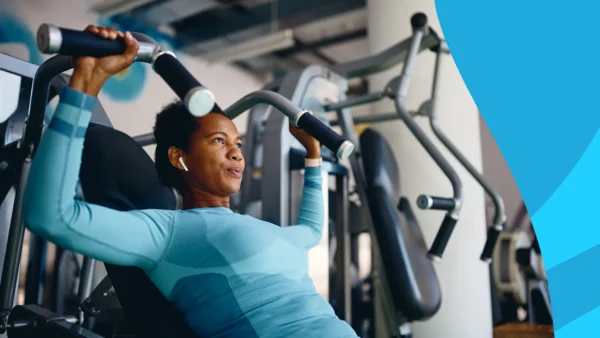
Researchers also found positive effects with strength training. One study measured the lipid profiles of 30 men who followed moderate- or high-intensity resistance training for six weeks. Both groups experienced lower LDL and total cholesterol levels, and the high-intensity group experienced an increase in HDL cholesterol.
An exercise program that combines resistance training with aerobic activity can lower LDL cholesterol levels, as well as improve several other key health markers, including a lower body fat percentage, better heart health, and enhanced metabolism.
How much exercise should you get?
“A practical, evidence-based prescription for patients who want to improve cholesterol is to aim for at least 200 minutes per week of aerobic activity, along with 2 to 3 resistance training sessions,” advises Dr. Setareh. “The minimal dose to improve HDL appears to be about 120 minutes weekly or approximately 900 kilocalories of energy expenditure, and HDL improvement increases further with each additional 10 minutes of exercise.”
Taking brisk walks, participating in cardio classes at the gym, or using the elliptical are all effective aerobic activities. The key is to exercise intensely enough to actually produce results, Supatra Tovar explains.
“For most people, ‘intense activity’ translates to working at a pace where your breathing increases, you feel pleasantly challenged, and you can still carry on short conversations,” Supatra Tovar says. “This is typically around 60%–80% of your maximum heart rate.”
The bottom line
Exercise has both direct and indirect effects on cholesterol levels. It increases your “good” cholesterol, lowers your “bad” cholesterol, and reduces triglycerides in your body. Beyond that, it helps with other aspects of wellness by managing your weight, stress levels, and inflammation, all of which are linked to cholesterol levels.
A healthy lifestyle that includes regular exercise is only part of a holistic approach to improving cholesterol levels. Work with your healthcare professional to explore solutions, including lifestyle changes, a heart-healthy diet low in saturated fats, and, if necessary, the use of a cholesterol-lowering medication.
- The impact of aerobic exercise on HDL quantity and quality: A narrative review, International Journal of Molecular Sciences (2023)
- The effects of exercise training on lipid metabolism and coronary heart disease, American Journal of Physiology (2020)
- Effects of the amount and intensity of exercise on plasma lipoproteins, New England Journal of Medicine (2002)
- LDL binding to cell receptors and extracellular matrix is proatherogenic in obesity but improves after bariatric surgery, Journal of Lipid Research (2023)
- Effect of inflammation and infection on lipids and lipoproteins, EndoText (Updated 2025)
- State of the art reviews: the anti-inflammatory actions of exercise training, American Journal of Lifestyle Medicine (2007)
- Update on the effects of physical activity on insulin sensitivity in humans, BMJ Open Sport & Exercise Medicine (2017)
- Insulin resistance, The Cleveland Clinic (Updated 2024)
- Acute cholesterol responses to mental stress and change in posture, Archives of Internal Medicine (1992)
- Exercising to relax, Harvard Health (2020)
- Differential effects of aerobic exercise, resistance training and combined exercise modalities on cholesterol and the lipid profile: review, synthesis and recommendations, Journal of Sports Medicine (2013)
- Changes in cardiovascular risk factors and inflammatory markers of young, healthy, men after six weeks of moderate or high intensity resistance training, Journal of Sports Medicine and Physical Fitness (2011)
- Medically accurate: SingleCare’s Medical Review Board analyzes all of our content to confirm it’s in line with current medical advice.
- Evidence-based: Our content is sourced from reputable U.S.-based healthcare professionals and peer-reviewed research.
- Trustworthy: All of SingleCare’s content goes through a multi-phase review process by our writers, editors, and Medical Board in order to provide clear and credible information.