





Key takeaways
Brand-name Mounjaro (tirzepatide) is not FDA-approved for the treatment of sleep apnea. Tirzepatide is sold under the brand name Zepbound to treat moderate-to-severe obstructive sleep apnea (OSA).
Tirzepatide medications, such as Mounjaro and Zepbound, help improve OSA symptoms by helping people lose weight and by exerting anti-inflammatory effects.
Talk to your healthcare provider about the best sleep apnea treatment for you, which may include a combination of weight-loss medication and an airway-opening device, such as a CPAP machine.


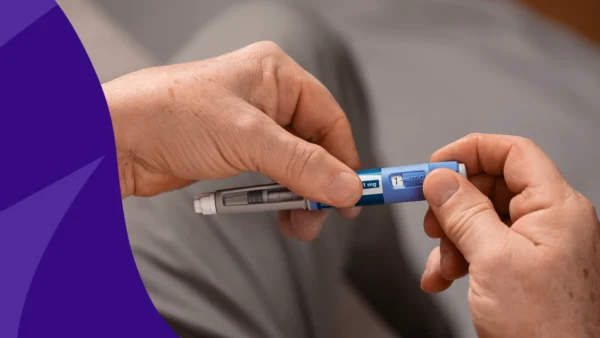
Mounjaro (name-brand of tirzepatide) is a prescription GLP-1 approved by the Food and Drug Administration (FDA) for one purpose: regulating blood sugar in people with Type 2 diabetes. Zepbound (another name-brand of tirzepatide) is FDA-approved for obstructive sleep apnea (OSA) and weight management. Essentially, Zepbound and Mounjaro are the same medication packaged under different brand names and are approved for different purposes. Yes, this can be confusing.
So, does Mounjaro treat sleep apnea? Technically, yes, but this would be an off-label use of the drug, and insurance often does not pay for off-label medications.
Save up to 80% on Mounjaro with SingleCare
Different pharmacies offer different prices for the same medication. SingleCare helps find the best price for you.


Does Mounjaro help with sleep apnea?
Tirzepatide, the active ingredient in Mounjaro, can improve symptoms of sleep apnea in people diagnosed with both moderate-to-severe OSA and obesity (body mass index, or BMI, of 30 or higher).
Glucagon-like peptide-1 agonists (GLP-1s) like Mounjaro address obesity, one of the main causes of sleep apnea, according to Chrissie Ott, MD, a board-certified internist, pediatrician, and metabolic health expert practicing in Portland. She says excess adipose tissue in the neck can press down on the airway during sleep, when a person is lying down and relaxed. “Extra pressure on the chest is also a component,” she says. “Just think if you had a 50-lb weight sitting on your chest as you were trying to sleep.”
Research shows that tirzepatide also reduces systemic inflammation and improves insulin sensitivity. These factors don’t directly cause sleep apnea. However, insulin resistance and inflammation-driving lifestyle habits, such as smoking and alcohol consumption, are linked to an increased risk of developing OSA. Given that, Mounjaro may decrease the risk of developing or worsening OSA.
Mounjaro and sleep apnea studies
Sleep apnea treatment research is ongoing. In late 2024, brand-name Zepbound (not Mounjaro) became the first FDA-approved medication for the treatment of moderate-to-severe obstructive sleep apnea.
In placebo-controlled clinical trials (SURMOUNT-OSA), people with moderate-to-severe obstructive sleep apnea on weekly doses of 10 milligrams (mg) or 15 mg experienced improvements in their apnea-hypopnea index (AHI) scores, a measure of sleep apnea severity. Specifically, patients experienced reduced:
- Frequency of breath-holding episodes per hour of sleep
- Frequency of shallow breathing episodes per hour of sleep.
- Body weight
- Hypoxic burden (oxygen dips)
- High blood pressure
Based on these results, researchers have concluded that a two-pronged approach of weight reduction and direct OSA treatment (such as CPAP therapy) may be the best way to improve or cure OSA.
Is Mounjaro approved for sleep apnea?
As of March 2026, name-brand Mounjaro is not FDA-approved for the treatment of sleep apnea. That’s why healthcare providers are more likely to prescribe name-brand Zepbound for sleep apnea (even though both of these medications are tirzepatide).
Dr. Ott is unsure why tirzepatide, sold as Zepbound, is FDA approved for OSA, but tirzepatide, sold as Mounjaro, is not. However, she notes that since the two medications contain identical active ingredients, Mounjaro could also be approved for OSA in the future. Once the brand-name patent for Mounjaro expires in the early 2030s, generic tirzepatide may also hit the market as an FDA-approved OSA treatment.
Navigating treatment options
Sleep apnea is a common problem that often dramatically negatively affects quality of life. It can cause snoring, morning headaches, and daytime sleepiness. It also causes sleep disruption for the bed partner. The first step to proper treatment is a proper diagnosis. Sleep apnea testing can be done in a clinic or at home, though it’s best to follow the recommendation of your healthcare provider.
Anyone who already has a sleep apnea diagnosis should discuss treatment options with their provider, who can offer personalized medical advice. Mounjaro may be an option, but insurance is more likely to cover Zepbound, as it is FDA-approved for OSA. If approved, Mounjaro or Zepound will likely be part of a more comprehensive treatment plan.
Other OSA treatments include:
- Continuous positive airway pressure therapy (CPAP machine)
- Orofacial physical therapy
- Oral nighttime appliance
- Surgery to remove physical obstructions
- Medication to address the result of poor sleep: daytime sleepiness (likely, Nuvigil or Provigil)
If someone has sleep apnea and obesity, losing weight often makes a world of difference. “Reaching a healthy weight is one of the main ways to decrease sleep apnea,” says Jessica Brantley-Lopez, RDN, registered dietitian and founder of The Eat Well Studio in Indio, California. She says lifestyle changes, such as cutting out alcohol or smoking, can also improve sleep apnea symptoms while improving overall health. She adds that patients can also improve nighttime breathing by sleeping on their sides or doing regular tongue exercises.
Mounjaro can cause significant weight loss, but Brantley-Lopez and Dr. Ott emphasize that it is not the only way to reduce body weight. Healthy eating and exercise can also play key roles.
“Whatever you do, definitely get your sleep apnea treated,” Dr. Ott says. “Untreated sleep apnea increases the risk of heart attacks, heart failure, stroke, and cognitive decline, among other things.”
The future of sleep apnea treatment
As mentioned above, sleep apnea research is ongoing. Over the last decade, there have been advances in weight-loss medications that also improve sleep apnea, as well as non-surgical OSA treatment, such as oral appliances that can be used during sleep.
Today, CPAP therapy remains the gold standard for sleep apnea. CPAP machines gently force air through a mask and into the throat during sleep to keep the airway open. The continuous flow of air is mild, but it is strong enough to keep the airway from collapsing, causing snoring, disordered breathing, and gasping.
For people with both OSA and obesity, weight loss can cause significant improvements in OSA symptoms. That’s always been true. With a new wave of weight-loss medications like Zepbound and Wegovy, there may also soon be more medications in the sleep apnea treatment space. Keep in touch with your healthcare provider to stay up to date on new and evolving sleep apnea treatments that might work for you and your lifestyle.
- Mounjaro (tirzepatide) injection, for subcutaneous use, Food and Drug Administration (2026)
- Zepbound (tirzepatide) injection, for subcutaneous use, Food and Drug Administration (2026)
- Tirzepatide for the treatment of obstructive sleep apnea and obesity, The New England Journal of Medicine (2024)
- Mounjaro® (tirzepatide) Injection: The first and only GIP and GLP-1 receptor agonist approved for Type 2 diabetes, Eli Lilly
- Anti-inflammatory effects of tirzepatide: a systematic review and meta-analysis, Reviews in Endocrine and Metabolic Disorders (2025)
- Tirzepatide prevents neurodegeneration through multiple molecular pathways, Journal of Translational Medicine (2024)
- Tirzepatide reduces body weight by increasing fat utilization via the central nervous system-adipose tissue axis in male mice, Diabetes, Obesity, and Metabolism (2025)
- Sleep apnea: Causes and risk factors, National Institutes of Health (2025)
- FDA approves first medication for Obstructive Sleep Apnea, Food and Drug Administration (2024)
- Tirzepatide on obstructive sleep apnea-related cardiometabolic risk: Secondary outcomes of the SURMOUNT-OSA randomized trial, Nature (2026)
- Effects of one-week tongue-task training on sleep apnea severity: A pilot study, Canadian Respiratory Journal (2015)
- Innovative treatments for adults with obstructive sleep apnea, Nature and Science of Sleep (2014)
- Treatments for obstructive sleep apnea: CPAP and beyond, Cleveland Clinic Journal of Medicine (2023)
- CPAP machine, Cleveland Clinic (2024)
- Medically accurate: SingleCare’s Medical Review Board analyzes all of our content to confirm it’s in line with current medical advice.
- Evidence-based: Our content is sourced from reputable U.S.-based healthcare professionals and peer-reviewed research.
- Trustworthy: All of SingleCare’s content goes through a multi-phase review process by our writers, editors, and Medical Board in order to provide clear and credible information.