





Key takeaways
Most eye changes after 55 are a normal part of aging, like struggling to focus on close-up objects or having a harder time seeing at night.
Some vision changes need a same-day visit to a healthcare provider, including sudden vision loss, sudden floaters or flashes, and a shadow over part of your vision.
Yearly dilated eye exams are a critical part of maintaining healthy vision after 55.


As you get older, signs of aging eyes often happen so gradually you may not even notice your vision is slowly changing … at first. Most eye changes after age 55 are normal, though they can be inconvenient, and usually aren’t a reason to feel alarmed. You might start holding a menu at arm’s length or using your phone’s flashlight to read in dim places. However, sudden changes to your vision can be warning signs of a serious condition. Here’s how to know which symptoms are normal and which changes should prompt a call to your eye care provider or optometrist.
Why your eyes change after 55
“After 55, several parts of the eye undergo gradual changes,” explains Neil Vadhar, MD, a board-certified ophthalmologist and fellowship-trained cornea, cataract, and laser refractive surgeon. “The lens becomes less flexible and can eventually become cloudy, which is why people may have more difficulty reading and eventually develop cataracts. The retina also becomes more vulnerable to age-related changes, which can contribute to conditions that affect vision, such as macular degeneration.” Age-related macular degeneration (AMD) is very common, with the risk increasing after age 55. Dry AMD tends to progress slowly, while wet AMD can lead to rapid vision loss.
“The cornea (the front surface of the eye) loses sensitivity and can become cloudier with age,” adds Karen Squier, OD, a professor of optometry and the chief of Low Vision Services at Southern College of Optometry. “The cloudiness of the lens can cause light to scatter, which can result in glare and reduced contrast sensitivity.” She adds that the lenses may also yellow with age, which can dull how you see colors.
“With age, the pupil gets smaller, a condition called miosis, and becomes less responsive to changes in lighting and near work,” Dr. Squier says. “This may cause people to have difficulty in dimmer illumination, as well as moving from indoor to outdoor lighting.”
The gradual changes that sneak up on you
You may adapt to certain vision changes as you age without even realizing they are happening. “Because these changes usually happen gradually, people may simply adjust by holding things farther away, using brighter lighting, or avoiding driving at night,” Dr. Vadhar explains. “But a gradual change in vision shouldn’t automatically be dismissed as normal aging. An eye exam can determine whether it’s simply an age-related change or something that needs treatment.”
Trouble focusing up close
Presbyopia is the medical term for when you have trouble focusing on things up close. This natural change is near-universal for most people, usually starting after 45. “Presbyopia is a common condition, and the patient may need a different prescription for near vision,” Dr. Squier says. If you’ve never had glasses, a pair of over-the-counter readers or a pocket magnifying glass might do the trick. “Alternatively, some people change the fonts on their phones or computers to a larger size so they don’t need to rely on a reading prescription,” Dr. Squier adds.
Needing more light and noticing more glare
Needing brighter light to read and having a harder time seeing at night are also common with age. However, glare, halos around headlights, and poor night vision may be early signs of cataracts, so mention these signs at your next eye exam. It’s worth mentioning to your vision provider to be sure you have the right prescription for your glasses or contact lenses.
“Another age-related change I see is difficulty in low lighting situations, which can be a combination of pupil size, cataract, and retinal/neural changes,” Dr. Squier says. “People may adapt by turning up the brightness on their smart technology screens, adjusting to a different wattage of lightbulbs, or using their phone’s flashlight.”
“Cataracts develop when the eye’s natural lens becomes cloudy, which can cause gradually worsening blur, glare, difficulty seeing at night, and faded colors,” Dr. Vadhar explains.
Dry, tired, or easily irritated eyes
Dry, tired, or easily irritated eyes can affect people of all ages, but those over 50 may experience it more frequently and with more noticeable impact on their vision. Having dry eyes often can harm quality of life and make it harder to see well if not treated.
It can be uncomfortable when your eyes don’t have adequate tear production and drainage, and unfortunately, that change is common with age. It happens for many reasons, including medication side effects, hormonal changes during menopause, and blinking less while looking at a screen. Your provider may recommend artificial tears to keep your eyes moist or reducing screen time to short bursts to reduce eye strain.
Warning signs that need urgent care
The following vision changes are not typical with normal aging and require immediate care.
Sudden floaters or flashes or light
Almost everyone develops some floaters with age. However, a sudden increase in floaters or an increase in flashes of light could signal a retinal tear or detachment. This symptom requires an urgent call to your healthcare provider for a same-day visit, or go to the emergency room if you can’t be seen quickly.
Straight lines that look wavy or bent
If straight lines appear wavy or bent (also known as metamorphopsia), it could be a sign of wet macular degeneration and is worth an urgent call for a same-day visit. This condition involves fluid or blood leaking into the macula, which is the center of the retina, and can quickly blur or distort your central vision.
Sudden blurriness, vision loss, or double vision
Sudden vision loss could mean a stroke, a detached retina, a blocked blood vessel in the eye, or giant cell arteritis (inflamed arteries that can cut off blood flow to the eye). New double vision can indicate a stroke or another nerve problem. These are emergency medical conditions requiring immediate care the day it occurs.
“Sudden vision loss is an emergency,” Dr. Vadhar cautions. “Even if the vision improves on its own, the person should seek urgent medical attention because some causes are very time-sensitive.”
A shadow or curtain across part of your vision
A shadow or curtain across part of your vision (especially your peripheral vision) is a sign of several serious conditions, including retinal detachment, impending stroke stemming from a blockage to the main artery in the neck, a viral retinal infection, or a blocked blood vessel in the eye. Do not wait to have this evaluated because time is an important factor with any of these emergencies.
There are other important things for one to take note of, according to Dr. Squier. “Is it one eye or both? Does it improve with blinking? Are you experiencing any associated symptoms, such as dizziness, headache, weakness, or speech difficulties? Do you have any new history such as a new medication or new systemic diagnosis [like high blood pressure or high cholesterol]?”
Why a dilated eye exam catches problems before you’d notice
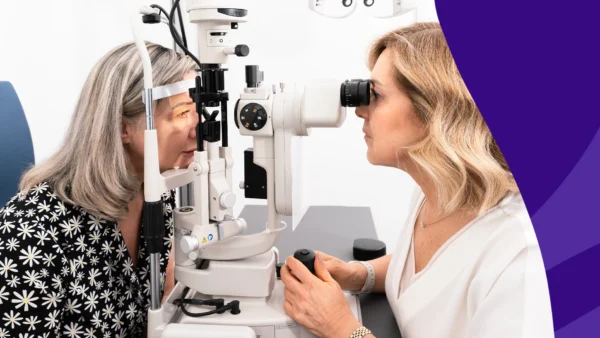
The National Institute on Aging recommends yearly dilated eye exams for people over 50 to catch any concerning vision problems while they are still in an early and treatable stage. Dilation causes the pupil to widen, making it easier for your provider to see inside your eyes. The dilation may cause blurry vision and sensitivity to light for a short period after the exam, so bring sunglasses and have someone drive you to and from the appointment.
“A dilated eye exam can help detect diabetic retinopathy, hypertensive retinopathy [when high blood pressure damages the blood vessels in the retina], glaucoma, and early cataracts,” Dr. Squier says. It can also catch early signs of macular degeneration.
“A patient may feel that their vision is perfectly normal while there are already changes occurring in the retina or optic nerve,” Dr. Vadhar cautions. “That’s why routine eye examinations become particularly important as we get older.”
What eye care costs after 55 and how to save
Without insurance, a comprehensive eye exam costs around $110 on average, ranging from about $50 to more than $250. However, the need for more specialized care as you age can increase costs. “It’s not necessarily that an eye exam costs more simply because someone is over 55,” Dr. Vadhar says. “It’s that eye diseases become much more common with age, so people are more likely to need additional testing, closer monitoring, and eventually treatment or surgery.”
A SingleCare coupon can lower the cost of related products, such as PreserVision AREDS supplements or prescription eye drops like cyclosporine.
Frequently asked questions
Why does my vision keep getting worse the older I get?
Some vision changes such as trouble seeing objects up close and a reduction in night vision are normal with aging. However, worsening vision could also indicate cataracts, glaucoma, or macular degeneration, which are serious and more common with age.
Can aging eyesight be improved or reversed?
“Some aspects of aging are unavoidable, but many of the vision problems associated with aging are very treatable,” Dr. Vadhar says. “Reading glasses can compensate for presbyopia, and cataract surgery can replace a cloudy lens with a clear artificial lens and often dramatically improve vision.”
Is it normal to see floaters sometimes, or does it always mean something is wrong?
Occasional and a few long-standing floaters can be normal for most people, but a sudden increase in floaters, especially with sudden flashes or shadows, may be a medical emergency.
Can stress or too much screen time cause sudden vision changes?
Stress and too much screen time may cause temporary vision changes like blurriness, eye strain, or eye fatigue. Certain sudden vision changes, such as sudden floaters or a shadow across your vision, can be more serious and require immediate medical attention.
Does insurance or Medicare cover eye exams after 55?
Original Medicare doesn’t cover routine eye exams for glasses or contacts. But Medicare Part B does cover annual diabetic eye exams if you have diabetes and glaucoma tests if you’re at high risk. Some Medicare Advantage plans (Part C) also include routine vision coverage.
The bottom line
Most gradual vision changes after age 55 are a normal and manageable part of aging. There are ways to reduce the impact of these changes, including a stronger eyeglass or contact lens prescription, lubricating eye drops, brighter lights, and regular breaks from the screen. Knowing the short list of urgent signs, such as sudden vision loss, wavy lines, and double vision, is what will protect your sight, not worrying about the typical vision changes that occur as we age.
If you have concerns or questions about age-related vision changes, contact your vision provider. If you experience any of the alarming vision changes outlined above, seek medical care right away.
- Aging: A predisposition to dry eyes, Journal of Ophthalmology (2014)
- Aging and your eyes, National Institute on Aging (2021)
- Age-related macular degeneration (AMD), National Eye Institute (2021)
- Cataracts, National Eye Institute (2026)
- Dry eye, National Eye Institute (2025)
- Floaters, National Eye Institute (2024)
- Presbyopia, National Eye Institute (2024)
- Shadow or a gray or dark curtain in vision, American Academy of Ophthalmology (2026)
- Sudden vision loss, JAMA (2017)
- Wet age-related macular degeneration (AMD), StatPearls (2024)
- Eye exams (routine), Medicare.gov
- Glaucoma tests, Medicare.gov
- How much does an eye exam cost?, All About Vision (2026)
Featured Experts:
- Neil Vadhar, MD, a board-certified ophthalmologist and fellowship-trained cornea, cataract, and laser refractive surgeon.
- Karen Squier, OD, a professor of optometry and the chief of Low Vision Services at Southern College of Optometry.
- Medically accurate: SingleCare’s Medical Review Board analyzes all of our content to confirm it’s in line with current medical advice.
- Evidence-based: Our content is sourced from reputable U.S.-based healthcare professionals and peer-reviewed research.
- Trustworthy: All of SingleCare’s content goes through a multi-phase review process by our writers, editors, and Medical Board in order to provide clear and credible information.