What causes eye pain? Related conditions and treatments


Overview: What does eye pain feel like?
Most people will feel eye pain at some point in their lives. Eye pain can range from minor discomfort to severe pain, a rough or gritty feeling on the surface of the eye, or sharp, throbbing pain at the back of the eye. One eye or both might be irritated or painful. Sometimes other parts of the head will hurt, like the sinuses. Sometimes the pain will envelop the entire head. Sometimes the pain ends within a few minutes or hours. Other times it may persist without letup. With so many different ways for the eye to hurt, it’s immediately apparent that many causes may be at work.
Key takeaways:
Eye pain is a common symptom that may be caused by foreign bodies, irritants, allergies, dry eye, contact lenses, styes (caused by inflamed or infected oil gland or eyelash), infections, scratches on the eyeball, eye injuries, swelling in or around the eye, angle-closure glaucoma, optic nerve swelling, sinus infections, and headaches.
Typically, eye pain does not require immediate medical attention except in cases of severe eye pain, blurred vision, fever, light sensitivity, nausea, vomiting, blood or pus in the eye, or if the pain is caused by an injury or chemical.
Eye pain generally does not require treatment except in some cases of severe pain, injury, chemical splashes, glaucoma, swelling, or infections. It typically resolves without treatment but some causes may require treatment to improve.
Treatment of eye pain varies by cause and may include lubricating eye drops, over-the-counter pain relievers, allergy medications, topical corticosteroids, antihistamines, antibiotic eye drops, antifungal eye drops, antiviral eye drops, eye pressure eye drops, surgery, or home treatments.
Eye pain can be managed with home remedies or over-the-counter analgesics to relieve pain.
Save on prescriptions for dry eye, allergies, eye infections, eye swelling, glaucoma, and migraine headaches with a SingleCare prescription discount card.
What causes eye pain?
Eye pain can result from a few general categories of problems: eyeball surface irritation, injury, swelling, infection, high fluid pressure in the eye, or nerve problems.
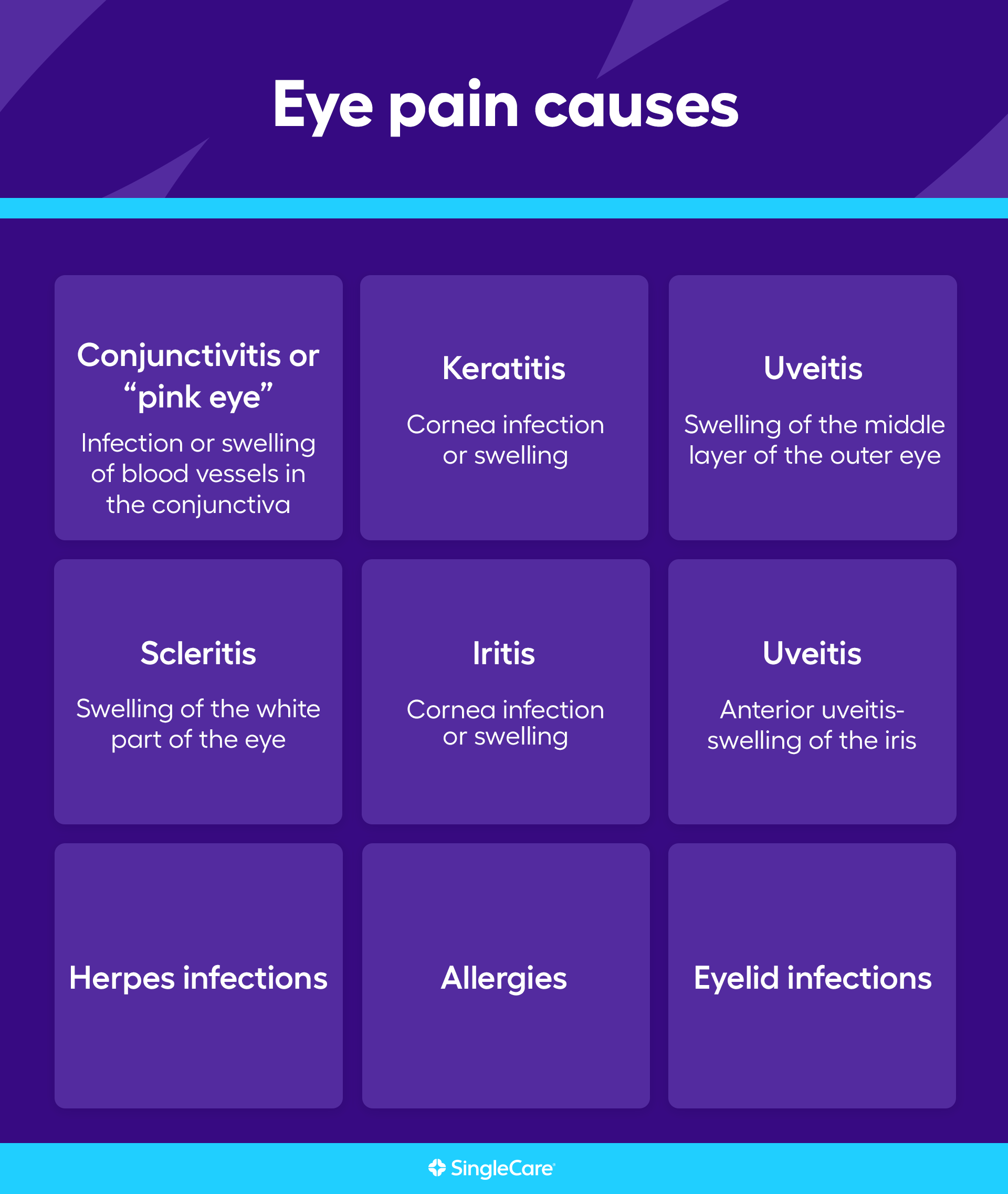
Eye irritation can be due to:
Dry eye
A foreign body
Irritants like dust, smoke, or pollution
Allergens
Contact lenses
A stye or chalazion (eyelid cyst)
Eyelid defects
Blepharitis (swelling of the eyelids)
Eye injuries can be caused by:
Foreign objects
Contact lenses
Chemicals
Corneal abrasion (scratching of the cornea)
Corneal laceration (a cut on the cornea)
Corneal ulcer (an open sore on the cornea)
Surgery and its complications
Swelling and infections can cause eye pain including:
Conjunctivitis or “pink eye” (infection or swelling of blood vessels in the conjunctiva)
Keratitis (cornea infection or swelling)
Uveitis (swelling of the middle layer of the outer eye)
Scleritis (swelling of the white part of the eye)
Iritis (anterior uveitis-swelling of the iris)
Herpes infections
Eyelid infection
Eye socket infection (orbital cellulitis)
Allergies
Prescription drugs
Elevated eye pressure can cause eye pain. It can also cause swelling of the optic nerve (optic neuritis), another possible cause of eye pain that can be brought on by autoimmune disorders or bacterial, or viral infections.
Neurological problems that can cause eye pain include:
Optic neuritis
Migraine headaches
Cluster headaches
Microvascular cranial nerve palsy (a medical condition common to people with diabetes or high blood pressure that decreases the ability to move the eyes)
Should I be worried about eye pain?
Eye pain or eye discomfort is usually mild and temporary. The most common causes are non-threatening eye conditions, like surface irritation or dry eye. The pain usually fades within a day. Other times, eye pain can be either very painful or a sign of a serious medical condition.
See an optometrist, doctor, or ophthalmologist (eye doctor) if:
The pain is hard to take
The pain doesn’t go away after a few days
There are signs of infection like red eye or discharge
The eye is scratched or injured in some way
Contact lenses are being worn
Vision isn’t the same as it usually is
Eye surgery or an eye injection has recently been performed
The immune system is weakened by illness or prescription drugs
Emergency medical attention is needed if:
The pain is severe
Vision changes suddenly or dramatically
The eye is sensitive to light
The eye is badly injured
The eye has a foreign object that can’t be washed out
A noxious chemical splashed on the eye is causing the pain
The eye or areas around the eye are swollen
There are other signs of infection like fever
There’s also nausea and vomiting
Blood or pus is oozing from the eye
Eye movement is restricted or double vision is experienced
These are a lot of rules to remember. As a general rule of thumb, if you’re worried, go to urgent care or see a healthcare professional. If the pain is severe, go to the emergency room. Left untreated, a serious cause of eye pain could result in permanent loss of vision in that eye.
How is the cause of eye pain diagnosed?
There are many causes of eye pain. As a first step, a healthcare professional will do a physical examination of the eye and take a medical history. The eye exam may be thorough and involve one or more tests:
A vision test
Examination of the eye using a slit-lamp device or ophthalmoscope
To examine the inside of the eye, pupil-dilating eye drops may be used
To check for cuts or scratches on the front of the eye, a dye might be applied to the surface of the eye to make the tears or rips visible
Checking eye pressure using a tonometer (an anesthetic and a dye may be applied to the surface of the eye, but the eye won’t feel numb)
Taking a photograph of the retina
Be prepared to answer questions about any changes to vision, any new floaters in the eye, drugs being used, and the nature of the pain.
Is eye pain contagious?
Eye pain is not contagious. However, bacterial and viral infections are. Some eye infections like viral and bacterial pink eye are highly contagious. Some ocular infections are spread from other infections a person may get. For example, herpes eye infections are typically spread by touching a cold sore and then touching the eyes with contaminated fingers, while orbital cellulitis is usually caused by bacterial sinus infections or upper respiratory infections.
If there’s an eye infection, help to prevent spreading it by following a few general rules:
Don’t touch or rub the eyes
Use hand sanitizer regularly
Wash any discharge from the eye with disposable cotton balls or cloths
Do not share personal items like towels, utensils, or face makeup
Wash clothes, towels, pillowcases, and bed sheets in hot water
Stay out of swimming pools
When using eye drops, don’t touch the bottle to the eye or eyelid
Once the infection has passed:
Throw away any contact lenses, contact lens cases, contact lens solutions, eye drops, makeup, and makeup brushes used while infected
Clean glasses thoroughly
Make sure all clothes that were worn as well as bed sheets and pillowcases that were used during the infection are washed in hot water and detergent
These measures will help prevent getting the infection again.
How long does eye pain last?
Eye pain will last for as long as the cause. For minor cases, eye discomfort or pain should resolve in about a day. For more serious cases, the eye pain will persist for several days or until the cause is treated.
How to stop eye pain
Every person with eye pain will want to know how to treat eye pain. Usually, little is required outside of pain relievers or a bit of eye care. When the cause is serious, then the cause needs to be addressed. Because eye pain is caused by many different medical problems, eye pain treatments can vary widely. These include prescription drugs like antibiotics, antifungal medications, antiviral medications, steroids, antihistamines, and eye pressure medications. Most will be applied topically as eye drops, but some medications may need to be taken orally. Some problems may only be resolvable with surgery.
Meanwhile, how to get rid of eye pain may involve a few simple remedies:
Over-the-counter pain relievers can help
Use warm compresses over the eye
Keep lights turned low
Try to avoid computer or TV screens
Use artificial tears if the eye surface is dry
Avoid contact lenses
Avoid eye makeup
RELATED: What are eye drops? Uses, warnings, and interactions
Living with eye pain
Chronic eye pain is a very rare condition. However, dry eye, allergies, eye strain, and some other causes of eye pain may be chronic or keep recurring. In those cases, a few tips can help manage those conditions and keep eye pain to a minimum:
Use artificial tears or other lubricating eye drops regularly throughout the day
Take regular breaks from computer or TV screens
Keep lights turned down low
Use glasses rather than contact lenses
Use a warm or cold compress to relax the eyes
Avoid rubbing the eyes
Avoid eye makeup
RELATED: What is lubricating eye drops? Uses, warnings, and interactions
Most importantly, see a healthcare professional if you’re worried
If the eye hurts and there’s any reason to worry about it, see a healthcare professional. Protecting eye health is a priority. Some situations will require urgent or emergency medical help. These include severe pain, vision problems, light sensitivity, bad infections, inability to move the eye, bad injuries, or noxious chemicals splashed onto the eye. Only a healthcare professional can definitively determine the eye problem and how best to manage it to preserve vision.
RELATED: Eye health 101: how to protect vision and keep your eyes healthy
FAQs about the causes of eye pain
What does it mean when only one eye hurts?
A single painful eye may have many causes from minor, temporary problems to more serious disorders. The pain could be caused by a foreign body, contact lens, a stye, a scratch on the surface of the eyeball, injury, swollen eyelid, infection, cluster headache, a chemical splash, prescription eye drops, or swelling. As with pain in both eyes, see a healthcare professional if there are signs of an infection, severe pain, vision changes, or any suspicion that the injury might be serious.
Is eye pain serious?
Eye pain should be considered serious if the pain is severe, the vision changes in the eye, there are other signs of infection, vomiting, or the cause of the pain is due to injury or chemicals. Urgent medical care is needed in those cases. If the vision has changed dramatically, or there’s a bad injury, or the eye has been splashed with dangerous chemicals, go to an emergency room.
Can eye pain be caused by stress?
Stress and anxiety do not directly cause eye pain. Eye pain results from a possible injury to tissues or nerve problems. However, stress and anxiety can cause or contribute to problems that do produce eye pain like dry eyes, eye strain, migraines, and elevated eye pressure.
What’s next? Additional resources for people with eye pain
Test and diagnostics
Eye exam, Mayo Clinic
Glaucoma tests, Cleveland Clinic
Treatments
Blepharitis treatments and medications, SingleCare
Glaucoma treatments and medications, SingleCare
Pink eye treatments and medications, SingleCare
Pink eye vs. allergies: compare types of pink eye, SingleCare
Stye treatments and medications, SingleCare
Scientific studies and clinical trials
Acute emotional stress as a trigger for intraocular pressure elevation in glaucoma, BMC Ophthalmology
Psychological contribution to understanding the nature of dry eye disease: a cross-sectional study of anxiety sensitivity and dry eyes, Health Psychology and Behavioral Medicine
What causes eye pain?, Current Ophthalmology Reports
More information on related health conditions
Allergy treatments and medications, SingleCare
Migraine medications and treatments, SingleCare
Subscribe to our savings newsletter
Health education, drug info, wellness & more
By clicking 'Subscribe', I agree to SingleCare's Terms & Conditions.








