




 Search for articles or Rx savings


Key takeaways
Oral antihistamines, including Zyrtec, Benadryl, and Allegra, can be given to cats for allergy symptoms like itchy skin, atopic dermatitis, sneezing, and upset stomach.
Cats will need smaller doses of these medications, and it’s essential to discuss dosage and dosing schedule with your cat’s veterinarian.
Medications that contain both antihistamines and cold medication, or antihistamines and pain medication, should not be given to cats. These ingredients can be toxic to cats.


Itchy, irritated skin. Sneezing, coughing, wheezing. Gastrointestinal upset. Just like humans, cats can experience uncomfortable and irritating allergies, too. If your feline friend is experiencing allergy symptoms, you likely want to know whether they can take an over-the-counter antihistamine, such as Zyrtec, Allegra, or Benadryl. You may want to know what the best antihistamine for cats is, and how it should be administered.
Two veterinarians explain everything you need to know about antihistamines for cats, in what circumstances you would give a cat an antihistamine, and how to ensure the antihistamine is given safely and comfortably for your furry sweetheart.
Can your cat take antihistamines?
What should you do if your cat has signs of an allergic reaction, such as itching, inflamed skin, sneezing, wheezing, a runny nose, or vomiting/diarrhea? Can you give a cat an allergy medicine like an antihistamine?
The answer is yes, cats can generally take antihistamines for allergy relief, according to Hilary Humm-Beatty, DVM, veterinary consultant at Embrace Pet Insurance. “As with any medication, the choice of medication and dosage should be determined in consultation with your cat’s veterinarian,” Dr. Humm-Beatty advises.
Whether or not a cat can take an antihistamine “absolutely depends on the individual cat’s health status,” says Sabrina Kong, DVM. veterinarian at WeLoveDoodles. Factors that your feline’s vet might consider include age, any pre-existing conditions (especially kidney or liver disease), and other medications they’re currently taking.
“What works for one cat may be harmful to another, which is why professional guidance is non-negotiable,” Dr. Kong emphasizes.
When do cats need antihistamines?
The main reason a veterinarian might suggest an antihistamine for a cat is an allergy or another inflammatory condition. Cats can experience environmental allergens, food allergies, and allergic asthma. During an allergic reaction, a cat’s symptoms can include itchiness and scratching, skin inflammation, dermatitis, sneezing/wheezing, vomiting and diarrhea, and overgrooming (licking themselves more than usual).
But allergies and allergy symptoms aren’t the only situations where taking an antihistamine may be helpful.
The most common use of antihistamines in cats is to treat environmental or seasonal allergies, which typically cause skin itching or sneezing, according to Dr. Kong. “They’re also used for insect bite reactions, as part of mast cell tumor management, and occasionally for mild vaccine reactions,” she explains.
Also, although some vets prescribe antihistamines for certain respiratory issues, they’re less effective for true asthma, Dr. Kong notes.
Which human antihistamines are safe for cats?
When appropriate and recommended by a veterinarian, cats can take the same antihistamines that humans take. But that doesn’t mean that cats should take them the same way. It’s very important to follow your veterinarian’s instructions as cats need different doses of human antihistamines. It’s also important that the antihistamines don’t contain any other ingredients that might be unsafe for cats.
Here’s what to know about the most commonly used antihistamines for cats.
Allegra (fexofenadine)
Allegra is a second-generation option that’s often used for cats. Allegra is “good for cats with mild allergies,” Dr. Kong says. It’s typically dosed at 10-25 mg per cat once daily, Dr. Kong shares.
Benadryl (diphenhydramine)
Benadryl is an older, first-generation antihistamine commonly used in cats. It’s often given to cats when they have a sudden allergic reaction, like from a bee sting. It can also treat a runny nose, sneezing, and itching. Typical dosing is about 1mg per pound of your cat’s weight, every 8-12 hours. For example, a 12-pound cat would take about half of an adult 25 mg tablet in an 8 to 12 hour period.
Chlor-Trimeton (chlorpheniramine)
Chlorpheniramine is another first-generation antihistamine sometimes given to cats. It’s usually dosed at 2-4 mg per cat twice daily, according to Dr. Kong. “It can cause drowsiness in some cats,” Dr. Kong notes.
Zyrtec (cetirizine)
Zyrtec is another second-generation antihistamine that’s often used for skin allergies in cats, according to Dr. Kong. “It causes less sedation than older drugs,” Dr. Kong says, who adds that Zyrtec for cats is typically dosed at 2.5-5 mg per cat, once daily.
Antihistamines that are not safe for cats
Most antihistamines are safe for cats, though you should only give your cat an antihistamine after consulting with your cat’s veterinarian. However, there are certain ingredients in medications often combined with antihistamines that you should not give to your cat.
Antihistamines with decongestants
Sometimes antihistamines are found in cold medications, and certain active ingredients in cold medications are dangerous for cats. “Never use products containing pseudoephedrine or phenylephrine (common in “cold” formulas) since these are highly toxic to cats,” says Dr. Kong.
Antihistamines with acetaminophen or other pain relievers
Additionally, sometimes antihistamines are found in products that also contain pain relievers. “Always check labels for acetaminophen or other pain relievers, which are deadly to cats,” Dr. Kong warns. It’s very important not to give these to your cat.
Considerations before giving your cat antihistamines
In addition to staying away from antihistamines that contain pseudoephedrine, phenylephrine, or pain relievers, Dr. Kong recommends avoiding long-acting/extended-release formulations, which can be dangerous for cats. Likewise, stay in touch with your veterinarian if your cat is taking an antihistamine long-term. “Long-term use of any antihistamine should be monitored by a vet to watch for potential effects,” Dr. Kong says.
Dr. Humm-Beatty says that when giving your cat an antihistamine, it’s important to keep in mind that results may take some time. “It may take up to 10 days for your cat to respond to antihistamines,” she says. Moreover, you want to be sure that you address all causes of your cat’s allergies and manage the allergen responsible for the allergic reaction in the first place.
“Not all allergies will respond to antihistamines alone,” Dr. Humm-Beatty says. “For example, if your cat has a flea allergy, it is essential to eradicate the fleas on the cat and in the environment. Antihistamines alone will not help with flea allergies.” The same is true of food allergies, and she recommends working with your vet to run a food allergy trial if you think that’s what’s causing your cat’s allergic reaction.
Other considerations to keep in mind when giving a cat an antihistamine include:
- Work with your veterinarian to determine proper dosing for antihistamines, remembering that cats will require smaller doses than humans
- Monitor any side effects, including drowsiness, unsteadiness, or digestive upset
- Only take the specific antihistamine your veterinarian recommended for your cat
- Don’t take the antihistamine on a long-term basis without consulting your veterinarian
Administering antihistamines to your cat
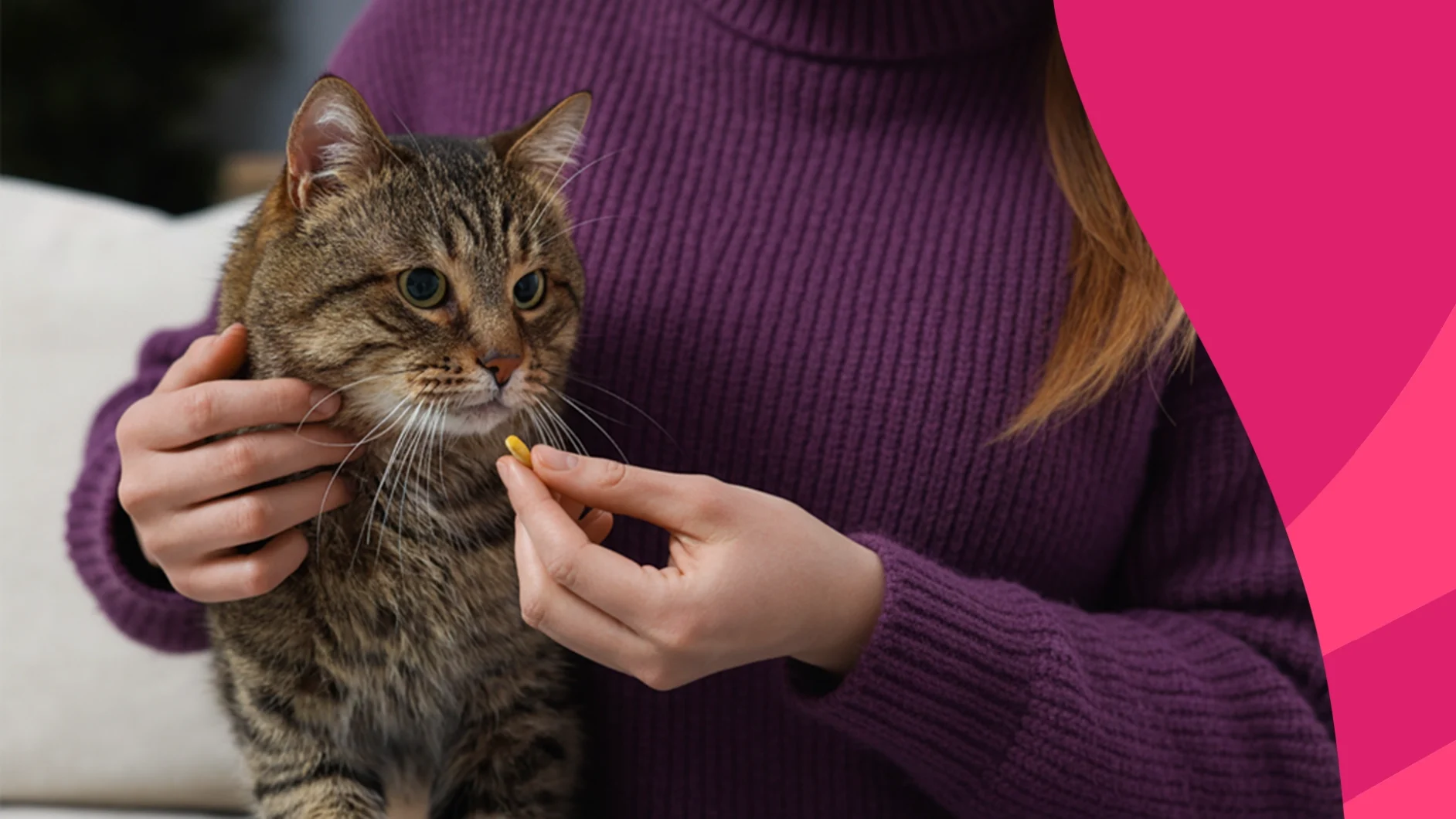
There are specific feline-friendly ways to give medications to cats. “Medications for cats can be administered as pills, a treat compounded into a soft chew, a flavored treat, a liquid tablet, or ointments,” says Dr. Humm-Beatty.
It can be challenging at times to give a cat medication, and patience is key, Dr. Kong emphasizes. “For pills, I recommend ‘pill pockets’ or wrapping the tablet in a small amount of a soft treat like cream cheese or butter,” Dr. Kong says. “Liquid formulations (compounded into tasty flavors by a veterinary pharmacy) are often easier for cats.”
Dr. Kong also urges cat owners to always end a medication administration session with a high-value treat or reward, so that you create a positive association for your cat. Also, never force the medication on your cat, since this can create lasting fear, Dr. Kong underscores.
Other ways to manage cat allergies
Antihistamines aren’t the only allergy treatments for cats. According to Dr. Kong, some alternative treatments for cat allergies include:
- Essential fatty acid supplements (omega-3s) to reduce skin inflammation
- Hypoallergenic diets for suspected food allergies
- Immunotherapy (allergy shots)
- Prescription medications like cyclosporine or corticosteroids for more severe cases
- Environmental control (using air purifiers and frequent cleaning) to help reduce allergens
- Allergy testing to determine what’s causing your cat’s allergies
The type of allergy your cat has—whether a food allergy, seasonal allergy, or environmental allergy—will determine the best kind of treatment. “Consult with your veterinarian for a specific, safe recommendation for your cat,” Dr. Humm-Beatty concludes.
- 2023 AAHA management of allergic skin diseases in dogs and cats guidelines, Journal of the American Animal Hospital Association (2023)
- Allergies in cats, VCA Animal Hospitals (2026)
- Is it safe to give your pet an antihistamine?, ASPCA (2022)