




 Search for articles or Rx savings


Key takeaways
Dexcom and FreeStyle Libre are continuous glucose monitors (CGMs) that offer benefits such as constant glucose monitoring, detailed data for healthcare professionals, and reduced need for finger sticks. However, they differ in cost, warm-up time, and sensor longevity.
Both Dexcom and FreeStyle Libre require a prescription and can monitor glucose in individuals with Type 1, Type 2, or gestational diabetes. Dexcom G6 and G7 sensors last 10 days, and FreeStyle Libre 2 Plus and 3 Plus sensors last 15 days.
Dexcom CGMs automatically provide glucose readings every 5 minutes. FreeStyle CGMs read glucose every minute.


People with Type 1 or Type 2 diabetes monitor their blood sugar at home. Some use a blood glucose meter, while others prefer a continuous glucose monitor (CGM). Two popular CGM systems are the Dexcom and FreeStyle Libre models.
Diabetes is associated with various long-term complications, such as nerve damage, kidney problems, vision loss, and others. Keeping glucose levels in the target (goal) range as much as possible helps prevent or delay these long-term complications. A CGM lets patients monitor glucose levels constantly.
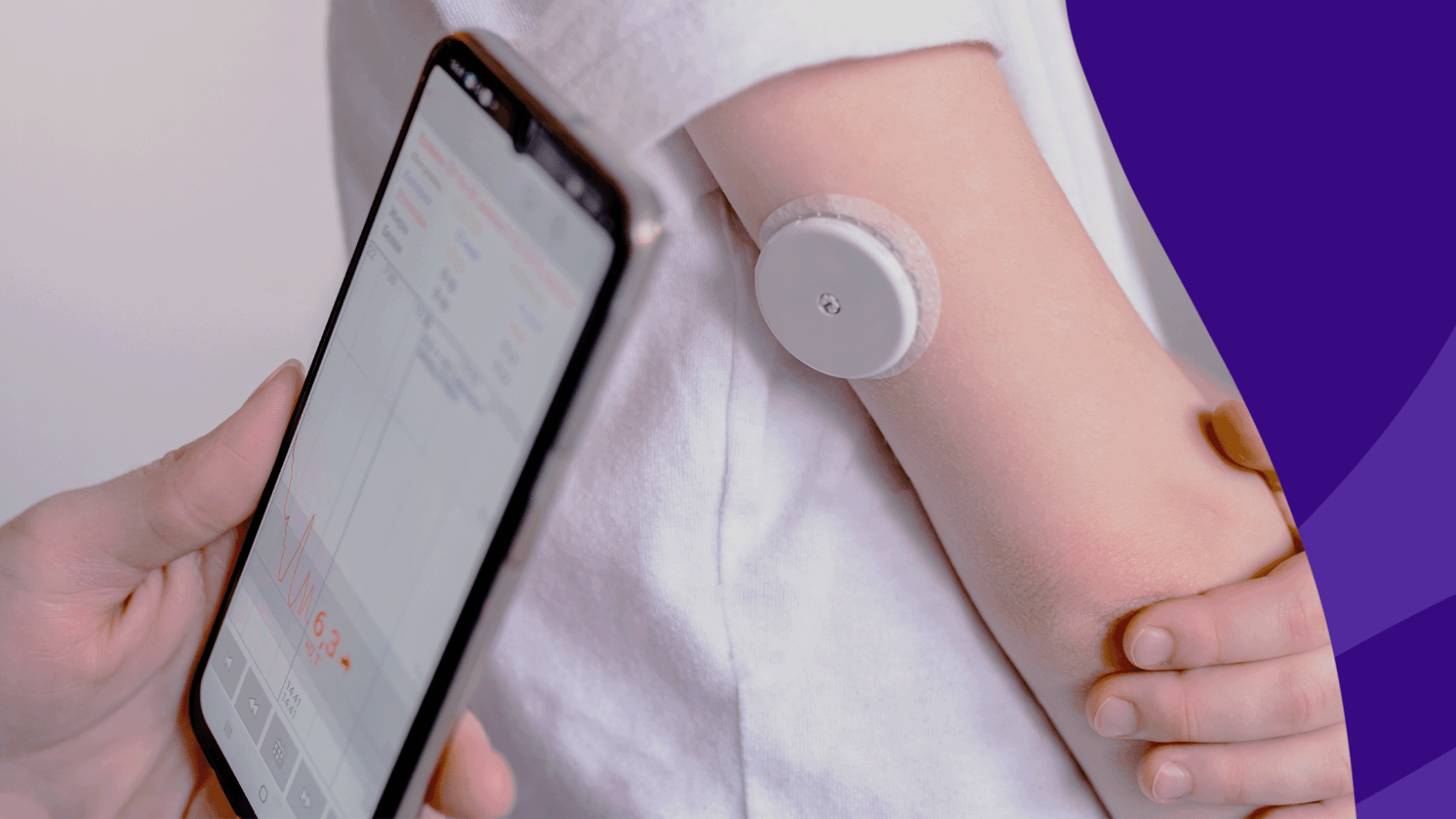
While a blood glucose meter analyzes glucose levels from the blood, a CGM analyzes glucose from interstitial fluid, the spaces around cells just beneath the skin. With the CGM, a small sensor (with a transmitter) is inserted into the skin, and the transmitter sends data to a receiver or mobile app on your smartphone.
While Dexcom and FreeStyle Libre CGMs are similar in that they continuously monitor glucose, they also have some differences. Continue reading to learn more about both types of CGMs.
A word of caution: although this article will outline basic information, similarities, and differences between these CGMs, it is essential to read the full user guide for the CGM you choose. The user guide contains detailed information that is specific to the model you use.
CGM benefits
Regardless of which CGM you choose, there are many benefits to using a CGM, including:
- Seeing a complete picture of how glucose levels change over time and how they are affected by factors like food, exercise, illness, and stress
- Providing detailed information that your healthcare professional can download and analyze for patterns and trends, which helps guide treatment
- Alerting you to high and low glucose levels so you can act right away to get your glucose back into the target range
- Significantly reducing finger sticks
Dexcom and FreeStyle Libre uses
Both the Dexcom and FreeStyle Libre require a prescription. All models of these CGMs can be used to monitor glucose in people with Type 1 diabetes, Type 2 diabetes, or gestational diabetes. Additionally, anyone who needs to or wants to monitor glucose can consult their healthcare professional for a prescription for a CGM. For example, people with prediabetes have blood sugar that is elevated, but not high enough for a diabetes diagnosis. In these individuals, using a CGM can be very helpful in seeing the effects of certain foods, exercise, and other factors. There is also the Dexcom Stelo available, which is a CGM that can be purchased without a prescription through the Dexcom website. This product is for adults 18 years and older who do not use insulin. For this article, we will discuss the Dexcom and Libre products available by prescription.
Dexcom vs. Freestyle Libre uses |
||
|---|---|---|
| Condition | Dexcom | FreeStyle Libre |
| Type 1 diabetes continuous glucose monitoring | Yes | Yes |
| Type 2 diabetes continuous glucose monitoring | Yes | Yes |
| Gestational diabetes monitoring | Yes | Yes |
Dexcom and FreeStyle Libre Models
Dexcom is available as:
- Dexcom G6 (this version will eventually be phased out, but an expected date is not yet available)
- Dexcom G7
FreeStyle Libre, made by Abbott, is available as:
Previous versions of the Libre are being phased out.
How long does each sensor last, and is there a warm-up period?
Each Dexcom G6 sensor lasts for 10 days. The transmitter (which sends the data) must be removed from the sensor with each sensor change and placed into a new sensor, which lasts for 90 days. The app will alert you when it’s time to change your sensor and/or transmitter. Once inserted, the Dexcom G6 takes two hours to warm up. If you need to check your sugar during this time, you can use your blood glucose meter.
With the Dexcom G7, the sensor and transmitter are one unit. The G7 is about 60% smaller than the G6 sensor. When you change your sensor, throw it out and apply a new sensor/transmitter unit. You do not need to remove the transmitter and move it to a new sensor. The G7 takes 30 minutes to warm up (it starts warming up as soon as it is applied) and lasts 10 days, plus an additional 12-hour grace period.
Once scanned, FreeStyle Libre systems take one hour to warm up and last 15 days.
Additionally, Dexcom and FreeStyle CGMs are waterproof. You can swim or shower with your CGM on.
Comparing Dexcom vs. Freestyle Libre sensors |
||||
|---|---|---|---|---|
| Dexcom G6 | Dexcom G7 | FreeStyle Libre 2 Plus | FreeStyle Libre 3 Plus | |
| How long does the sensor last? | 10 days (transmitter lasts 90 days and must be moved to the new sensor with each sensor change) | 10 days (transmitter and sensor are one unit) + 12-hour grace period | 15 days | 15 days |
| How long is the warm-up period? | 2 hours | 30 minutes | 1 hour | 1 hour |
| Is the CGM waterproof? |
Yes | Yes | Yes | Yes |
What age can Dexcom and FreeStyle Libre be used?
The Dexcom G6 or Dexcom G7 can be used in adults and children two years and older. A newer Dexcom G7 15-day sensor is expected to be available later this year, but will only be approved in adults 18 years and older with Type 1, Type 2, or gestational diabetes. The existing G7 will continue to be available for adults and children two years and older.
The FreeStyle Libre 2 Plus and 3 Plus systems can be used in adults and children aged two years and older.
Where do I place the sensor on my skin?
Regardless of which CGM you use, it’s best to rotate sites (use a new site) whenever you change your sensor. This allows your skin to heal. Also, choose a site that’s at least three inches from your pump site or any injection sites and away from any scarring, tattoos, or irritation. Choose a site that is unlikely to be bumped or lain on while sleeping.
The Dexcom G6 sensor is approved to be used on:
- The abdomen (ages 2 years and older)
- The upper buttocks (ages 2 to 17 years)
The Dexcom G7 sensor is approved to be used on:
- The back of the upper arm
- The upper buttocks (ages 2 to 6 years)
The FreeStyle Libre 2 Plus and 3 Plus sensors are approved to be used on the back of the upper arm. However, there has been some research that shows other sites can also be accurate, even though they are not approved for use. You can ask your healthcare provider for medical guidance if you want to wear a sensor in a location not recommended by the manufacturer.
How often do Dexcom and FreeStyle Libre check glucose?
Both Dexcom models automatically provide updated glucose readings every 5 minutes. The reading is sent to the receiver, smartphone app, and/or compatible insulin pump.
The FreeStyle Libre 2 Plus and 3 Plus automatically send updated glucose readings to the receiver (reader), smartphone app, and/or compatible insulin pump every minute.
CGMs have a few minutes of “lag time,” meaning it can take a few minutes for the glucose level in the interstitial fluid to catch up with your blood glucose. Any time you think that the CGM data may not be accurate, you should do a finger stick just to make sure that the CGM data is correct. An example would be if you feel symptoms of hypoglycemia (low blood sugar) like dizziness, shakiness, and hunger, but your glucose data shows a normal or high reading. You may also need to manually check your blood sugar when your CGM is warming up.
Note that not all insulin pumps are compatible with all CGMs. For up-to-date information about CGM and pump compatibility with your specific devices, contact Dexcom, Abbott, or your pump manufacturer.
What kind of alarms do the Dexcom and FreeStyle Libre have?
Read the user manual thoroughly before using your CGM. It is very important to familiarize yourself with the alarm settings and features of your CGM. Alarms enable you to keep tight control over your glucose. They can help you react to a high sugar or remind you to eat something when you start to go low. You can often “catch” a low before it gets too low and prevent dangerous lows.
Examples of alarm features include:
Dexcom G6 and G7:
- You can customize alert settings and sounds.
- You can turn off alert sounds or set it to vibrate, but even in vibrate mode, urgent low glucose and technical alarms (such as signal loss) will still sound if the notification is not acknowledged. So, it is still important to look at the phone to see other alarms.
- You can set critical alerts, such as urgent low glucose, to override the smartphone’s do-not-disturb and mute functions.
FreeStyle Libre 2 Plus and 3 Plus:
- Real-time alarms are based on readings that are checked every minute.
- You can choose high, low, and signal loss alarms, but the urgent low glucose alarm (55 mg/dL) is mandatory and cannot be turned off. To get urgent alarms, you must first start the sensor with your phone.
- A signal loss alarm notifies you when glucose alarms are not available.
Coverage and cost comparison of Dexcom vs. FreeStyle Libre
The best way to find out about coverage and out-of-pocket costs is to check with your health insurance provider or Medicare prescription plan.
You can also check the manufacturer’s websites or call the manufacturer to ask about ways to save.
Dexcom offers a patient assistance program to people who meet certain income eligibility requirements. The manufacturer’s website also has more information about a free trial and other savings opportunities.
FreeStyle Libre may offer a free trial of the Libre 2 Plus or 3 Plus systems. Contact Abbott via the Libre website for more information on the trial or other discounts and savings.
You can always use a SingleCare card to save on the cost of your CGM prescriptions and refills, too. For example,
- A one-month supply (3 sensors) of Dexcom G6 sensors costs about $546, but a SingleCare coupon can bring the cost down to as low as $314.
- A Dexcom G6 transmitter, which lasts 90 days, has an out-of-pocket cost of about $365, but a SingleCare coupon can bring the cost down to about $185.
- A one-month supply (3 sensors) of Dexcom G7 sensors costs about $572, but using a SingleCare coupon can bring the cost down to about $321. (You do not need to buy transmitters with the G7 sensors as they are already part of the sensor.)
- A one-month supply of FreeStyle Libre 2 Plus (2 sensors) costs about $228 if you pay out of pocket, but a SingleCare coupon can bring the price down to $153.
- A one-month supply of FreeStyle Libre 3 Plus (2 sensors) costs about $234 if you pay out of pocket, but a SingleCare coupon can bring the price down to $153.
Comparing the cost of Dexcom vs. Freestyle Libre |
||
|---|---|---|
| Dexcom G7 | FreeStyle Libre 3 Plus | |
| Typically covered by insurance? | Varies | Varies |
| Typically covered by Medicare prescription plans? | Varies | Varies |
| Quantity | Example: Dexcom G 7 (3 sensors for a 30-day supply) | Example: FreeStyle Libre 3 Plus (2 sensors for a 30-day supply) |
| Out-of-pocket cost | $572 | $234 |
| SingleCare cost | $321 | $153 |
Common side effects of Dexcom vs. Freestyle Libre
People who use CGMs may experience local skin reactions, such as itching, irritation, redness, and swelling. Often, these go away as your body gets used to the sensor. Some will experience scarring and lumpy skin. It’s very important to rotate the sensor site with each sensor change. Doing so will help minimize reactions. If skin problems are severe, bothersome, or persist, consult your healthcare professional for medical advice.
Do any medications or substances interfere with Dexcom or FreeStyle Libre?
When choosing a CGM, tell your healthcare provider about all your medications, including prescription drugs, OTC medicines, and vitamins or supplements.
If you take the medicine hydroxyurea, you should not use Dexcom to make diabetes treatment decisions. In this case, you should consult your healthcare provider about a different way to monitor your sugar.
Taking more than the maximum recommended doses of acetaminophen (the ingredient found in Tylenol, as well as in many over-the-counter cough, flu, and cold medications) can falsely raise your Dexcom readings, making you possibly miss low glucose events. If you take Tylenol, consult your healthcare provider for medical advice.
When using a FreeStyle Libre 2 Plus or 3 Plus CGM, know that vitamin C as well as salicylic acid (found in aspirin and related products) can affect your glucose readings. Check with your healthcare provider for medical advice.
Talk with your healthcare provider about potential interactions with your CGM that could affect your glucose readings.
Dexcom vs. Freestyle Libre interactions |
||
|---|---|---|
| Drug | May interfere with Dexcom readings? | May interfere with FreeStyle Libre readings? |
| Hydroxyurea | Yes | No |
| Acetaminophen | Yes | No |
| Vitamin C | No | Yes |
| Salicylic acid (aspirin) | No | Yes |
Frequently asked questions about Dexcom vs. FreeStyle Libre
Are Dexcom and FreeStyle Libre the same?
Although they both continuously monitor glucose, they have some differences, as outlined above, such as cost, warm-up time, and how long they can stay on the body.
Can I use Dexcom or FreeStyle Libre while pregnant?
Dexcom G6 and G7, and FreeStyle Libre 2 Plus or 3 Plus can be used while pregnant. Consult your healthcare provider for more information about glucose monitoring during pregnancy.
Can I use Dexcom or FreeStyle Libre with alcohol?
While drinking alcohol will not interfere with the mechanism of the CGMs, alcohol is known to cause low blood sugar, which can happen quickly. The risk of low blood sugar is higher if you use insulin, take certain diabetes medications, or drink on an empty stomach. If you drink alcohol, talk with your healthcare provider about safe alcohol consumption.
Which is more accurate, Dexcom or FreeStyle Libre?
Both types of CGMs can be very helpful in monitoring glucose levels. They are also accurate, especially the newest models (Dexcom G7 and FreeStyle Libre 3 Plus), which are even more accurate than previous versions. Talk with your healthcare provider about which CGM is better for you. You may also want to check with your insurance company if cost is a concern, as some insurance companies may prefer one CGM over another and charge a lower price.
How much does Dexcom cost per month?
It depends on which system you get (the G6 or G7) and your insurance coverage. The price varies based on these factors.
With the G6, you will need one box of three sensors every month, and one transmitter every 3 months. The out-of-pocket cost of a one-month supply (3 sensors) of Dexcom G6 sensors is about $546—and a Dexcom G6 transmitter, which lasts 90 days, has an out-of-pocket cost of about $365.
With the G7, the sensor and transmitter are combined, so you will only need three sensors every month. The out-of-pocket cost of a one-month supply (3 sensors) of Dexcom G7 sensors costs about $572.
You may also need to purchase a receiver, which displays your glucose values, or you can use an app on your smartphone.
- Long-term complications of diabetes, MedlinePlus (2024)
- Manage blood sugar, Centers for Disease Control and Prevention (2024)
- Continuous glucose monitoring (CGM), Cleveland Clinic (2024)
- Comparing the Dexcom G7 and FreeStyle Libre 3, Association of Diabetes Care & Education Specialists (2024)
- Where can you wear your Libre? Using the FreeStyle Libre continuous glucose monitor on alternative sites, Diabetes, Obesity and Metabolism (2022)
- Where can I insert my Dexcom G6 sensor?, Dexcom
- Where can I insert my Dexcom G7 sensor, Dexcom
- Full indications and important safety information: Freestyle Libre 3 system, Abbott
- Full indications and important safety information: Freestyle Libre 2 system, Abbott
- Diabetes and alcohol, Icahn School of Medicine at Mount Sinai
- Stelo, Dexcom
- Don’t wait. Transition to our latest sensor technology, Libre
- G7 system overview, Dexcom
- Dexcom G7 15-day, Dexcom
- Dexcom G7 vs G6 differences: Find the right Dexcom CGM for you, Dexcom
- Interfering substances and risks, Dexcom