





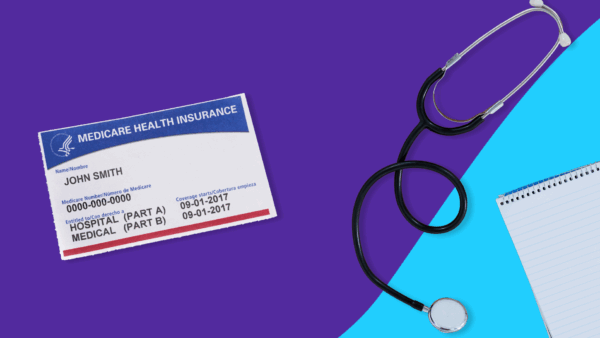
Key takeaways
Medicare Part D coverage for Ozempic varies by plan, but federal law limits deductible and coinsurance, or copay spending to $2,100 or less for all Medicare Part D plans in 2026.
Ozempic may cost about $50 per 1, 3 mL prefilled 2 mg/3 mL pen (0.25 mg or 0.5 mg per dose) with some Part D plans, but this is an uncommonly low price.
The Medicare GLP-1 Bridge does not cover Ozempic, but eligible beneficiaries may be able to get Wegovy, which contains the same active ingredient, for $50 per month for weight management.


Ozempic (semaglutide) is a self-administered glucagon-like peptide-1 (GLP-1) injection that’s only available with a prescription. Ozempic is approved by the Food and Drug Administration (FDA) to help control blood sugar levels in adults with Type 2 diabetes mellitus, to reduce the risk of heart attack, stroke, and cardiovascular death in adults with Type 2 diabetes and heart disease, and to support kidney and heart health in adults with Type 2 diabetes and chronic kidney disease. Medicare drug plans typically cover Ozempic for these FDA-approved uses only. The total out-of-pocket cost varies by plan but can’t exceed $2,100 in 2026.
How Medicare covers prescription drugs
Medicare covers prescription drugs under Part A, Part B, and Part D.
- Part A covers the cost of prescription drugs administered while you’re in the hospital or another inpatient facility.
- Part B covers the cost of prescription drugs that require you to visit a healthcare provider for administration, such as osteoporosis injections or chemotherapy infusions, or that are administered through durable medical equipment like an insulin pump.
- Part D covers prescription drugs that you fill at your pharmacy and administer yourself.
Coverage of Ozempic falls under Medicare Part D. Insurance companies can decide whether to cover Ozempic as part of their formulary (or list of covered drugs), and how much to charge in copays or coinsurance, so coverage and costs vary by Part D plan.
If your Medicare Part D plan covers Ozempic, it will be assigned a tier number. The higher the number, the more you generally pay.
Does Medicare cover Ozempic?
Many Medicare Part D plans typically cover Ozempic, but coverage isn’t guaranteed. Here’s why:
- Ozempic doesn’t belong to a protected drug class, so insurance companies can choose not to cover it.
- Insurance companies may offer some plans that cover Ozempic and others that don’t.
- Ozempic is usually only covered if it’s prescribed for an FDA-approved use. Weight loss treatment, a popular off-label use for Ozempic, isn’t covered under Medicare Part D by law.
Most Medicare plans that cover Ozempic require prior authorization. The insurance company offering the Medicare plan will verify with your healthcare provider that you have Type 2 diabetes before approving coverage.
“Exception requests for Ozempic under Medicare Part D can be made if it’s believed the medication is medically necessary and alternatives on the plan are not suitable,” says Elizabeth Rubin-Ribak, the clinical adviser at Embers Recovery in Phoenix, Arizona. “This needs to be supported with detailed clinical history and evidence that alternatives have failed or caused side effects.”
Does the Medicare GLP-1 Bridge cover Ozempic?
No, Ozempic is not currently covered through the Medicare GLP-1 Bridge. The temporary program, which began July 1, 2026, gives eligible Medicare Part D beneficiaries access to certain GLP-1 medications for weight management for a $50 monthly copay. Covered medications currently include Wegovy, Zepbound, and Foundayo.
Wegovy contains the same active ingredient as Ozempic, semaglutide, but the two drugs have different FDA-approved uses. Medicare beneficiaries who qualify for the Bridge may therefore be able to get Wegovy for weight management for $50 per month, even though Ozempic itself isn’t included in the program. Eligibility requirements apply, and a healthcare provider must submit a prescription and, when requested, complete a prior authorization.
How much does Ozempic cost with Medicare?
The cost of Ozempic with Medicare depends on your plan’s deductible and co-insurance or copay, but federal law limits your out-of-pocket expenses.
Here’s what to look for when calculating how much Ozempic costs with Medicare:
- Deductible: You’ll pay 100% out-of-pocket for Ozempic and all other covered prescriptions until you meet your plan’s deductible. Because Ozempic can be expensive without insurance or discounts, you may meet the deductible with your first month’s supply. If you have already met your annual deductible for the year, you are no longer responsible for paying the full cost of your medications.
- Copay or coinsurance: After meeting your annual deductible, you’ll pay a fixed amount (a copay) or a percentage of the total cost (coinsurance) when paying for your Ozempic prescription. The details will be outlined in your plan’s Summary of Benefits document.
- Maximum out of pocket: Between your deductible and your copay or coinsurance, you’ll pay no more than $2,000 toward all of your covered prescriptions in 2025. In 2026, the out-of-pocket maximum increases slightly to $2,100.
The Medicare website makes it easy to compare out-of-pocket costs across plans. Enter your ZIP code, prescriptions, and up to five local pharmacies. The site will display Medicare Part D plans in your area. Click “View drugs and their costs” to compare the cost of your prescriptions at different pharmacies with a particular plan.
The total yearly cost for Ozempic ranges, and you may pay between $315 and $2,100 (the out-of-pocket maximum), depending on your plan. However, you may pay as little as $50 per month for Ozempic, through a new pilot program, according to a recent announcement from the Trump administration.
How to save on Ozempic
Although Medicare Part D could save you thousands of dollars on Ozempic, it can still be tough to pay the deductible and coinsurance, and Medicare won’t cover it for off-label uses like weight loss or PCOS. Coupons and other programs may help you save money on Ozempic, but they can’t be combined with insurance like Medicare.
Here are some options to consider.
Ozempic coupons from SingleCare
An Ozempic coupon from SingleCare is a good option to consider if your Medicare plan doesn’t cover Ozempic. It can’t be combined with insurance like Medicare Part D.
This coupon can bring the cost down from $1,245 to $860 per 1, 3 mL prefilled 2 mg/3 mL pen (0.25 mg or 0.5 mg per dose), depending on which pharmacy you choose.
SingleCare coupons are free and can be used every time you pick up a prescription from the pharmacy. Save the coupon to your SingleCare account, print it, or send a copy via email or text. Show it to your pharmacist during checkout to get the discount.
You should note that any costs associated with paying for Ozempic with a SingleCare coupon or card do not count toward your annual Medicare out-of-pocket maximum.
RELATED: How to use the SingleCare app
Medicare Extra Help program
The Medicare Extra Help program is designed to make prescriptions more affordable for Medicare beneficiaries with limited income and resources. If you meet the financial requirements for Medicare Extra Help, your Part D premium and deductible can drop to $0. Your copay will be no more than $12.15 for covered brand-name drugs like Ozempic and $4.90 or less for generic drugs in 2026.
Patient assistance program for Ozempic
Novo Nordisk provides this drug at no cost to eligible individuals through its patient assistance program (PAP). Unfortunately, Medicare Part D recipients will no longer qualify for Ozempic through the PAP as of 2026. If you still have time to apply for 2025, your household income must be 400% or less than the federal poverty level.
If you don’t have health insurance, you may still qualify for the PAP if your household income is 200% or less than the federal poverty level.
Ozempic alternatives
Ozempic is just one of several GLP-1 (or GIP/GLP-1) diabetes medications your healthcare provider might consider prescribing. Check your plan’s formulary to see if any of these Ozempic alternatives are covered:
- Victoza (liraglutide)
- Trulicity (dulaglutide)
- Mounjaro (tirzepatide)
- Byetta (exenatide)
- Rybelsus (semaglutide, the same active ingredient as Ozempic, in an oral tablet)
“These are sometimes more affordable, depending on insurance coverage,” Dr. Rubin-Ribak says. These other medications can also be effective for controlling blood sugar and reducing weight.
If your Medicare plan covers none of these medications, ask your healthcare provider about generic liraglutide for Type 2 diabetes. With a SingleCare coupon, you could pay about $92 for a month’s supply, depending on which pharmacy you choose.
Your healthcare provider may also consider an alternative that’s in a different drug class. “For diabetes, metformin is inexpensive and remains a first-line option for many people. Older medicines like sulfonylureas and pioglitazone are also lower cost, though they have trade-offs such as risk of low blood sugar or weight gain. DPP-4 inhibitors are sometimes cheaper than GLP-1 drugs but lead to modest changes in weight,” says Jennifer Warren, MD, a dual board‑certified physician in obesity medicine and family medicine.
RELATED: Diabetes Coupons & Discount Diabetic Supplies
Bottom line: Medicare coverage of Ozempic varies
If your Part D plan covers Ozempic, your total out-of-pocket spending on covered Part D drugs is capped at $2,100 in 2026. Your actual Ozempic cost depends on your plan’s formulary, deductible, and cost-sharing requirements. To get a precise answer about how much Ozempic costs with Medicare, it’s best to look at your plan’s Summary of Benefits or to compare plans on the Medicare website.
- How do drug plans work? Centers for Medicare & Medicaid Services
- Help with drug costs, Centers for Medicare & Medicaid Services
- Percentages over 2025 poverty guidelines, NeedyMeds (2025)
- Ozempic prescribing information, Novo Nordisk (2025)
- 2026 eligibility criteria and additional information, Novocare (2025)
- Medicare GLP-1 Bridge, Centers for Medicare & Medicaid Services (2026)
- Medically accurate: SingleCare’s Medical Review Board analyzes all of our content to confirm it’s in line with current medical advice.
- Evidence-based: Our content is sourced from reputable U.S.-based healthcare professionals and peer-reviewed research.
- Trustworthy: All of SingleCare’s content goes through a multi-phase review process by our writers, editors, and Medical Board in order to provide clear and credible information.