What causes eye twitching? Related conditions and treatments



Overview: What does eye twitching look like?
Eye twitching—or more properly, eyelid twitching—is the sudden, quick, and involuntary movement of an eyelid. The lower eyelid is usually affected, but eyelid spasms can also affect the upper eyelid. These spasms can be limited to one eye or affect both eyes. Twitches can happen once, twice, or several times in a day. Though usually experienced as a minor eyelid twitch, some can be severe enough to close the entire eye or to open the eyelid. For most people, eyelid twitching will go away, but others may experience eyelid twitching every day.
Key takeaways:
Eye twitching is a common symptom that may be caused by stress, anxiety, fatigue, eye irritants, eye strain, allergies, nutritional deficiencies, eye problems, drugs, or neurological disorders.
Typically, eye twitching does not require immediate medical attention.
Eye twitching generally does not require treatment. It usually resolves without treatment within minutes to days.
Treatments for eye twitching vary by cause.
Eye twitching can be managed by reducing stress, getting enough sleep, quitting smoking, consuming less caffeine, using an air purifier, and practicing good eye care.
Save on prescriptions for eye twitching with a SingleCare prescription discount card.
What causes eye twitching?
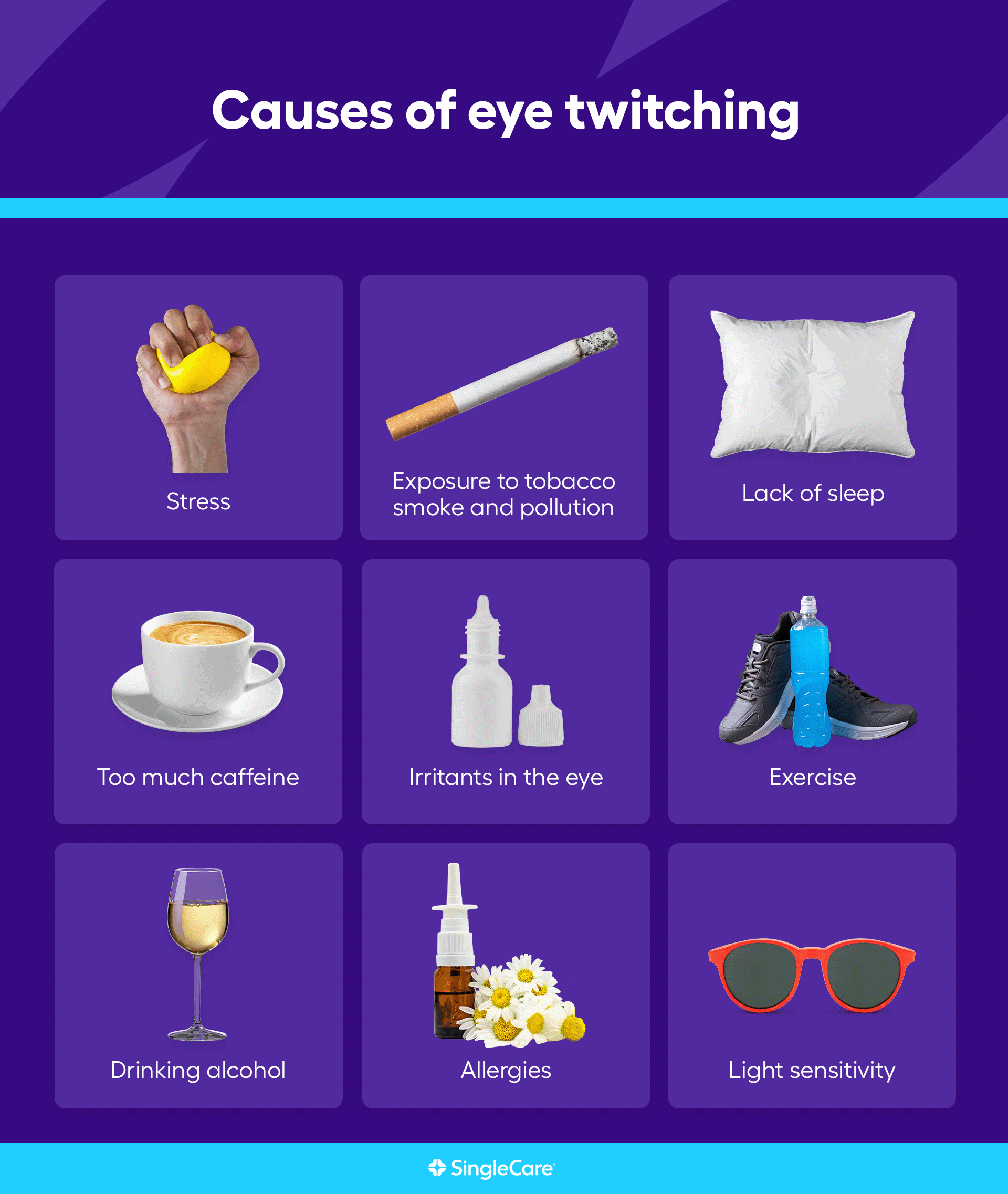
Most eye twitching is due to transient and nonmedical causes, such as:
Stress
Anxiety
Lack of sleep
Too much caffeine
Irritants in the eye
Exposure to tobacco smoke and pollution
Exercise
Drinking alcohol
Eye strain
Light sensitivity
Nutritional deficiencies
Allergies
Some medical conditions may be the possible cause of eye twitching, including:
Dry eye
A scratch on the surface of the eye (corneal abrasion)
Blepharitis (swelling of the eyelid)
Swelling in the eye
Certain medications, such as Clozaril (clozapine) and Topamax (topiramate)
In rare cases, eye twitching can be caused by nervous system problems:
Benign essential blepharospasm (chronic eyelid spasms)
Hemifacial spasm (facial muscle twitching on one side of the face)
Brain damage, stroke, or tumor
Parkinson’s disease
Meige syndrome
Tourette syndrome
Among these neurological disorders, only blepharospasm involves eyelid twitching without any other symptoms present. All of these other neurological conditions will have other symptoms in addition to eye twitching—some may be severe. In very rare cases, eyelid twitching is the sole or first sign of the problem.
RELATED: Stress statistics 2022
Should I be worried about eye twitching?
Most of the time, eye twitching isn’t a cause for concern. It will usually go away in a few minutes or a few days. Cold compresses, lower eyelid massages, and repeated blinking may help calm the twitching. Some lifestyle changes, such as cutting back on caffeine, getting more sleep, or relaxing, may help the twitching to resolve. However, talk to a healthcare professional if there are other symptoms, such as:
Eye pain
Eye swelling or redness
Twitching lasting for a week or more
Difficulty opening the eye
Complete eye closure
Drooping eyelid
If there are other more serious problems, such as muscle weakness, facial spasms, tremors, tics, numbness, or vision changes, then see a doctor as soon as possible. In those rare cases, there may be a serious medical issue that needs attention from a healthcare professional.
How is the cause of eye twitching diagnosed?
Eye twitching is not really a medical condition or diagnosis, but it may be a sign of other medical conditions, such as dry eye, eyelid swelling, corneal abrasion, or an underlying neurological condition. A recent medical history and other symptoms will help the doctor zero in on a cause. Expect to be asked about other symptoms, such as swelling, pain, and other involuntary movements or spasms. Remember, if it’s an underlying medical condition, there will usually be other symptoms besides eyelid spasms. These other symptoms are often more obvious and more troubling than eye twitching. The doctor may also ask about daily habits, such as caffeine intake, sleep habits, alcohol consumption, and stress. If eye twitching is a sign of another illness, final diagnosis and treatment may require a specialist, such as an ophthalmologist, allergist, or neurologist.
Is eye twitching contagious?
Eye twitching and any of its causes are not contagious.
How long does eye twitching last?
Eye twitching due to stress, fatigue, irritation, or similar transient issues should go away in a few minutes to a few days. If eye twitching persists for longer than one week or is accompanied by other symptoms, see a healthcare professional.
How to stop eye twitching
Most eye twitching does not require medical treatment. In order to get rid of eye twitching, avoid triggers and try to fix underlying issues:
Reduce stress through relaxation, yoga, or other means
Get enough sleep by practicing good sleep hygiene
Rest the eyes every 20 minutes when working to reduce eye strain
Cut back on screen time
Cut back on caffeine
Cut back on smoking and drinking
Avoid bright lights
Use an air purifier
Eat a healthy diet or take dietary supplements
Use eye drops or artificial tears to keep eyes moist
Practice good eye care
If eyelid spasms are due to eye problems, healthcare professionals will try to treat the underlying medical condition. An eye doctor will treat eye swelling, redness, corneal abrasions, and eyelid swelling with one or more drugs, usually antibiotics or corticosteroids.
Treating eye twitching caused by neurological problems is more complex. Most of these conditions involve multiple treatments, both for the underlying cause and the various symptoms. Benign essential blepharospasm, which only affects eyelids, is usually treated with botox (botulinum toxin) injections, medications, or surgery. Botox is the most successful treatment, but its benefits typically last for only a few months. Side effects include droopy eyelids that last for a few days. Medications that have been effective at reducing eyelid spasms include dopamine agonists, methylphenidate, and benzodiazepines, but botox injections are the preferred treatment. When all else fails, partial surgical removal of eyelid muscles (myectomy) may be required.
RELATED: Eye health 101: how to protect vision and keep your eyes healthy
Living with eye twitching
Most eye-twitching episodes resolve by themselves or go away when the underlying irritant or medical condition is treated. However, for people with benign essential blepharospasm, eye twitching may be an ever-present problem until it’s successfully treated. Living with benign essential blepharospasm usually involves lifestyle changes to control factors that can worsen the twitching. This involves stress management, a good diet, good sleep hygiene, and avoiding habits like smoking, drinking alcohol, or consuming caffeine.
Most importantly, see a healthcare provider if eye twitching doesn’t get better
While most eye twitching gets better without any treatment or intervention, talk to a primary care physician, optometrist, or ophthalmologist if eye twitching persists for a week or longer. See a healthcare professional right away if there are other symptoms, such as eye pain, swelling, eye redness, facial muscle spasms, weakness, dizziness, tremors, or vision problems. In any case, it’s always better to seek medical advice from a healthcare professional than from other sources. Only a doctor or other healthcare provider can identify or rule out possibly serious medical problems.
FAQs about the causes of eye twitching
What kind of deficiency causes eye twitching?
Eye twitching can result from nutritional deficiencies. Low vitamin B12, low vitamin D, and electrolyte imbalances may cause eye twitching, but this has not been definitively proven. Keep in mind that vitamin or mineral deficiencies usually have several symptoms. Some of those symptoms may be more noticeable or worrisome than eyelid spasms. Again, if eye twitching is accompanied by other symptoms, get medical attention.
Can dehydration cause eye twitching?
Dehydration can dry out the eyes. Irritation and discomfort due to dry eyes can induce eyelid spasms.
What neurological problem causes eye twitching?
Eye twitching can be caused by any number of nervous system disorders. However, if eye twitching is the only symptom, there could be a problem with a part of the brain called the basal ganglia, but neurologists have not confirmed the validity of this correlation. In this case, both eyelids are usually affected and eye twitching doesn’t get better over time. Eye twitching can also be caused by the facial nerve that controls half of the face, so other facial twitches and spasms will be noticed as well. Severe neurological conditions that can cause eye twitching usually have other symptoms that are more obvious and concerning, such as tremors, weakness, fatigue, vision changes, and movement problems.
What does under-eye twitching for days mean?
Under-eye twitching that lasts days could be benign or caused by an underlying condition, such as swollen eyes or eyelids, corneal abrasion, or a nervous system problem. If other symptoms are present, such as eye pain, vision changes, eye redness, eye burning, or eye swelling, get medical advice from a healthcare professional.
Why has my eye been twitching for weeks?
Eye twitching that lasts for weeks could be a sign of an underlying condition. If the only symptom is eye twitching, there could be a problem with the nerves that control the eyelids, a condition called benign essential blepharospasm (BEB). If there are other symptoms, these could point to other medical or neurological conditions. A healthcare professional is essential for diagnosing the problem responsible for these symptoms.
What’s next? Additional resources for people with eye twitching
Test and diagnostics
Lids that shake, rattle, and roll, Review of Ophthalmology
Managing eyelid and facial spasms, Review of Ophthalmology
Treatments
Benign essential blepharospasm, National Institutes of Health
Eyelid myokymia, StatPearls
Managing eyelid and facial spasms, Review of Ophthalmology
What is botox: uses, warnings, and interactions, SingleCare
Scientific studies and clinical trials
Eyelid myokymia with concomitant cerebral tumour: a case report, Neuro-Ophthalmology
Multiple sclerosis presenting with facial twitching (myokymia and hemifacial spasms), Case Reports in Neurological Medicine
More information on related health conditions
Bell’s palsy treatments and medications, SingleCare
Blepharitis, SingleCare
Hemifacial spasm, National Institutes of Health
Meige syndrome, Cleveland Clinic
Multiple sclerosis treatments and medications, SingleCare
Subscribe to our savings newsletter
Health education, drug info, wellness & more
By clicking 'Subscribe', I agree to SingleCare's Terms & Conditions.








