






Key takeaways
Most people can safely have a drink or two while taking doxycycline in moderation.
Heavy drinking can worsen side effects like nausea and stomach pain, and delay recovery from an infection.
Those with liver problems or older adults may have a higher risk of side effects when mixing alcohol and doxycycline.


Doxycycline is a commonly prescribed antibiotic in the tetracycline class, available as an oral tablet or capsule. It’s used to treat a wide range of bacterial infections, including urinary tract infections (UTIs) and sexually transmitted infections (STIs) such as chlamydia. It also helps prevent malaria in travelers and manage acne or other skin problems caused by bacteria.
While moderate alcohol consumption, typically one or two drinks, is unlikely to cause serious issues for most people, combining the two isn’t entirely without risk. Understanding how alcohol can affect the effectiveness and your overall health is important before mixing them.
Can you drink while taking doxycycline?
Drinking in moderation while taking doxycycline is generally safe for most people. Alcohol isn’t known to decrease the effectiveness of doxycycline or cause severe interactions. Moderate drinking means no more than two drinks per day for men and no more than one drink per day for women. Drinking past those limits may cause increased side effects, which means heavy drinking and chronic alcohol use should be avoided while taking doxycycline.
However, whether you feel like drinking may vary depending on why you’re taking this antibiotic. It’s normal to feel tired, weak, or run down while your body is trying to heal from an infection, decreasing your desire to raise a glass with friends.
Save up to 80% on Doxycycline with SingleCare
Different pharmacies offer different prices for the same medication. SingleCare helps find the best price for you.


What happens if you mix doxycycline and alcohol?
If you’re feeling mostly recovered and ready to have a glass of wine, just know that drinking alcohol may increase the risk of side effects of doxycycline. Everyone is different, with some people experiencing more severe reactions than others.
Nausea or vomiting
An upset stomach is a common side effect of doxycycline. It’s also known to be hard on the stomach, sometimes causing nausea and vomiting. People who drink alcohol while taking doxycycline may experience increased nausea and vomiting. Even small amounts of beer, wine, or liquor can trigger these side effects.
Diarrhea
Diarrhea is another possible side effect when mixing alcohol and doxycycline. Doxycycline kills harmful bacteria but can also affect the balance of good bacteria. Alcohol can make this imbalance worse, disrupting the good and bad bacteria in the digestive system.
Inflammation of the esophagus
Doxycycline can irritate your esophagus, especially if you don’t drink enough water with it. That’s why it’s recommended to take doxycycline with a full glass of water and stay upright for at least 30 minutes after. Alcohol increases stomach acid, which can creep up and potentially worsen inflammation.
Liver damage
Doxycycline and alcohol are both metabolized or processed by the liver. Reports have shown that doxycycline may cause liver injury in rare cases, and alcohol is known to cause liver problems, especially in those who drink heavily over time. The risk of liver toxicity may increase when mixing doxycycline and alcohol.
Slowed recovery from infection
Regular alcohol use can weaken the immune system and slow the immune response. Even just one night of binge drinking can reduce immune function for up to a day. As a result, it could take longer to recover from bacterial infections while taking doxycycline. Some studies suggest that certain alcoholic drinks, like wine, can decrease the antibiotic’s absorption and effectiveness.
Are certain people at greater risk of side effects?
Some people may have a higher risk of side effects when mixing alcohol and doxycycline. Those with existing health issues, including liver problems, and older adults may experience more serious problems.
People with liver problems
People with existing liver problems, such as hepatitis, cirrhosis, or fatty liver disease, may have trouble processing doxycycline and alcohol. Healthcare professionals recommend completely avoiding alcohol for patients with liver problems. Adding doxycycline to the mix can add extra stress to an already damaged liver.
Older adults
Older adults break down alcohol and medications more slowly, allowing both to stay in the body longer and increasing the risk of side effects. Age-related liver and kidney changes can make mixing alcohol with doxycycline especially risky.
Always consult a healthcare provider about existing health conditions before drinking alcohol while taking doxycycline.
How long after taking doxycycline can you drink alcohol?
The timing for drinking alcohol after doxycycline depends on how long the drug stays in your body. Doxycycline has a half-life of about 18 to 22 hours in healthy adults. Half-life is the time it takes for half of the drug to leave your system.
For most people, it takes about five half-lives for a drug to completely clear from the body. For doxycycline, this means it can take around four to five days for the medication to be fully cleared. Waiting a few days after your last dose is generally enough, and moderate drinking during this time isn’t likely to cause problems.
Antacids or supplements that contain calcium, magnesium, aluminum, iron, or bismuth subsalicylate can affect the absorption of doxycycline. Therefore, it’s recommended to avoid taking these products within two hours before or after a dose of doxycycline.
Which antibiotics are not affected by alcohol?
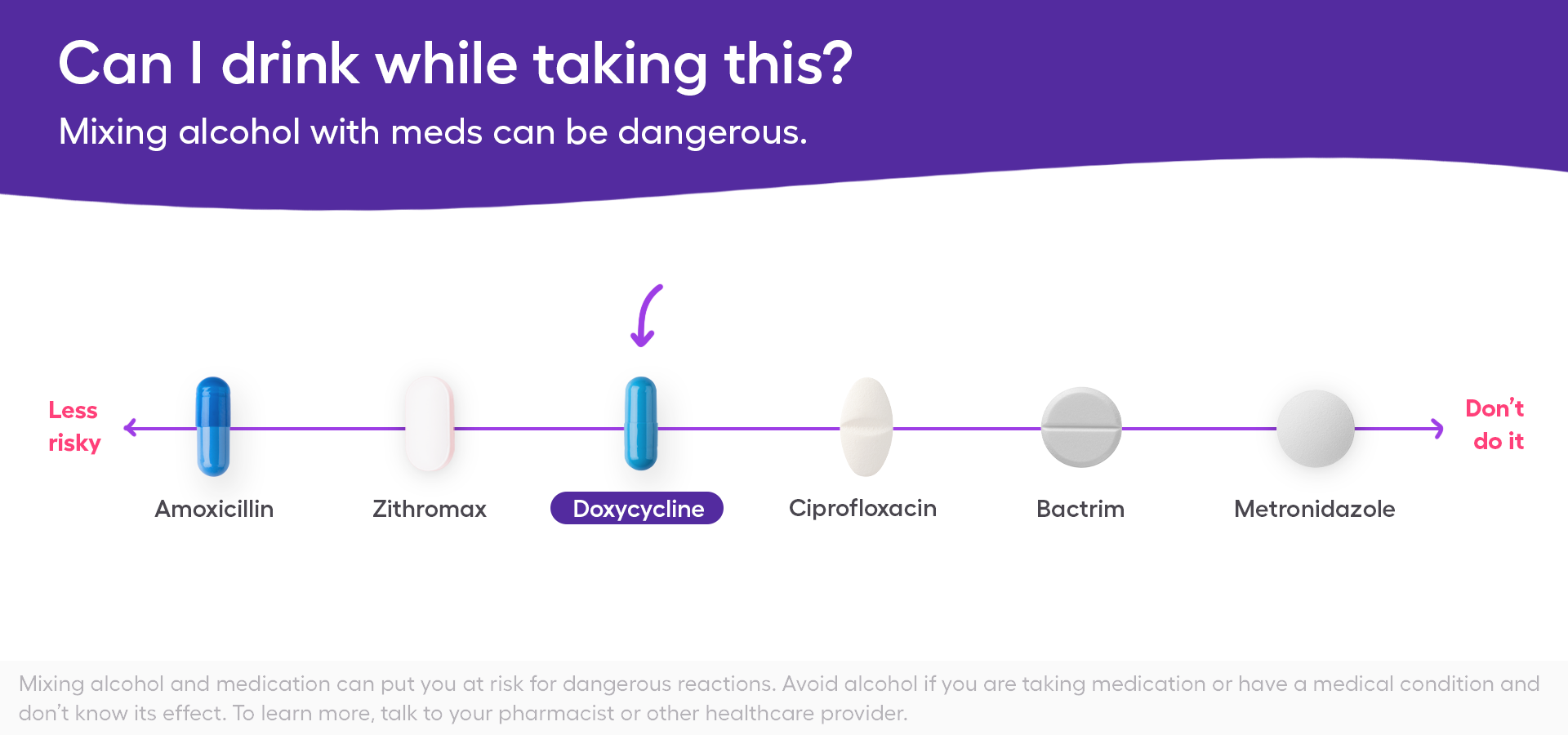
Alcohol can sometimes interfere with antibiotics or worsen side effects like nausea, dizziness, or stomach upset. Still, many antibiotics can be taken safely with an occasional drink. Here’s how different types compare:
- Penicillins: These are safe to take with alcohol in moderation. Examples include Amoxil (amoxicillin) and Pen-Vee K (penicillin V).
- Cephalosporins: Most are fine, but a few can cause serious reactions. Vantin (cefpodoxime) and Omnicef (cefdinir) are generally safe, while Cefotan (cefotetan), Cefobid (cefoperazone), and Mandol (cefamandole) should be avoided with alcohol.
- Fluoroquinolones: Usually safe with moderate drinking. Examples include Cipro (ciprofloxacin), Levaquin (levofloxacin), and Avelox (moxifloxacin).
- Macrolides: Some can interact with alcohol. Avoid drinking with Ery-Tab (erythromycin), but Zithromax (azithromycin) is typically safe.
- Tetracyclines: Moderate alcohol use is okay. Examples include Vibramycin (doxycycline), Minocin (minocycline), and Sumycin (tetracycline).
- Nitrofurantoin: Macrobid (nitrofurantoin) may be taken safely with alcohol in moderation.
- Zyvox (linezolid) and Sivextro (tedizolid): Moderate drinking is okay, but avoid tyramine-rich drinks like draft beer and red wine if you have high blood pressure.
Some types of antibiotics are known to cause dangerous reactions with alcohol and should be avoided completely during treatment. The main culprits include Flagyl (metronidazole), Tindamax (tinidazole), Bactrim (trimethoprim/sulfamethoxazole), and certain cephalosporins like Cefotan (cefotetan) and Cefobid (cefoperazone). Combining these drugs with alcohol can trigger flushing, nausea, vomiting, and rapid heartbeat, causing a disulfiram-like reaction.
Each person responds differently to drug interactions between alcohol and antibiotics. Anyone taking antibiotics should talk with their healthcare provider about alcohol use during treatment.
The bottom line
For most people, an occasional drink won’t reduce the efficacy of doxycycline or cause severe side effects. However, those who drink larger amounts of alcoholic beverages might strain their body’s ability to process the medicine and increase the risk of adverse reactions, like stomach pain, nausea, and vomiting. Because everyone responds differently, it’s best to ask your healthcare provider or pharmacist for medical advice before mixing doxycycline with alcohol.
- Drink alcohol only in moderation, Office of Disease Prevention and Health Promotion (2025)
- Acticlate highlights of prescribing information, U.S. Food and Drug Administration (2025)
- Gut microbiome in alcohol use disorder: Implications for health outcomes and therapeutic strategies-a literature review, World Journal of Methodology (2024)
- Esophageal ulceration following the ingestion of a single dose of doxycycline: A case report, Cureus (2024)
- Doxycycline, LiverTox (2019)
- Alcohol’s effects on the body, National Institute on Alcohol Abuse and Alcoholism (2024)
- Fact versus fiction: A review of the evidence behind alcohol and antibiotic interactions, Antimicrobial Agents and Chemotherapy (2020)
- Doxycycline hyclate, StatPearls (2025)
- Disulfiram-like reaction with metronidazole: An unsuspected culprit, Journal of Pediatric Pharmacology and Therapeutics (2019)
- Medically accurate: SingleCare’s Medical Review Board analyzes all of our content to confirm it’s in line with current medical advice.
- Evidence-based: Our content is sourced from reputable U.S.-based healthcare professionals and peer-reviewed research.
- Trustworthy: All of SingleCare’s content goes through a multi-phase review process by our writers, editors, and Medical Board in order to provide clear and credible information.