





Key takeaways
Soursop is a tropical fruit that contains fiber, vitamin C, potassium, and antioxidants, which can support overall health as part of a balanced diet.
Early research suggests soursop may have anti-inflammatory, antimicrobial, and other medicinal properties, but most studies have been conducted in laboratories or animals. More human research is needed.
Soursop is not a proven treatment for cancer or other medical conditions. Its seeds and concentrated extracts may pose health risks, and people taking certain medications should consult a healthcare provider before using soursop supplements.


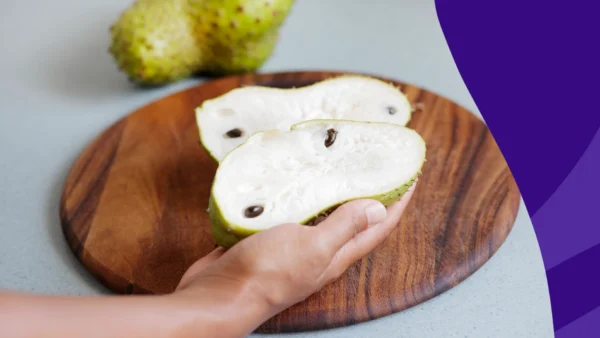
Soursop (Annona muricata), also known as guayabano, graviola, guanabana, or sirsak, looks like a prickly avocado and grows in tropical and subtropical climates. The fruit has a creamy texture and sweet-tart flavor, while its leaves and other plant parts have long been used in traditional medicine. Early research suggests soursop may offer several health benefits, but most studies have been conducted in animals or laboratories. More research is needed to determine its effectiveness and safety in humans. Here’s what to know about the potential benefits and risks of soursop.
Potential soursop benefits at a glance |
|
|---|---|
| Benefit or Claim | Evidence assessment |
| Provides vitamin C and antioxidants | Yes; established nutritional values |
| Supports digestive health | Yes, due to fiber content |
| Supports immune function | Yes, due to Vitamin C content |
| Lowers blood pressure | Limited human research |
| Reduces inflammation | Primarily animal and laboratory research but may have anti-inflammatory effects |
| Lowers blood sugar | Primarily animal and laboratory research |
| Fights bacteria or parasites | Primarily animal and laboratory research, but may have antibacterial effects |
| Prevents or treats cancer | No evidence in humans, but anticancer activity has been found in lab studies |
| Relieves headaches and arthritis symptoms | Insufficient human evidence but may have potential for reducing arthritis-related inflammation |
| May support weight loss | Insufficient human evidence |
13 health benefits of soursop
In 1 cup of raw soursop pulp, you get the following macronutrients, vitamins, and minerals
Soursop nutritional values |
|
|---|---|
| Nutrient | Amount per cup |
| Calories | 148 |
| Fiber | 7.4 g |
| Vitamin C | 46.4 |
| Potassium | 626 mg |
| Carbohydrates | 37.9 g |
| Sugar | 30.5 g |
Source: University Hospitals. Approximate USDA-based values for raw edible pulp.
This breakdown is important because these macro- and micronutrients are linked to the following benefits:
1. Provides antioxidants
Eating a diet rich in antioxidants may help protect you against disease. Antioxidants are substances that fight free radicals, which are known for damaging cells. Research notes that free radicals can lead to Alzheimer’s, cancer, and heart disease.
Soursop fruit and leaf extracts have antioxidant properties because they contain vitamin C, flavonoids, acetogenins, tannins, phytosterols, and phenolic compounds. Studies suggest that the antioxidant content of each serving depends on the extraction method used; an extract made with a mixture of water and alcohol was found to be a safe and efficient source of antioxidants.
2. Boosts immunity
If you eat an entire piece of soursop fruit, you stand to get roughly 120 milligrams of vitamin C.
“Soursop is rich in antioxidants like vitamin C, which can help support your immune system,” explains Ashley Kitchens, RDN, registered dietitian and owner of Plant Centered Nutrition in Durham, North Carolina. Vitamin C boosts your body’s natural defenses by protecting cells against free radical damage.
3. Fights bacteria
Western medicine typically treats bacterial infections with antibiotics. Those types of drugs may come with side effects, prompting many to seek natural alternatives, like soursop.
Researchers evaluated soursop’s antibacterial properties through an in vitro study (a study conducted in a non-living environment, such as a test tube). They tested soursop leaf extracts at varying concentrations and found them highly effective against certain bacterial strains, including major players such as Staphylococcus aureus, Vibrio cholerae, E. coli, and Salmonella. However, soursop is not an alternative to antibiotics prescribed by your provider. More research is needed to understand the connection between soursop and bacterial infections.
4. May treat or prevent ulcers
Ulcers are sores that often appear in the digestive tract, causing pain and bloating. Antibiotics and antacids are common treatments.
There is limited evidence of using soursop to mitigate or treat ulcers in humans; however, there are several promising studies that involved testing on animals. In a study on mice, researchers found that soursop extract resulted in “significant anti-ulcer activity.” Research is limited, and more studies are needed to establish the benefits for humans.
5. Reduces inflammation
Inflammation in the body can cause all types of annoyances: joint pain, fatigue, and even digestive issues. There are natural and medicinal solutions available, with soursop emerging as a potential contender.
In a study conducted on rodents, researchers found soursop extract has anti-inflammatory effects. Soursop helps fight free radicals that cause oxidative stress in your body, thereby reducing inflammation. Researchers concluded that the extract they used lessened inflammation and helped relieve pain.
6. Shows anti-parasitic activity
It is well documented that soursop is used in various parts of the world to treat parasites. Several in vitro studies have put the plant’s leaf extracts and seeds to the test, finding promising antiparasitic results. In a controlled study performed on sheep, the leaf extract showed as high as 89% toxicity against gastrointestinal parasites.
7. May help manage blood pressure
If you have high blood pressure, consuming soursop could potentially complement any treatments you’re on. A controlled trial of 143 people found that those who consumed 100 grams of soursop juice twice a day for three months had significantly lower average systolic blood pressure than the control group, who were not treated.
8. May help relieve headaches
Could soursop treat headaches? Maybe so. The leaves of the plant have been used across the world to treat headaches when steeped in tea. This is due to the plant’s known ability to reduce inflammation. A word of caution, though, is that there aren’t any studies to support soursop’s direct effect on headaches, and current evidence appears to be anecdotal.
9. May lower blood sugar levels
A number of in vitro studies suggest that soursop fruit extracts may help people manage blood sugar levels. This is because the extracts inhibit α-amylase and α-glucosidase, which influence your blood glucose levels. It’s also thought that soursop may slow the breakdown of carbohydrates, reducing the amount of glucose your body absorbs.
10. Can help arthritis symptoms
Because soursop has anti-inflammatory properties, it may be used to help relieve symptoms of arthritis. In one study, researchers pretreated rats with soursop fruit extract and then injected them with carrageenan to elicit edema (swelling). They found that soursop significantly inhibited swelling and noted that the results were on par with the “most clinically effective anti-inflammatory agents.”
11. Boosts digestive health
The dietary fiber content in soursop, roughly 20 grams per serving, may be one key to unlocking your digestive health. “Fiber can help improve digestion and gut health,” says Kitchens. She explains that fiber promotes regularity and feeds the good bacteria that live in your gut.
12. Shows potential anti-cancer activity
An extensive scientific review notes that graviola (another name for soursop) is a popular treatment for cancer in some countries. Extracts from the plant were found to offer protection against malignancies, including colon, breast, and prostate cancers.
However, there is currently no reliable evidence that eating soursop or taking soursop supplements can prevent, treat, or cure cancer. Soursop should never replace prescribed cancer treatments. If you have cancer, speak with your healthcare provider before taking soursop supplements, as their safety and potential interactions with cancer treatments are not well established.
“Lab studies (in vitro) show there may be some antimicrobial and anti-cancer properties, but the data is inconclusive in humans,” says Erika Gray, Pharm.D., founder and chief medical officer at ToolBox Genomics.com.
13. May help weight loss efforts
A study on the use of graviola (soursop) leaf tea in mice found that the plant helps reduce body weight and “attenuated the accumulation of lipids” (a fancy way of saying it prevented body fat). As a result of reduced body weight and body fat, soursop tea was also potentially linked to a reduction in cardiovascular risks associated with cholesterol and triglycerides.
Important considerations and potential downsides
There are a number of claims about soursop’s health benefits, such as improving sleep, but we couldn’t find any science-backed evidence. Additionally, while soursop has potential effects on inflammation, blood pressure, and even cancer cells, the plant has not been recommended by health professionals as a “miracle cure” for any of these or the other issues outlined here.
Soursop can be a beneficial addition to your diet, though it may not be safe for everyone. There are several groups of people who should avoid the fruit or consume it with caution.
“The main group at risk is those with neurodegenerative diseases,” says Dr. Gray. “People with a family history of neurodegenerative disorders should avoid eating soursop.”
Soursop contains annonacin, which is a mitochondrial toxin, she explains. Chronic consumption has been linked to neurodegenerative illnesses like Parkinson’s disease. It could also lead to side effects like low blood pressure and liver damage.
Dr. Gray also suggests the following people should avoid or use soursop with caution:
- Pregnant and breastfeeding people should avoid soursop, as there is a lack of human safety data
- People on diabetes and blood pressure medications should be cautious of signs of low blood pressure and low blood sugar
- People on anticoagulants, as soursop could act as a natural blood thinner
- People with kidney issues, as soursop in high doses could cause damage to those organs
Lastly, Dr. Erika Gray advises that soursop should not be taken daily or long-term. She warns that people should avoid consuming extracts or seeds because of the higher concentration of annonacin.
Soursop pulp vs. soursop bitters
It’s also important to note that eating soursop pulp as food is different from consuming concentrated leaf extracts, seeds, or supplements, such as soursop bitters. Soursop bitters are liquid herbal supplements made with soursop extracts and combined with other ingredients to support digestion, immune health, and overall wellness. Despite some compounds in soursop showing promising effects in animal and laboratory studies, there’s no evidence establishing that soursop bitters have the same effects on humans.
Soursop bitters may also contain ingredients that interact with certain medications, so it’s important to read the ingredient list and consult your healthcare provider before using them.
Eating the fruit is generally safe, but you should ask your healthcare provider for guidance before using supplements.
How to incorporate soursop into your diet
Kitchens says she has consumed soursop many times while traveling and finds it delicious. She notes that a typical serving size is 1 cup of chopped, fresh fruit to get the health benefits. She also recommends eating it as part of a balanced diet that includes a variety of fruits and vegetables.
“My favorite way to enjoy soursop is by simply cutting the fresh fruit in half and scooping out the white pulp while discarding the seeds,” she says.
Kitchens suggests the following additional ways to add soursop to your diet:
- Blend it into smoothies
- Add it to yogurt or granola
- Incorporate it into a fruit salad
- Juice it and drink it
- Juice it and turn it into a frozen dessert like ice cream
Health experts advise against consuming large amounts of soursop, as it can become toxic at certain doses, especially when taken as extracts. The time of day you choose to consume soursop depends on your goals. Taking it on an empty stomach can promote better absorption of vitamins and minerals; if you prefer to drink it as a tea, you may prefer to take it at night as part of a soothing evening ritual.
Is soursop the next superfood? The verdict
Soursop is a nutrient-rich fruit that can be a healthy addition to a balanced diet, but it’s too soon to call it a superfood. Although early research suggests soursop may have anti-inflammatory, antioxidant, and other beneficial properties, most studies have been conducted in laboratories or on animals. More research is needed to confirm these effects in humans. In the meantime, enjoy soursop as a fruit rather than relying on it to treat health conditions. Talk to your healthcare provider before using soursop supplements, especially if you take medications or have an underlying health condition.
- Nutrition facts, Soursop, raw, 1 cup, pulp, University Hospitals (2026)
- Add antioxidants to your diet, Mayo Clinic (2025)
- Antioxidant activity and acute oral toxicity of soursop (Annona muricata L.) leaf and its effect on the oxidative stability of Mexican hairless pork patties, Foods (2025)
- Anti-microbial efficacy of soursop leaf extract (Annona muricata) on oral pathogens: an in-vitro study, Journal of Clinical and Diagnostic Research (2016)
- Antiulcerogenic activity of the hydroalcoholic extract of leaves of Annona muricata Linnaeus in mice, Saudi Journal of Biological Sciences (2018)
- Mechanisms of analgesic and anti-inflammatory properties of Annona muricata Linn. (Annonaceae) fruit extract in rodents, Journal of Medicinal Food (2014)
- Annona muricata (annonaceae): A review of its traditional uses, isolated acetogenins and biological activities, International Journal of Molecular Sciences (2015)
- In vitro anthelmintic activity of aqueous leaf extract of Annona muricata L. (Annonaceae) against Haemonchus contortus from sheep, Experimental Parasitology (2013)
- The effects of soursop supplementation on blood pressure, serum uric acid, and kidney function in a prehypertensive population in accordance with the 2017 ACC/AHA guideline, Journal of Human Hypertension (2019)
- Pharmacological activities of soursop (Annona muricata Lin.), Molecules (2022)
- Distribution of phenolic contents, antidiabetic potentials, antihypertensive properties, and antioxidative effects of soursop (Annona muricata L.) fruit parts in vitro, Biochemistry Research International (2015)
- Emerging therapeutic potential of graviola and its constituents in cancers, Carcinogenesis (2018)
- Use of an extract of Annona muricata Linn to prevent high-fat diet-induced metabolic disorders in C57BL/6 mice, Nutrients (2019)
- Graviola, Memorial Sloan Kettering Cancer Center (2026)
- Medically accurate: SingleCare’s Medical Review Board analyzes all of our content to confirm it’s in line with current medical advice.
- Evidence-based: Our content is sourced from reputable U.S.-based healthcare professionals and peer-reviewed research.
- Trustworthy: All of SingleCare’s content goes through a multi-phase review process by our writers, editors, and Medical Board in order to provide clear and credible information.