





Key takeaways
Antibiotic use can disrupt the balance of bacteria in the body, potentially leading to yeast infections.
Risk factors for developing a yeast infection include the type of antibiotic, being female or pregnant, having diabetes or a weakened immune system, or a personal history of recurrent yeast infections.
Ways to prevent yeast infections include wearing loose clothing and cotton underwear, while treatment options include over-the-counter and prescription antifungal medications.


Your healthcare provider may prescribe antibiotics for bacteria-caused infections of the throat, sinuses, or skin. Antibiotics are effective in controlling bacterial growth during an infection, but they also have the ability to disrupt the body’s balance of helpful bacteria as well. As a result, some antibiotics may increase the risk of someone developing a vaginal yeast infection due to the overgrowth of yeast. In this article, learn about how antibiotics can cause a yeast infection, how to prevent them, and treatment options recommended by healthcare providers.
RELATED: See our best drug prices
Can antibiotics cause a yeast infection?
Yes, it is possible to get a vaginal yeast infection (vulvovaginal candidiasis) while taking a course of antibiotics. Antibiotics have the potential to disrupt the balance of your microbiome, which includes the healthy bacteria responsible for keeping yeast (Candida fungus) growth in check on the skin and vaginal canal.
Common symptoms of a yeast infection may include white vaginal discharge that looks like cottage cheese, burning during urination, swelling and redness around the vaginal area and vulva, and pain and soreness during sexual intercourse.
Most women will develop a yeast infection at some point in their lives. About 70% of women may experience a vaginal yeast infection in their lifetime, and between 10% and 30% of women experience yeast infections due to antibiotics. Ninety percent of vaginal yeast infections are caused by a type of fungus called Candida albicans.
Why do antibiotics increase the risk of yeast infections?
A woman’s vagina maintains its own balanced mix of yeast and bacteria. “Antibiotics can destroy bacteria that protect the vagina or may alter the balance of bacteria present,” says Janelle Luk, MD, medical director and co-founder of Generation Next Fertility in New York, New York.
She explains that a type of bacteria called Lactobacillus keeps the vagina slightly acidic, which keeps vaginal infections at bay. Antibiotics can affect the bad bacteria causing your illness, but they also wipe out beneficial bacteria, including Lactobacillus. This makes the vaginal environment less acidic, encouraging the growth of yeast.
Which antibiotics are most likely to cause a yeast infection?
Any antibiotic can disrupt normal bacterial balance, but some antibiotics are more prone to causing yeast infections than others. Broad-spectrum antibiotics (antibiotics that work against a wide range of bacteria) are most likely to throw off your body’s natural bacterial balance. Examples of broad-spectrum antibiotics include:
- Penicillins (like amoxicillin)
- Carbapenems (like imipenem)
- Tetracyclines (like doxycycline)
- Quinolones (like ciprofloxacin)
Sometimes, other medicines can increase the risk of yeast infections. For example, some inhaled steroid treatments for asthma, such as Pulmicort (budesonide), can increase the risk of an oral yeast infection, called thrush.
Who is most at risk?
In addition to being female, the following risk factors can increase the likelihood of developing a yeast infection due to antibiotic use:
- A weakened immune system
- A history of recurrent yeast infections
- Use of hormonal contraceptives, such as birth control pills
- Pregnancy
- Diabetes
How long after starting antibiotics can a yeast infection develop?
“A yeast infection can develop within several days of starting an antibiotic, later in the course, or shortly after treatment ends,” says Michelle Kavall, FNP-C, nurse practitioner and founder of Longévité Palm Beach in Boca Raton, Florida. “There is no fixed timeline,” she adds.
Sometimes yeast infections can happen well after your antibiotic course has ended, shares Furhan Qureshi, MD, internal medicine physician and founder of Noor Esthetique and Wellness Center in Sterling, Virginia. “Antibiotic-associated fungal infections can occur within just a few days, up to at least one or two weeks after antibiotics are completed,” he says.
What are the first signs and symptoms of a yeast infection?
“The first signs and symptoms of a vaginal yeast infection can include itching and irritation, swelling, soreness, redness, or small skin cracks,” Kavall says. “You may also notice burning, especially during urination or sex,” she shares.
A common sign of a yeast infection is thick, white, creamy discharge, but this can look different between patients. “Although the discharge may also be thin or minimal, usually with little or no strong odor,” Kavall explains.
Keep in mind that some symptoms common with yeast infections, like white discharge and burning with urination, may have other causes, including:
- Bacterial vaginosis (BV)
- Urinary tract infections (UTIs)
- Other sexually transmitted infections (STIs), such as trichomoniasis
If you’re experiencing symptoms, seek medical advice from a healthcare professional to get evaluated and discuss appropriate treatments.
RELATED: How can I tell if I have a UTI or a yeast infection?
How to prevent a yeast infection while taking antibiotics
First and foremost, you should know that the benefits of antibiotics far outweigh the risk of side effects. Even though antibiotics might increase the risk of yeast infections, it is still important to take the medication your healthcare provider prescribed to fully treat a bacterial infection. Failure to finish an antibiotic prescription can lead to something called antibiotic resistance. This means that your bacterial infection might become resistant to the drug and much more difficult to cure.
RELATED: What happens if you don’t finish antibiotics?
However, it is possible to help prevent some antibiotic side effects, including yeast infection, with these tips from Dr. Luk:
- Avoid hot tubs or hot baths because yeast thrives in warm environments
- Wear loose clothing
- Change out of wet bathing suits or underwear right away, as moisture allows yeast to grow
- Skip douches
- Avoid vaginal deodorant products such as sprays, powders, or scented pads and tampons
- Wear breathable cotton underwear
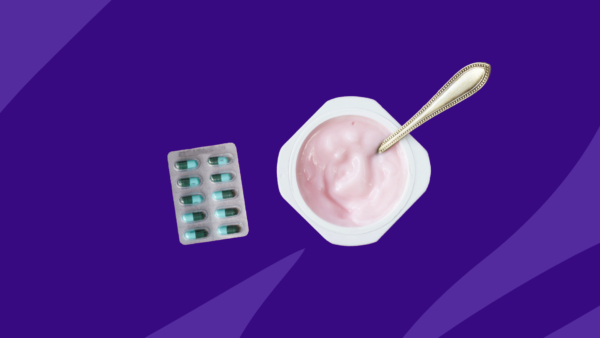
- Ask your healthcare provider if you should take probiotics to replenish beneficial bacteria in the gut microbiome, or eat more probiotic-rich foods, for example, yogurt
Your healthcare provider may also prescribe “an antifungal pill called Diflucan (fluconazole) to take concurrently with your antibiotic prescription,” says Rebecca Berens, MD, owner of Vida Family Medicine in Houston, Texas.
Dr. Luk says it’s good to preemptively speak with your healthcare provider about a Diflucan prescription if you experience yeast infections often. If Diflucan doesn’t work, another solution could be to use over-the-counter (OTC) vaginal creams, suppositories, or ointments such as Monistat (miconazole).
Can you treat a yeast infection without stopping your antibiotics?
Yes, you can treat a yeast infection without stopping your antibiotics. “What’s most important, in my opinion, is that the patient continue their antibiotic course and not let the fear of an opportunistic yeast infection prevent them from getting their bacterial infection treated,” Dr. Qureshi says. “We can always treat for a yeast infection during the antibiotic course,” he says.
“When appropriate, antifungal treatment can be given while the patient continues a necessary antibiotic,” says Kavall. The Centers for Disease Control and Prevention’s (CDC’s) 2021 guidelines recommend OTC and prescription azole antifungals (such as fluconazole) for vaginal yeast infections. Though topical azole antifungals don’t have many drug-drug interactions, there are some antibiotics that may interact with oral fluconazole.
Fluconazole is a cytochrome P450 (CYP) 3A4 inhibitor, and it can prolong the QT interval of the heart rhythm. This drug can interact with fluoroquinolone antibiotics (e.g., ciprofloxacin) and macrolide antibiotics (e.g., azithromycin), among other medications.
Always continue taking your antibiotics as prescribed unless your healthcare provider advises otherwise. In most cases, yeast infections can be treated alongside antibiotic use. Talk to your healthcare provider if you notice any symptoms of yeast infections while on antibiotics. Review your full medication and supplement list so they can recommend treatments that minimize interactions.
When to see a healthcare provider
“Patients should receive immediate medical evaluation for fever, chills, significant pelvic pain, nausea, vomiting, sores, foul-smelling discharge, abnormal bleeding, difficulty swallowing, rapidly worsening swelling, or severe illness,” Kavall advises. She says patients who are pregnant, have certain health conditions, or who are taking other medications may require more careful treatment selection. “Patients with a first episode, uncertain symptoms, recurrent infections, or treatment failure should be evaluated instead of repeatedly self-treating,” she adds.
The bottom line
Antibiotics are a common culprit behind vaginal yeast infections. Preventive measures like wearing cotton underwear and avoiding scented feminine hygiene products can help reduce your risk. If you experience symptoms that might be a yeast infection, consult a healthcare professional for treatment advice.
Frequently asked questions
How soon can antibiotics cause a yeast infection?
Antibiotics can increase your risk of developing a yeast infection within days of starting the medication, up to a couple of weeks after stopping them.
Can probiotics prevent yeast infections?
Certain probiotics may be used to prevent and treat infections, but current published research isn’t strong enough to support their benefit over conventional treatments. Check with a healthcare provider if you are considering probiotic use.
Should I stop taking antibiotics if I develop a yeast infection?
No, you should continue taking your antibiotic medication as prescribed. If you develop a yeast infection, seek medical care from your healthcare provider for a full evaluation and to discuss your treatment options.
- Candidal vaginitis, Merck Manual Professional Version (2026)
- Vaginal candidiasis, StatPearls [Internet] (2024)
- What doctors want patients to know about preventing yeast infections, American Medical Association (2026)
- Risk factors for candidiasis, CDC (2024)
- Vaginitis: Diagnosis and treatment, American Family Physician (2025)
- Harnessing probiotics to combat candidiasis: Mechanisms, evidence, and future directions, Journal of Fungi (2025)
- Vulvovaginal candidiasis (VVC), CDC (2021)
- Monistat 3 day – miconazole nitrate cream, DailyMed (2025)
- Probiotics for the treatment of vulvovaginal candidiasis in nonpregnant women: a systematic review and meta-analysis of randomized controlled trials, American Journal of Obstetrics and Gynecology (2026)
- Medically accurate: SingleCare’s Medical Review Board analyzes all of our content to confirm it’s in line with current medical advice.
- Evidence-based: Our content is sourced from reputable U.S.-based healthcare professionals and peer-reviewed research.
- Trustworthy: All of SingleCare’s content goes through a multi-phase review process by our writers, editors, and Medical Board in order to provide clear and credible information.