




 Search for articles or Rx savings


Key takeaways
Many Blue Cross Blue Shield (BCBS) plans cover glucose monitoring devices like the Dexcom G7, but not all do.
Without insurance, a full year’s supply of Dexcom G7 sensors costs almost $7,000.
The cost of Dexcom G7 sensors with BCBS insurance depends on the plan’s deductible and copay structure.


The Dexcom G7 is a leading continuous glucose monitor that allows people two years and older with diabetes mellitus to track their blood sugar levels 24 hours a day. It collects an incredible amount of data that people use to make healthier decisions, but the Dexcom G7 isn’t something you can buy once and use for years. Each sensor has a limited life-span and costs more than $100 to replace, so many people rely on health insurance to cover it. Does Blue Cross Blue Shield cover the Dexcom G7? Let’s take a look.
What is the Dexcom G7, and why does insurance matter?
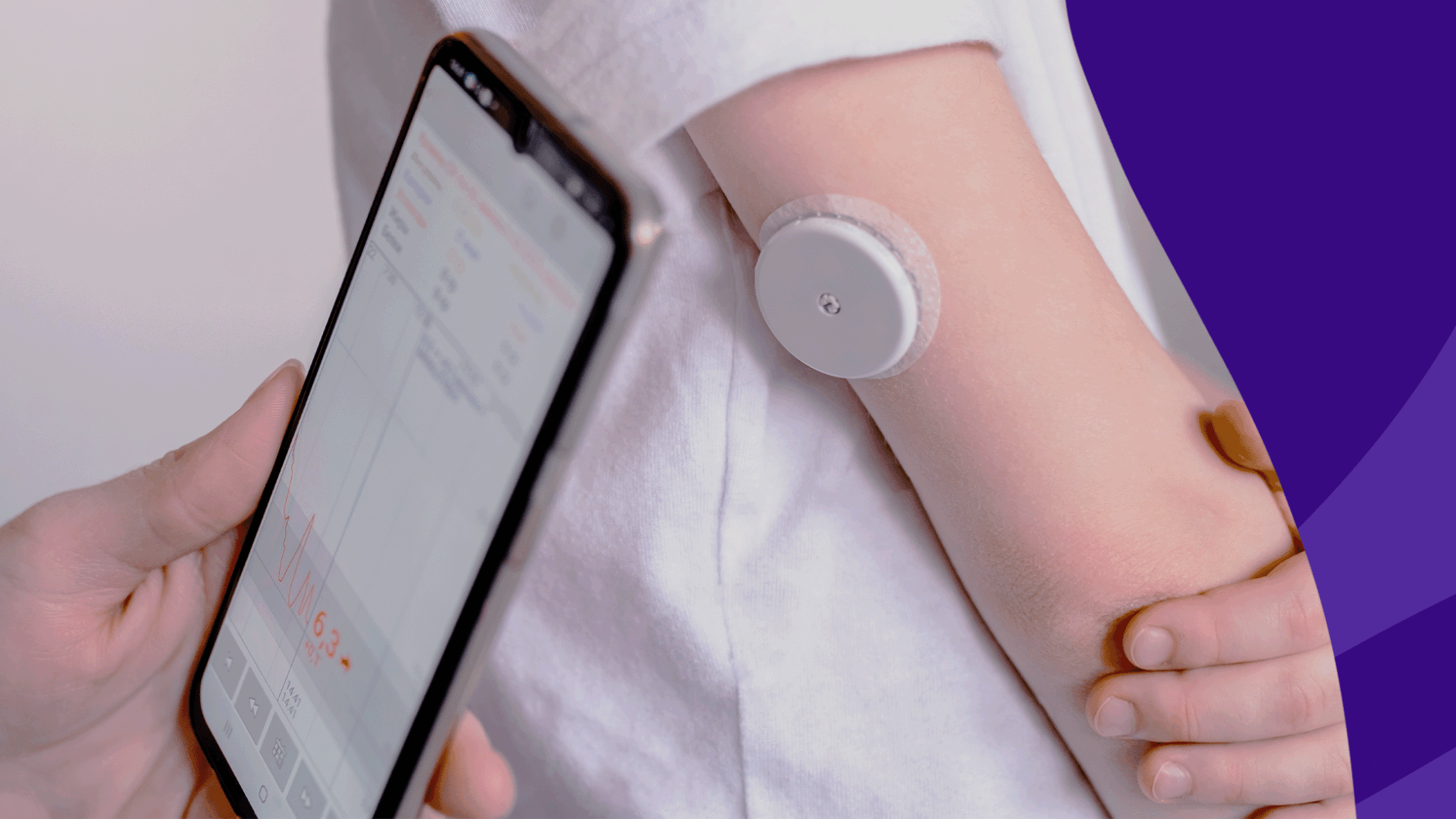
The Dexcom G7 is a three-part system that reads blood sugar levels every five minutes. It consists of a sensor that taps into the blood supply just below the skin on the back of the upper arm, a transmitter that sits above the skin and wirelessly shares data, and a handheld receiver for viewing data. A smartphone can also serve as the receiver.
Note that older Dexcom models relied on a reusable transmitter that could be detached from the sensor. The G7 integrates the sensor and transmitter into one device. Both are discarded after use.
Before continuous glucose monitoring systems were invented, fingerstick glucose monitors offered the only way for people to track their blood glucose levels. To use these monitors, people with diabetes prick a finger several times per day, place a drop of blood on a test strip, and wait for the machine to read the strip. The Dexcom G7 offers several advantages over fingerstick glucose monitors:
- Less pain: The skin is pricked once every 10 or 15 days, not multiple times per day.
- Real-time alerts: Users can address high or low blood sugar before symptoms escalate.
- Reliable and convenient: Readings are always taken at the same time.
- Valuable insights: People can see how their daily habits affect blood glucose, leading to potentially healthier decisions.
- Smart integrations: The Dexcom G7 communicates with automatic insulin pumps to deliver the right dose of insulin at the right time.
The Dexcom G7 improves the way people manage diabetes, but it comes at a steep price. Insurance coverage can significantly reduce the out-of-pocket cost of the Dexcom G7, but the amount varies depending on the plan. Fortunately, most commercial health insurance plans cover continuous glucose monitors like the Dexcom G7 for people who qualify.
Does Blue Cross Blue Shield cover Dexcom G7?
Coverage varies by plan, but some Blue Cross Blue Shield (BCBS) plans do cover the Dexcom G7. Others only cover competitors or older models like the Dexcom G6, while some plans may not cover any continuous glucose monitors at all.
Dexcom G7 Medicare coverage is provided under Part B because it’s classified as durable medical equipment (DME). Therefore, Medicare Part D plans are unlikely to cover it. Medicaid coverage varies by state.
“In my experience, most commercial insurance companies cover the Dexcom G7 or a similar continuous glucose monitor for patients who have diabetes,” says Jennifer Brown, a dual board-certified physician based in West Virginia. “However, most plans do require prior authorization before they will approve coverage.” This means your healthcare provider must submit evidence to prove that you’ve been diagnosed with diabetes and that the Dexcom G7 is medically necessary for your treatment.
How much does Dexcom G7 cost without insurance?
A three-pack of 10-day Dexcom G7 sensors (a 30-day supply) costs $575 without insurance or discounts. That’s about $192 per sensor and $6,900 per year.
Diabetes Coupons & Discount Diabetic Supplies
How much does Dexcom G7 cost with BCBS?
The cost of the Dexcom G7 with BCBS depends on the plan’s deductible and the copay or coinsurance associated with its drug tier.
Some BCBS drug lists classify the Dexcom G7 as Tier 3, which means you would pay about 40%–45% coinsurance, depending on the plan. Others list it as Tier 2, which has a lower coinsurance of about 10%. Some plans charge a fixed copay amount instead of coinsurance.
Let’s consider the Anthem BCBS Bronze Pathway X 10600 plan as an example. It has an annual deductible of $10,600 and $0 copays on all drug tiers. Depending on your other medical expenses, you may end up paying the full out-of-pocket cost of the Dexcom G7 sensors ($6,900 per year) before reaching your deductible.
On the other hand, the Anthem BCBS Silver Pathway X 500 plan has a prescription drug deductible of $800. You’d reach that deductible after paying for about four Dexcom G7 sensors. Then, you’d pay a 45% coinsurance for the Dexcom G7 for the rest of the year.
How to check whether your BCBS plan covers Dexcom G7
There are several ways to check whether your BCBS plan covers the Dexcom G7:
- Log in to your BCBS account and view the drug list or formulary. Search for the Dexcom G7 by name, or look for alternatives under headers like “medical devices,” “diabetes supplies,” “continuous glucose monitor,” or “CGM.”
- Call BCBS. A customer service representative can look up your plan and help you understand which continuous glucose monitors are covered, if any.
- Ask a healthcare professional to look up Dexcom G7 coverage on your behalf. The official Dexcom website offers an insurance lookup tool to make this easier, but only providers may use it.
How to save on Dexcom G7
To save money on the Dexcom G7, consider using a SingleCare prescription discount card. This free card can be used at any participating pharmacy to give you an immediate discount on the Dexcom G7. The final price varies by pharmacy, so browse participating locations near you to find the best deal.
The lowest price for three Dexcom G7 sensors is about $332, or $111 per sensor, with a SingleCare coupon card.
SingleCare coupons can’t be combined with insurance, so the amount you pay won’t count toward your BCBS deductible. However, using a SingleCare card may cost less in the long run, depending on the terms and conditions of your insurance plan.
Here’s how to use SingleCare to save money on the Dexcom G7:
- Visit the Dexcom G7 Sensor page on the SingleCare website, or download the SingleCare app and search for the Dexcom G7 sensor.
- Enter your ZIP code.
- Compare prices at participating pharmacies.
- Click the button next to your preferred pharmacy to get a unique coupon card.
- Print this card, create a free SingleCare account to save it digitally, or text or email it to yourself for safekeeping.
- Tell your healthcare provider to send the Dexcom G7 prescription to your chosen pharmacy (if it’s different from the one you normally use).
- Show the discount card to the pharmacist during checkout.
You may also want to ask your healthcare provider about more affordable alternatives to the Dexcom G7. For example, the Freestyle Libre 2 costs about 50% less than the Dexcom G7 with a SingleCare coupon.
Over-the-counter continuous glucose monitors are available for an affordable price, but Dr. Brown says they aren’t as useful as they may seem. “OTC CGMs are designed for patients who don’t require insulin, which can limit their utility.” For example, they don’t detect dangerously low blood sugar (hypoglycemia). Talk to your healthcare provider to learn more about the pros and cons of different glucose monitoring systems.
The SingleCare prices in this article are the most accurate at the time of publishing in ZIP code 23666 as of Jan. 6, 2026. Prices vary by pharmacy. Visit our Dexcom G7 coupon page for updated Dexcom G7 prices near you.
- Select Drug List, Anthem Blue Cross Blue Shield (2026)
- Essential Drug List, Anthem Blue Cross Blue Shield (2025)
- Anthem Bronze Pathway X Transition 10600 ($0 Virtual PCP + $0 Select Drugs + Incentives) – HMO, HealthSherpa
- Anthem Silver Pathway HMO 500 ($0 Virtual PCP + $0 Select Drugs + Incentives) – HMO, HealthSherpa