




 Search for articles or Rx savings



Key takeaways
While Macrobid doesn’t directly interact with alcohol, drinking can worsen the side effects and may slow recovery from a UTI.
People with liver or kidney disease and older adults are at an increased risk from mixing Macrobid and alcohol due to how both are processed in the body.
It’s best to avoid alcohol until after completing the full course of Macrobid, which usually lasts around one week.


Macrobid (nitrofurantoin) is a prescription antibiotic used to treat urinary tract infections (UTIs) caused by certain types of bacteria. It’s often used as a first-line treatment to help stop bacterial growth in the urinary tract. Although alcohol doesn’t have any direct effects on Macrobid, it’s not recommended to drink alcohol while taking Macrobid. Mixing Macrobid and alcohol could affect how well you heal from the infection and potentially increase side effects like nausea or an upset stomach from the medication.
Can you drink while taking Macrobid?
There is no contraindication on the drug label for Macrobid, meaning there is no interaction between Macrobid and alcohol. Unlike other antibiotics, such as metronidazole and tinidazole, Macrobid does not cause a disulfiram-like reaction with effects like flushing or a rapid heart rate when mixed with alcohol.
However, it’s best to limit alcohol intake to moderate consumption. Drinking in moderation, or no more than one drink per day for women and no more than two drinks per day for men, is unlikely to cause any severe problems on Macrobid. In many cases, it’s recommended to avoid alcohol altogether, since alcohol may have other negative health effects on its own and could slow the healing process after an infection.
Keep in mind that Macrobid is usually taken as one capsule every 12 hours for around seven days. Therefore, you may need to abstain from alcohol for at least a week.
Save up to 80% on Macrobid with SingleCare
Different pharmacies offer different prices for the same medication. SingleCare helps find the best price for you.


What happens if you mix Macrobid and alcohol?
Although there’s no direct interaction between Macrobid and alcohol, mixing the two could lead to potential effects that may impact treatment. As both have some overlapping effects, some problems may be amplified.
Overlapping side effects
Macrobid and alcohol may cause similar side effects. Alcohol may intensify some of the common side effects of Macrobid, including:
- Nausea and vomiting
- Headache
- Dizziness
- Drowsiness
- Loss of appetite
- Upset stomach
Experiencing adverse effects from Macrobid alone might deter a person from using alcohol. However, even one drink of alcohol with Macrobid could increase nausea or headache, which can be an uncomfortable experience for many.
Impaired immune function and recovery
Getting enough rest, nutrition, and fluids is important to support the immune system when fighting an infection. Alcohol is known to disrupt immune system processes, which can reduce its ability to protect against microbes. Impaired immune function is worsened with higher alcohol consumption.
If you’ve ever been out drinking for the night, you know how much it can wear you down the next day. Although alcohol doesn’t directly reduce the effectiveness of the medication, the poor sleep and dehydration that come with drinking alcohol can affect your ability to recover from an illness.
Liver problems
Although rare, Macrobid has been found to cause liver problems, especially inflammation of the liver (hepatitis). Studies have shown that Macrobid is linked to hepatotoxicity, which may lead to symptoms like yellowing of the skin or eyes (jaundice), dark urine, fatigue, and abdominal pain.
Alcohol is also known to directly affect the liver, since over 90% of it is metabolized or processed in the liver. Heavy alcohol use is especially hard on the liver. Therefore, chronic alcohol use or a night of binge drinking could potentially worsen the risk of liver problems while on Macrobid.
Note: Some effects of mixing Macrobid and alcohol can depend on a person’s tolerance to alcohol and how much they drink. It’s best to consult a healthcare provider before drinking alcohol after starting Macrobid treatment.
Are certain people at greater risk of side effects?
Some groups of people may have a higher risk of side effects from mixing Macrobid and alcohol. Those with certain medical conditions or other risk factors should watch their alcohol intake more carefully during treatment.
People with liver disease
People with a history of liver disease or other severe liver problems, like cirrhosis or fatty liver disease, are at an increased risk of complications. Both Macrobid and alcohol are metabolized by the liver, which could cause:
- Increased levels of Macrobid in the body, which can cause increased side effects of the drug
- Increased risk of liver damage from Macrobid
- Worsened liver damage from heavy alcohol use
Those with liver disease generally need to use Macrobid with caution or even avoid it altogether. Due to the potential risk of liver problems alone, a healthcare provider may recommend abstaining from all alcohol during treatment.
People with kidney disease
The kidneys also play a part in processing Macrobid and alcohol in the body. Macrobid is not recommended for people with serious kidney impairment since the drug could build up in the body. Alcohol may also affect kidney function and overall hydration.
Drinking alcohol while on Macrobid could lead to increased Macrobid side effects and an increased risk of dehydration. Kidney problems and electrolyte imbalances from alcohol use may increase the risk of peripheral neuropathy (a rare but serious side effect of Macrobid that can cause tingling or numbness in the hands or feet).
Older adults
Adults older than 65 may already experience declining kidney and liver function, which is normal with age. However, that also means older adults may be at greater risk of complications. For example, reports suggest that severe liver problems from Macrobid happen more often in older adults. Adding alcohol to the mix could increase the risk of toxicity in the liver.
How long after taking Macrobid can you drink alcohol?
Macrobid has a relatively short half-life of around 20 minutes. The half-life is how long it takes for the amount of a drug in the body to be reduced by half. Since it can take about five half-lives to clear a drug from the body, that means Macrobid is usually eliminated within a couple of hours in most healthy people.
Still, your healthcare provider may advise waiting to drink alcohol until after the course of treatment is finished. Even after the treatment is completed, you may still be recovering from the infection. After finishing Macrobid treatment and UTI symptoms have resolved, you can better gauge when it’s right for you to drink.
If you decide to drink during Macrobid treatment, consider the following:
- Choose a lower-alcohol beverage, such as beer or wine, as opposed to hard liquor
- Don’t drink on an empty stomach
- Stay hydrated with water or other fluids to prevent dehydration
- Drink in moderation
Consult a healthcare provider if you’re unsure about drinking alcohol during or after treatment with Macrobid. Everyone is different, and your healthcare provider will have a better picture of your overall health.
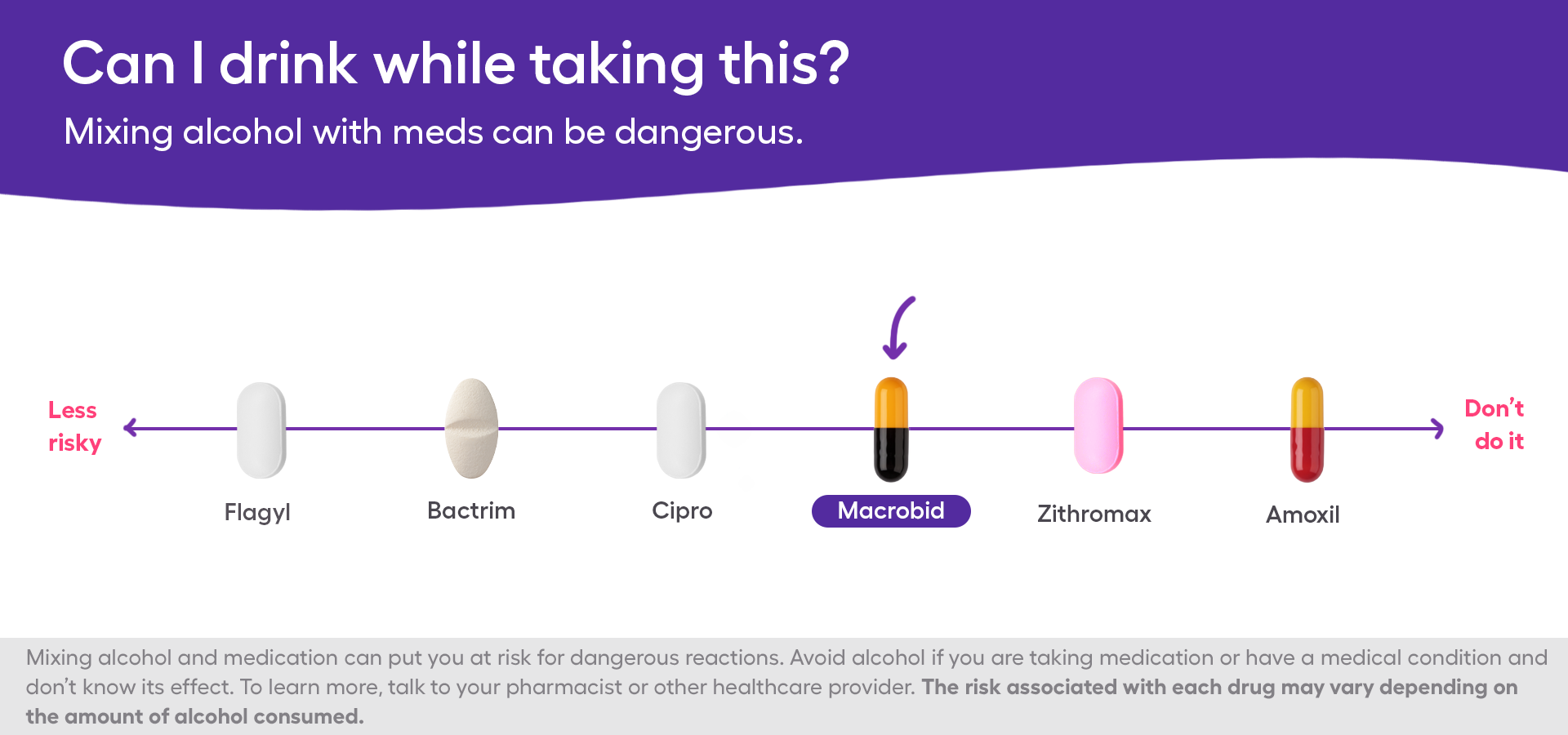
Which antibiotics are not affected by alcohol?
Many antibiotics don’t directly interact with alcohol, but many healthcare professionals still recommend avoiding alcohol until after treatment. However, some antibiotics may be less likely to cause severe side effects with alcohol than others.
Some antibiotics that may be less impacted by alcohol than others include:
- Penicillins such as Amoxil (amoxicillin) and Principen (ampicillin)
- Zithromax (azithromycin)
- Fluoroquinolones like Cipro (ciprofloxacin) and Levaquin (levofloxacin)
- Cleocin (clindamycin)
- Vibramycin (doxycycline)
- Certain cephalosporins like Omnicef (cefdinir) and Vantin (cefpodoxime)
Consuming a large amount of alcohol can be dangerous, no matter if you’re taking an antibiotic or not. Drinking alcohol in moderation is key if you’re given the green light to drink during treatment.
Drinking may still increase nausea, dizziness, or an upset stomach while taking any antibiotic. Alcohol can also affect a person’s recovery from an infection due to its effects on the immune system.
Antibiotics to avoid with alcohol
Some antibiotics can cause more serious reactions with alcohol. These include:
- Flagyl (metronidazole)
- Tindamax (tinidazole)
- Bactrim (sulfamethoxazole/trimethoprim)
- Zyvox (linezolid)
Disulfiram-like reactions are possible with metronidazole, tinidazole, and sulfamethoxazole/trimethoprim, which can cause nausea, vomiting, flushing, a rapid heart rate, and headache. Mixing alcohol and linezolid could lead to dangerous spikes in blood pressure.
The bottom line
There is no direct interaction between Macrobid and alcohol, but it’s usually best to avoid drinking alcohol while on treatment with an antibiotic. Mixing both could lead to increased nausea or headaches, with alcohol disrupting the body’s ability to fight a bacterial infection. Drinking in moderation may be allowed. However, those with liver or kidney disease may need to use extra caution when doing so.
- Macrobid drug label, U.S. Food and Drug Administration (2021)
- Disulfiram-like reactions, University of Maryland (2026)
- Drink alcohol only in moderation, U.S. Department of Health and Human Services (2026)
- Macrobid drug label information, DailyMed (2025)
- Alcohol and the immune system, Alcohol Research (2015)
- Dose-dependent effects of chronic alcohol drinking on peripheral immune responses, Scientific Reports (2019)
- Nitrofurantoin, LiverTox (2025)
- Pathophysiological aspects of alcohol metabolism in the liver, International Journal of Molecular Sciences (2021)
- Peripheral nerve toxic effects of nitrofurantoin, Archives of Neurology (2012)
- Nitrofurantoin toxicity: a near case of mistaken identity, Cureus (2018)
- Nitrofurantoin: properties and potential in treatment of urinary tract infection: a narrative review, Frontiers in Cellular and Infection Microbiology (2023)
- Fact versus fiction: a review of the evidence behind alcohol and antibiotic interactions, Antimicrobial Agents and Chemotherapy (2020)