





Key takeaways
Medication errors are common and can lead to serious side effects, hospitalizations, and death, highlighting the importance of proper medication management.
Personal medication list templates, caregiver checklists, and trackers for medication schedules, side effects, and inventory facilitate easier medication management.
Our free medication list templates and resources are available for download to help patients and caregivers manage medications and track side effects effectively.
Learning how to properly keep track of and manage medications is one of the most important things a patient or caregiver can do. Taking and managing medications may seem easy, but they can quickly become complicated and lead to medication errors, such as taking the wrong dose of a medication or taking a medication at the wrong time. Medication errors are extremely common and can lead to serious side effects, hospitalizations, and even death. Our free, printable medication trackers and other log sheets can help make medication management and caregiving easier and safer.
Why is medication management important?
Taking the right dose of medication at the right time of day is extremely important. Proper medication management helps ensure medications are working how they should be to treat injuries, illnesses, and diseases.
“Medication management service aims to help patients, seniors, and those in assisted living settings take the correct medicine and dose at the right time,” says David Clark, a lawyer and partner at The Clark Law Office, a personal injury law firm in Michigan. “Research shows that around 50% of patients mismanage [their] medications. The U.S. government considers medication management so important that it has federal and state laws that regulate medicine use,” Clark says.
RELATED: Medication error statistics
How to create a medication list
Medication lists, medication schedule templates, and log sheets can be easy to create with a little free time and creativity. A good medication list will allow a patient or caregiver to track multiple medications and allow room to track how much of a medication to take, how often to take it, and when to take it. Websites like Canva can be great for creating medication list templates, and Microsoft Excel can be useful too.
If you’re short on time or don’t feel like creating your own template, check out the templates below. These free printable medication list templates were created by SingleCare to help patients and caregivers easily and properly manage medications.
8 free medication list templates
The following templates are free to download and print. To download a template in a PDF format, simply click on “DOWNLOAD THIS TEMPLATE FOR FREE” and save the template to your phone or desktop.
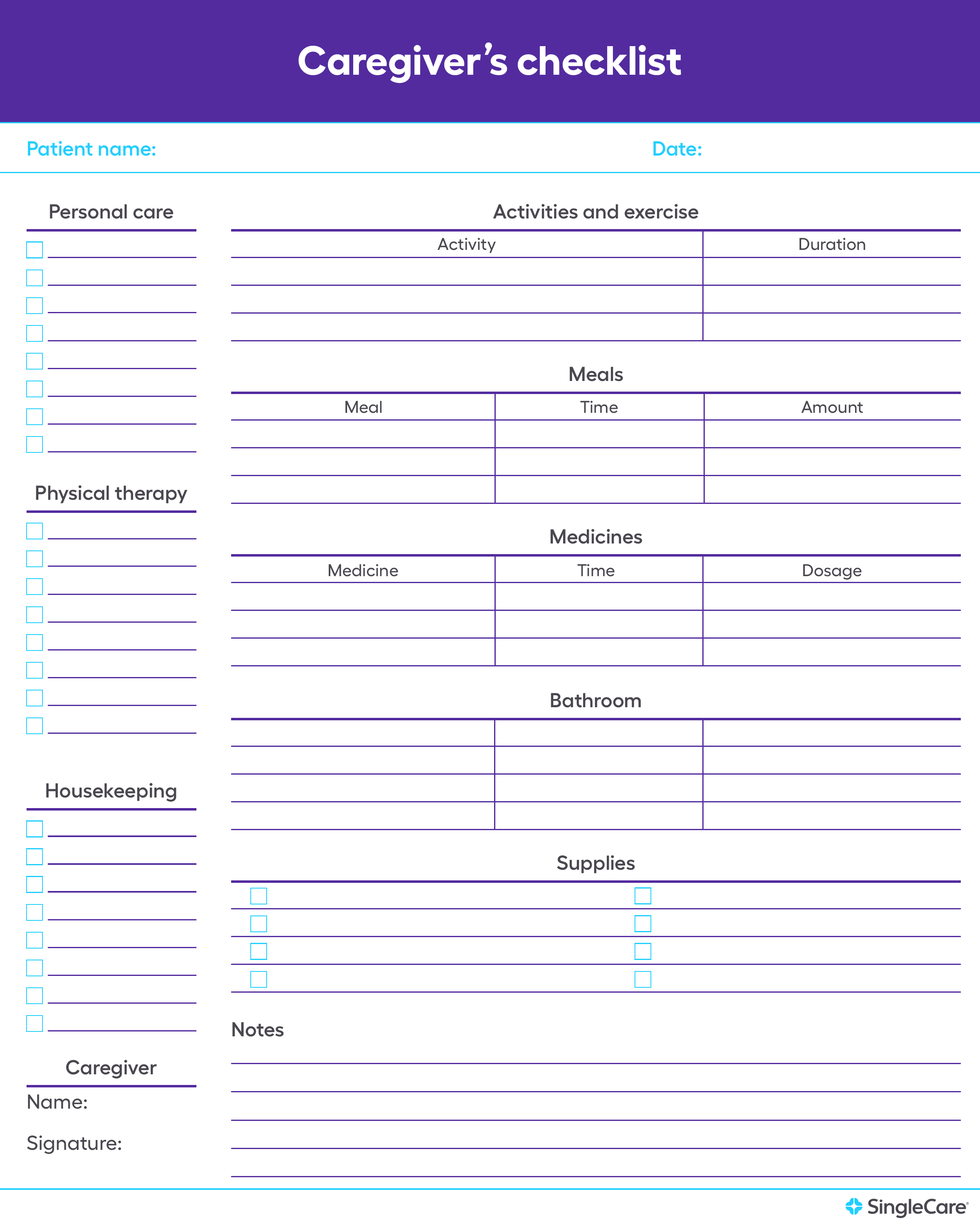
1. Caregiver checklist
The caregiver checklist linked below makes it easy to keep records of any tasks that need to be performed in order to care for a patient. The caregiver checklist below includes a section where caregivers can jot down notes like doctors’ phone numbers, emergency contact information, and the dates and times of upcoming doctor’s appointments. It can even be used as a log for tracking blood sugar or blood pressure levels. Staying organized can help caregivers avoid burnout, and this checklist makes it easy to manage someone else’s medications and daily activities to keep them as healthy as possible.
 DOWNLOAD THIS TEMPLATE FOR FREE
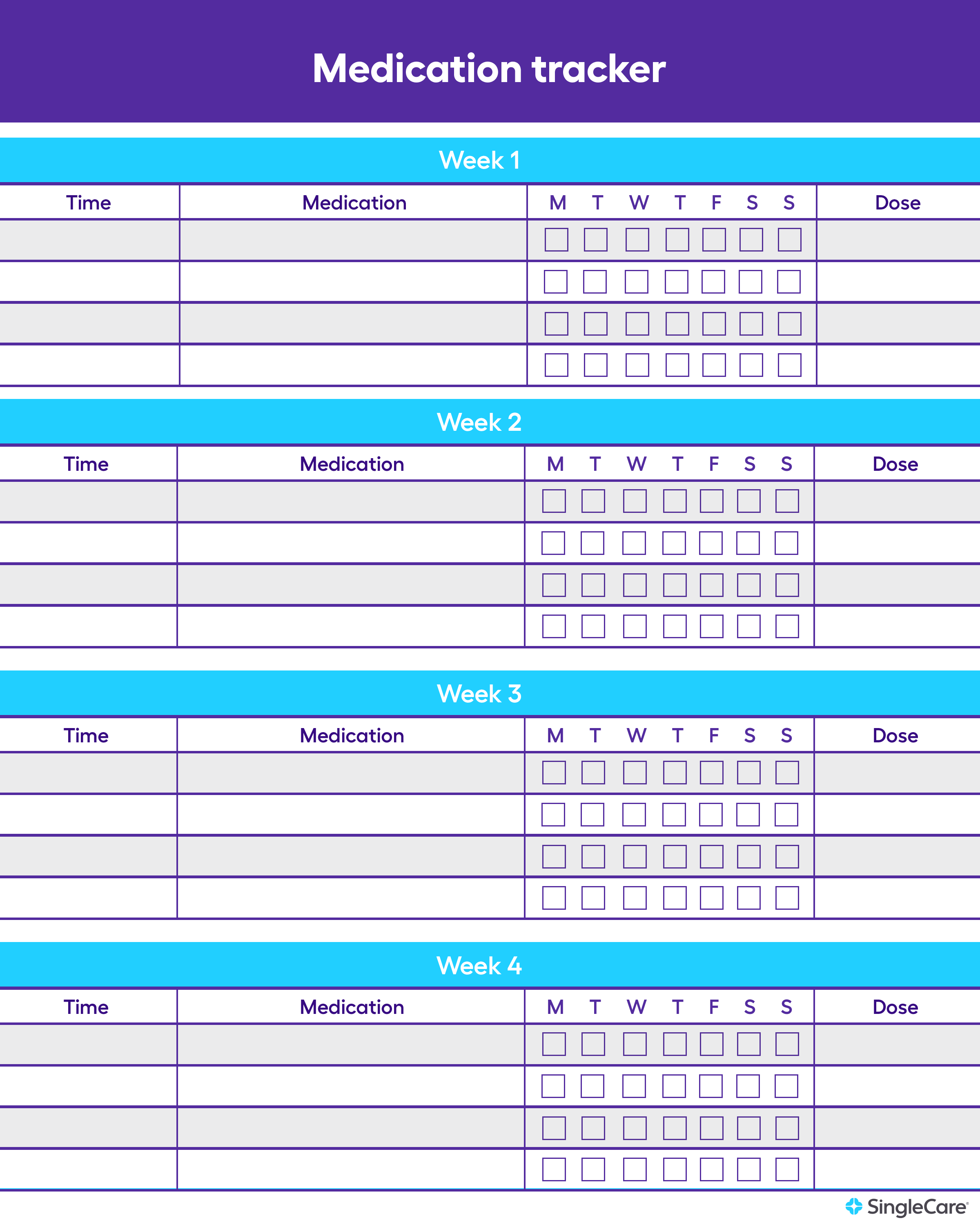
2. Medication tracker
This medication tracker is helpful for patients, caregivers, and healthcare providers. It allows people to track medications that must be taken daily or weekly and can track four medications for up to a month. It allows someone to track which medications must be taken, the day and time they must be taken, and how much of each must be taken.
In the current age of digital technology, it may seem antiquated to use a printable medication log sheet, especially since there are so many mobile apps that can be used to do the same thing. Certain apps can help set important reminders and function as a tracker, but printable medication log templates can still be useful. Some patients are unable to use technology and need a hard copy to keep track of their medications and medical records. Printable trackers can also be nice for caregivers who have multiple patients because they can be placed in easy-to-see places like bedside tables, wall panels, or refrigerators.
No matter what your preference is, using a weekly medication tracker is a great way to keep track of your daily medications to ensure you’re taking them consistently over time. This is one of the best ways to prevent medication errors.
DOWNLOAD THIS TEMPLATE FOR FREE
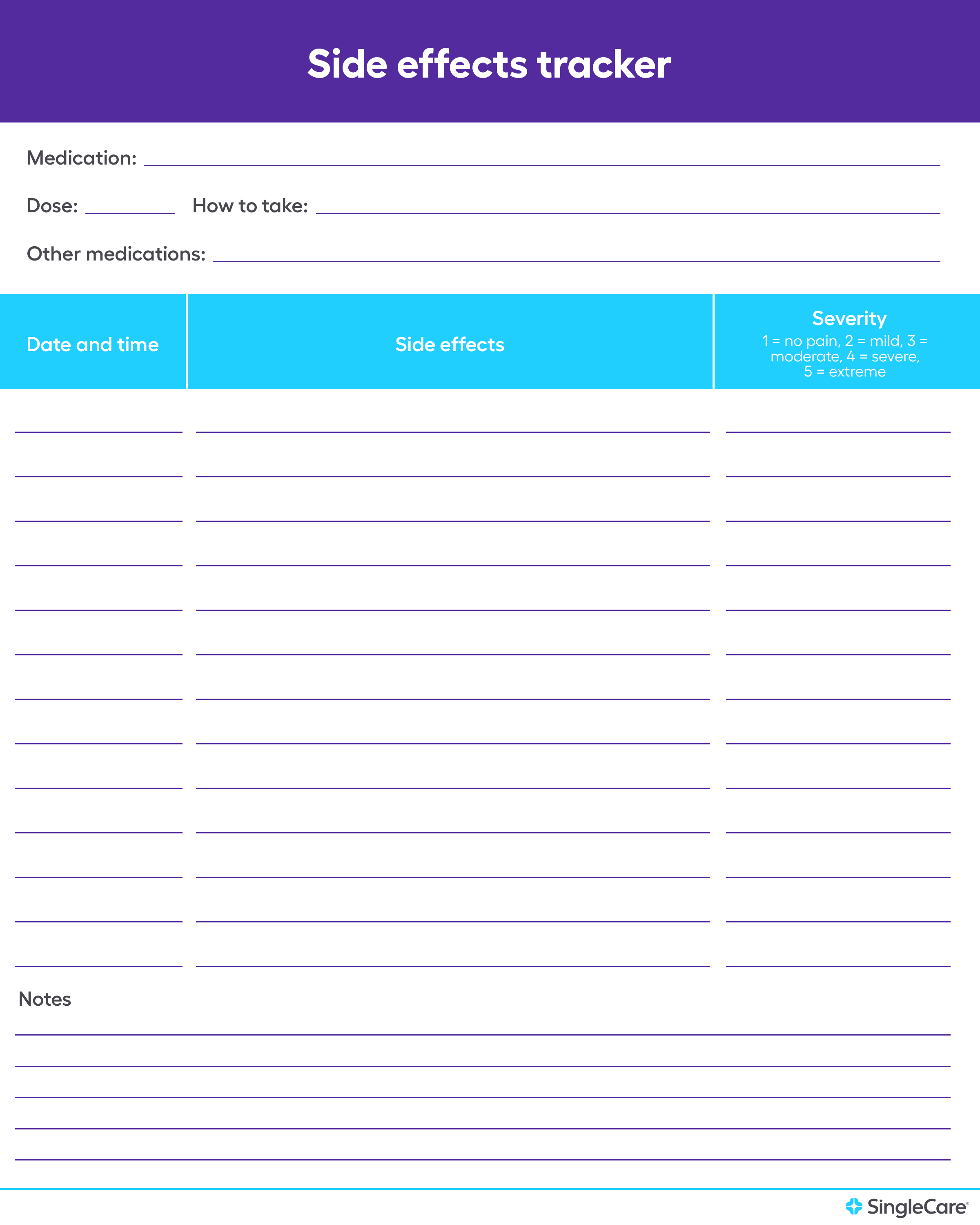
3. Side effects tracker
Some medications cause initial side effects that will resolve on their own, while others can cause persistent side effects that require medical attention. Tracking side effects will help someone determine if a medication is right for them. If the side effects of a drug become too severe, it may be time to switch medications. Another reason to use a side effects tracker is to be able to share experienced side effects with a healthcare provider. If a patient keeps detailed notes on the side effects they experience, their healthcare provider will more easily be able to advise them on whether what they’re experiencing is normal.
Side effects that may require medical attention include:
- Difficulty breathing
- Swelling of the face, throat, or neck
- Confusion
- Trouble speaking
- Difficulty understanding speech
- Numbness or weakness on one side of the body
- Chest discomfort
- Severe abdominal pain and/or vomiting
- Mood changes
- Suicidal thoughts or behaviors
This list of severe side effects is not comprehensive. For a complete list of potential drug side effects, talk with your healthcare provider or pharmacist.
The free printable side effects tracker linked below is available for instant download. It’s best for tracking the effects of only one medication at a time, whereas the template that follows (a medication feedback form) can be used for multiple medications.
DOWNLOAD THIS TEMPLATE FOR FREE
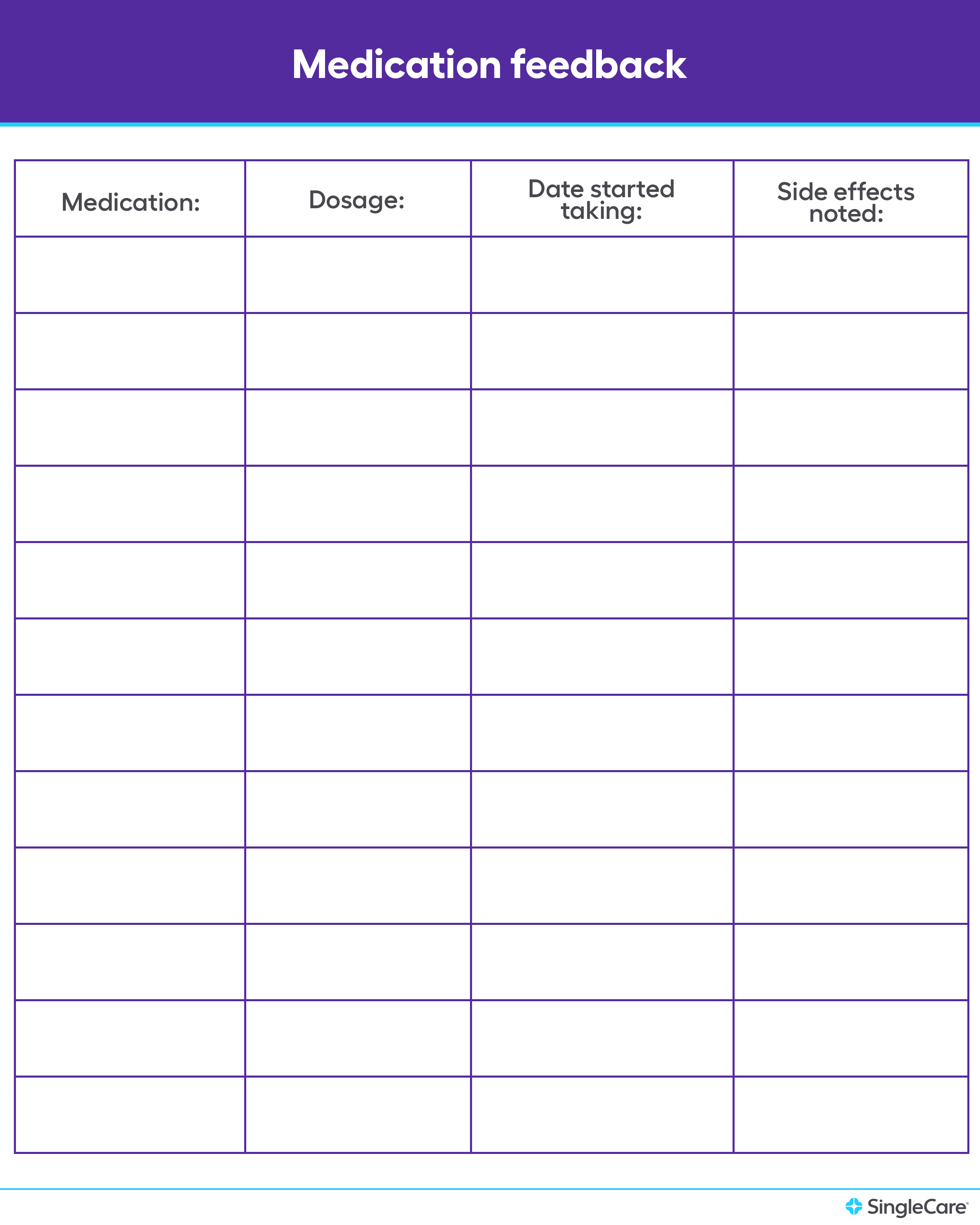
4. Medication feedback form
This medication feedback form is best for tracking the side effects of multiple medications. It allows a patient, caregiver, or healthcare provider to track the side effects of up to 12 medications, and it has spaces for the name of each medication, the dosage taken, the date the medication was started, and any side effects being experienced.
Tracking side effects is especially important for anyone taking or administering multiple medications because it’s possible for medications to interact with one another and cause adverse effects. Even though healthcare providers try their best not to prescribe someone multiple medications that might interact, there’s always the potential for a drug interaction to occur. If someone keeps track of their medical history and side effects they’re experiencing in a medication chart, their healthcare provider will be able to fine-tune the treatment plan to make sure the patient is getting the best treatment possible.
DOWNLOAD THIS TEMPLATE FOR FREE
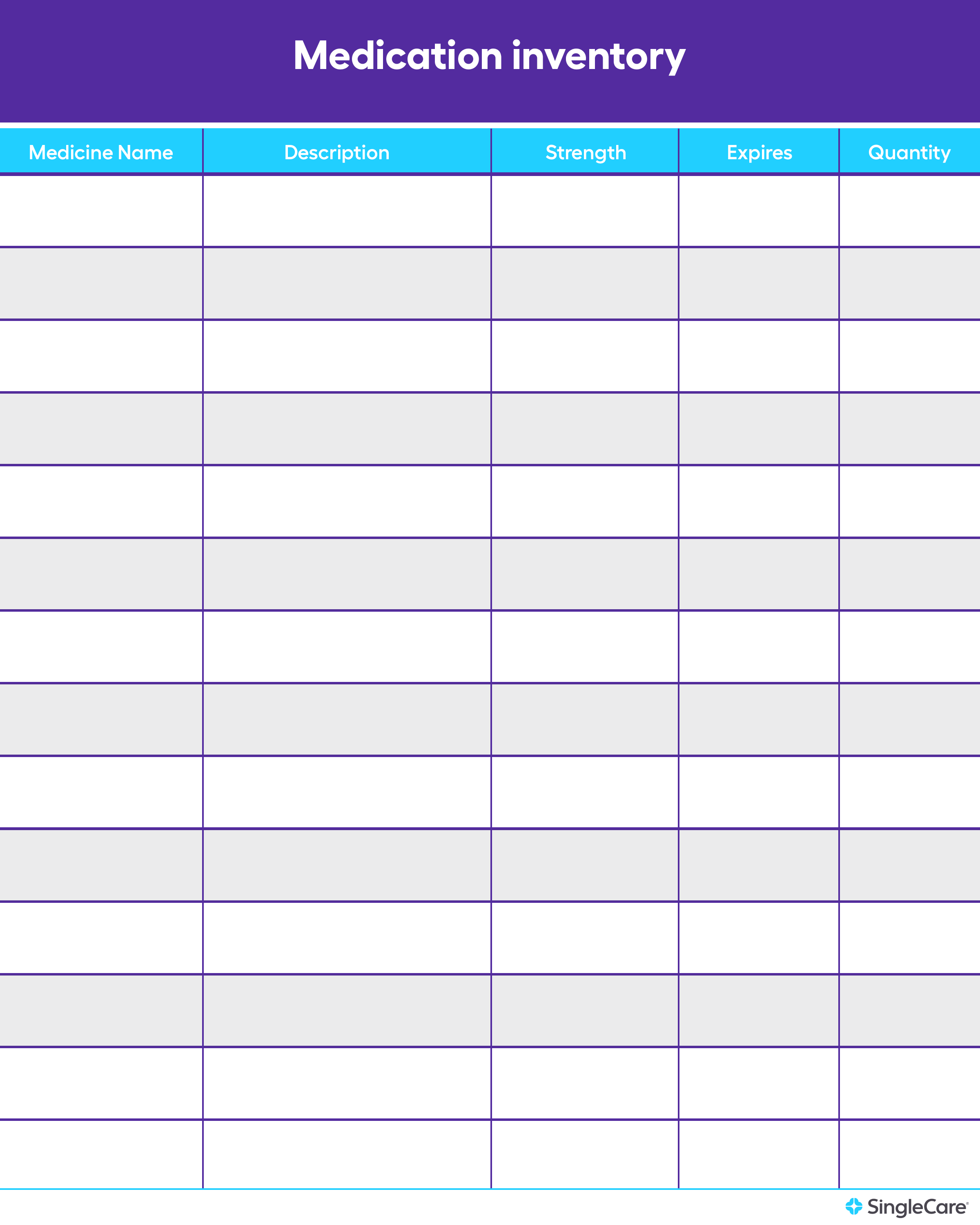
5. Medication inventory template
Over time, medications can become less effective (and possibly dangerous) if they expire. The following inventory template can be helpful for anyone who wants to track what they have in their medicine cabinet, including over-the-counter drugs and vitamins, to make sure they haven’t expired. It’s also a great way to keep track of how much of each medication or supplement a person has on hand.
 DOWNLOAD THIS TEMPLATE FOR FREE
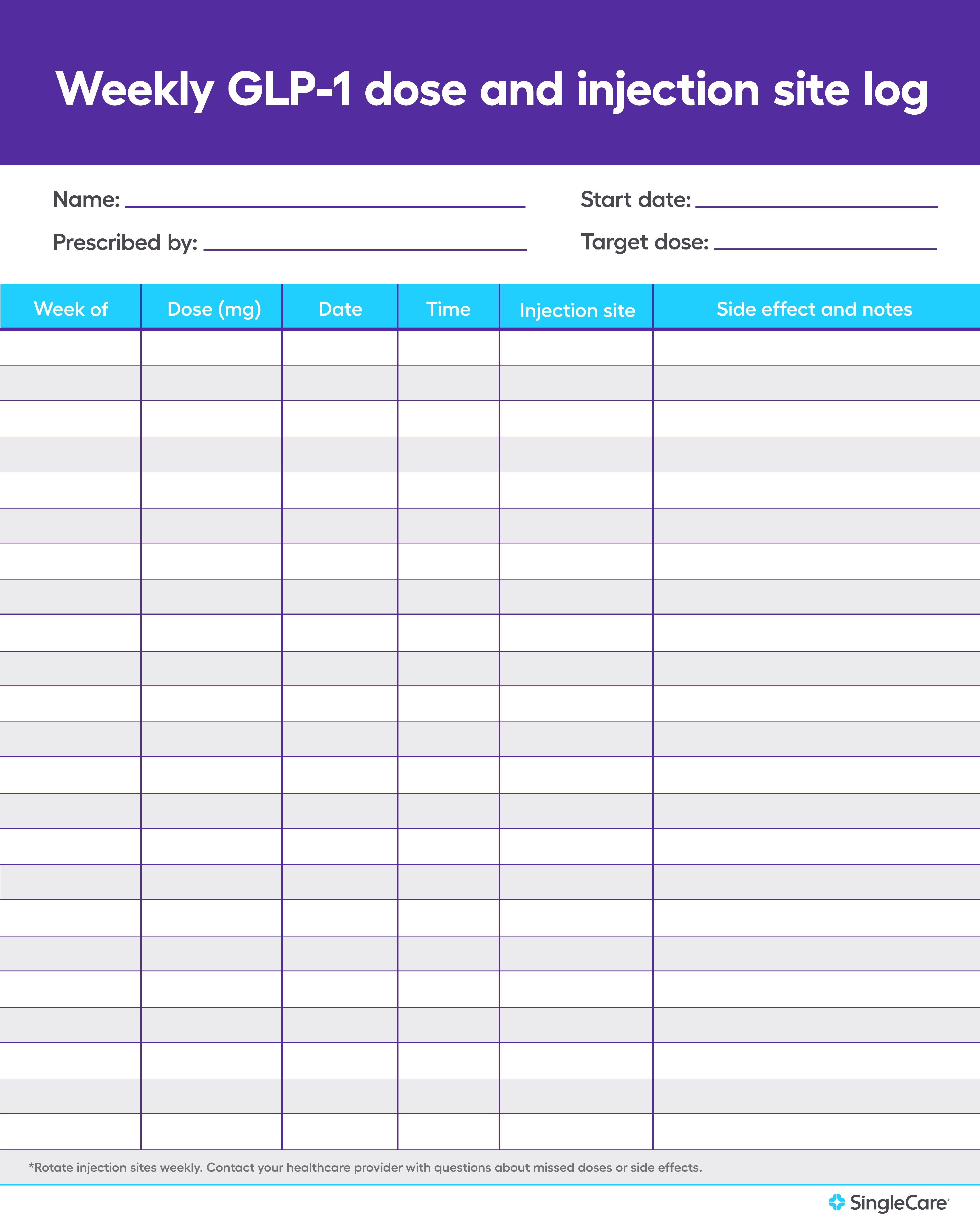
6. Weekly GLP-1 dose and injection site log
GLP-1s like Ozempic, Wegovy, Zepbound, and Mounjaro have a once-weekly dosing schedule that can be easy to forget without a reminder. People taking injectable GLP-1s also need to rotate their injection sites, so it’s important to not only remember when to take it but also which area of the body you should inject it in next. Keeping a weekly Ozempic dose and injection site log can help patients keep track of which day they took their last dose and where they last injected it.
DOWNLOAD THIS TEMPLATE FOR FREE
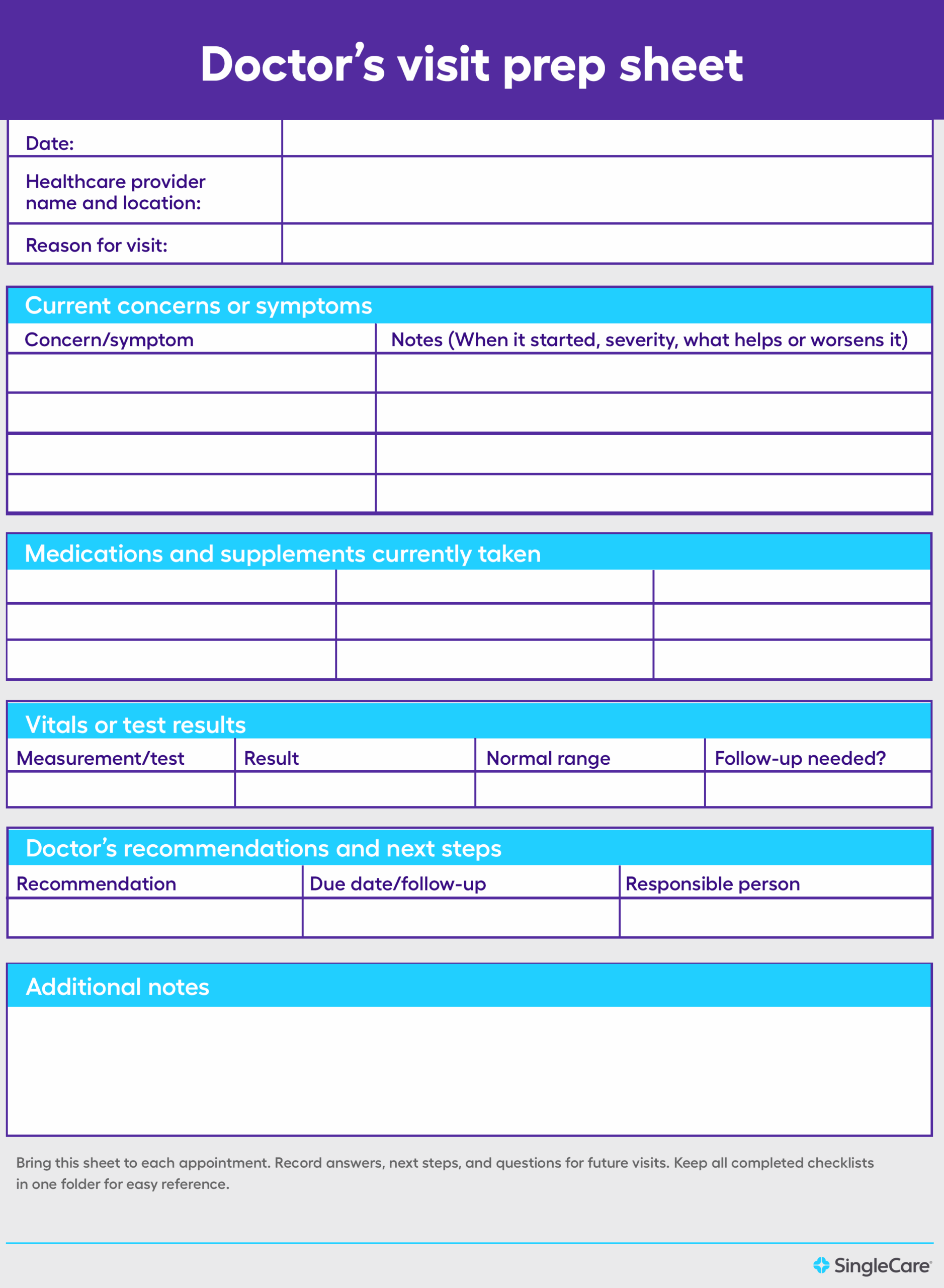
7. Doctor visit prep sheet
Doctor’s visits can be stressful, especially when you have a list of concerns or questions you hope to discuss and want to make sure you don’t forget them. A doctor’s visit prep sheet allows you to organize your thoughts, questions, and symptoms so you can help your healthcare provider better understand your concerns. It can also help you make the best use of your time, reduce anxiety, and lead to better healthcare outcomes overall.
DOWNLOAD THIS TEMPLATE FOR FREE
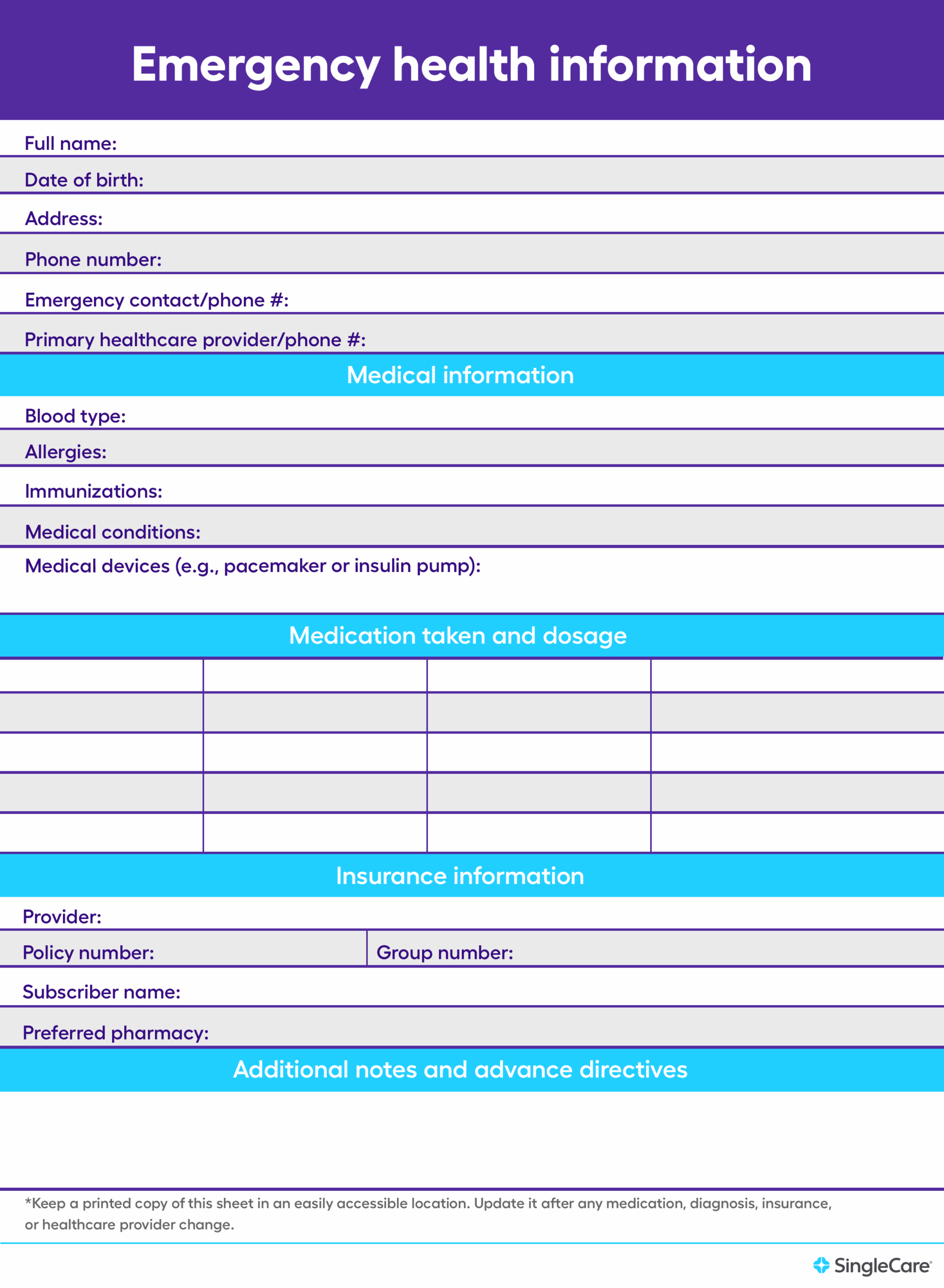
8. Emergency health information sheet
Taking a few moments to complete a physical emergency health information sheet can turn out to be incredibly important during an emergency. Having vital health data ready for first responders and medical professionals enables faster treatment and more accurate diagnoses, especially when you’re not able to communicate them on your own. An emergency health info sheet is especially helpful to caregivers during a health crisis.
DOWNLOAD THIS TEMPLATE FOR FREE
These free downloadable log templates are great for keeping track of medications, but it’s important to note that there’s no one-size-fits-all solution for effective medication management. If a downloadable template works for you, that’s great, but if an app is what’s going to get you to manage your medications more effectively, then go with that instead. At the end of the day, what’s most important is reducing the risk of medication errors by keeping track of when and how a medication should be taken.
Other medication management resources
- Medication management for people with disabilities
- Medication management for seniors
- Alzheimer’s and dementia medication management
- Medication management for cancer patients
- Medically accurate: SingleCare’s Medical Review Board analyzes all of our content to confirm it’s in line with current medical advice.
- Evidence-based: Our content is sourced from reputable U.S.-based healthcare professionals and peer-reviewed research.
- Trustworthy: All of SingleCare’s content goes through a multi-phase review process by our writers, editors, and Medical Board in order to provide clear and credible information.