




 Search for articles or Rx savings


Key takeaways
Mounjaro and Ozempic are both injectable medications approved for the treatment of Type 2 diabetes, along with lifestyle modifications like diet and exercise.
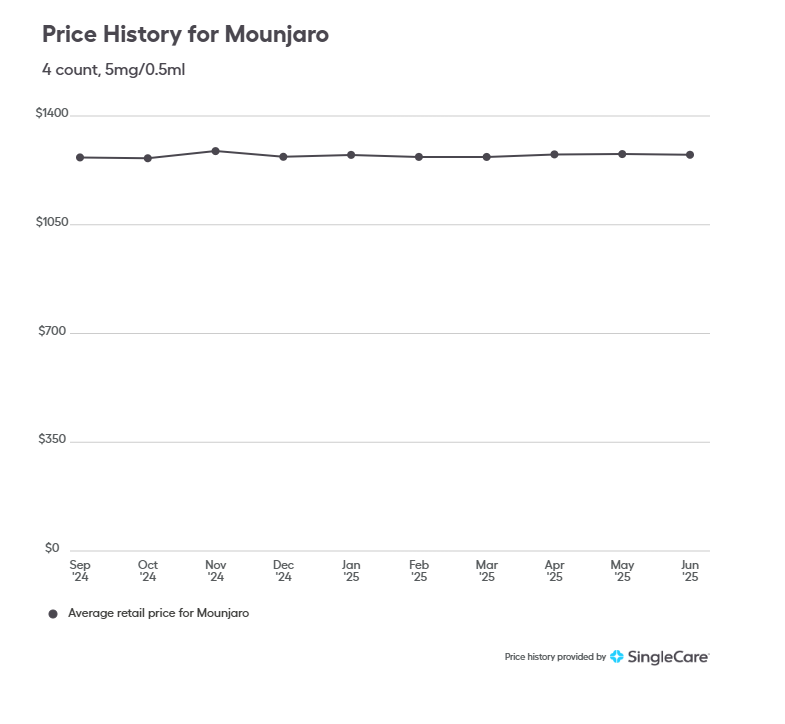
The average retail price of Mounjaro is $1,493 for a one-month supply.
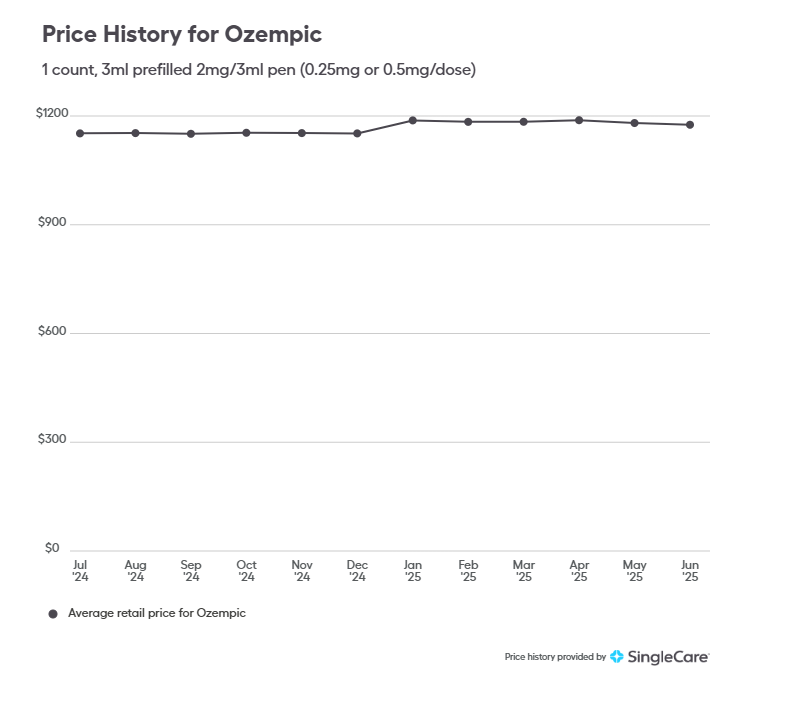
The average retail price of Ozempic is $1,384 for a one-month supply.
The out-of-pocket cost someone pays for Mounjaro or Ozempic depends on several factors, including insurance coverage, location, and pharmacy.


Mounjaro (tirzepatide) and Ozempic (semaglutide) have both made headlines for their weight loss effects, but these once-weekly prescription injections are actually approved for blood sugar control in people with Type 2 diabetes. Because they’re similar drugs with similar uses, some people may wonder which is more expensive. Although one may seem more expensive than the other, your out-of-pocket cost can depend on several factors, such as your location, choice of pharmacy, and insurance coverage.
What’s the difference between Mounjaro and Ozempic?
Mounjaro and Ozempic are both brand-name forms of different glucagon-like peptide-1 receptor agonists (GLP-1s). They are both administered via subcutaneous injection and have similar side effects. The main difference is their active ingredient, in addition to dosages and approved uses.
Ingredients and drug classification
Mounjaro and Ozempic have different active ingredients and belong to different (but overlapping) classes of drugs.
Ozempic is a brand-name form of semaglutide. As a GLP-1 receptor agonist, it activates the GLP-1 receptors, lowering blood sugar, suppressing appetite, and, in turn, reducing body weight.
Mounjaro contains tirzepatide, a dual-action glucose-dependent insulinotropic polypeptide (GIP) and GLP-1 agonist. It targets both GLP-1 and GIP receptors, which makes it slightly more effective than Ozempic at lowering blood sugar and suppressing appetite.
Dosage
Mounjaro and Ozempic are both once-weekly injections, but Mounjaro is prescribed in higher doses.
Mounjaro starts with a 2.5 mg dose injected once weekly and then increases to between 5 mg and 15 mg once weekly. Ozempic dosage starts at 0.25 mg once weekly and then increases to between 0.5 mg and 2 mg weekly. Healthcare providers will monitor their patients to determine whether to increase their dosage during the first few months of treatment.
Approved uses
The Food and Drug Administration (FDA) has approved both Mounjaro and Ozempic to help manage blood sugar levels in adults with Type 2 diabetes. They both work by stimulating insulin production and slowing digestion.
Ozempic is also FDA approved to reduce the risk of cardiovascular problems, such as heart attack and stroke, in people with Type 2 diabetes and heart disease. In 2025, it was also approved to reduce the risk of worsening kidney problems, such as kidney failure, in people with Type 2 diabetes and chronic kidney disease.
Both Mounjaro and Ozempic have not been FDA-approved for weight loss, so they are often used off-label for such. That said, there are FDA-approved weight loss drugs with the same active ingredients but different brand names: Zepbound (tirzepatide) and Wegovy (semaglutide).
How much does Mounjaro cost without insurance?
The average retail price of a one-month supply of Mounjaro is $1,493, but that’s not always what people pay. Prices fluctuate and vary by location and pharmacy. If your health insurance covers Mounjaro, you’ll pay your plan’s copay or coinsurance, not the retail price.
For instance, some people are able to save on Mounjaro with financial assistance. You can also use a SingleCare coupon to reduce the cash price of a one-month supply of Mounjaro to $872.
How much does Ozempic cost without insurance?
The average retail price of a one-month supply of Ozempic is $1,384, but the actual out-of-pocket costs vary by pharmacy, location, and more.
There are several ways to save on Ozempic, even if you don’t have insurance. For example, a SingleCare coupon can reduce the cash price to $825 for a one-month supply.
Mounjaro vs. Ozempic insurance and cost comparison |
||
|---|---|---|
| Mounjaro | Ozempic | |
| Typically covered by insurance? | Yes | Yes |
| Typically covered by Medicare Part D? | Sometimes | Sometimes |
| Quantity | 4 prefilled injection pens | 1 prefilled multidose pen |
| Typical Medicare copay | Varies | Varies |
| Cost without insurance* | $1,469 | $1,368 |
| SingleCare cost* | $872 | $825 |
| Savings | Get coupon | Get coupon |
*Cost at time of publication. Drug prices fluctuate and vary by pharmacy and location.
Does insurance cover Mounjaro?
Sometimes. Insurance coverage for prescription drugs varies by each plan’s policy, and brand-name GLP-1s for diabetes are less likely to be covered than generic drugs. “Even with insurance, unless a patient has certain complications such as cardiovascular disease, uncontrollable diabetes on other medications, kidney disease, and/or obesity, the medication is not likely to be covered,” says Troy Alexander-EL, MD, a board-certified internal medicine physician and founder of Higher Level Healthcare.
Still, some insurance companies do offer plans that cover Mounjaro. For instance, United Healthcare and Blue Cross Blue Shield plans typically cover Mounjaro when prescribed for blood sugar control in Type 2 diabetes. Some plans require prior authorization, so it’s a good idea to check your drug formulary before requesting a prescription from your healthcare provider.
Additionally, Medicaid and Medicare coverage are much more likely for blood sugar control with diabetes treatment than for weight loss.
Does insurance cover Ozempic?
“In my experience, generally Ozempic has better insurance coverage and may be more affordable compared to Mounjaro,” says Vandana Sheth, RDN, CDCES, FAND, a Los Angeles-based registered dietitian nutritionist and certified diabetes educator. “However, coverage and costs vary based on insurance plans, formulary status, as well as pharmacy benefit manager negotiations.” Like Mounjaro, Ozempic is more likely to be covered when prescribed for an FDA-approved use—diabetes treatment, cardiovascular risk reduction, and kidney failure risk reduction—than for weight loss.
Medicare and Medicaid coverage for Ozempic also depends on the specific plan and your reason for using Ozempic. Medicare and Medicaid generally offer coverage for Ozempic when deemed medically necessary.
You can check your cost and coverage for Ozempic with this tool from Novo Nordisk, the manufacturer of Ozempic.
RELATED: How to get Ozempic covered by insurance
Bottom line
Mounjaro costs slightly more than Ozempic. However, your actual out-of-pocket costs for Mounjaro versus Ozempic depend on insurance coverage and the reason you’re taking it. SingleCare coupons can also help you save hundreds per month on the price of Mounjaro or Ozempic.
Ultimately, only a healthcare professional familiar with your health conditions, medical history, and other medications you’re taking can recommend whether Mounjaro, Ozempic, or another diabetes medication or weight loss treatment is best for you.
- Ozempic prescribing information, Food and Drug Administration (2025)
- Mounjaro prescribing information, Food and Drug Administration (2025)
- FDA approves Ozempic® (semaglutide) as the only GLP-1 RA to reduce the risk of worsening kidney disease and cardiovascular death in adults with Type 2 diabetes and chronic kidney disease, Novo Nordisk USA (2025)
- Check your cost and coverage, NovoCare