Food poisoning
Food poisoning symptoms: What are the early signs of food poisoning?


Overview: What does food poisoning feel like?
Food poisoning happens when people eat contaminated food. If it sounds familiar, it is. One in six people gets food poisoning annually in the U.S.—48 million people a year. Over 100,000 end up in the hospital. The simple fact is this: people who eat food will eventually eat something that makes them sick. All sorts of things can make food bad: bacteria, viruses, molds, parasites, poisons, and allergens, but mostly infectious microbes. These microbes are most likely found in raw meat, undercooked meat, shellfish, hot dogs, deli meat, dairy products like unpasteurized milk and soft cheeses, raw fruits, and contaminated water. What does food poisoning feel like? It feels bad. Depending on the cause, people with food poisoning have stomach cramps, diarrhea, nausea, vomiting, fever, and sometimes worse. The good news is that the problem usually clears up in two or three days. The bad news is that some people can get very sick and end up in a hospital.
Key takeaways:
Food poisoning is a common health condition that can affect anyone regardless of age, sex, race, or ethnicity.
Early signs of food poisoning include nausea, vomiting, stomach cramps, or diarrhea.
Severe symptoms of food poisoning such as dehydration, high fever, severe abdominal pain, or bloody diarrhea may require immediate medical attention.
Food poisoning is caused by bacteria, viruses, fungi, parasites, toxins, and allergens. People at a higher risk for developing severe food poisoning symptoms include older adults (65+), young children younger than 5, pregnant women, or people with a weakened immune system.
Food poisoning is often self-diagnosable.
Symptoms of food poisoning generally do not require treatment. They typically resolve without treatment within two or three days.
Treatment of food poisoning may include antibiotics, antidiarrheal agents, antiparasitic medications, or oral rehydration treatments. Read more about food poisoning treatments here.
Untreated food poisoning could result in complications like severe dehydration, kidney disease, kidney failure, meningitis, nervous system damage, or problems with an unborn baby.
Save on prescriptions for food poisoning with a SingleCare prescription discount card.
What are the early signs of food poisoning?
The early signs of food poisoning are usually nausea, vomiting, diarrhea, and stomach upset.
Other food poisoning symptoms
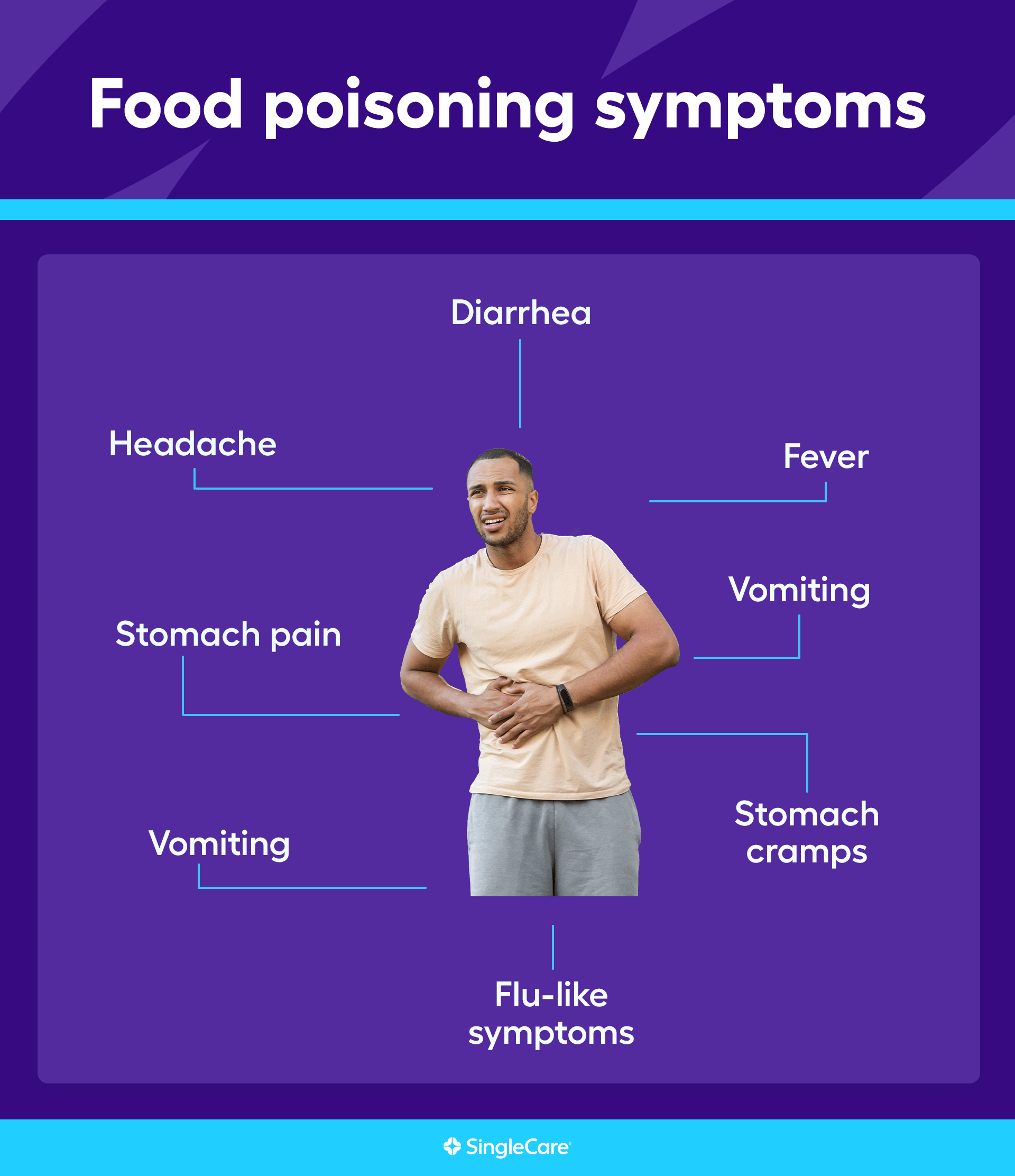
Many of the common symptoms of food poisoning depend on the cause. These include:
Diarrhea
Vomiting
Fever
Stomach pain
Stomach cramps
Chills
Headache
Flu-like symptoms
Severe symptoms of food poisoning will require medical attention. Again, these symptoms will depend on the cause. These include:
Profuse watery diarrhea
Bloody diarrhea
Severe vomiting
Severe dehydration
High fever
Confusion (Listeria)
Seizures (Listeria)
Muscle weakness (botulism)
Double vision (botulism)
Slurred speech (botulism)
Food poisoning vs. stomach flu symptoms
Although it’s common for people to say they’ve caught a stomach bug or stomach flu, it’s not flu at all (which is a respiratory infection caused by the influenza virus). Instead, stomach flu is what healthcare professionals call “gastroenteritis.” It is often a “bug,” that is, a bacterial, viral, or parasitic infection. However, when people say “stomach flu,” they usually are talking about viral gastroenteritis. Stomach flu is caught by eating virus-contaminated fecal material either in food or some other way, such as touching your hand to your mouth after touching a contaminated surface like a door knob or someone else’s hand. Since viral gastroenteritis could be considered a type of food poisoning if contracted via contaminated food, the symptoms are the same.
RELATED: The parent’s guide to stomach bugs
Types of gastroenteritis: How can I tell which one I have?
Gastroenteritis can be classified by how long symptoms are experienced:
Acute: symptoms last for two weeks or less
Persistent: symptoms last from between two weeks to 30 days
Chronic: symptoms last for longer than a month
Recurrent: diarrhea that comes back after a week of remission
How long symptoms persist, however, doesn’t help to solve the problem. Healthcare providers, then, need to diagnose the cause of food poisoning:
Bacterial gastroenteritis: intestinal infections caused by bacteria such as Escherichia coli, Staphylococcus aureus (“staph” infections), Salmonella, Campylobacter, and Shigella—some of these bacterial infections, such as Salmonella, Shigella, E. coli, Clostridium botulinum, or Listeria, can develop into severe and even life-threatening medical conditions
Viral gastroenteritis: intestinal infections caused by norovirus, rotavirus, adenovirus, and others
Parasitic gastroenteritis: intestinal infections caused by microscopic animals like amoebas and cyclospora
Toxin-mediated gastroenteritis: eating food contaminated with bacterial poisons—this is what healthcare providers mean by the term “food poisoning,” and some of these poisons, like botulin toxin, can be fatal
Allergic gastroenteritis: an allergic reaction in the digestive system to food—there are usually many other symptoms such as tingling in the mouth, difficulty swallowing, facial swelling, or wheezing
It’s not easy to tell what’s causing food poisoning symptoms. Healthcare professionals can make a good guess based on the symptoms, but the symptoms are usually not specific enough to be able to zero in on the exact treatment.
That being said, different types of food poisoning do have different presentations. It’s not essential to know these differences if symptoms are mild. However, if symptoms are severe, it is important to recognize them as symptoms requiring treatment. Don’t worry about the cause. Just learn to recognize these severe symptoms and go to the emergency room when they show up.
When to see a doctor for food poisoning symptoms
See a doctor if experiencing symptoms such as:
Diarrhea or vomiting that persists for longer than three days
Severe vomiting
Inability to keep fluids down for a day or longer
Watery or bloody diarrhea
Signs of dehydration such as extreme thirst, dry mouth, dark urine, infrequent urination, dizziness, and feeling tired
Fever higher than 102 degrees
Symptoms in a higher risk individuals, such as young children, seniors, pregnant women, or anyone with a weak immune system
Symptoms of a potentially serious infection require emergency medical treatment. These include:
Signs of a Listeria infection such as a stiff neck, headache, muscle pain, confusion, balance problems, or seizures
Signs of botulism such as muscle weakness, slurred speech, drooping eyelids, double vision, difficulty breathing, or paralysis
Urinary symptoms, including infrequent or no urination, blood in the urine, and anemia
A doctor will start the diagnosis by taking a medical history and doing a physical exam. Be prepared to tell the doctor what foods have been eaten, the symptoms experienced, and when the symptoms started. A stool sample will probably be needed to identify the infecting microbe. A blood test may also be needed. People poisoned with botulin toxin may require a brain scan and nerve testing.
Complications of food poisoning
Some infections can lead to serious and even life-threatening complications including:
Severe dehydration from diarrhea or vomiting
Nervous system infections such as meningitis (Listeria)
Paralysis or death (botulin toxin)
Hemolytic uremic syndrome (anemia, low platelet counts, and kidney injury as a result of Shigella or E. coli infections)
How to treat food poisoning symptoms
Food poisoning usually doesn’t require treatment. Symptoms will resolve within two or three days in most cases. Rest and drinking fluids are all that is usually required. If diarrhea is a problem, an over-the-counter remedy should be sufficient if approved by a healthcare provider. Antidiarrheals are not always recommended. If diarrhea is bad, consider using oral rehydration solutions that contain electrolytes such as Pedialyte.
If medical help is needed, a doctor may prescribe antibiotics for bacterial infections, antiparasitics such as Vandazole (metronidazole) for parasite infection, or intravenous or oral rehydration solutions for dehydration. Botulism is treated with antitoxin and hospital care.
How long will food poisoning last?
Most people with food poisoning just need to wait it out. Even some potentially severe infections such as Listeria or E. coli typically resolve on their own without causing anything other than stomach cramps and diarrhea for a few days. As long as the symptoms are mild, no medical help is needed. Just do a few things to help stay healthy and comfortable during the recovery period:
Rest
Drink plenty of fluids
Consider using electrolyte drinks if vomiting or diarrhea is a problem
Eat what you can, but you may want to first try bland, low-residue foods like white bread, boiled starches (potatoes or noodles), white rice, lean meats, soups, crackers, or eggs
Use a hot water bottle or heating pad to help relieve stomach cramps
Most importantly, clean and cook your food
The best way to treat food poisoning is not to get it. Wash food when preparing it, keep cooking surfaces such as cutting boards clean, cook the food completely, and store it in a refrigerator. To avoid botulism, remember that botulinum toxin is more often found in home-preserved low-acid foods like green vegetables, fish, and meat. In the long run, even careful food preparation and storage will not guarantee a lifetime that is free of food poisoning. When food makes you ill, take care of yourself and watch for worsening. If the symptoms are severe, get medical help. Only a healthcare professional can definitively identify and treat the cause of the problem.
RELATED: How to prevent food poisoning
FAQs about food poisoning symptoms
What does food poisoning feel like when it starts?
The first signs of food poisoning are typically nausea, diarrhea, vomiting, and stomach pain.
How long does food poisoning last?
Once symptoms start, they typically go away in about two to three days. See a healthcare professional if symptoms last longer than that or get worse.
Is it food poisoning or am I sick?
To be completely clear, healthcare providers generally consider “food poisoning” to be limited to eating foods that are contaminated with a poison like botulinum toxin. However, most people use “food poisoning” to describe any kind of food-borne illness, including a stomach virus, a viral infection of the digestive system. A stomach virus is mostly spread through food, but it is often caught by swallowing fecal material, so “food-borne” is not quite the best description. Still, the virus is caught by something you eat.
The more relevant question is: am I sick with a bacterial or viral infection? Or worse? In most cases, it’s hard to tell. If symptoms are mild, the experience is pretty much the same. In severe cases of food poisoning, a healthcare professional is required to figure out what’s causing the problem and treat it appropriately. So it pays to be familiar with the signs of a severe digestive system infection or food poisoning. That’s the time to get medical help.
RELATED: Rotavirus vs. norovirus vs. stomach flu: compare causes, symptoms, treatments, & more
What’s next? Additional resources for people with food poisoning symptoms
Test and diagnostics
Bacterial gastroenteritis, StatPearls
Diagnosis and management of foodborne illnesses, American Family Physician
People at risk of food poisoning, FoodSafety.gov
Viral gastroenteritis, StatPearls
Treatments
E. coli treatments and medications, SingleCare
Salmonella treatments and medications, SingleCare
Stomach flu treatments and medications, SingleCare
Scientific studies and clinical trials
Food safety in the 21, Biomedical Journal
More information on related health conditions
Botulism, Centers for Disease Control and Prevention (CDC)
Diarrhea treatments and medications, SingleCare
Hemolytic uremic syndrome, StatPearls
Subscribe to our savings newsletter
Health education, drug info, wellness & more
By clicking 'Subscribe', I agree to SingleCare's Terms & Conditions.








