





Key takeaways
Beets may help support healthy blood pressure, enhance digestion, support liver health, and boost antioxidant levels.
Regular consumption of beets can reduce inflammation, support female fertility, and promote skin health due to their anti-inflammatory and antioxidant properties.
Beets can increase endurance and improve exercise performance by enhancing blood flow, gas exchange, and muscle contraction.


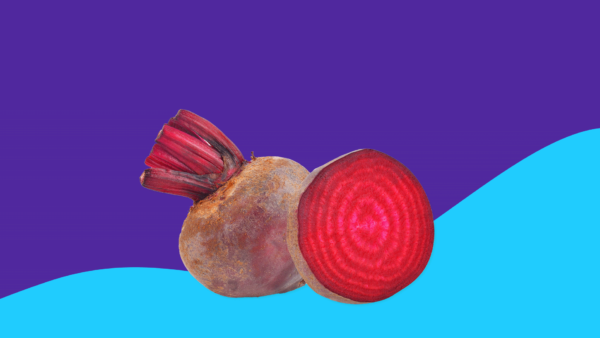
Beets may not be the first vegetable on your favorite foods list, but they are incredibly good for your overall health. The part of the beet you typically eat, i.e., the bulbous part under the stem, is technically the taproot or “beetroot,” though most of us just call it a beet. Whatever you know it as—and however you prepare it, from sliced raw to juiced to pickled to roasted—the veggie is a nutritional powerhouse. It’s low in calories, packed with vitamin antioxidants, anti-inflammatory compounds, heart-healthy nitrates, and a few other unexpected benefits.
Here are 8 reasons to say, “Pass the beets!”
8 health benefits of beets
Whether bright red, deep purple, or yellow-gold, vibrant pigmentation means that beets are full of vitamins and minerals. But to think that beet benefits stop there is an understatement; they can do a whole lot more than simply round out your nutrient intake. Beets are a true superfood—here’s why.
1. Lower blood pressure
Beets are high in plant-based nitrates, magnesium, and potassium, which help support healthy blood pressure, according to Inna Melamed, Pharm.D., functional medicine practitioner and author of Digestive Reset. Nitrates help relax blood vessels, which can help lower blood pressure. When you eat beets regularly, says Dr. Melamed, they may help lower high blood pressure. If you have high blood pressure, continue to take your blood pressure medication. Consider checking your blood pressure daily. If you already have low blood pressure, or if your blood pressure drops below 90/60 or you feel weak or fatigued, see your provider for advice.
In fact, one study found beetroot juice to be an accessible, affordable, and effective treatment for controlling hypertension across several different populations. And a meta-analysis found beetroot juice to lower systolic (the top number in a blood pressure reading) blood pressure. Another study found that drinking beetroot juice lowered blood pressure in older adults. That’s important, because controlling your blood pressure can help to decrease heart disease risk and improve heart health.
2. Improve digestive health
One cup of beets provides almost four grams of fiber, or 15% of your daily value (DV). Meaning, they help regulate your bowel movements, including relieving symptoms of constipation. Plus all of that fiber content feeds your gut microbiome, which some research shows may lead to better blood sugar and metabolism regulation.
3. May support liver health
There are a few compounds in beets that can support liver health, but the biggest one is betalains, phytonutrients found naturally in red beets.
Betalains have been linked to liver function through studies examining their effect on nonalcoholic fatty liver disease; in one small human study, supplementation with beetroot powder reduced liver enzymes, lipids, and overall liver size, while another study in rodents found a decrease in liver stress, fat, and inflammation after treatment with beetroot powder.
4. Boost your antioxidants
One serving of beets contains up to 11% of your DV of vitamin C, so your immune system will thank you for the boost! Plus, beetroot is a good source of the mineral manganese, which, among other functions, helps the enzymes that metabolize glucose do their job.
5. Lower inflammation
On top of all that, beets have anti-inflammatory properties, thanks to those betalains mentioned earlier. It doesn’t matter whether you choose red, purple, or yellow beets—even though the betalains vary slightly across the color spectrum, says Lauren Manaker, MS, registered dietitian and author of Fueling Male Fertility, they’re all equally good for you.
“Different plant compounds are responsible for making the beets different colors, but despite the different chemical makeup of the compounds found in the different beet varieties, you will still get potential anti-inflammatory benefits from consuming them,” she explains.
6. May support female fertility
Consuming beets may support female fertility in two different ways: by improving blood flow to the uterus and increasing the amount of folate in your diet. “Some data suggests that drinking beet juice may help support IVF success among females who are struggling with their fertility,” Manaker says, explaining that beetroot’s high nitrate content dilates blood vessels and allows a rich supply of oxygenated, nutrient-rich blood to flow to the uterus.
In fact, a study of nearly 300 women found that people who drank a combination of beet juice, watermelon juice, and ginger appeared to have better IVF outcomes compared to people who didn’t drink it.
Meanwhile, beets are also loaded with folate, a critical nutrient for women in the early stages of pregnancy; getting enough folic acid before becoming pregnant and during early pregnancy can reduce the risk of developing certain birth defects, Manaker says.
7. Improve skin health
Because beets contain so many anti-inflammatory and antioxidant properties, says Manaker, some data suggests that eating them may help support skin health. Vitamin C, in particular, might play a big part here. While the data is somewhat limited, some research suggests that both topical and dietary vitamin C (like the kind found in beetroot) can reduce UV damage and wrinkling, speed up wound healing, and boost collagen production.
8. Increase endurance and athletic performance
It all comes back to dietary nitrates, at least when you’re talking about beets. One last benefit of these nitrogen-based compounds, Manaker says, is enhanced athletic performance: “Because beetroot increases levels of nitric oxide, which is linked to increased blood flow, gas exchange, and strengthening of muscle contraction, athletes may benefit from eating this vegetable before they perform.”
There is research to back this up, such as a study suggesting that beetroot supplementation can fuel muscle function and another study reporting that beetroot juice can make you more successful at intermittent, high-intensity exercising. A research review found that beetroot juice may improve endurance and athletic performance. A diet high in nitrates can also improve cognitive function.
Side effects of beets
There are only a few things to note when it comes to being cautious about your consumption of beets. Anyone with hypotension or taking medication that lowers blood pressure should be aware of the blood pressure effects of eating beets and consult with their provider or a nutritionist about how to eat beets without causing dangerously low blood pressure.
People who take potassium-sparing diuretics, such as spironolactone, may need to watch their potassium intake, so check with your healthcare provider about eating beets, which contain a good amount of potassium. Consider buying a blood pressure cuff, take your blood pressure daily, write down the values, and discuss your results with your provider.
Kidney stones and oxalates
Dr. Melamed also warns that beets have a high amount of oxalates, which can form mineral crystals throughout the body (like kidney stones, for example). People with a history of calcium oxalate kidney stones (the most common type of kidney stone) may need to limit their intake of beets.
How to eat beets
Raw beets, canned beets, pickled beets, roasted beets, soups, beet juice…the possibilities are endless, but does how you consume beets have an effect on the nutritional profile?
- “Raw beets appear to retain more nutrients than cooked,” says Manaker, “but that shouldn’t deter people from eating beets in any form, because no matter how they are eaten, there are nutritional benefits to be reaped when they are enjoyed.”
- Canned beets, notes Manaker, offer a little less nutrition than fresh beets and may contain added salt, but they’re still a good choice (and you can look for no added salt in the brands you choose).
- Drinking beet juice allows you to consume a larger serving size of beets more easily, but according to Manaker, you also miss out on a lot of the dietary fiber when you drink beet juice versus eating whole beets.
As far as working more beets into your diet, there are more ways than you might think! “Beets can be eaten as an addition to salads, roasted and enjoyed as a side dish, juiced for a sippable snack, or freeze-dried [to a crunchy form]…and added to surprising dishes, like pizza and pasta,” says Manaker. You can even add beet greens anywhere you would use spinach or kale, even adding them to smoothies or hummus.
Another unexpected thing you might want to keep in mind when adding beets to your diet? The time of day you eat them: Some conventional wisdom says you should consume beets or beet juice at breakfast, and Dr. Melamed says there is some truth to this: “Since beets and beet juice have that vasodilatory effect, they open up the blood flow and oxygen to the body, making you feel energetic in the morning [when you most need it].”
Bottom line: Are beets healthy?
Beets are healthier than you probably realize! According to Dr. Melamed, the typical serving size recommendation is one cup of cooked beets per day. But that doesn’t mean you actually have to eat them every day; it’s always best, she adds, to rotate your healthy foods so you get a variety of vitamins, minerals, and nutrients.
The exception, says Dr. Melamed, is when using beet consumption as a treatment for hypertension: “Ideally, you don’t want to eat beets daily unless you are trying to [lower your] blood pressure and use it for medicinal purposes.”
Frequently asked questions
Are beets good for men?
Yes, beets are good for men. With their vitamins, minerals, and antioxidants, beets are great for overall health. They may also support healthy blood pressure and circulation.
Can beets turn your urine or poop red?
Yes, due to a natural pigment called betanin, beets can turn your urine and poop a harmless red color; this is known as beeturia.
What happens if you eat beets every day?
Eating beets regularly provides you with lots of healthy vitamins and minerals and may support healthy blood pressure and circulation.
Do beets interact with any medications?
Yes. Beets may interact with medications, sucha s diuretics or blood pressure medications. Check with your healthcare provider before making significant changes to your diet.
- Dietary nitrate from beetroot juice for hypertension: A systematic review, Biomolecules (2018)
- Ageing modifies the oral microbiome, nitric oxide bioavailability and vascular responses to dietary nitrate supplementation, Free Radical Biology and Medicine (2025)
- Effects of beetroot juice on blood pressure in hypertension according to European Society of Hypertension Guidelines: A systematic review and meta-analysis, Nutrition, Metabolism and Cardiovascular Diseases (2024)
- Dietary fiber, gut microbiota, and metabolic regulation—Current status in human randomized trials, Nutrients (2020)
- Beetroot supplementation on non-alcoholic fatty liver disease patients, Current Research in Nutrition and Food Science (2019)
- Beta vulgaris L. (Beetroot) Methanolic extract prevents hepatic steatosis and liver damage in T2DM Rats by hypoglycemic, insulin-sensitizing, antioxidant effects, and upregulation of PPARα, Biology (2021)
- Manganese, Royal Society of Chemistry (2013)
- Anti-inflammatory activity of betalains: A comprehensive review, Human Nutrition & Metabolism (2021)
- Beetroot, watermelon and ginger juice supplementation may increase the clinical outcomes of intracytoplasmic sperm injection cycles, Fertility & Sterility (2019)
- About folic acid, Centers for Disease Control and Prevention (2026)
- Vitamin C and skin health, Oregon State University (2026)
- Possible effects of beetroot supplementation on physical performance through metabolic, neuroendocrine, and antioxidant mechanisms: A narrative review of the literature, Frontiers in Nutrition (2021)
- Effects of beetroot juice supplementation on intermittent high-intensity exercise efforts, Journal of the International Society of Sports Nutrition (2018)
- Beetroot juice and exercise for clinical health and athletic performance: A narrative review, Nutrients (2026)
- Dietary oxalate and kidney stone formation, American Journal of Physiology Renal Physiology (2018)
Featured experts
- Inna Melamed, Pharm.D., a functional medicine practitioner and author of “Digestive Reset.”
- Lauren Manaker, MS, RDN, LD, a registered dietitian and author of “Fueling Male Fertility.”
- Medically accurate: SingleCare’s Medical Review Board analyzes all of our content to confirm it’s in line with current medical advice.
- Evidence-based: Our content is sourced from reputable U.S.-based healthcare professionals and peer-reviewed research.
- Trustworthy: All of SingleCare’s content goes through a multi-phase review process by our writers, editors, and Medical Board in order to provide clear and credible information.