






Key takeaways
Combining cyclobenzaprine and alcohol can cause side effects, such as drowsiness, dizziness, and decreased awareness.
Certain health conditions increase the risk of serious side effects when combining alcohol and cyclobenzaprine, both central nervous system depressants.
Always consult a healthcare professional before consuming alcohol while taking cyclobenzaprine.


Cyclobenzaprine—sold under the brand names Amrix, Flexeril, or Fexmid— is a muscle relaxant. It is approved by the Food and Drug Administration (FDA) for the short-term treatment of muscle spasms caused by sudden, painful skeletal muscle conditions. It is typically only taken for up to two to three weeks at a time for pain relief, but many people wonder if they can have a drink while taking this drug. The short answer: no, you shouldn’t. Mixing cyclobenzaprine and alcohol can intensify side effects and lead to serious health risks.
Read on to learn why combining cyclobenzaprine and alcohol is not recommended.
Can you drink while taking cyclobenzaprine?
If you’ve ever wondered whether it’s safe to drink alcohol while taking cyclobenzaprine, you’re not alone.
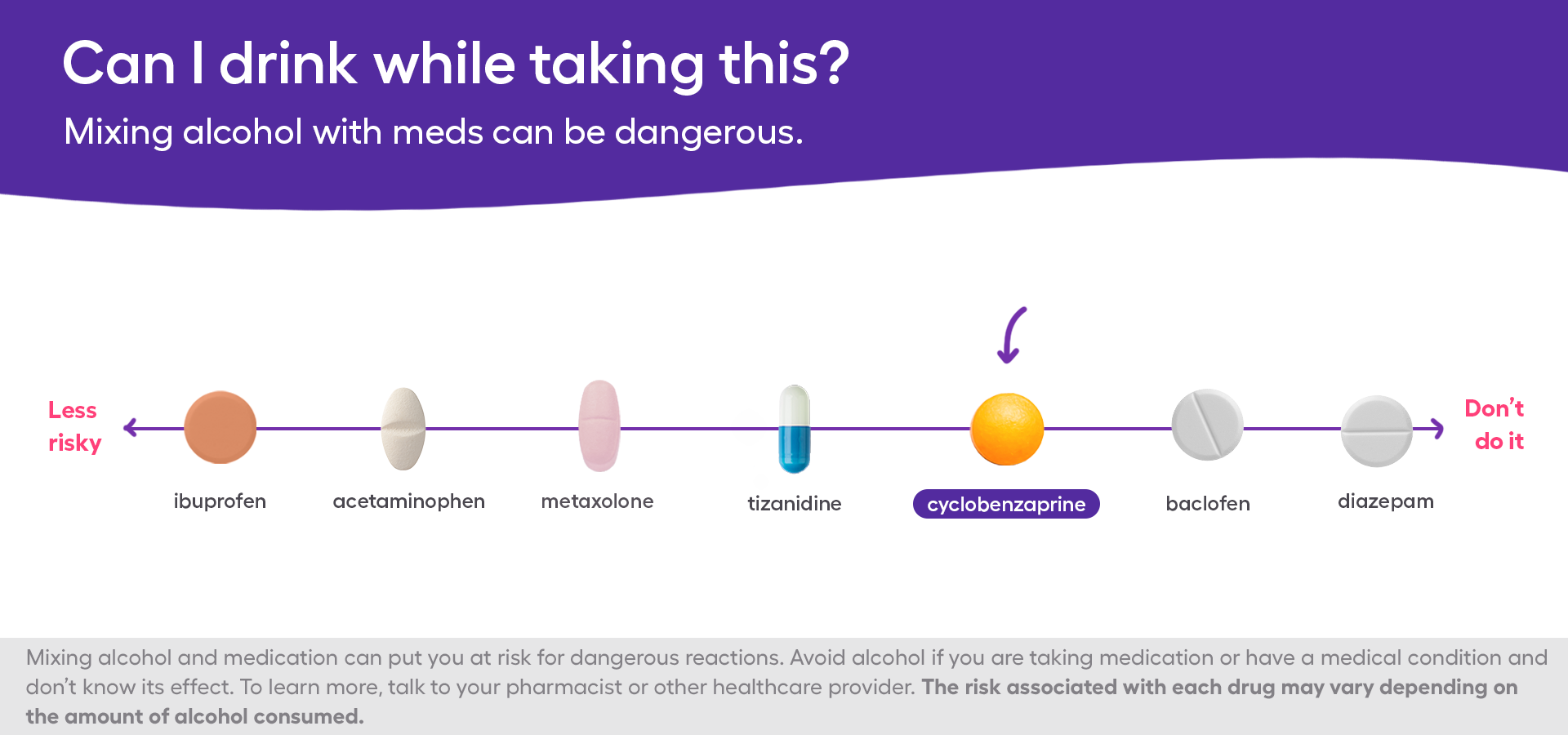
According to the drug manufacturer, it is risky to mix cyclobenzaprine and alcohol. In addition to common side effects of cyclobenzaprine like constipation and dry mouth, both substances depress, or slow down, your central nervous system (CNS). That’s the part of your body that controls functions like breathing, coordination, and alertness. Alcohol is a CNS depressant that has a similar effect. When taken together, they can intensify these effects, increasing the risk of extreme drowsiness, slowed reflexes, poor coordination, and impaired judgment.
What’s more, cyclobenzaprine can affect liver function, leading to complications such as hepatitis, jaundice (yellowing of the skin or eyes), and cholestasis (slowing of the flow of bile). Because alcohol is metabolized by the liver and can cause liver damage on its own, mixing the two raises the risk of liver injury.
Save up to 80% on Cyclobenzaprine with SingleCare
Different pharmacies offer different prices for the same medication. SingleCare helps find the best price for you.


What happens if you mix cyclobenzaprine and alcohol?
Combining cyclobenzaprine with alcohol can greatly increase the risk of side effects that affect your brain, coordination, and overall safety. Both substances slow down the central nervous system (CNS), which controls alertness, muscle movement, and reflexes, so their effects compound when used together. Here’s what you might experience if you mix the two:
- Excessive drowsiness: Both cyclobenzaprine and alcohol can make you drowsy. When combined, they can cause extreme drowsiness that may interfere with normal activities or make it unsafe to drive.
- Dizziness and lightheadedness: The combination can make you feel unsteady or off-balance, increasing the risk of falls and injuries.
- Slowed thinking and poor concentration: Because both substances slow down your brain activity, it can make it harder to think, focus, react, and remember things. Even small amounts of alcohol can worsen this effect.
- Loss of coordination and balance: Substances that slow your brain function, such as cyclobenzaprine and alcohol, can make it harder to move safely, potentially leading to falls or injuries—especially for older adults.
- Increased risk of overdose: Combining cyclobenzaprine with alcohol can increase the risk of overdose, which can cause life-threatening symptoms such as drowsiness, fast heart rate, shakiness, agitation, dizziness, slurred speech, irregular heartbeat, impaired motor control, and respiratory depression.
Are certain people at greater risk of side effects?
It’s always best to talk to a healthcare provider before drinking alcohol with any medication. With cyclobenzaprine in particular, some people face a higher risk of side effects when alcohol is involved.
Drug interactions that increase the risk of adverse effects include prescription drugs, including opioids and benzodiazepines like valium and diazepam, and over-the-counter medications like antihistamines. Seek medical advice from a healthcare provider if you’re seeking alternative treatment options.
Older adults (65 and over)
People aged 65 years or older are more likely to experience stronger effects of cyclobenzaprine. As we age, the body processes medications more slowly, which can cause the drug to build up in the system. This can lead to increased drowsiness, dizziness, and impaired coordination—effects that become even more dangerous when combined with alcohol.
People with liver problems
Because cyclobenzaprine is metabolized by the liver, people with liver impairment may not break down the drug efficiently. This can result in higher levels of the medication in the bloodstream and a greater risk of toxicity and sedation. Adding alcohol, which also strains the liver, further increases the likelihood of side effects and potential liver damage.
How long after taking cyclobenzaprine can you drink alcohol?
If you’re wondering how long to wait before drinking alcohol after taking cyclobenzaprine, the safest answer is: Wait until the medication is completely out of your system, which may take a while.
There are no official guidelines on exactly how long to wait since it can vary by person. However, cyclobenzaprine has an average half-life of 18 hours, meaning it takes that long for half the drug to be eliminated from your body. It usually takes about five half-lives for a medication to fully clear, which means it may take almost four full days for cyclobenzaprine to leave your system. To be safe, it is best to consult a healthcare provider to determine when it is okay to have a drink after completing cyclobenzaprine treatment.
Which muscle relaxants are not affected by alcohol?
Unfortunately, no muscle relaxant is completely safe to take with alcohol. All drugs in this class interact with alcohol in similar ways, by slowing your brain function in order to treat your muscle pain. Common examples of muscle relaxers include:
- Soma (carisoprodol)
- Zanaflex (tizanidine)
- Lioresal (baclofen)
- Robaxin (methocarbamol)
- Skelaxin (metaxolone)
Because all of these medications affect the CNS, it’s best to avoid alcohol altogether while using them and ask your healthcare provider for safer ways to manage pain or muscle tension if you plan to drink.
The bottom line
Mixing cyclobenzaprine and alcohol is not safe. Both substances slow brain activity, and when taken together, the combination can intensify side effects such as drowsiness, dizziness, lack of coordination and balance, and decreased awareness.
Certain people, especially older adults and those with liver problems, are more vulnerable to these effects. To stay safe, avoid alcohol while taking cyclobenzaprine and talk to your healthcare provider if you have questions about when it’s safe to drink again after finishing your prescription.
- Alcohol’s effects on health, National Institute on Alcohol Abuse and Alcoholism (2025)
- Cyclobenzaprine tablets full prescribing information, DailyMed (2025)
- Elimination half-life of drugs, StatPearls (2025)
- Muscle relaxers, Cleveland Clinic (2023)
- Medically accurate: SingleCare’s Medical Review Board analyzes all of our content to confirm it’s in line with current medical advice.
- Evidence-based: Our content is sourced from reputable U.S.-based healthcare professionals and peer-reviewed research.
- Trustworthy: All of SingleCare’s content goes through a multi-phase review process by our writers, editors, and Medical Board in order to provide clear and credible information.