





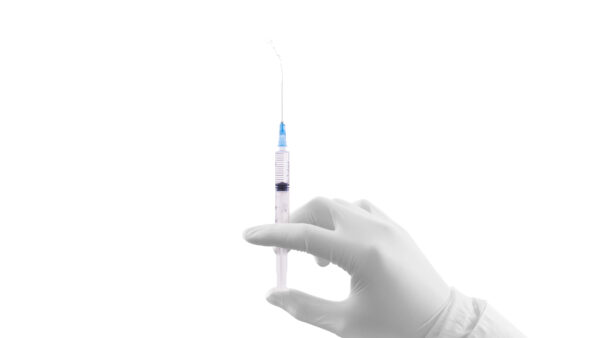
Key takeaways
When choosing a single-dose Dupixent pen or syringe, consider factors such as age, ease of use, potential pain, and dose to determine which type of injection works best for you.
People taking Dupixent can avoid misuse or injury by checking the needles for damage or expiration, prepping the injection site, and administering the medication properly.
Tips for using single-use Dupixent pens and syringes include storing devices properly, rotating injection sites regularly, and practicing self-injection under clinical supervision during the initial doses.


Dupixent (dupilumab) is a prescription drug approved by the U.S. Food and Drug Administration (FDA) to treat a variety of medical conditions, including severe asthma, moderate-to-severe atopic dermatitis, eosinophilic esophagitis, chronic obstructive pulmonary disease (COPD), nasal polyps, prurigo nodularis, and several others. The biologic medication works by blocking specific proteins responsible for inflammation. If you’re prescribed Dupixent by your healthcare provider, you have the choice of a prefilled pen (auto-injector) or a prefilled syringe.
Continue reading to discover the key features of each device, which can help you determine which one may be the best fit for you.
Dupixent pen vs. syringe: What’s the difference – Quick Guide
| Dupixent pen vs. syringe | ||
|---|---|---|
| Feature | Dupixent pen | Dupixent syringe |
| Delivery | Auto injection | Manual |
| Ease of use | Easier for self-injection | Can take several tries but self-injection gets easier |
| Doses | 200 mg and 300 mg | 100 mg , 200 mg, and 300 mg |
| Needle visibility | Hidden with needle cover | Visible with needle shield |
| Pain level | Moderate | Mild |
| Age recommendations | 2 years and up | 6 months and older |
| Recommended for | Adult patients, self-injectors | Caregivers, healthcare professionals |
Key differences and considerations
Although both applications deliver the same drug, the Dupixent pen and syringe have several differences you’ll want to consider.
These include:
Ease of use
The prefilled Dupixent pen has an auto-injector with a needle cover—meaning that you won’t see the needle before you inject. On the other hand, the Dupixent syringe has a visible needle that you’ll see before manually injecting the medicine. Once you’ve administered the drug, the needle automatically covers itself with a shield to prevent accidental needle sticks.
Purvi Parikh, MD, FACP, FACAAI, a board-certified pediatric allergist and immunologist with the Allergy & Asthma Network in New York City, notes that after a few doses, the pen and syringe can be easily used by most people without difficulty. “Initially, the pen seems easier to use as there isn’t much the operator has to do; however, most patients have no issue with the syringe, and it only takes one to two visits to be able to self-administer. I would say by just the second or third dose, ease of use for the pen and syringe is similar.”
Pain
Dr. Parikh says that most of her patients prefer the syringe over the pen because it’s less painful. “From a pain standpoint, almost all of my patients prefer the syringe as it’s far less painful going in, and it doesn’t leave a mark as the pen does. A majority of my patients have asked to be switched from the auto-injector to the syringe for this reason. They mention that the difference in pain and discomfort is quite noticeable with the pen.”
A non-interventional, open-label study from Japan examined 331 patients receiving dupilumab, administered via a pen or syringe, for the treatment of atopic dermatitis, chronic rhinosinusitis with nasal polyps, and bronchial asthma. Participants reported that the pre-filled pain caused more pain during self-injection than the syringe.
Age
According to the manufacturers of the drug, Regeneron Pharmaceuticals and Sanofi, adults and children aged 2 years and older can use the pre-filled pens. For adults and adolescent patients 6 months and older, the prefilled syringe for subcutaneous injection is recommended.
Pediatric patients between 6 months and less than 12 years of age must have the Dupixent injections administered by a parent or caregiver. For children 12 years of age and older, the manufacturers recommend adult supervision during self-injection.
Dose
There’s a slight difference in the recommended dose of dupilumab in the single-use pen and syringe. Prefilled pens are available in 200 mg and 300 mg doses, while refilled syringes have 100 mg, 200 mg, and 300 mg doses.
Typically, adult patients take 300 mg every other week, but will start with a much larger loading dose—600 mg—administered as two 300 mg injections. The first dose and the following one for young children will vary based on their body weight and age. The medical condition being treated can also affect the dose a person receives.
Cost and insurance coverage
According to Dr. Clifford, most insurance plans will cover Dupixent syringes or pens for their FDA-approved indications through specialty medicine pharmacies. However, she notes that a prior authorization (PA) is often required before a prescription can be approved. PA is a process in which your healthcare provider must obtain approval from your insurance provider that a specific medication or service is medically necessary for your health.
If your insurance company denies coverage for the biologic drug, you can explore other options to lower your out-of-pocket costs. The manufacturer offers Dupixent MyWay, a patient support program that provides financial assistance.
Without insurance coverage, the Dupixent costs $5,360 for two 300 mg/ml pens. If you use a SingleCare coupon, you can pay $3,784 for two prefilled pens or $3,792 for the same amount of prefilled syringes at a Walgreens pharmacy.
How to inject Dupixent pen vs. syringe
Because there’s a high risk of injury with self-injecting medications, it’s crucial that you follow your healthcare provider’s and the drug manufacturer’s instructions on proper administration.
Here’s a step-by-step guide for injecting the Dupixent prefilled pen:
- Find a clean, flat surface.
- Have the necessary supplies ready—this includes the prefilled pen, an alcohol wipe, a cotton ball or gauze, and a Sharps Disposal Container.
- Double-check the pen to ensure it’s not damaged, has the correct dose, and the cap—which is yellow for 200 mg and green for 300 mg—is not missing or not securely attached. If the window of the pen is yellow, do not use it.
- Review the label to ensure you have the correct medication and dose, that the expiration date hasn’t passed, and to review other important safety information.
- Warm up the pen to a room temperature of less than 77 degrees Fahrenheit for at least 30 or 45 minutes, depending on the dose.
- Wash your hands with warm water and soap.
- Pick an injection site—the preferred locations are your thigh, stomach (except for the two inches around your belly button), or the outer area of your upper arm if a caregiver is administering the drug.
- Clean the injection site with an alcohol wipe and allow it to air dry.
- Administer the injection—remove the cap, pinch the skin, and press and hold down the pen until you can no longer see the yellow or orange needle cover. You’ll hear two “clicks” during administration. Keep the pen pressed to your skin and count to five to ensure you get the full dose.
- Pull the pen straight up to remove it from your skin. Avoid rubbing your skin or administering a second dose.
- Dispose of the used single-use pen and cap in an FDA-approved Sharps Container. Do not dispose of the materials in a household trash can.
And here are the instructions on how to safely inject a prefilled Dupixent syringe:
- Remove the Dupixent pre-filled syringe from the carton by holding the middle of the syringe’s body. Don’t use the syringe if it’s been damaged or dropped on a hard surface.
- Gather your supplies for administration, which include the prefilled syringe, an alcohol wipe, a cotton ball or gauze, and a Sharps Disposal Container.
- Check that you have the correct medication and dose, and that the expiration date hasn’t passed.
- Take a look at the liquid medicine through the viewing window to ensure it’s not discolored (it should be yellow), cloudy, or has visible particles or flakes.
- Place the syringe on a flat surface and allow it to warm up to room temperature (77 degrees Fahrenheit) for 30 or 45 minutes, depending on the dose.
- Choose your injection site—you can inject it into your thigh, stomach (except for the two inches around your belly button), or the outer area of your upper arm if a caregiver is administering the drug.
- Wash your hands and clean the injection site with an alcohol wipe. Allow your skin to air dry completely before giving the injection.
- Remove the needle cap, pinch the fold of skin on the chosen injection site, and immediately insert the needle at a 45-degree angle.
- Push the plunger rod of the needle down slowly and as far as it will go while relaxing the pinch. You’ll want to ensure the syringe is empty.
- Release the plunger rod until the needle shield completely covers the needle, and remove the syringe from the injection site.
- Dispose of the single-use syringe, needle, and caps in a Sharps Container.
The Dupixent website offers videos for additional support on subcutaneous injection on its Injection Support Center page.
If you require additional guidance on administering the Dupixent pen or syringe, please consult your pharmacist or prescribing healthcare provider for medical advice.
Here are some additional tips on using the single-use Dupixent pen or syringe:
- Keep the medication refrigerated: Gail Clifford, MD, MMM, CPE, FACP, FHM, a hospitalist and medical consultant at ARRC LED of Orlando, Florida, advises that the medication should be stored in the refrigerator between 36 and 46 degrees Fahrenheit in its original carton. “Medication can also be kept at room temperature up to 25 degrees C or 77 degrees Fahrenheit for about two weeks, then must either be used or discarded. Do not freeze the medication.”
- Rotate injection sites: “It is important to rotate injection sites to prevent the risk of local irritation and ensure predictable absorption over time,” Dr. Clifford says. “Move around approved areas and avoid injecting in any tender, bruised, scarred, or inflamed skin.”
- Have supervised injections: Dr. Parikh advises that you self-administer the first few doses under the supervision of your healthcare provider. Like any medication, there’s a risk of mild to serious side effects, such as severe allergic reactions, which is why clinical supervision is essential with the initial doses of Dupixent. Your healthcare provider can also ensure that you know how to use the device correctly. “If either the pen or syringe is hard for you to use, ask your doctor to switch to the other,” she says.
- Barrier factors of adherence to dupilumab self-injection for severe allergic disease: A non-interventional open-label study, Patient Preference and Adherence (2023)
- Dosage and administration, Dupixent (n.d.)
- Pre-filled pen injection support, Dupixent (n.d.)
- How to inject Dupixent with a pre-filled syringe, Dupixent (n.d.)
- Injection Support Center, Dupixent (n.d.)
- Purvi Parikh, MD, FACP, FACAAI, of Allergy & Asthma Network
- Gail Clifford, MD, MMM, CPE, FACP, FHM, of ARRC LED
- Medically accurate: SingleCare’s Medical Review Board analyzes all of our content to confirm it’s in line with current medical advice.
- Evidence-based: Our content is sourced from reputable U.S.-based healthcare professionals and peer-reviewed research.
- Trustworthy: All of SingleCare’s content goes through a multi-phase review process by our writers, editors, and Medical Board in order to provide clear and credible information.