




 Search for articles or Rx savings



Key takeaways
Mixing amoxicillin and alcohol does not cause severe interactions, and moderate drinking while taking the antibiotic is usually considered safe.
Amoxicillin side effects, such as nausea and vomiting, can be exacerbated by alcohol consumption, and drinking can impair the body’s ability to fight infections.
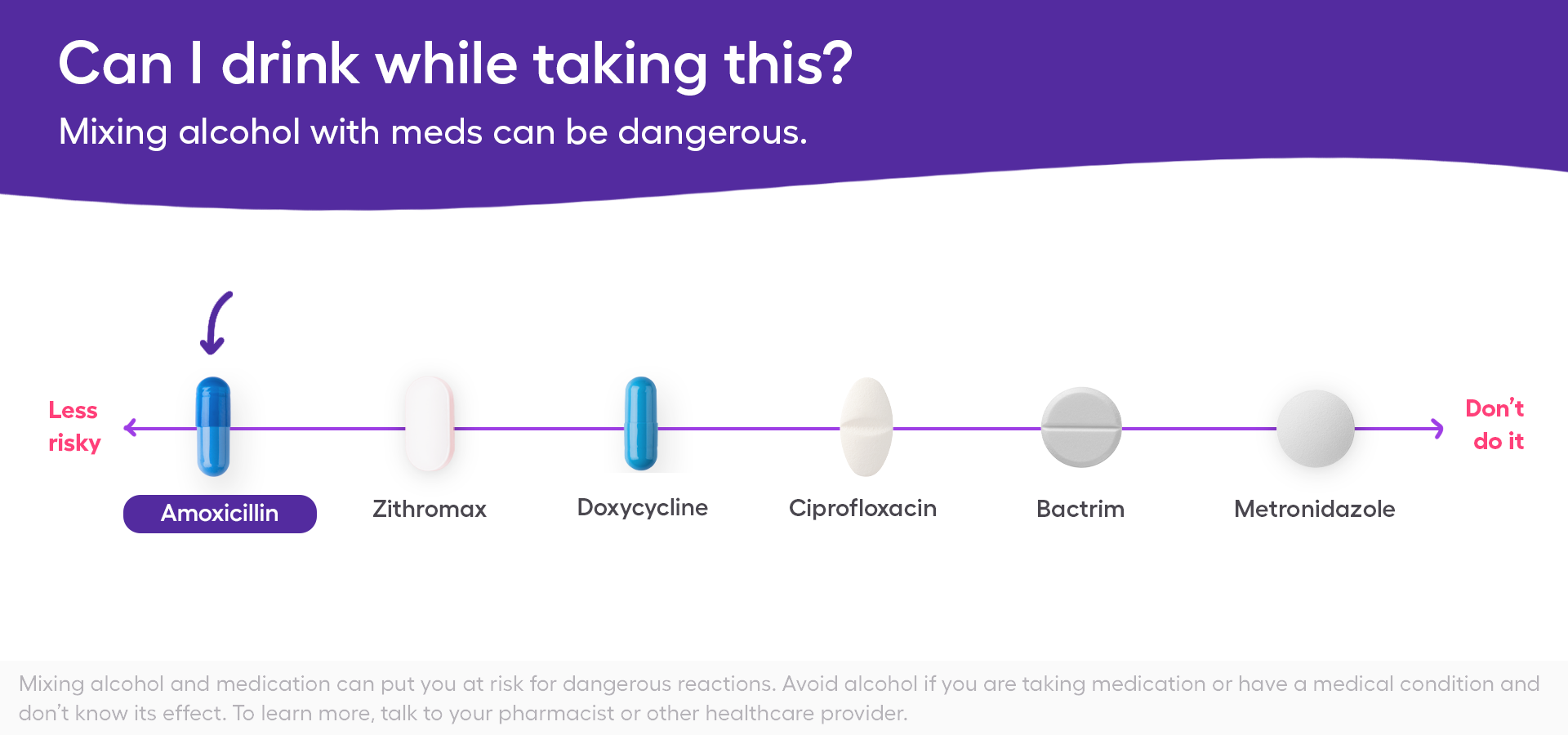
Unlike amoxicillin, other antibiotics like Flagyl (metronidazole) can cause severe reactions when mixed with alcohol.
Take amoxicillin as prescribed and consult a healthcare provider about any concerns, especially when experiencing side effects after drinking alcohol.


If you come down with a bacterial infection, like strep throat, you may be prescribed an antibiotic such as amoxicillin. Treatment with amoxicillin typically lasts for several days, so you might be wondering whether combining amoxicillin and alcohol is safe, especially if the treatment course falls on a weekend or special occasion when you might be offered a cocktail or a glass of wine.
But can you drink on amoxicillin? Fortunately, it’s less likely than other medications to have a severe interaction with alcohol. For the most part, combining alcohol and amoxicillin should not cause any problems as long as you drink in moderation.
However, the low risk of problems while combining alcohol and amoxicillin is not absolute. The side effects of amoxicillin and alcohol can overlap, which could lead to nausea or an upset stomach. In addition, heavy alcohol use can weaken the immune system and delay healing, the opposite of what your body needs to fight off an infection. Continue reading to learn more about what happens when you mix amoxicillin and alcohol.
Save up to 80% on Amoxicillin with SingleCare
Different pharmacies offer different prices for the same medication. SingleCare helps find the best price for you.


What is amoxicillin?
Amoxicillin, known by different brand names like Amoxil, Moxatag, and Trimax, belongs to the penicillin family of antibiotics. Introduced in 1974, it is FDA approved for treating bacterial infections of the ear, nose, throat, lower respiratory tract, urinary tract, and skin. Available in various forms, including regular tablets, chewable tablets, and oral suspensions, it is usually taken every 8 to 12 hours for up to 10 days or longer. The dosage and duration of treatment depend on the infection being treated. Amoxicillin is not effective against viral or fungal infections.
Amoxicillin side effects
Amoxicillin may cause mild to severe side effects. In most cases, the side effects of amoxicillin are mild and temporary.
Common side effects of amoxicillin include:
- Rash
- Headache
- Stomach pain
- Diarrhea
- Nausea
- Vomiting
Serious side effects of amoxicillin include:
- Clostridioides difficile-associated diarrhea, which can cause severe abdominal pain or cramping.
- Severe allergic reactions (hives, swelling of the face, and trouble breathing)
- Kidney inflammation or liver injury
- Blood disorders, such as anemia or low platelet counts
- Seizures
Not everyone experiences side effects while taking amoxicillin. However, it’s important to seek medical help if serious side effects develop or worsen.
Can you mix amoxicillin and alcohol?
When considering whether you can drink alcohol while taking amoxicillin, the answer is nuanced. You likely won’t have to avoid drinking alcohol completely while taking amoxicillin. As long as you stick to low to moderate alcohol consumption (two drinks or fewer per day for men and one drink or fewer per day for women), the risk of serious side effects is low.
In general, drinking a glass of red wine with dinner shouldn’t be a problem. However, if you’re planning on drinking several glasses, you might be in trouble.
Problems with drinking alcohol with an infection
Although alcohol does not directly interact with amoxicillin, alcohol can have other effects on the body that can be detrimental during an infection. Here are the main drawbacks of mixing amoxicillin and alcohol:
- Increased side effects: Binge drinking can worsen nausea, headache, and an upset stomach, common side effects of mixing the amoxicillin antibiotic with alcohol. Additionally, if you have a fever or dehydration, alcohol can worsen these symptoms.
- Increased liver or kidney stress: Both alcohol and amoxicillin are processed by the liver and kidneys, leading to potential stress on these organs.
- Risk of missed doses: Alcohol may impair your ability to stick to your prescribed schedule.
- Immune system effects: Alcohol can weaken the immune response, making recovery more challenging. People who have been diagnosed with alcohol use disorder or alcohol addiction may have a harder time fighting infections
- Dehydration: Alcohol can act as a diuretic, which can cause the body to get rid of fluids quickly, potentially causing dehydration. Drinking lots of fluids and staying hydrated are essential parts of self-care when dealing with an illness or infection.
Healthcare professionals will generally recommend you avoid alcohol while you’re sick to avoid these effects and help your body get much-needed rest to fight an infection.
Amoxicillin and alcohol interaction
There is no mention of an amoxicillin and alcohol interaction in the FDA drug label for amoxicillin. Mixing amoxicillin and alcohol is not known to cause a severe reaction. In addition, alcohol will not directly affect how well amoxicillin works.
In some cases, you may be prescribed Augmentin, which is a combination of amoxicillin and another drug called clavulanate. The risks of drinking alcohol with amoxicillin are similar to Augmentin, which is not known to interact with alcohol.
Antibiotics interactions with alcohol
Other antibiotics are more likely than amoxicillin to interact with alcohol. For example, mixing Flagyl (metronidazole) with alcohol can lead to a disulfiram-like reaction that can cause flushing, nausea, headache, rapid heart rate, and increased blood pressure. Tindamax (tinidazole) and Bactrim (sulfamethoxazole/trimethoprim) are other antibiotics that can lead to a disulfiram-like reaction when mixed with alcohol.
Some antibiotics can cause other problems when mixed with alcohol. For example, mixing an antibiotic called Nydrazid (isoniazid) with alcohol may increase the risk of liver damage. Chronic, heavy alcohol use can reduce the effectiveness of some antibiotics, such as Vibramycin (doxycycline).
How to take amoxicillin safely
Amoxicillin, like other antibiotics, can only do its job if it’s being taken correctly and safely. There are some ways to ensure you’re getting the most out of your treatment and avoiding potential side effects.
- Take amoxicillin as prescribed. Taking a higher dose than normal may increase the risk of side effects. If you need help remembering to take scheduled doses, set an alarm or reminder. While amoxicillin can be taken with or without food, some people experience fewer gastrointestinal side effects when taking it with a meal.
- Tell your healthcare provider about any medical conditions you have or medications you’re taking. Make sure to tell your provider about any health conditions, such as kidney or liver problems. You should also tell them about other medications you’re taking, including prescription drugs, over-the-counter medicine, and herbal supplements, as possible drug interactions may occur.
- Don’t stop taking amoxicillin without talking to a healthcare provider. Abruptly stopping amoxicillin may cause the infection to come back and also lead to antibiotic resistance, which may require a different antibiotic and a longer treatment duration.
- Tell your healthcare provider about any side effects that concern you. If you experience unusual stomach pain or other side effects after taking amoxicillin, especially after drinking alcohol, talk to your healthcare provider.
When to consult a healthcare provider
Seek medical advice from a healthcare provider before starting treatment with amoxicillin. A healthcare provider can help guide you on the best way to take your medication to avoid potential side effects and drug interactions.
Seek immediate medical attention if you experience signs or symptoms of an allergic reaction while taking amoxicillin. You should consult a healthcare provider if you experience severe diarrhea that is painful, bloody, or does not seem to go away or get better. You should also consult a healthcare provider if you experience severe nausea and vomiting, particularly if they occur after drinking alcohol with amoxicillin. You may be recommended other treatment options if amoxicillin isn’t right for you.
Bottom line
If you’re asking yourself if you can take amoxicillin while drinking alcohol, the safest approach is to abstain or limit your alcohol intake significantly. Alcohol shouldn’t affect how amoxicillin works to fight a bacterial infection.
Still, drinking any amount of alcohol may increase certain side effects of amoxicillin, such as nausea and vomiting. Increased alcohol use can also affect the body’s ability to fight an infection and recover.
- Cephalosporin induced disulfiram-like reaction: A retrospective review of 78 cases, International Surgery (2014)
- https://pmc.ncbi.nlm.nih.gov/articles/PMC4590612/, Alcohol Research (2015)
- Alcohol hangover, Alcohol Health and Research World (1998)