




 Search for articles or Rx savings



Key takeaways
Having a drink once in a while may be possible, but combining alcohol and Jardiance may cause serious issues, including low blood sugar, dehydration, low blood pressure, or ketoacidosis.
Some people should avoid alcohol completely, especially if they have kidney or liver issues, poorly controlled diabetes, take insulin or other diabetes meds, drink heavily, or are older.
There’s no “safe window” for drinking on Jardiance because the medication stays in your body a long time.


Jardiance is the brand name for empagliflozin, a prescription medication primarily used to help manage Type 2 diabetes. The medication is also FDA-approved for treating heart failure in adults with Type 2 diabetes and heart disease. While occasional, moderate alcohol consumption may be okay for some people taking Jardiance, it’s safest to avoid mixing the two.
Can you drink while taking Jardiance?
The short answer is that drinking alcohol while taking Jardiance isn’t entirely off-limits, but most healthcare providers discourage the practice, as it has serious risks that need to be taken seriously.
Since Jardiance is specifically designed to lower blood glucose, introducing alcohol can lead to some serious side effects, including dangerous drops in blood sugar (hypoglycemia), dehydration, low blood pressure, and euglycemic diabetic ketoacidosis (euglycemic DKA), a rare but serious condition.
“Occasional, moderate drinking may be safe for some people, as the risk depends on overall health, blood sugar control, kidney function, and how much you drink,” explains Pamela Tambini, MD, Medical Director at Engage Wellness.
In healthy individuals, Jardiance is generally considered safe for the liver. However, when you start mixing happy hour with Jardiance, the way alcohol interferes with liver function becomes a concern. This is because alcohol impairs the liver’s ability to release stored glucose when blood sugar is low, as the liver has shifted its priority to metabolizing the alcohol. Individuals with pre-existing liver conditions, such as fatty liver disease or cirrhosis, should never combine alcohol and Jardiance.
What happens if you mix Jardiance and alcohol?
When you’re taking Jardiance and you add cocktails to the mix, the impact on blood sugar control can lead to serious complications, including:
- Blood sugar complications: Jardiance works by helping the kidneys eliminate excess glucose through urine, which works to lower blood sugar levels naturally. Alcohol interferes with the liver’s glucose production and release, particularly between meals or overnight, which can cause blood glucose to drop to dangerously low levels.
- Increased dehydration: Because Jardiance makes you urinate more to excrete glucose, and alcohol is a diuretic that worsens dehydration and strains both kidneys and liver, the combination can cause fluid loss and electrolyte imbalances.
- Ketoacidosis: Jardiance increases the risk of diabetic ketoacidosis. Alcohol, especially in excess or without enough carbohydrates, increases ketone production, also increasing the risk of diabetic ketoacidosis (DKA).
- Euglycemic diabetic ketoacidosis: Unlike typical DKA, euglycemic DKA can occur even when blood glucose levels appear normal, making it particularly dangerous and difficult to detect.
“Jardiance is still effective when alcohol is present. However, using the two together increases the risk of side effects, including the risk of dangerous ketone buildup,” says Jefferey Chester, DO, Medical Director, The Ohana Treatment Center. Unpredictable blood sugar swings, increased dehydration, and the masking of hypoglycemic symptoms can all interfere with diabetes management.
Save up to 80% on Jardiance with SingleCare
Different pharmacies offer different prices for the same medication. SingleCare helps find the best price for you.


Are certain people at greater risk of side effects?
Certain groups are more vulnerable than others to the side effects of Jardiance and risks of imbibing while taking the medication. This means some populations are best served by abstaining from alcohol entirely while taking Jardiance.
- Patients with a history of DKA: Individuals who have previously experienced DKA are at particularly high risk for recurrent episodes. Their metabolic systems may be more prone to ketone overproduction, especially when Jardiance and alcohol are both present.
- Individuals with poor diabetes control: Patients whose blood sugar levels are already difficult to manage may face compounded risks due to the unpredictable effects of alcohol on glucose metabolism.
- Those with kidney or liver disease: Since both Jardiance and alcohol affect kidney and liver function, compromised organ function will reduce the ability to process and eliminate both substances effectively.
- Patients taking certain medications: Those currently using insulin, sulfonylureas (like glyburide or glipizide), or diuretics face increased risks due to Jardiance interactions. These medications can amplify the blood sugar-lowering effects of both Jardiance and alcohol, leading to severe hypoglycemia.
- Heavy drinkers: Heavy alcohol users may have underlying liver damage, making them more susceptible to adverse effects.
Beyond alcohol-related risks, Jardiance can increase the risk of urinary tract infections (UTIs), genital yeast infections, kidney problems, and low blood pressure. Patients should be monitored regularly for signs of these complications, which may be harder to detect when alcohol is present.
How long after taking Jardiance can you drink alcohol?
Jardiance’s half-life is approximately 12 hours, but it typically takes about five half-lives for a medication to be completely eliminated from the body, which would be two to three days with Jardiance. Since Jardiance is typically taken daily, the effects are continuous, so there is no ‘safe window’ for alcohol while on treatment.
For patients who choose to consume alcohol occasionally and with their healthcare provider’s approval, Dr. Tambini recommends specific types of alcoholic beverages that may pose lower risks.
“The goal is to avoid big blood sugar spikes, reduce dehydration risk, and lower chances of ketoacidosis,” she explains. “Safer options include dry wines, spirits with sugar-free mixers, or light beer.”
These recommendations focus on avoiding added sugars that could cause blood glucose spikes, while choosing options with lower alcohol content that are less likely to cause severe dehydration. Dr. Chester adds practical advice that’s helpful for anyone consuming alcohol: Consume alcohol slowly, don’t drink on an empty stomach, and monitor for unusual symptoms.
Are any diabetes medications safe to mix with alcohol?
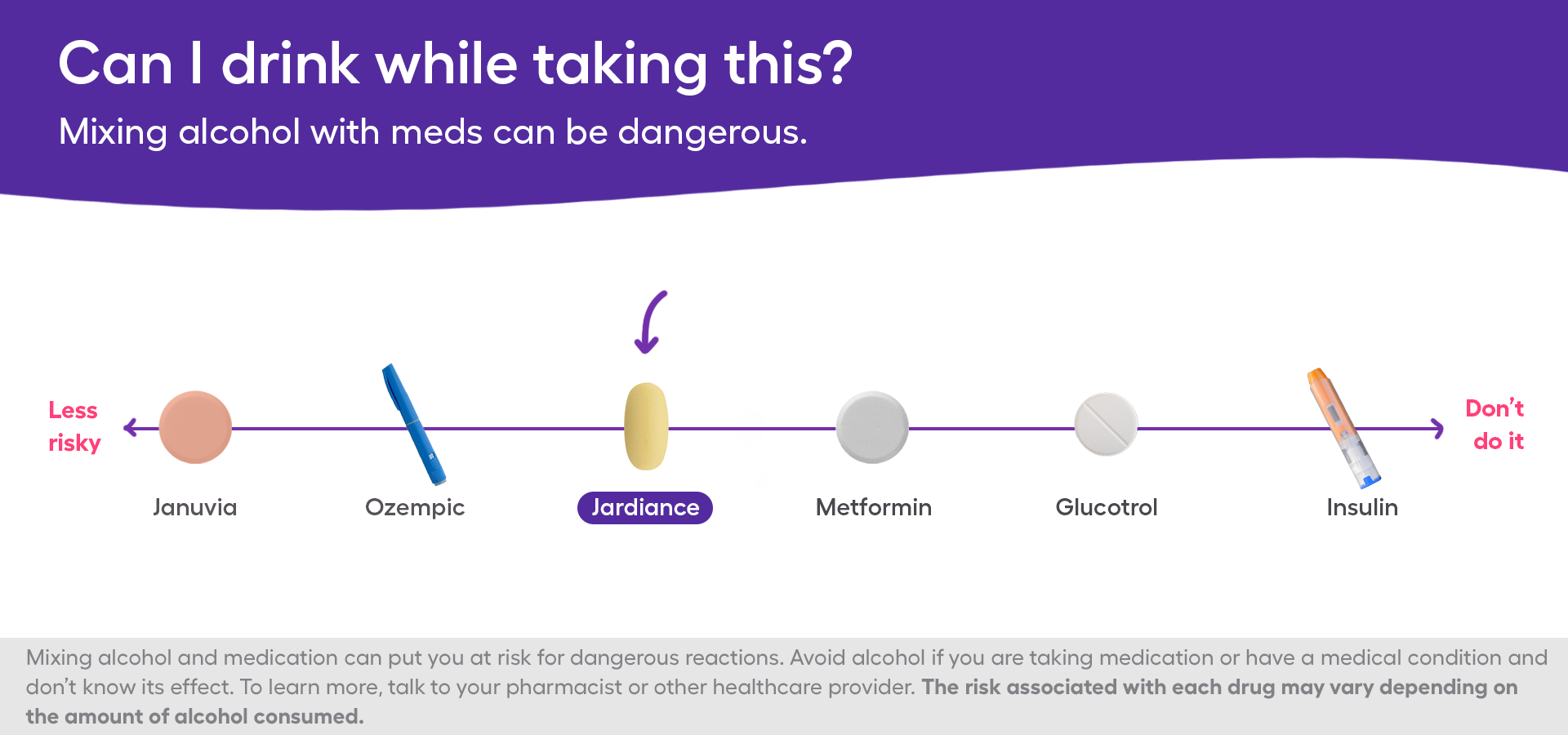
All SGLT2 (sodium-glucose co-transporter 2) inhibitors (including Jardiance, Invokana, Farxiga, and Steglatro) carry similar risks when combined with alcohol. There are alternative diabetes medications that may be safer options for people who occasionally consume alcohol.
- DPP-4 inhibitors: These medications, such as Januvia and Tradjenta, work by preventing the breakdown of incretin hormones, which help regulate blood sugar in response to meals. They have a lower risk of hypoglycemia and don’t significantly affect kidney function, making them potentially safer with alcohol.
- GLP-1 receptor agonists: Medications like Ozempic (semaglutide) and Victoza (liraglutide) work by slowing digestion and stimulating insulin production when blood sugar is elevated. They have a lower risk of severe hypoglycemia compared to SGLT2 inhibitors.
- Metformin: While combining metformin and alcohol can increase the occurrence of lactic acidosis in certain high-risk patients, it generally has fewer direct interactions than SGLT2 inhibitors–particularly when alcohol use is limited and infrequent.
While SGLT2 inhibitors like Jardiance actually provide kidney-protective benefits in many patients with diabetes, alcohol interactions can complicate their use. ACE inhibitors, ARBs (angiotensin receptor blockers), and certain other blood pressure medications may be prescribed for kidney protection in patients who drink alcohol, but patients should discuss potential benefits and risks with a healthcare professional.
The bottom line
While occasional, moderate drinking isn’t absolutely out of the question for everyone taking Jardiance, the combination introduces serious risks that need to be properly considered.
The potential for dangerous blood sugar drops, severe dehydration, low blood pressure, and the rare but serious risk of euglycemic diabetic ketoacidosis make mixing alcohol and Jardiance particularly risky. These dangers are amplified in certain high-risk populations, including those with a history of diabetic ketoacidosis, poor diabetes control, chronic kidney disease, and liver disease.
Because it takes two to three days for Jardiance to be fully eliminated, the safest approach is to avoid alcohol entirely while taking Jardiance. For patients who find this restriction difficult, discussing alternative diabetes medications with lower alcohol interaction risks may be worthwhile. It’s important to fully consider other medical conditions, other medications, and supplements when choosing the safest approach for you. As with any medication decision, follow your healthcare provider’s medical advice when it comes to alcohol consumption while taking Jardiance.
- Common questions about empagliflozin, NHS (2023)
- Empagliflozin tablets, Cleveland Clinic (2025)
- Euglycemic diabetic ketoacidosis, StatPearls (2023)
- Taking empagliflozin with other medicines and herbal supplements, NHS (2023)
- Empagliflozin (oral route), Mayo Clinic (2025)
- Highlights of prescribing information, Food and Drug Administration (2023)