




 Search for articles or Rx savings



Key takeaways
Combining alcohol with Qsymia can worsen side effects like dizziness, mood changes, and heart problems.
Drinking while taking Qsymia may also make it harder to lose weight, as alcoholic beverages may contain extra calories and sugar.
People with kidney problems, liver problems, or older age might be more affected by alcohol while on Qsymia.


Qsymia is a prescription drug that contains two active ingredients in one capsule: phentermine and topiramate. It is approved for weight loss in people with obesity and people who are overweight with at least one weight-related condition, such as high blood pressure or Type 2 diabetes. It’s most effective for weight management when used alongside healthy lifestyle changes, such as a reduced-calorie diet and exercise. If you or a loved one is taking Qsymia, it’s not unusual to wonder if it’s safe to have a drink with friends—without sabotaging your weight-loss goals.
While mixing alcohol and Qsymia isn’t generally recommended due to increased side effects and potentially reduced weight loss, many people are able to drink in moderation. Everyone is different, though, and it’s best to consult a healthcare provider if you have questions about mixing the two.
Save up to 80% on Qsymia with SingleCare
Different pharmacies offer different prices for the same medication. SingleCare helps find the best price for you.


Can you drink while taking Qsymia?
Most healthcare providers recommend avoiding alcohol while taking Qsymia. Both alcohol and Qsymia can slow the central nervous system (CNS), which can lead to more intense effects from both substances.
However, the FDA drug label only warns against drinking excessive amounts of alcohol with Qsymia. Therefore, some people may be able to drink in moderation. Drinking in moderation means consuming alcohol in limited amounts, such as one drink per day for women and up to two drinks per day for men.
Keep in mind that phentermine in Qsymia is labeled as a controlled substance since it’s similar to amphetamine and carries a risk of misuse. Adding alcohol to the mix could increase this risk.
What happens if you mix Qsymia and alcohol?
Mixing Qsymia with alcohol can cause unexpected side effects, some of which can be serious. Side effects can range from trouble thinking clearly to more serious concerns like heart problems and an increased risk of seizures.
Increased CNS side effects
Qsymia can often cause CNS side effects like dizziness and trouble with coordination. Alcohol is a CNS depressant that can cause similar side effects. Therefore, mixing the two could lead to more serious CNS side effects. While mixing both substances, it might be harder to walk straight, think clearly, and stay awake. Things like driving and operating machinery could also be dangerous due to increased drowsiness. In some cases, combining alcohol and Qsymia may increase the risk of trouble sleeping or worsen existing sleep problems.
Worsened mental health problems
Qsymia is known to cause mood disorders in some people, including depression and anxiety. In fact, depression is one of the most common side effects of Qsymia. You should watch for unusual mood changes and suicidal thoughts, and seek emergency medical attention if needed. Drinking alcohol at the same time can make side effects like depression, anxiety, or mood swings worse. Alcohol can lower inhibitions, leading to riskier choices or deeper feelings of sadness.
Increased risk of seizures
Stopping Qsymia suddenly can increase the risk of having seizures. Binge drinking or quitting alcohol after consuming large amounts over time can also increase the risk of seizures. The risk is even higher if you have a history of epilepsy or are taking other medicines that can trigger seizures.
Potential heart problems
Phentermine in Qsymia is a stimulant, which can increase heart rate and blood pressure. Drinking alcohol may also cause an increase in heart rate and blood pressure and, in severe cases, may lead to an irregular heartbeat or chest pain. Mixing the two could worsen problems with heart rate and blood pressure, potentially leading to a heart attack, especially in people with pre-existing cardiovascular problems.
Reduced weight-loss effects
Combining Qsymia and alcohol may lead to poorer weight-loss results. Alcohol contains calories and can lower self-control when eating. Drinking can also make it harder to stay motivated with a balanced diet and regular exercise. People might notice it’s harder to lose weight or keep it off if alcohol is a regular part of their routine.
Are certain people at greater risk of side effects?
Some people may be more likely to experience side effects when taking Qsymia and drinking alcohol. Problems with the kidneys or liver, and older age could be risk factors for more side effects while drinking on Qsymia.
People with kidney problems
People with moderate or severe kidney problems tend to accumulate higher levels of the drug in their bodies. This extra exposure can increase the risk of side effects. Drinking alcohol could cause the kidneys to work harder, worsening the potential effects of taking Qsymia with kidney problems.
Healthcare providers typically recommend taking a lower dose of Qsymia for people with kidney problems and avoiding Qsymia altogether in people with serious kidney disease or who are on dialysis.
People with liver problems
The liver is key to processing Qsymia in the body. If the liver isn’t working well, it might be more difficult for the body to remove Qsymia, which could lead to higher drug levels and more side effects. The dose of Qsymia is reduced in people with moderate liver problems, while it should be avoided in people with severe liver disease.
Alcohol is known to cause liver problems, especially in large amounts over time. Therefore, people who drink heavily may have more liver problems and an increased risk of side effects from Qsymia.
Older adults
Older adults often have more medical problems and use several medicines at the same time. Their kidneys, liver, and heart may not work as well with age. Because of this, they could react more severely to Qsymia or alcohol. In addition, older adults who mix Qsymia and alcohol could be more likely to experience falls, which could cause severe injuries.
How long after taking Qsymia can you drink alcohol?
The active ingredients in Qsymia can stay in the body for many hours. The “half-life” is the time it takes for half of a drug to leave the body, and it often takes around five half-lives for most of a drug to be cleared from your system.
The half-lives of each drug in Qsymia are different:
- Phentermine: around 20 hours
- Topiramate: about 65 hours
That means Qsymia could stay in your system for around two weeks. If you want to be completely safe, it might be best to wait at least a couple of weeks after stopping Qsymia to drink alcohol.
Even if you feel fine after stopping Qsymia, the medication can still affect your body and how it reacts to alcohol. Drinking too soon after stopping Qsymia could increase the risks of dizziness, mood changes, or seizures.
Never stop Qsymia suddenly without talking to your provider due to an increased risk of seizures. It’s recommended to slowly stop taking Qsymia by taking a dose every other day for at least a week before stopping treatment.
Qsymia contraindications
There are other precautions to take into account while taking Qsymia besides its risks with alcohol. Before prescribing Qsymia, healthcare providers recommend a negative pregnancy test. Qsymia can cause birth defects and should be avoided during pregnancy and breastfeeding.
Those with the following should also avoid Qsymia.
- Glaucoma
- Overactive thyroid (hyperthyroidism)
- Known allergy to any ingredients in Qsymia or other sympathomimetic amines
In addition, people who are taking a monoamine oxidase inhibitor (MAOI), such as Nardil (phenelzine) or Parnate (tranylcypromine), or who have taken an MAOI within the past 14 days, should avoid Qsymia. Combining Qsymia with an MAOI could lead to high blood pressure and other severe side effects.
Drug interactions are also possible while taking Qsymia. For example, drug interactions could involve birth control pills, valproic acid, acetazolamide, or other carbonic anhydrase inhibitors. Tell a healthcare provider about all medications, including prescription drugs, over-the-counter medicines, and supplements.
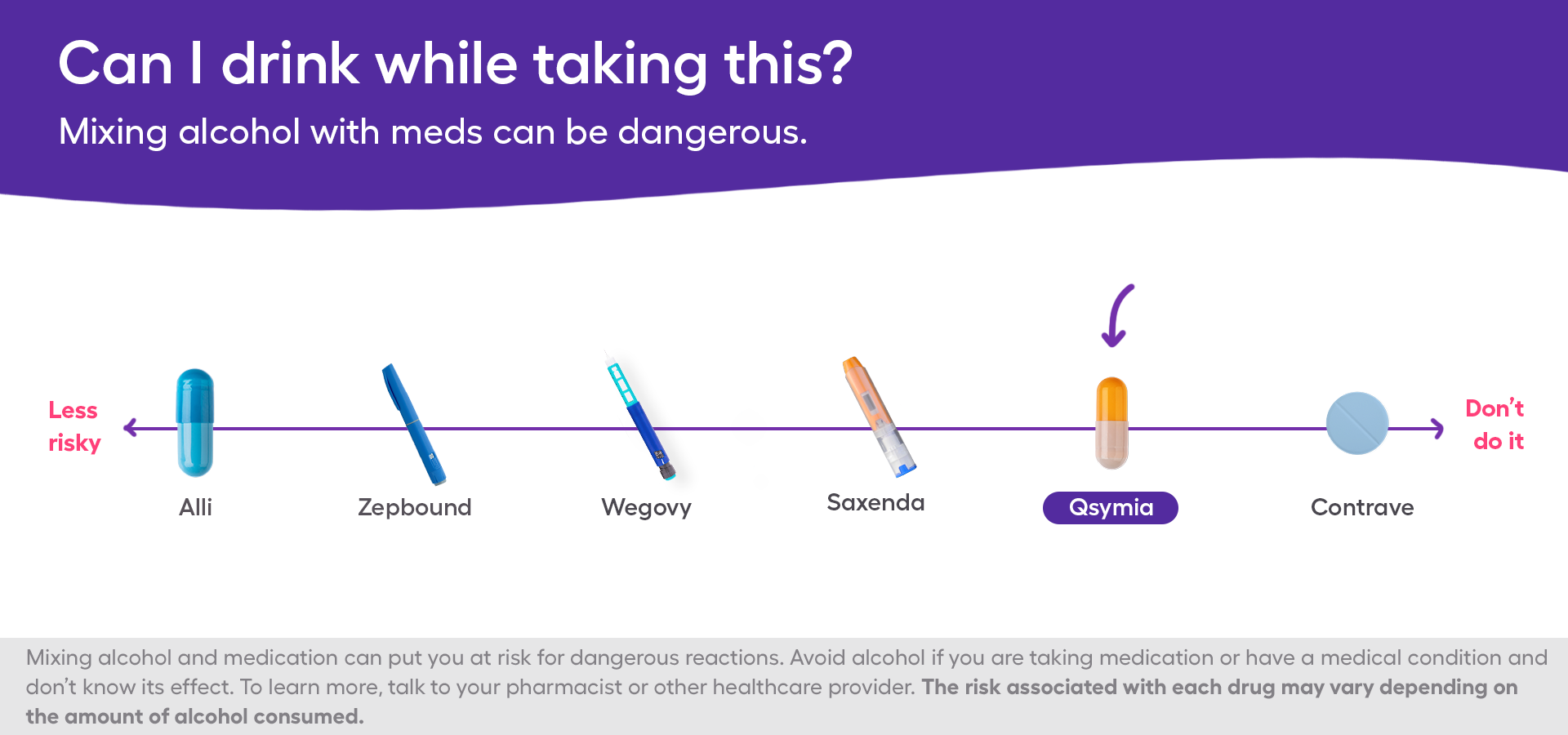
Which weight-loss medications are not affected by alcohol?
It’s best to be careful when taking any weight-loss medication and drinking alcohol, even if there’s no specific warning on the drug label. Alcohol can affect how your body processes medications and increase the risk of side effects.
Use caution with alcohol while taking these weight-loss medications:
- Stimulant-based appetite suppressants, such as Adipex-P (phentermine) and Didrex (benzphetamine)
- GLP-1 receptor agonists, such as Wegovy (semaglutide), Saxenda (liraglutide), and Zepbound (tirzepatide)
- Lipase inhibitors, such as Alli (orlistat) and Xenical (orlistat)
- Antidepressant-based therapies, such as Contrave (bupropion/naltrexone)
Some of these medications, like GLP-1s, don’t have a direct interaction with alcohol but could cause worsened nausea or dizziness with alcohol. Others, like stimulant-based suppressants or bupropion-based drugs, could increase the risk of serious side effects, such as seizures or high blood pressure, when mixed with alcohol.
How long a person has taken the medication and whether they’ve just started treatment could affect how they react to alcohol. The amount of alcohol consumption can also play a part.
The bottom line
Drinking alcohol while taking Qsymia isn’t typically recommended because of side effects like dizziness, mood swings, or heart problems. Drinking alcohol might also make weight loss harder. Some people may be able to have a drink now and then, but it depends on your health and your tolerance for alcohol. If you have any medical conditions or take other medications, the risks of side effects could increase. Check in with a healthcare professional for medical advice before mixing the two.
- Qsymia highlights of prescribing information, U.S. Food and Drug Administration (2024)
- Alcohol and sleep-related problems, Current Opinion in Psychology (2020)
- Lose weight and keep it off with Qsymia, U.S. Food and Drug Administration
- Suicide risk in alcohol use disorders: Literature review and study protocol with preliminary data for a study in treatment-seeking inpatients, Healthcare (2025)
- Phentermine and topiramate, MedlinePlus (2023)
- Alcohol as a seizure trigger, Epilepsy Foundation (n.d.)
- Alcohol’s effects on health, National Institute on Alcohol Abuse and Alcoholism (2025)
- Alcohol: balancing risks and benefits, The Nutrition Source (2022)
- Drinking alcohol affects your kidneys, National Kidney Foundation (2014)
- Viral hepatitis and liver disease, U.S. Department of Veterans Affairs (2020)
- Aging and medications, MSD Manual (2025)
- A narrative review: Phentermine and topiramate for the treatment of pediatric obesity, Adolescent Health, Medicine and Therapeutics (2023)