H. Pylori symptoms: What are the early signs of H. Pylori?


Overview: What does H. pylori feel like?
Helicobacter pylori (H. pylori) is one of the world’s most common bacterial infections. It affects half the world’s population and 30% to 40% of people living in North America. Most people get infected as children and have the infection throughout their lives. The bacteria is acid-resistant, so H. pylori infections most often affect the stomach lining. However, H. pylori can also be found in the mouth.
Although many people with H. pylori have no symptoms or mild symptoms, H. pylori infection can cause serious illness. The combination of bacterial toxins and the immune system’s response to them can damage the stomach lining, making it vulnerable to stomach acid. The result is swelling, stomach ulcers, duodenal ulcers, and even cancer. The first sign of trouble is abdominal pain caused by swelling or sores. This pain is usually at its worst within a few hours after eating. Nausea, vomiting, bloating, burping, and fullness are also common complaints.
Key takeaways:
H. pylori is a common health condition that can affect anyone regardless of age, sex, race, or ethnicity.
Early signs of H. pylori include stomach pain, indigestion, heartburn, nausea, vomiting, bloating, and feeling full early when eating.
Serious symptoms of H. pylori, such as bloody stools, bloody vomit, black stools, or severe pain, may require immediate medical attention.
H. pylori is a bacterial infection. You may be at higher risk for developing H. pylori symptoms if you have lived in a developing country, have a close relative with a history of gastric cancer, are a senior, or have lived in crowded conditions or areas with poor sanitation.
H. pylori requires a medical diagnosis.
Symptoms of H. pylori require treatment. They typically resolve with treatment within two weeks.
Treatment of H. pylori includes antibiotics and medications that reduce or neutralize stomach acid. Read more about H. pylori treatments here.
Untreated H. pylori could result in complications like gastritis, stomach ulcers, duodenal ulcers, perforation, stomach cancer, and lymphoma.
Save on prescriptions for H. pylori with a SingleCare prescription discount card.
What are the early signs of H. Pylori?
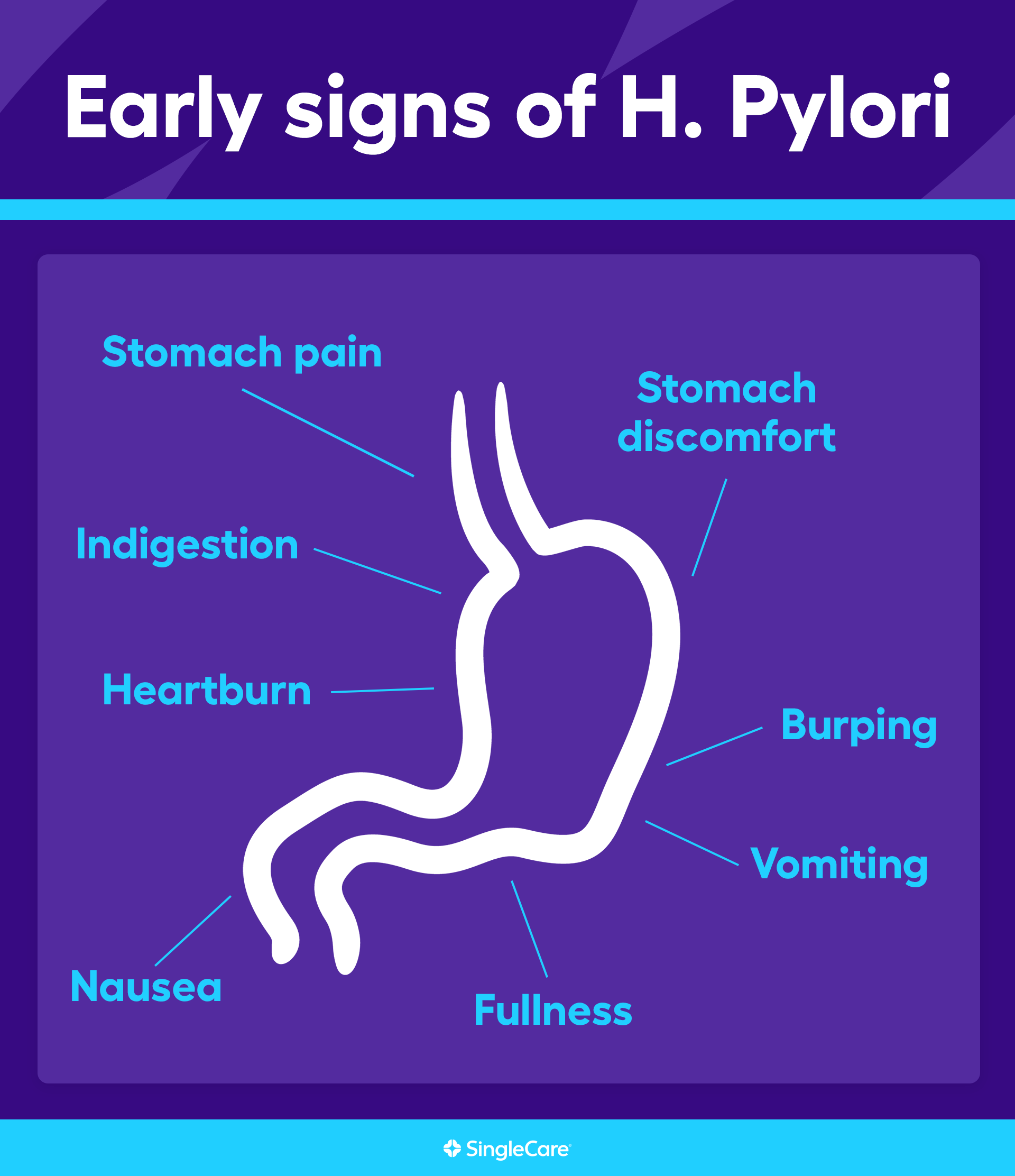
The earliest signs of H. pylori are signs of gastritis, which include:
Stomach pain
Stomach discomfort
Indigestion
Heartburn
Burping
Nausea
Vomiting
Fullness
Other H. pylori symptoms
Most of the symptoms of an H. pylori infection are due to complications such as gastritis, peptic ulcer disease (PUD), stomach cancer, or gastriclymphoma. All these conditions share common symptoms, which may include:
Stomach pain
Nausea
Vomiting
Bloating
Burping
Feeling full soon after eating little
Heartburn
Indigestion
Loss of appetite
Black stools
Blood in the stool
Blood or blood clots in vomit
People with stomach cancer may also experience weight loss.
Stages of H. pylori: How can I tell which one I have?
H. pylori is a long-term infection that is often first contracted in childhood, usually through contact with another infected person. However, it can also be acquired through contaminated water or food. Not everyone infected with H. pylori will have problems. It can take decades for symptoms to appear. Some people will have an H. pylori infection without ever having symptoms.
In the early stage, H. pylori bacteria enter the stomach, attach to cells on the stomach lining, and produce a thin film around themselves to protect the colony from stomach acid. Unfortunately, the chemical that protects them from stomach acid is toxic to the cells lining the stomach. During this early period, the stomach lining is more or less normal and healthy, so there are no symptoms.
In the next stage, H. pylori toxins and the body’s immune reaction cause swelling in the parts of the stomach lining where the bacteria is living. Tissues in the stomach lining are often killed by bacteria toxins and the immune system, a condition called chronic gastritis. Symptoms usually include stomach discomfort, stomach pain, heartburn, indigestion, and mild nausea.
Atrophic gastritis, a more serious form of gastritis, occurs when the lining of the stomach starts transforming into other tissues. Most commonly, the stomach lining changes into tissues that look and act like the tissues that line the intestines. In some cases, H. pylori stimulates stomach tissues to turn into immune system tissues. Both are considered precancerous.
In the later stages, parts of the stomach lining that have been transformed into other tissues may develop into stomach cancer or stomach lymphoma.
When to see a doctor for H. pylori symptoms
An H. pylori infection can eventually become a serious medical condition such as stomach cancer. When symptoms are first experienced, see a healthcare professional. It may not be H. pylori, but the infection can usually be treated if it is. Most symptoms don’t need an emergency room visit unless the pain is severe. However, see a doctor as soon as possible if you have black or bloody stools, bloody vomit, or blood clots in the vomit (“coffee grounds” vomit).
The healthcare provider will ask about your symptoms and perform a physical examination. This screening is important for identifying serious problems like ulcers or stomach cancer. Sometimes the diagnosis is made when a patient sees a doctor for another reason. For instance, a history of peptic ulcer disease (PUD) will trigger testing for H. pylori infection.
Testing for H. pylori may include breath, stool, and blood or saliva tests. A specialist in the gastrointestinal system, called a gastroenterologist, may examine the stomach lining using an endoscope, a long, thin, flexible tube with a camera at the end. This procedure is called an “upper endoscopy.” It looks at the esophagus, stomach, and duodenum, the first part of the small intestine. During the procedure, the doctor may take a tissue sample from any affected areas to examine the cells under a microscope. An upper endoscopy and biopsy are more likely to be performed in people with persistent symptoms or other risk factors for stomach cancer.
Complications of H. pylori
Complications of untreated H. pylori may include:
Bleeding
Perforation (developing a hole in the stomach or upper intestine)
Peritonitis (swelling of the abdominal cavity) due to perforation
Narrowing of the stomach outlet from swelling and scarring
Gastric cancer
Gastriclymphoma
Esophageal cancer
How to treat H. pylori symptoms
The goal of H. pylori treatment is to eliminate the infection, especially if gastric ulcers are involved. It’s treated with a combination of antibiotics and stomach acid reducers following well-defined guidelines:
The most commonly-prescribed antibiotics are amoxicillin, clarithromycin, metronidazole, tinidazole, levofloxacin, or tetracycline.
The most commonly-prescribed stomach acid reducers are proton-pump inhibitors (PPIs) such as omeprazole, pantoprazole, and esomeprazole. These drugs decrease the stomach’s acid production, allowing swelling and ulcers time to heal.
Many therapies also include bismuth subsalicylate or bismuth salts. Better known as over-the-counter antacids such as Pepto-Bismol, bismuth neutralizes acid and helps reduce swelling. Again, this gives the stomach or upper intestine time to heal.
Not everyone needs another H. pylori test after treatment. But a follow-up breath or stool test may be recommended to ensure the infection has cleared.
Living with H. pylori
The risk of H. pylori recurrence is low but still possible. First-line treatments are successful in 80% of patients. Physicians will turn to other treatment protocols if it doesn't work.
People can do a few things during and after treatment to prevent a recurrence or transmission to others. These include:
Take the medications as instructed
Keep all follow-up appointments
Wash your hands
Wash and prepare food carefully
Make sure cooking or drinking water is sanitary
Get medical treatment for any household member with symptoms of gastritis or peptic ulcer disease
See a healthcare professional if symptoms like indigestion, heartburn, or stomach pain recur
Most importantly, see a healthcare professional
Many of the early symptoms of an H. pylori infection may seem minor. Stomach upset (dyspepsia), burping, and other problems may not be bad enough to warrant a visit to a healthcare provider. Many symptoms can be fixed with over-the-counter antacids or stomach acid reducers. That’s okay if these problems occur every once in a while. But if these symptoms happen often, if the pain is hard to take, or if there is a change in your stools, see a healthcare professional as soon as possible. The problem may be due to a chronic H. pylori infection. Getting the right tests and treatment can prevent serious and life-threatening situations.
FAQs about H. pylori symptoms
What does H. pylori poop look like?
In most people infected with H. pylori, stools look normal. That’s because many people experience no symptoms or only minor symptoms. In some people, an H. pylori infection can damage the stomach lining, cause sores, or lead to stomach cancer. In those cases, there may be bleeding, which should always be a sign to get medical help. If the bleeding is in the stomach, it usually turns stools black and tarry. If bleeding is in the intestines, stools will appear red.
What are the first symptoms of H. pylori?
Once an H. pylori infection starts causing stomach inflammation, the first symptoms are stomach pain, indigestion after eating, and maybe burping. It may not feel like much at first, but if stomach discomfort keeps happening after eating or worsens, it’s time to see a healthcare provider.
How do you test for H. pylori?
A urea breath test is 95% accurate at identifying an H. pylori infection, but it’s not always readily available. A stool test is also an accurate test for a current infection. A blood test can look for evidence of an infection but doesn’t specify if the infection is now or in the past. For patients with persistent symptoms or at higher risk for stomach cancer, a specialist in gastroenterology will examine the stomach lining with a special camera (endoscope) and take a tissue sample to test for H. pylori.
What’s next? Additional resources for people with H. pylori symptoms
Test and diagnostics
Diagnosis and treatment of peptic ulcer disease and H. pylori infection, American Family Physician
Helicobacter pylori, StatPearls
Helicobacter pylori urea breath test, University of Rochester
H. pylori signs and symptoms, The University of Arizona
Treatments
Diagnosis and treatment of peptic ulcer disease and H. pylori infection, American Family Physician
Gastritis treatments and medications, SingleCare
Helicobacter pylori diagnosis and treatment guidelines, The American Journal of Managed Care
Ulcer treatments and medications, SingleCare
Scientific studies and clinical trials
Why do we still have Helicobacter pylori in our stomachs, Malaysian Journal of Medical Sciences
More information on related health conditions
Gastriclymphoma, StatPearls
Helicobacter pylori and cancer, National Cancer Institute, NIH
Subscribe to our savings newsletter
Health education, drug info, wellness & more
By clicking 'Subscribe', I agree to SingleCare's Terms & Conditions.








