






Key takeaways
Mounjaro (tirzepatide) is FDA approved for Type 2 diabetes but is often prescribed off-label for weight loss.
Because Mounjaro is not FDA approved for weight loss, the official prescribing information does not give BMI guidelines for this drug. However, healthcare providers often consider BMI along with other individual factors.
Other weight loss drugs, like Zepbound, are typically used in adults with a BMI of 30 or more (obesity), or 27 or more (overweight) with a weight-related medical condition.


Mounjaro (tirzepatide) is a once-weekly injectable prescription drug that is approved by the Food and Drug Administration (FDA) for use in adults with Type 2 diabetes. Together with lifestyle changes like a reduced-calorie diet and increased physical activity, Mounjaro helps control blood sugar levels. And although Mounjaro is not FDA approved for weight loss, healthcare providers often prescribe this drug off-label for this use because it slows stomach emptying, making you feel fuller for longer and reducing cravings. Mounjaro, made by drug company Eli Lilly, is classified as a glucose-dependent insulinotropic polypeptide (GIP) receptor and glucagon-like peptide-1 (GLP-1) receptor agonist, also called a dual GIP/GLP-1 agonist. When considering whether you’re a candidate for Mounjaro, healthcare providers will consider various factors, including your body mass index (BMI).
Why BMI matters for Mounjaro
According to the Centers for Disease Control and Prevention (CDC), body mass index (BMI) is a measure of a person’s weight relative to their height. It is a free, quick, easy, and reliable type of measurement, but it should always be considered along with other individual factors, such as blood pressure, cholesterol levels, and labs.
But because Mounjaro is FDA approved as a diabetes drug, its official prescribing information does not refer to BMI, obesity, or overweight as a qualification for use. Still, healthcare providers may consider BMI with other factors, such as a patient’s hemoglobin A1c (a measure of blood sugar control over a three-month period), before prescribing Mounjaro for Type 2 diabetes. They may also ask about the patient’s lifestyle habits, perform a physical exam, and assess their risk of other health problems. For example, even if you don’t have Type 2 diabetes, they may decide you are an appropriate candidate for Mounjaro if you have obesity or if you’re overweight with a weight-related medical condition, such as hypertension (high blood pressure) or high cholesterol.
For an FDA-approved weight loss medication, such as Zepbound—which contains tirzepatide, the same active ingredient as Mounjaro—the prescribing information does refer to weight. Specifically, the Zepbound prescribing information notes that the drug is FDA approved for weight loss and long-term weight management in adults with obesity—or adults with overweight who have at least one weight-related medical condition. Zepbound is also FDA approved for adults with moderate to severe obstructive sleep apnea and obesity.
BMI requirements for Mounjaro
There are no specific guidelines that state BMI requirements for Mounjaro. The prescribing information does not list BMI, obesity, or overweight as criteria for use. Still, healthcare providers often consider BMI when prescribing Mounjaro off-label for weight loss, along with other individual factors. Standard BMI categories are:
- Underweight: BMI less than 18.5 kg/m2
- Healthy weight: BMI of 18.5 to less than 25 kg/m2
- Overweight: BMI of 25 to less than 30 kg/m2
- Obesity: BMI of 30 kg/m2 or more
- Class 1 obesity: 30 to less than 35 kg/m2
- Class 2 obesity: 35 to less than 40 kg/m2
- Class 3 obesity: 40 kg/m2 or more
FDA-approved weight loss drugs are typically prescribed for adults with obesity (BMI of 30 or more) or overweight (BMI of 27 or more) plus a weight-related medical condition.
Save up to 80% on Mounjaro with SingleCare
Different pharmacies offer different prices for the same medication. SingleCare helps find the best price for you.


How to calculate your BMI
To calculate your BMI, you can use a calculator to divide your weight in kilograms by your height in meters squared. The BMI number is reported as kg/m2.
An easier way to calculate your BMI is to use an online calculator from a trusted website, such as the CDC, which has calculators for adults and children. You can also use a chart like the one below. Just locate your height and weight to see where your BMI falls.
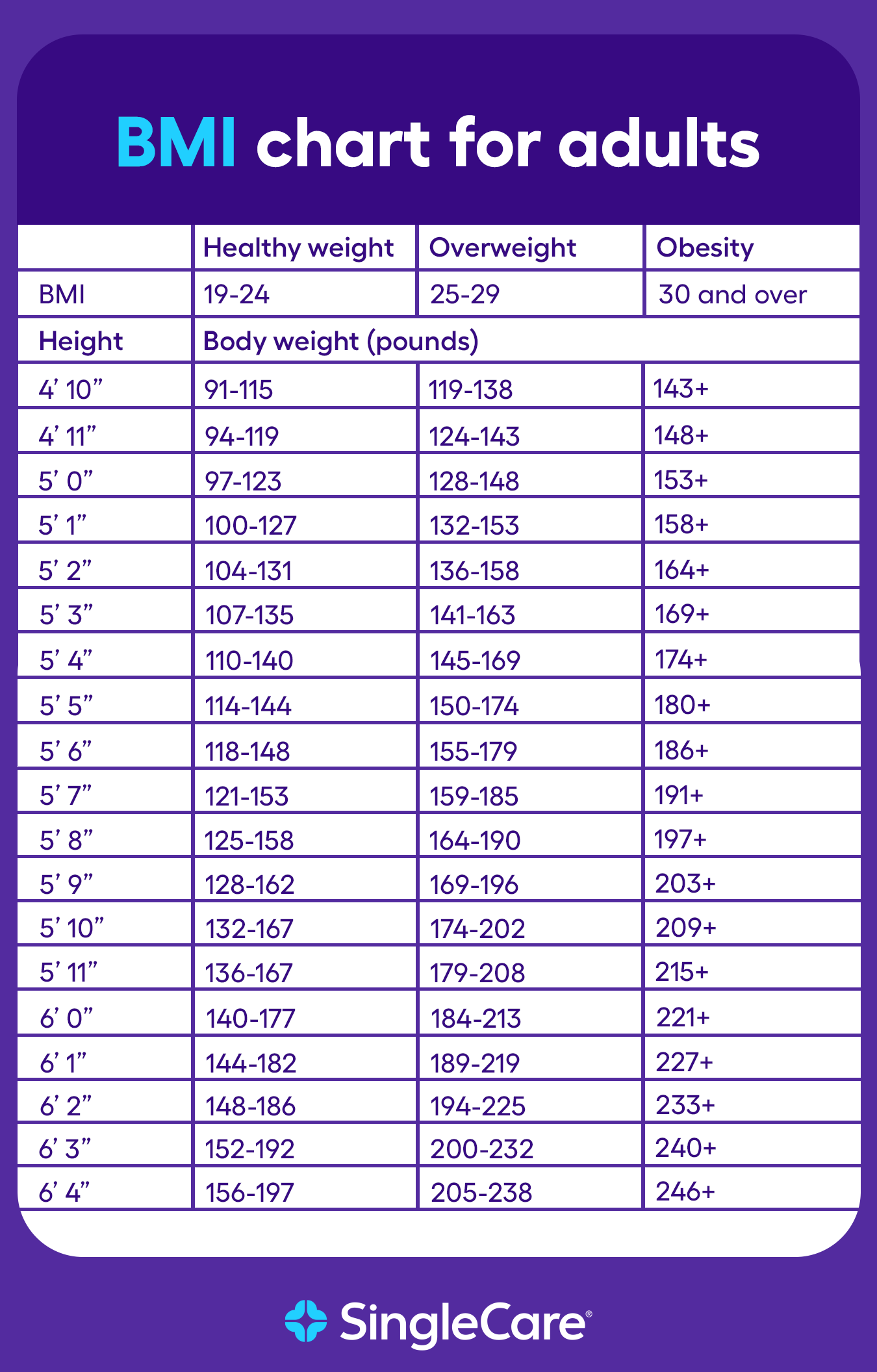
Just know that BMI is only one piece of the puzzle. You can have a higher BMI and be perfectly healthy, or you can have a low BMI and still have health problems. BMI does not distinguish between fat, muscle, and bone mass—all of which can affect your weight.
It’s best to discuss your concerns with your healthcare provider, who can tell you exactly how your BMI relates to your health.
Mounjaro eligibility factors besides BMI
As mentioned above, BMI is only one piece of a larger puzzle. Some research has even found that using BMI to determine treatment may end up excluding a significant number of adults who have weight-related health conditions, such as metabolic syndrome. Healthcare providers will often consider other factors, in addition to BMI, such as:
- Medical conditions like Type 2 diabetes, prediabetes, cardiovascular disease, high blood pressure, high cholesterol, fatty liver disease, or sleep apnea
- Lab and exam results, including blood sugar, hemoglobin A1c, cholesterol levels, and blood pressure readings
- Lifestyle factors such as diet, exercise, smoking, and alcohol use
- Family history or other risk factors for weight-related health problems
Mounjaro side effects
Mounjaro is most commonly associated with stomach-related side effects. These side effects are common with most weight loss injections. In many cases, these side effects fade or go away as your body adjusts to the medication. The most common side effects of Mounjaro include:
- Nausea
- Vomiting
- Diarrhea or constipation
- Decreased appetite
- Stomach pain
- Indigestion
Some people also experience injection site reactions. Mounjaro is injected subcutaneously (under the skin) of the stomach, thigh, or upper arm. Rotating injection sites each time can help minimize the risk of these reactions.
Serious side effects are less common, but require emergency or urgent medical attention, and may include:
- Pancreatitis (inflammation of the pancreas)
- Gallbladder problems
- Hypoglycemia, or low blood sugar, when Mounjaro is used in combination with insulin or certain diabetes medicines
- Allergic reactions
- Kidney problems (this typically occurs with dehydration)
- Severe stomach problems
- Diabetic retinopathy problems
Steps for getting Mounjaro
If you are thinking about using Mounjaro, call your healthcare provider. They can examine you, order any necessary tests, and offer medical advice on whether this medicine is appropriate for you.
Health insurance coverage for Mounjaro will vary by plan. Some insurance plans will cover Mounjaro for Type 2 diabetes, but not for weight loss. This drug often requires a prior authorization before your plan determines if it will provide coverage. Your healthcare provider can help you navigate your insurance coverage.
If your insurance plan does not cover Mounjaro, you can consider other ways to save on this medicine—or talk to your healthcare provider about alternatives such as Zepbound (tirzepatide), Ozempic (semaglutide), or Wegovy (semaglutide).
You can always use SingleCare to save on your Mounjaro prescription. What’s more, you can use the discount every month on refills, too. SingleCare is accepted at over 35,000 pharmacies in the United States and Puerto Rico. A typical Mounjaro prescription without insurance costs about $1,474 for four, 5 mg single-use pens (a one-month supply), but by using your SingleCare discount, you can pay as low as $875 for your prescription, saving about $600 per month.
- Mounjaro, DailyMed (2025)
- About body mass index (BMI), Centers for Disease Control and Prevention (2024)
- Zepbound, DailyMed (2025)
- Adult BMI categories, Centers for Disease Control and Prevention (2024)
- Body mass index is a barrier to obesity treatment, Frontiers in Endocrinology (2024)
- Medically accurate: SingleCare’s Medical Review Board analyzes all of our content to confirm it’s in line with current medical advice.
- Evidence-based: Our content is sourced from reputable U.S.-based healthcare professionals and peer-reviewed research.
- Trustworthy: All of SingleCare’s content goes through a multi-phase review process by our writers, editors, and Medical Board in order to provide clear and credible information.