





Key takeaways
Insulin and Mounjaro aren’t the same thing, but they both treat Type 2 diabetes.
Some healthcare providers prescribe insulin with Mounjaro for more effective blood sugar control.
Insulin can cause blood sugar levels to drop too low, and this risk increases when it’s combined with Mounjaro.


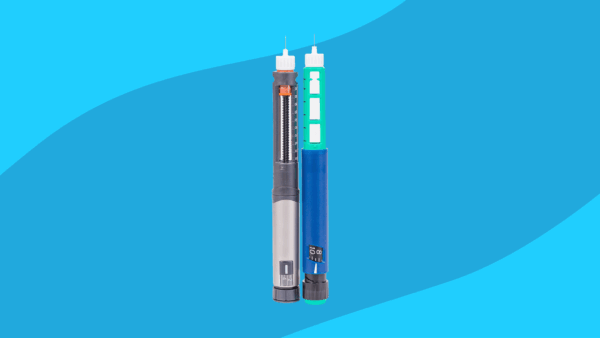
Mounjaro (tirzepatide) is a brand-name prescription medication that’s approved by the Food and Drug Administration (FDA) to control blood sugar levels in adults with Type 2 diabetes who follow a healthy diet and exercise plan. Like insulin, Mounjaro is injected by the patient into fatty tissue, like the abdomen, thigh, or upper arm. Insulin and Mounjaro are two distinct drugs, but they often accomplish the same goal of glucose management.
Is Mounjaro insulin?
No, Mounjaro isn’t insulin. Mounjaro is a dual glucagon-like peptide-1 (GLP-1) and glucose-dependent insulinotropic polypeptide (GIP) receptor agonist that helps the body create more insulin naturally.
GLP-1 and GIP are known as incretin hormones. They stimulate the pancreas’s natural production of insulin after a meal, which helps to stabilize blood sugar levels. People with Type 2 diabetes do not respond normally to incretin hormones, and as a result, less insulin is produced.
Mounjaro mimics these incretin hormones, binding to the same receptors as GLP-1 and GIP. Think of the receptor as a lock and GLP-1 or GIP as the key. Mounjaro is basically a copy of the key and capable of “unlocking” insulin production.
GLP-1 also slows down the body’s production of glucagon, a hormone that tells the liver to release sugar. This can help lower fasting blood sugar levels in people with diabetes. Without enough GLP-1, you might wake up in the morning with high blood glucose even though you haven’t eaten for hours.
So, Mounjaro stabilizes blood sugar levels in two ways:
- Reducing the amount of existing blood sugar (through increased insulin production)
- Reducing the amount of new sugar released into the bloodstream (through decreased glucagon production)
But the benefits of Mounjaro don’t stop with blood sugar control. “In the gut, GLP-1s work to slow gastric emptying, which causes patients to feel fuller longer,” says Jennifer Brown, MD, a board-certified obesity expert at MyObesityTeam. “In the brain, GLP-1s suppress the appetite regulation center in the hypothalamus, causing a decrease in appetite.”
Save up to 80% on Mounjaro with SingleCare Different pharmacies offer different prices for the same medication. SingleCare helps find the best price for you.


Mounjaro vs. insulin
Mounjaro and insulin lower blood sugar levels in different ways. “The main difference is that Mounjaro works with the body to release its own insulin only when blood sugar is high, while insulin injections reduce blood sugar regardless of the starting level,” says Jennifer Warren, MD, a board-certified obesity doctor.
Here are some other major differences between insulin and Mounjaro.
Role in treating Type 1 vs. Type 2 diabetes
Insulin is considered a first-line and necessary treatment for people with Type 1 diabetes. By definition, someone with Type 1 diabetes doesn’t produce insulin, so they need insulin injections throughout the day. Mounjaro contains no insulin and isn’t FDA approved to treat Type 1 diabetes.
On the other hand, insulin isn’t a first-line treatment for people in the early stages of Type 2 diabetes. Instead, healthcare professionals tend to start treating Type 2 diabetes with lifestyle changes (e.g., diet and exercise) and drugs like metformin or Mounjaro.
“Mounjaro is an excellent choice for Type 2 diabetics, and I often use it as a first-line treatment,” Dr. Brown says. “It’s very effective in lowering glucose levels and also causes weight loss.” If necessary, insulin may be added to the treatment protocol to effectively stabilize blood sugar.
Injection frequency
Both insulin and Mounjaro are delivered through subcutaneous injections. Some people with Type 2 diabetes may need to inject insulin up to four times a day, and there are fast-acting and long-acting insulins that are used in different circumstances. In contrast, Mounjaro is a long-acting medication that’s injected once per week.
Side effects
Insulin and Mounjaro have different side effect profiles. Hypoglycemia (dangerously low blood sugar) is the most commonly reported side effect of insulin, whereas people who take Mounjaro tend to experience gastrointestinal side effects like nausea, vomiting, and diarrhea. Mounjaro does not cause hypoglycemia, but it can potentiate the hypoglycemia induced by insulins or sulfonylurea diabetic medications when used concurrently.
Another major difference is weight gain versus weight loss. People tend to lose weight while taking Mounjaro, but insulin injections are associated with steady weight gain. For example, clinical trials reported in the prescribing information for Lantus show that people gain an average of 8–10.5 pounds after taking Lantus or an intermediate-acting insulin (such as Novolin N) for five years.
Injection site reactions (swollen, sore, red, and itchy skin where the needle entered) can occur with both insulin and Mounjaro.
Can you take insulin and Mounjaro at the same time?
Yes, insulin and Mounjaro can be taken at the same time, but combining these medications can increase your risk of hypoglycemia.
“I would avoid starting Mounjaro with insulin if the patient is already having frequent low blood sugar, requires only a small insulin dose, or can’t regularly monitor their blood glucose,” Dr. Warren says. “It’s also best not to begin Mounjaro at the same time as mealtime insulin unless the patient can be closely monitored.”
Despite the risks, your healthcare provider may prescribe Mounjaro and insulin for greater blood sugar control. Dr. Brown says she considers adding insulin only if the patient’s glucose levels remain uncontrolled. “Patients on both have to be very cautious about hypoglycemia,” she reiterates.
Combining Mounjaro with insulin reduces the amount of injected insulin that’s required, and Dr. Warren says this can be beneficial for people who experience adverse side effects with insulin, such as weight gain.
How to know whether Mounjaro is right for you
Talking to your healthcare provider is the best way to know whether Mounjaro is right for you. They’ll consider your personal health history, family health history, current symptoms, experience with other diabetes medications, and more to prescribe a treatment that’s safe and effective. Here are some of the things they might consider before prescribing Mounjaro.
1. Insulin alone isn’t working
Some people successfully control their Type 2 diabetes with regular insulin injections. For others, insulin alone isn’t enough. Other medications can be prescribed in addition to or instead of insulin, including Mounjaro.
Your healthcare provider has many different types of Type 2 diabetes treatments to choose from, such as:
Of all the GLP-1 receptor agonists currently available, Mounjaro is considered the most effective for controlling blood sugar levels. However, your healthcare provider may try a different type of drug based on your health history, risk factors, and other medications.
2. You have high fasting blood sugar levels
The body stores excess sugar in the liver and periodically releases it into the bloodstream when you haven’t eaten. This ensures a ready supply of sugar is available to power your cells and give you energy. However, if your blood sugar levels are too high when you haven’t eaten, it’s usually a sign that the liver is releasing too much sugar. Mounjaro and other GLP-1 receptor agonists can help.
3. You prefer once-weekly injections to daily
If you struggle to take your insulin on time because you hate dealing with needles, Mounjaro could be a suitable long-acting alternative. Mounjaro is a once-weekly injection that’s self-administered through an autoinjector pen. Many people find this much more convenient and tolerable than daily insulin injections.
4. Your healthcare provider recommends losing weight
“Obesity is one of the root causes of Type 2 diabetes,” Dr. Brown says. But people with diabetes often face a catch-22 because taking insulin increases the risk for weight gain. Mounjaro, on the other hand, promotes weight loss in multiple ways:
- Reduces appetite
- Makes you feel fuller longer
- Stabilizes insulin production and decreases the need for large doses of insulin
In clinical trials listed in the drug’s prescribing information, people with Type 2 diabetes taking Mounjaro lost about 6%–12% of their body weight, or an average of about 18 pounds, in 10–12 months. A more recent study involving patients both with and without diabetes found tirzepatide to be associated with an average weight loss of about 15% in 12 months. The prescribing information also cites evidence that adding Mounjaro to diabetes treatment regimens has advantages for weight loss compared to other options. Mounjaro was found to be more effective for weight loss than diet and exercise alone (average of 2.2 pounds lost), semaglutide when added to metformin (e.g., Ozempic; average of 12.5 pounds lost), insulin degludec when added to metformin (e.g., Tresiba; average of 4.2 pounds gained), insulin glargine when added to metformin, sulfonylurea, or SGLT2 inhibitor (average of 3.7 pounds gained), and basal insulin in general (average of 3.5 pounds gained). People lost more weight on higher doses of Mounjaro.
5. You aren’t at risk for contraindicated conditions
Mounjaro isn’t safe for people with a personal or family history of certain thyroid cancers (specifically medullary thyroid carcinoma) or Multiple Endocrine Neoplasia, Type 2 (MEN2).
Because Mounjaro side effects may include pancreatitis (inflammation of the pancreas), kidney injury, gallbladder disease, and severe gastrointestinal symptoms, people with preexisting issues of the pancreas, kidney, gallbladder, or gastrointestinal tract may want to consider an alternative treatment. In some cases, the benefits of Mounjaro may outweigh the potential risks. Your healthcare team should closely monitor your health for serious side effects.
Animal studies suggest that Mounjaro may cause serious congenital disabilities, but this drug hasn’t been thoroughly studied in people who are pregnant or trying to conceive. Talk to your healthcare provider right away if you become pregnant while taking Mounjaro. Note that Mounjaro can decrease the effectiveness of birth control pills, so use a back-up method for at least one month after starting Mounjaro and after each dose increase.
6. You can’t afford Mounjaro
Cost can be a limiting factor for people considering Mounjaro. This medication isn’t always covered by insurance, and paying out-of-pocket could set you back $$1,520 for a 28-day supply (4, 5 mg/0.5 mL pens).
Fortunately, you don’t have to pay full price for Mounjaro without insurance. A free SingleCare prescription discount card knocks the price down to $875 for 4, 5 mg/0.5 mL pens. Select your favorite pharmacy from the list of SingleCare partners, download your Mounjaro coupon, and present it to the pharmacist to save over $600 on Mounjaro.
- The evolving story of incretins (GIP and GLP-1) in metabolic and cardiovascular disease: A pathophysiological update, Diabetes, Obesity and Metabolism, A Journal of Pharmacology and Therapeutics (2021)
- Does GLP-1 suppress hepatocyte glucose production directly, via fibroblast growth factor 21? eBioMedicine (2019)
- Management of Type 2 Diabetes: Selecting Amongst Available Pharmacological Agents, Endotext (2022)
- Insulin routines, American Diabetes Association (2025)
- Lantus prescribing information, Sanofi (2025)
- Comparative effectiveness of GLP-1 receptor agonists on glycaemic control, body weight, and lipid profile for type 2 diabetes: systematic review and network meta-analysis, British Medical Journal (2024)
- Insulin and weight gain: Understanding the connection, Obesity Medicine Association (2024)
- Mounjaro prescribing information, Food and Drug Administration (2025)
- Semaglutide vs tirzepatide for weight loss in adults with overweight or obesity, JAMA Internal Medicine (2024)
- Weight loss drugs could make oral contraception less effective, MHRA warns, British Medical Journal (2025)
- Medically accurate: SingleCare’s Medical Review Board analyzes all of our content to confirm it’s in line with current medical advice.
- Evidence-based: Our content is sourced from reputable U.S.-based healthcare professionals and peer-reviewed research.
- Trustworthy: All of SingleCare’s content goes through a multi-phase review process by our writers, editors, and Medical Board in order to provide clear and credible information.