






Key takeaways
Claritin is less sedating than older antihistamines, but alcohol can still increase drowsiness or dizziness and cause slower reaction times.
Some people, especially older adults, those with liver disease, or people taking sedating medications, are at higher risk when mixing Claritin and alcohol.
It’s safest to avoid alcohol on Claritin or wait at least a day after your last dose before drinking.


Claritin (loratadine) is often what gets many people through the day, especially during pollen season. Others might need Claritin year-round just to stay productive while dealing with everyday allergens, like dust mites. Whether you’re taking it for hay fever once in a while or daily for extended periods, you might question whether it’s safe to drink alcohol on Claritin.
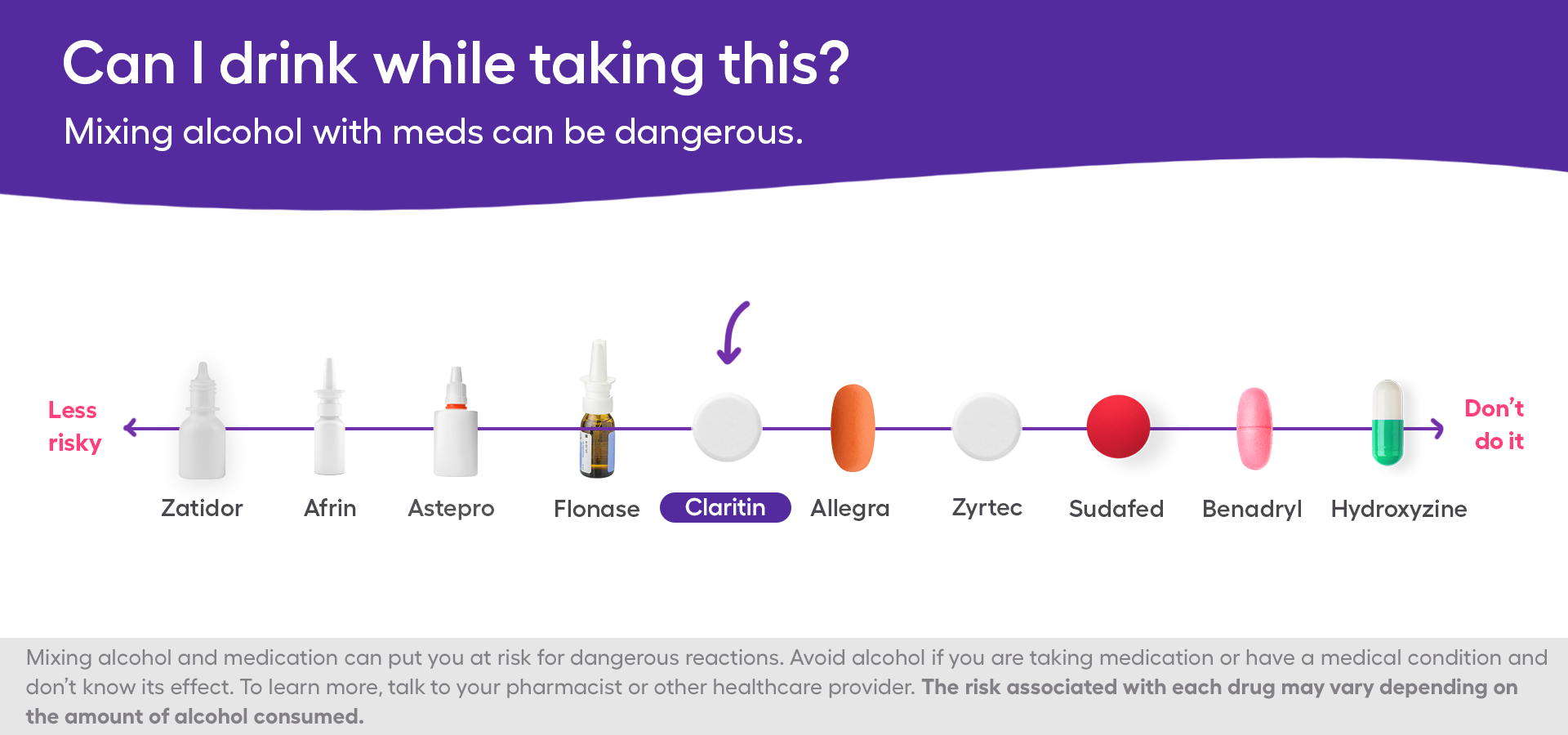
Alcohol is less likely to cause problems with Claritin than older allergy medications like Benadryl (diphenhydramine), but it may still be best to avoid mixing the two. That’s because both Claritin and alcohol could make you more sleepy than usual.
Save up to 80% on Claritin with SingleCare
Different pharmacies offer different prices for the same medication. SingleCare helps find the best price for you.


Can you drink while taking Claritin?
Claritin is a second-generation antihistamine that works by blocking the effects of histamine to treat allergy symptoms. It’s available over the counter or with a prescription to help manage the symptoms of perennial (year-round) and seasonal allergies, such as sneezing, a runny nose, and watery eyes.
Unlike first-generation antihistamines like Benadryl and Chlor-Trimeton (chlorpheniramine), Claritin is considered a non-drowsy antihistamine. Although the risk of sleepiness is lower with Claritin, mixing alcohol and Claritin is not usually recommended.
Those who’ve been taking Claritin consistently and know how it affects them may be able to drink alcohol in moderation. That means, no more than two drinks per day for men or one drink per day for women. Drinking alcohol in any amount, however, does carry a risk of increased side effects.
Consult a healthcare provider about whether it’s safe for you to drink alcohol, especially if you take other medications besides Claritin or have other medical conditions.
What happens if you mix Claritin and alcohol?
Mixing Claritin and alcohol could lead to various adverse effects. The severity of these effects depends on how a person reacts to Claritin and alcohol, as well as the dosage of Claritin and the amount of alcohol consumed.
Drowsiness or dizziness
Both Claritin and alcohol can act as central nervous system (CNS) depressants. In other words, they can slow activity in the brain, which can leave you feeling drowsy or dizzy. Since they can have these effects on their own, mixing the two could lead to increased sedative effects. If you find it difficult to stay balanced, you’ll need to avoid driving or working with dangerous equipment.
Headache
Headaches are possible while drinking alcohol on Claritin. While headaches are a common potential side effect of Claritin, they can also occur after drinking alcohol. The dehydrating effects of alcohol can also trigger headaches that may be worsened by Claritin.
Fatigue
Fatigue is another potential side effect of Claritin, though it’s not commonly reported. Alcohol is known to disrupt sleep cycles, which can cause you to experience daytime drowsiness and fatigue the next day after drinking. Mixing alcohol and Claritin could compound this effect.
Impaired focus and slower reaction times
Because Claritin and alcohol can slow the nervous system, you might have trouble focusing or making important decisions. Your judgment and reaction times could also be affected while mixing alcohol and Claritin.
Worsened allergy symptoms
Alcohol can trigger allergy symptoms in some people, which can be counterproductive when you’re taking Claritin to manage allergies. Certain alcoholic beverages, such as red wine, beer, and aged spirits like whiskey and bourbon, naturally contain histamine. That’s why some people get congested after drinking alcohol. Add these symptoms on top of the ones you’re already trying to manage with Claritin, and you could end up feeling worse.
Dry mouth or eyes
Antihistamines may have anticholinergic-mimicking effects that cause drying of the mouth or eyes. Alcohol can also cause effects that resemble these symptoms. Therefore, mixing the two could lead to worsened dry mouth or dry eyes.
Are certain people at greater risk of side effects?
Some people may have an increased risk of side effects from mixing Claritin and alcohol. Factors such as age, liver health, and other medications taken could make a difference.
Older adults
Adults older than 65 may be more sensitive to alcohol and medications. With age comes a higher likelihood of medical conditions and a slower metabolism of different substances. It may take longer for older adults to clear alcohol and medications like Claritin from their bodies. That could lead to increased drowsiness, dizziness, and falls or other injuries.
People with liver problems
Both Claritin and alcohol are broken down by the liver. Someone with liver disease may have more trouble getting rid of these substances, which could lead to more adverse effects. Alcohol and Claritin can also be hard on the liver over time. Those with liver problems from alcohol use disorder or substance use should avoid mixing the two, let alone drinking alcohol on its own.
People who take sedating medications
Mixing alcohol and Claritin can be particularly dangerous in people who are already on sedating medications like sleep aids, anxiety medications, or muscle relaxers. Drug interactions plus alcohol could lead to slowed breathing and severe drowsiness.
Always tell a healthcare provider about other health conditions you have before taking Claritin and thinking about drinking.
How long after taking Claritin can you drink alcohol?
Claritin has a half-life of around eight hours in most adults. This is the time it takes for half the drug to leave the body. Usually, it takes about five half-lives for most of the drug to clear out.
With this half-life in mind, Claritin could take around 40 hours to be mostly gone. Still, most healthcare professionals suggest waiting at least a day or two after your last dose before drinking alcohol to play it safe. If you’re sensitive to medications or planning to drink more than a small amount, you might want to wait even longer.
The safest bet? Avoid mixing Claritin and alcohol altogether. Both affect your nervous system, and together they can lead to increased drowsiness, dizziness, and reduced coordination. Claritin is less likely than some other antihistamines to cause severe problems with alcohol, but the risk is still there.
What if you already combined them?
If you’ve already combined Claritin and alcohol, there’s no need to panic if you’re taking the recommended dosage of Claritin and had one drink. Just be aware of any usual symptoms that appear. You may want to watch for the following:
- Unusual drowsiness
- Severe lightheadedness or dizziness
- Trouble standing or walking
- Weakness or feeling faint
In any case, you’ll want to stop drinking any more alcohol or taking any more Claritin, at least until the alcohol’s out of your system. If possible, have someone look after you for a while. Drink some water and rest.
Seek immediate medical attention if you experience:
- Fainting
- Confusion
- Difficulty breathing
- An irregular or slow heartbeat
- Signs of an alcohol overdose, such as vomiting or extreme drowsiness
- Signs of an allergic reaction, such as hives or swelling of the face or throat
Harmful interactions are rare. However, if you’re unsure about timing or have questions, check in with your healthcare provider or pharmacist. They can offer medical advice based on your health and situation.
Which allergy medications are not affected by alcohol?
Second-generation antihistamines like Allegra (fexofenadine) aren’t greatly affected by moderate alcohol use when taken at normal doses. These over-the-counter drugs are used for allergy relief without strong sedating effects, which may make them safer for occasional alcohol consumption than first-generation antihistamines like Benadryl.
However, not all second-generation antihistamines are non-sedating. Some, such as Zyrtec (cetirizine) and Xyzal (levocetirizine), can still cause drowsiness that may be worsened by alcohol.
Allergy medications that may need to be used with caution with alcohol include:
- Benadryl (diphenhydramine)
- Chlor-Trimeton (chlorpheniramine)
- Dimetapp (brompheniramine)
- Zyrtec (cetirizine)
- Xyzal (levocetirizine)
Serious or life-threatening reactions are rare, but the sedating effects of first-generation antihistamines may be worsened even with one drink.
The bottom line
Claritin is considered one of the most effective treatment options for allergies. Some people who’ve been on it and know how it affects them may be able to drink in moderation. However, alcohol can worsen allergy symptoms and increase the mild side effects of Claritin, like dizziness or drowsiness. If you take other medications or drink often, ask a healthcare provider first before thinking about drinking on Claritin.
- Loratadine drug label information, DailyMed (2025)
- Drink alcohol only in moderation, U.S. Department of Health and Human Services (2026)
- Mechanism of dehydration following alcohol ingestion, JAMA Internal Medicine (1963)
- How alcohol affects your sleep, National Council on Aging (2025)
- Possible effect of the ingestion of alcohol on allergic rhinitis, American Academy of Allergy, Asthma & Immunology (2019)
- Pharmacokinetics in older adults, MSD Manual (2025)
- Loratadine, LiverTox (2017)
- Loratadine, StatPearls (2025)
- Medically accurate: SingleCare’s Medical Review Board analyzes all of our content to confirm it’s in line with current medical advice.
- Evidence-based: Our content is sourced from reputable U.S.-based healthcare professionals and peer-reviewed research.
- Trustworthy: All of SingleCare’s content goes through a multi-phase review process by our writers, editors, and Medical Board in order to provide clear and credible information.