






Key takeaways
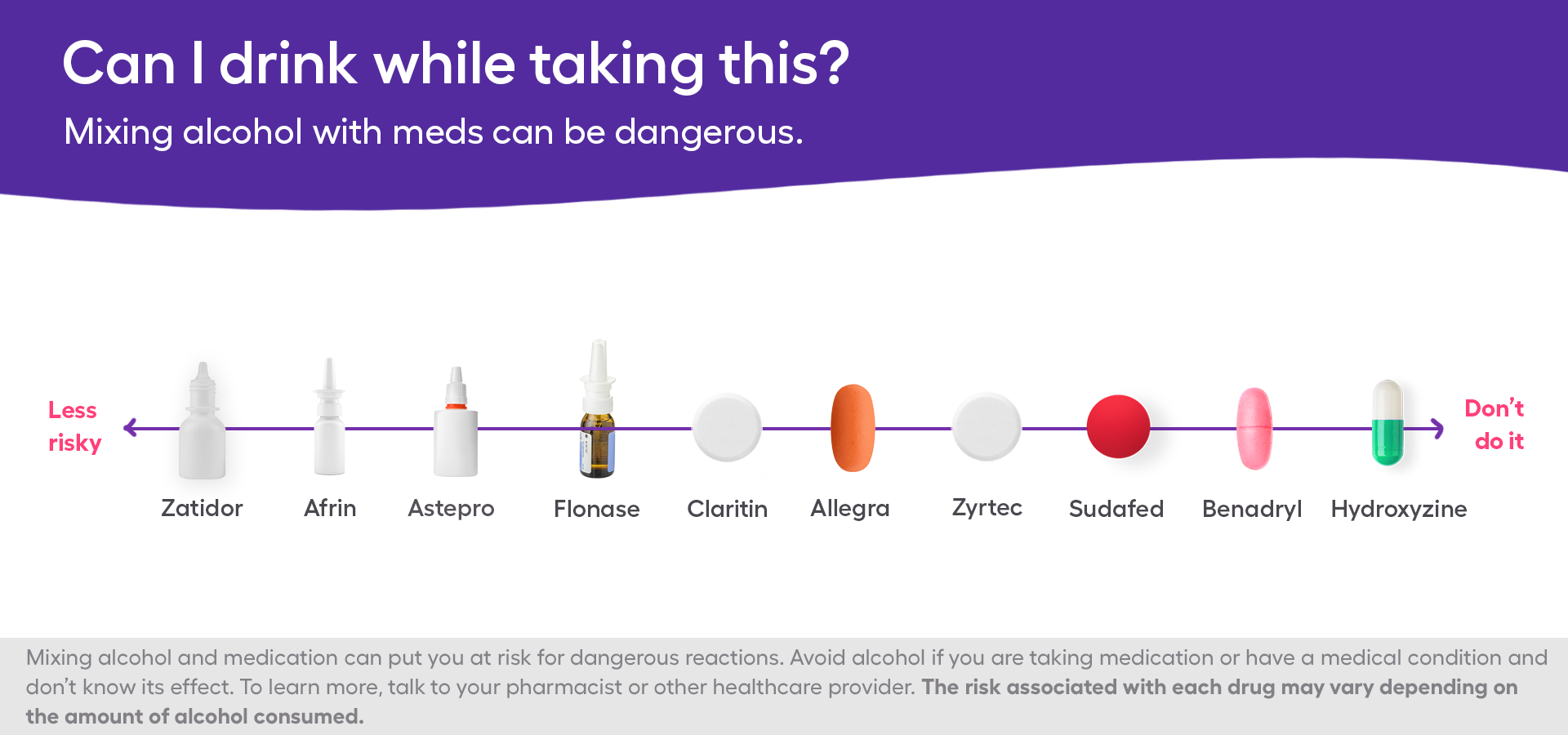
Mixing first-generation allergy medicines like Benadryl with alcohol can cause severe drowsiness and the potential for harmful interactions.
Second-generation medications like Claritin, Allegra, or Zyrtec are safer when taken with alcohol because the risk of sedation is lower.
Nasal sprays like Flonase or Nasonex are the safest alternatives if you’re consuming alcohol.


Seasonal allergies are as common as they are annoying. According to the Asthma and Allergy Foundation of America, allergic rhinitis (aka hay fever) affects 20 million adults in the United States each year. And millions more experience various other types of allergies, everything including insect bites, pet dander, shellfish, peanuts, and mold spores (to name a few). If you have a severe or anaphylactic allergy, you might carry an EpiPen or receive allergy shots. For most people, however, over-the-counter allergy medicine is the first line of defense against allergy symptoms.
But how does taking allergy medication impact your ability to enjoy those #weekendvibes? In other words, will you still have the option to enjoy a cold beer on a hot summer night (or a hot toddy on a cold winter night) if you are taking something to combat your itchy eyes, runny nose, sneezing, hives, rash, or scratchy throat?
Can you drink alcohol while taking allergy medication?
If you’re taking medication to manage your allergies, you may wonder if it’s safe to drink alcohol, and for good reason. Combining allergy meds with alcohol can cause side effects that impair your daily functioning and pose health risks. Keep reading to uncover the relationship and risks between alcohol and first- and second-generation oral allergy medications.
First-generation allergy medicines
If your allergy med of choice is a first-generation allergy medication, the answer is an emphatic NO, don’t drink alcohol. These medications include:
- Benadryl (diphenhydramine)
- Chlor-Trimeton (chlorpheniramine)
- Tavist (clemastine)
- Atarax (hydroxyzine)
RELATED: Can you drink while taking hydroxyzine?
Simply put, none of these and alcohol should never, EVER, be combined, says David Corry, MD, a pulmonologist and professor of medicine in the immunology, allergy, and rheumatology department at Baylor College of Medicine in Houston, Texas.
“That is a big contraindication,” Dr. Corry says. Why? The primary side effect of these medications, which are central nervous system depressants, is drowsiness (case in point: Benadryl is also used to treat insomnia), which is also one of the primary side effects of alcohol consumption.
“First-generation antihistamines (like diphenhydramine, chlorpheniramine, clemastine, and hydroxyzine) will cause drowsiness in just about everybody, and alcohol does that too,” Dr. Corry explains. “So if you are taking alcohol and antihistamines, your chances of having a double dose of that drowsiness are very, very high.”
In the worst-case scenario, he explains, this double dose of drowsiness can not only impair your ability to function and increase the likelihood of some sort of accident, but it can also lead to difficulty breathing and unconsciousness. Meaning that cocktail is not worth the risk.
What if you’re having an allergic reaction?
It’s essential to note an important exception to this hard-and-fast rule: If someone is facing a severe allergic reaction while consuming alcohol from food or an insect bite, immediate action is necessary, and an antihistamine can be taken.
“If you are allergic to shellfish and you had two martinis and then somebody passes you a shrimp and you are having a reaction … you would not withhold Benadryl,” says Maria Marzella Mantione, Pharm.D., director of the Doctor of Pharmacy program at St. John’s University in Queens, New York. She adds that in this scenario, the patient needs professional medical care, so call 911 or get them to a healthcare provider immediately.
“These concerns (about antihistamines and drowsiness) are really outside of this particular context of severe, life-threatening situations,” Dr. Corry agrees.
Fortunately, Benadryl clears from your system in four to six hours, says Dr. Mantione. So, presuming the allergic reaction is kept at bay, you won’t be teetotaling indefinitely.
Second-generation allergy medicines
If you have chronic seasonal allergies, it is unlikely your healthcare provider will recommend a first-generation antihistamine, says Dr. Mantione, because these are normally used for acute reactions and may cause drowsiness every time they are taken. Instead, she explains, you’ll likely be steered toward one of these second-generation allergy medications:
- Claritin (loratadine)
- Allegra (fexofenadine)
- Xyzal (levocetirizine)
- Zyrtec (cetirizine)
These medications and alcohol are generally considered a slightly safer combination, as the medication does not typically cause drowsiness or other side effects that would be intensified by alcohol consumption.
RELATED: Can you drink alcohol while taking Claritin?
“Most of these have a reduced, if not completely absent, side effect of sleepiness,” Dr. Corry says. This is not to say, however, that it is okay to go on a bender while taking Claritin, Zyrtec, Xyzal, or Allegra. Dr. Corry recommends avoiding alcohol use altogether while taking any medication.
But is doing so going to lead to a critical medical emergency? Probably not, explains Dr. Mantione. “It is one of those situations where, as a pharmacist, I say it is best to avoid because we don’t know how it is going to affect you, but it is not (considered) a life-threatening combination,” she says.
RELATED: Can you drink while taking Zyrtec?
She also offers an alternative treatment option for those who don’t want to give up the opportunity to have a drink: nasal corticosteroids, such as Flonase or Nasonex. These are used as needed and are safe to use regularly throughout the allergy season. They don’t have a contraindication with alcohol as they don’t cause drowsiness or other systemic side effects, she says.
“If somebody came to me and said, ‘I am on this allergy medication, but I am going away on vacation, and I am hoping to have Bahama Mamas every day,’ I would recommend the nasal corticosteroid,” Dr. Mantione says.
Is having one or two drinks okay?
It’s crucial to be cautious when combining alcohol with allergy medications, even one glass of wine with dinner. Alcohol should be avoided completely with first-generation antihistamines like diphenhydramine due to the increased risk of drowsiness and impairment. Although second-generation antihistamines are generally considered safer, healthcare professionals advise against drinking alcohol while taking allergy medications, except nasal sprays.
RELATED: Can you take Benadryl and drink alcohol?
Are certain people at greater risk of side effects?
Yes. Older adults, individuals with certain medical conditions, and those with heightened sensitivity to either substance may be at a higher risk of adverse effects from mixing alcohol with allergy medications. Those taking medications for sleep disorders or mental health issues like anxiety or depression are also at heightened risk of intensified side effects. Additionally, people taking multiple drugs or with a history of alcohol abuse should be particularly cautious.
How long after taking allergy medicine can you drink alcohol?
When you take your allergy medication is important, too. For first-generation antihistamines like Benadryl, it is recommended to wait at least four to six hours after the last dose before consuming alcohol, which is typically how long it takes the medication to clear from your system. For second-generation antihistamines, consult with a healthcare professional to determine the safest approach regarding alcoholic beverages. These often stay in your system longer but pose less risk of serious interactions.
The bottom line
Combining alcohol with medicines for allergies should be avoided. First-generation antihistamines pose significant risks when paired with alcohol, while second-generation options are generally safer but still warrant caution. Ultimately, it is best to err on the side of caution and avoid alcohol while taking any allergy medication to ensure optimal health and safety. Always consult with a healthcare provider for personalized medical advice.
- Allergy facts and figures, Asthma & Allergy Foundation of America
- Medically accurate: SingleCare’s Medical Review Board analyzes all of our content to confirm it’s in line with current medical advice.
- Evidence-based: Our content is sourced from reputable U.S.-based healthcare professionals and peer-reviewed research.
- Trustworthy: All of SingleCare’s content goes through a multi-phase review process by our writers, editors, and Medical Board in order to provide clear and credible information.