





Key takeaways
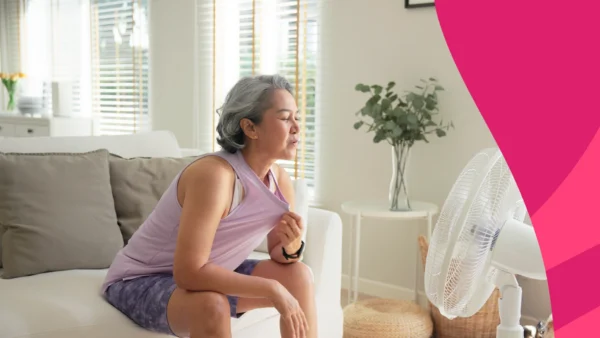
The hot summer weather can trigger hot flashes and worsen their severity.
Drinking cold water, taking frequent cold baths, and wearing loose-fitting clothing can help manage hot flashes in summer.
Effective treatments are available for this symptom, including HRT, low-dose antidepressants, and NK1/NK3 receptor antagonists.


In the U.S., more than 67,000 emergency department visits each year are heat-related, according to the American Heart Association. Much of the attention is on heat-related illnesses, such as heat exhaustion and heat stroke. However, people in their perimenopausal and menopausal phases are also bearing the brunt of summer.
Hot flashes feel like sudden surges of intense heat in the upper part of your body – prominently on your face, neck, and chest. Hot flashes include flushing, sweating, and sometimes a rapid heartbeat. Hot flash is a common symptom of menopause and perimenopause. However, other people can also experience it when triggered by factors like medications, stress, and underlying medical conditions.
Are hot flashes worse in summer?
The summer heat can trigger hot flashes and worsen their severity. “Is it worse to feel warmer when you are already warm? Absolutely,” says Bruce Dorr, MD, a board-certified OB-GYN practicing in Littleton, Colorado, and the senior medical adviser at Biote.
Heat triggers a response from KNDy neurons, nerve cells in the hypothalamus. This area of the brain is responsible for regulating body temperature. KNDy refers to three chemicals used and secreted by the neurons: kisspeptin, neurokinin B, and dynorphin. Normally, estrogen keeps KNDy neurons stable. However, drops in estrogen during perimenopause and menopause can destabilize them. This causes the body’s temperature control system to go haywire and trigger hot flashes. The effect can worsen the overall feeling of warmth in the summer months, Dr. Dorr explains.
A case report suggests climate change may increase hot flashes, especially in regions with dramatic seasonal temperature swings.
Another study assessed the impact of season on menopausal symptoms. It found that peaks in hot flashes and trouble sleeping occurred in July (often the hottest month). On the other hand, the lowest prevalence of these symptoms was observed in January (typically the peak of winter).
Why does heat trigger hot flashes?
Health scientists have found that the body functions best at a temperature of about 98.6 degrees Fahrenheit. However, the body constantly adapts its temperature to environmental (ambient) temperature. When the body temperature is too low, the hypothalamus triggers mechanisms to generate heat e.g., shivering. When it’s too high, mechanisms that would cool it down are triggered, e.g., perspiration.
When the environment is within a range of temperatures called the “thermoneutral zone,” a healthy individual is able to maintain their core body temperature without the body needing to make adjustments or initiate any thermoregulatory responses like increasing metabolic rate, causing sweating, shivering, or skeletal muscle contraction.
Dysregulation of the body’s thermoregulation can increase the risk of heat-related illnesses and symptoms such as hot flashes. Menopausal hormones play a big role.
Vasomotor symptoms like hot flashes and night sweats are rooted in hormone changes triggered by both estradiol volatility and decreased estrogen hormones during menopause, says Alyssa Dweck, MS, MD, FACOG, MSCP, Chief Medical Officer of Bonafide Health and a Menopause Society Certified Practitioner practicing at Well by Messer in NYC.
She explains that declines in estrogen levels during menopause lead to a narrowing of the thermoneutral zone (the comfortable temperature range where your body does not have to work extra hard to stay warm or cool).
Simply put, during menopause, estrogen levels are low, and the hypothalamus becomes hypersensitive to heat and small temperature shifts. And when ambient temperature is high, as in summer, it raises core body temperature, increasing the likelihood of crossing the already-narrowed thermoneutral threshold, advises Dr. Dweck. Such small changes in body temperature can trigger hot flashes in people whose hypothalamus is already hypersensitive. Dr. Dweck explains.
Notably, summer can increase both the frequency and physiological severity of hot flashes by lowering the trigger threshold, so hot flashes get triggered more often. Adding the sensation of heat to a body already working hard to stay cool in the hot weather increases the person’s distress, Dr. Dorr explains.
Summer triggers beyond the heat itself
Dr. Dorr says that in addition to the hot weather, certain factors and lifestyle habits during summer months may trigger vasomotor symptoms in women in menopause and perimenopause, such as:
- Dehydration: Heat can cause dehydration. Dehydration disrupts the body’s ability to regulate temperature, which can trigger hot flashes, flushing, night sweats, blood pressure changes, and heart palpitations or changes in heart rate.
- Variability in diet: Summer is usually a time for alcohol, spicy foods, and comfort foods, including ice cream and other sweet treats, which can disrupt glucose regulation and further cause dehydration, triggering the same issues.
- Higher humidity: Humidity, which is typically higher in summer, may compound the problem. “When the air is saturated, sweat can’t evaporate efficiently, so the body’s natural cooling process falls behind and hot flashes break through,” Dr. Dorr explains.
- Stress: Dr. Dorr says that while summer means more freedom to travel, some trips and family gatherings can be stressful, and stress increases cortisol and vascular effects that trigger hot flashes.
- Frequent, abrupt temperature swings: Dr. Dorr says the constant swing between summer heat and indoor air conditioning can be a trigger. “In menopause, the body’s internal thermostat becomes far more sensitive, and its comfort zone narrows, so those abrupt temperature shifts can set off hot flashes even when stepping into cool indoor air feels like relief.”
Hot flashes vs. heat exhaustion: How to tell the difference
While hot flashes and heat exhaustion share overlapping symptoms, they are distinct and can be distinguished from each other.
While hot flashes might be worse in the summer months, they are caused by hormonal imbalance, not by being in a hot environment. They tend to affect the upper part of the body, from the shoulders up, explains Dr. Dorr. Hot flashes are not dangerous and don’t cause any symptoms such as confusion or dizziness.
Heat exhaustion, on the other hand, is a condition in which the body can’t cool itself effectively, usually caused by overexertion in a hot environment. Heat exhaustion will cause a person to feel ill with symptoms such as dizziness, a fast pulse, nausea, or muscle cramps. If the body is not cooled, heat exhaustion can progress to heat stroke, which is a medical emergency.
How to manage hot flashes in summer
Typically, when hot flashes start, it’s not possible to stop them instantly. This makes it challenging to stay comfortable. But there are things you can do to reduce how often hot flashes occur and their severity, especially during hot weather.
- Stay hydrated by drinking more water and eating fluid-rich foods like watermelon and cucumber. Use fans (including at-home fans and portable fans) both at home and on the go.
- Take cool showers or baths.
- Wear loose-fitting cotton clothing and wear fewer layers
- Avoid consuming foods or substances that can contribute to dehydration, including alcohol, caffeine, and cigarettes.
- Avoid exercising in heated environments. Instead, engage in light physical activities that help you relax and get better sleep.
You can also try some mind-body approaches to trigger the body’s cooling mechanism:
- Paced breathing: This technique involves taking slow, deep breaths (about seven per minute) to help calm your nervous system and slow your heart rate. Breathe in through your nose and exhale through your mouth.
- Cognitive behavioral therapy: CBT is an evidence-based psychological practice that may be helpful for improving hot flashes and other menopausal symptoms. During such sessions, a therapist teaches you how to interrupt a cycle of behavior or thoughts that are stressful or negative and can trigger hot flashes.
- Clinical hypnosis: Evidence has consistently shown that hypnosis may be significantly effective for reducing the frequency and severity of hot flashes. During hypnosis, you are in a state of focused relaxation. As your provider guides you to imagine sensations of coolness, your brain learns to dissociate from hot-flash-triggering discomfort.
Treatment options when lifestyle changes are not enough
Vasomotor symptoms that interfere with day-to-day activities or relationships should be evaluated and managed appropriately. “This might include use of hormone therapy, non-hormonal drugs, or clinically studied supplements along with lifestyle and behavioral intervention,” says Dr. Dweck.
According to Dr. Dorr, while there are different treatment options, hormone replacement therapy remains the most effective treatment for vasomotor symptoms and is considered first-line therapy for appropriate candidates.
“There is also a significant update in this area; as late as last year, the FDA began removing black box warnings from menopausal hormone therapy products, hopefully giving more confidence to women seeking treatment options,” he says. The labeling changes include removing broad risk statements for cardiovascular disease, breast cancer, and probable dementia.
Common pharmacological medications your healthcare provider may prescribe include:
- Serotonin and norepinephrine reuptake inhibitors (SNRI) such as Effexor XR (venlafaxine)
- Selective serotonin reuptake inhibitors (SSRIs) such as Celexa (citalopram), Paxil (paroxetine), Zoloft (sertraline)
- Neurontin (gabapentin)
- Selective estrogen receptor modulators (SERMs), such as Duavee (bazedoxifene)
- Ditopran (oxybutynin)
- High blood pressure medication, such as Catapres (clonidine)
- Veozah (fezolinetant) and Lynkuet (elinzanetant), newer FDA-approved neurokinin receptor antagonists (non-hormonal medications)
These medications are typically expensive, but there are ways you can save costs. Instead of buying brand-name versions, you can purchase generic versions that contain the same active ingredients at a lower cost.
SingleCare prescription discount cards are also a great way to lower out-of-pocket costs for your medications. To save on Veozah, for instance (which can cost over $700 for a month’s supply of 30 or 45 mg tablets without insurance), you can visit SingleCare’s Veozah coupon page. Compare prices at the pharmacies, choose the one you would like to use, then click the “Get Free Coupon” button to get a coupon.
When to see a healthcare provider
You should see a healthcare professional anytime your quality of life is affected. “Too many women worry they’re bothering their provider with menopause symptoms, as if hot flashes that disrupt sleep, work, and family life somehow don’t rise to the level of a medical concern. They do,” says Dr. Dorr, adding that if your doctor doesn’t provide the support you need, you should find one who will.
Your provider is your advocate. They will work with you to address your concerns and recommend appropriate treatments for your symptoms.
Additionally, Dr. Dweck points out that new-onset hot flashes and/or night sweats, especially those occurring remote from the time of menopause, might suggest a medical problem unrelated to menopause and should be reported to a healthcare provider and appropriately evaluated.
- In the summer heat, know how to recognize—and prevent—heat stroke, American Heart Association (2023)
- Modulation of body temperature and LH secretion by hypothalamic KNDy (kisspeptin, neurokinin B and dynorphin) neurons: A novel hypothesis on the mechanism of hot flushes, Frontiers in Neuroendocrinology (2014)
- In brief: How is body temperature regulated and what is fever? StatPearls (2025)
- Being hot: Climate versus climacteric, Case Reports in Women’s Health (2021)
- Monthly variation of hot flashes, night sweats, and trouble sleeping: effect of season and proximity to the final menstrual period (FMP) in the SWAN Menstrual Calendar substudy, Menopause (2020)
- In brief: How is body temperature regulated and what is fever? InformedHealth.org (2022)
- Physiology, temperature regulation, StatPearls (2023)
- Beyond the classic thermoneutral zone, Temperature (2014)
- Menopause symptoms and relief, Office on Women’s Health in the Office of the Assistant Secretary for Health (2025)
- Nonhormonal treatment of menopausal vasomotor symptoms, JAMA Internal Medicine (2025)
- Cognitive-behavioral therapy shows promise managing menopausal insomnia and hot flashes, The Menopause Society (2026)
- Complementary and alternative medicine for menopause, Journal of Evidence-Based Integrative Medicine (2019)
- FDA approves labeling changes to menopausal hormone therapy products, U.S. Food and Drug Administration (2026)
- Hot flashes: What can I do? National Institute on Aging (2021)
- An OB-GyN’s tips for managing hot flashes, American College of Obstetrics and Gynecology (2025)
- Hot Flashes and Night Sweats (PDQ®): Health Professional Version, PDQ Cancer Information Summaries: National Cancer Institute (2025)
Featured experts:
- Bruce Dorr, MD, a board-certified OB-GYN practicing in Littleton, Colorado, and the senior medical adviser at Biote
- Alyssa Dweck, MS, MD, FACOG, MSCP, the Chief Medical Officer of Bonafide Health and a Menopause Society Certified Practitioner practicing at Well by Messer in NYC
- Medically accurate: SingleCare’s Medical Review Board analyzes all of our content to confirm it’s in line with current medical advice.
- Evidence-based: Our content is sourced from reputable U.S.-based healthcare professionals and peer-reviewed research.
- Trustworthy: All of SingleCare’s content goes through a multi-phase review process by our writers, editors, and Medical Board in order to provide clear and credible information.