






Key takeaways
Benadryl (diphenhydramine) is a first-generation antihistamine that some people take to reduce allergic symptoms, but it can also cause drowsiness.
Experts strongly recommend that people not mix Benadryl with alcohol, since both substances have a sedative effect.
People with certain medical conditions or taking certain medications may need to be especially careful not to mix Benadryl and alcohol.


Got allergies? Tempted to pop a Benadryl in the afternoon and then relax later tonight with a beer? You might want to reconsider.
Benadryl is the brand name for diphenhydramine, a first-generation antihistamine that you might take for seasonal allergy symptoms or a mild allergic reaction. Since it can also make you drowsy, some people also use it as a sleep aid. It’s usually not a good idea to combine this over-the-counter allergy medication with alcohol, largely because one of its main side effects is sleepiness. Here’s what you need to know before you open your medicine cabinet—and your liquor cabinet.
Save up to 80% on Benadryl with SingleCare
Different pharmacies offer different prices for the same medication. SingleCare helps find the best price for you.


Can you drink alcohol with Benadryl?
“Benadryl is a commonly used medication with a relatively good safety profile,” says Brian Laird, Pharm.D., pharmacy operations manager at OSF HealthCare in Urbana, Illinois. “However, because of potential drowsiness, avoid taking it before situations in which drowsiness or decreased mental capacity could be a concern.” That includes drinking alcohol. Dr. Laird does not recommend drinking any alcohol if Benadryl or any first-generation antihistamine is your choice for addressing your symptoms.
People often take an antihistamine like Benadryl to temporarily relieve seasonal allergy symptoms such as
- Sneezing
- An itchy throat or nose
- Runny nose
- Itchy, watery eyes
It’s also used, sometimes off-label, to treat hives (urticaria), allergic rhinitis, vertigo, motion sickness, and symptoms of dystonias. “A combination of alcohol and Benadryl, or any medication in the same class, can increase drowsiness and lack of coordination,” says Dr. Laird. “Some people may be prone to dizziness as well.” 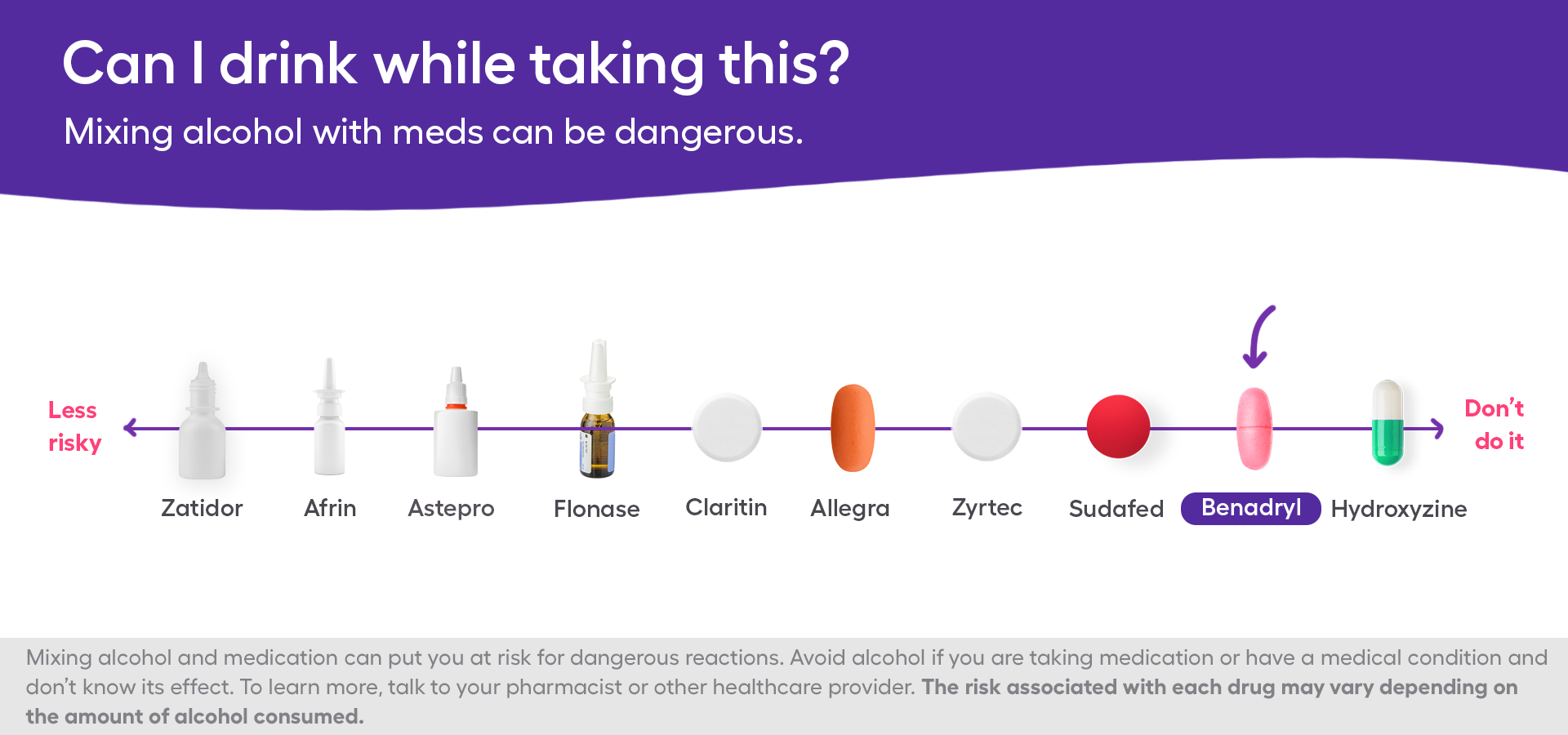
What happens if you mix Benadryl and alcohol?
Experts caution that diphenhydramine doesn’t just relieve allergy symptoms. It also affects the central nervous system. It crosses the blood-brain barrier and then binds to central H1 (histamine) receptors in the brain, which normally promote alertness. When the medication blocks those histamine receptors, it prevents histamine action in the brain, leading to drowsiness.
Now think about what could happen if you took a medication like Benadryl that already causes sedation and then knocked back a few alcoholic beverages.
“Alcohol is a depressant,” explains Manisha Relan, MD, a spokesperson for the American College of Allergy, Asthma and Immunology (ACAAI). “When taken together, the side effects amplify. So what you might see is a slowing of brain function, which can cause sleepiness, impaired judgment, impaired coordination, and impaired cognitive function. This is most dangerous when driving or operating heavy machinery.”
Essentially, Benadryl is one of numerous medications that you should avoid taking while drinking alcohol, according to the National Institute on Alcohol Abuse and Alcoholism (NIAAA). The exception to the rule is if someone is having a severe allergic reaction that could cause anaphylaxis. For example, if you have an allergy to shellfish and accidentally ate some after having a glass of wine, Benadryl should not be withheld. However, you should seek immediate medical attention.
“Mixing Benadryl with alcohol intentionally is considered polydrug use or abuse, since some people do it for the effects,” adds Dr. Relan. “Mixing the two together increases the risk of dependence and addiction. Long-term use of the two can affect memory as well.”
As a general guideline, even if you’re not drinking alcohol, you should follow the Benadryl dosing instructions carefully. The Food and Drug Administration has warned that higher-than-recommended doses can lead to seizures, serious heart problems, coma, and even death.
Why your age and biology matter
Certain people are at higher risk for experiencing side effects when combining Benadryl and alcohol.
Older adults
According to the NIAAA, older adults are at increased risk for side effects if they combine alcohol and Benadryl. “Aging itself results in increased risk of impaired coordination and cognitive function due to the slowing of metabolism as we get older,” Dr. Relan says. “Pair that with two additional risk factors like alcohol and diphenhydramine, and this could increase the risk of overdose.”
In fact, guidelines also suggest that older adults avoid medications containing diphenhydramine due to safety concerns, such as higher fall risk or dangerous sedation.
People with certain medical conditions
If you have certain medical conditions, talk to your healthcare provider before you take Benadryl or consider having a drink while taking Benadryl. According to Dr. Relan, her two main areas of concern would be patients with:
- Impaired liver function: “In liver disease, it is harder to process and break down Benadryl and alcohol. This leads to increased risk of toxicity,” she says.
- Cardiac or respiratory issues: “When it comes to respiratory conditions like asthma, COPD, or even sleep apnea, there is a cumulative effect with adding Benadryl and alcohol, both of which depress breathing independently.”
People taking certain medications
Also, it’s important to note that some people may want to avoid taking Benadryl altogether, as it can interact with certain medications they’re already taking, such as:
- Certain blood pressure medications
- Anticholinergic drugs
- Benzodiazepines
- Certain antidepressants
- Other sleep aids
- Other antihistamines
Watch out for cough syrups, too, since some cough and cold medications may also contain an antihistamine, and you don’t want to double up.
How long after taking Benadryl can you drink alcohol?
If you don’t plan to give up alcohol entirely while using Benadryl, you might want to consider spacing out these two different central nervous system depressants appropriately.
Dr. Relan notes that the half-life of Benadryl is up to 12 hours, and the sedative effects can last four to six hours. “I would recommend waiting as long as possible,” she says.
“Ideally, someone would wait until the alcohol is out of their system before taking Benadryl,” Dr.Laird says. “Benadryl generally takes longer to be cleared by the liver. Its effects can still be seen after nine to 18 hours, depending on the person.”
What to do if you’ve already mixed them
It’s important to know what to do if you mix Benadryl and alcohol.
“First, try not to panic,” says Dr. Relan. “Mistakes do happen. Next, watch out for signs, such as dizziness, confusion, extreme drowsiness, or difficulty breathing. Seek immediate medical attention if there are any concerns.”
Essentially, it’s time for the liver to do its job, adds Dr. Laird. That is, one of the primary functions of the liver is to break down anything that you consume by mouth, including medication, and metabolize it so it can eventually be excreted.
“It might make you extra sleepy, and that is to be expected,” Dr. Laird says. “Make sure you are not at risk for falling or hurting yourself. If your breathing seems greatly disrupted, it is time to visit the emergency department. Otherwise, a long nap will typically help.”
Safer alternatives for allergy relief and sleep
While Benadryl is widely available, you might also want to consider alternatives, whether or not you’re using alcohol. As a general rule, second-generation antihistamines don’t have as many side effects as first-generation antihistamines. More specifically, second-generation H1 antihistamines don’t have the same sedative effect as Benadryl, so you could consider:
In fact, second-generation antihistamines are now the preferred choice for hives, even though first-generation antihistamines can be used. “The year is 2026, and Benadryl is OUT,” says Dr. Relan. “Most evidence-based practicing board-certified allergists do not use or recommend Benadryl anymore.” Dr. Relan does not recommend it in her clinical practice, as second-generation antihistamines offer a “much better safety profile,” and some, such as fexofenadine, don’t even cross the blood-brain barrier. “If treating seasonal allergies, use a nasal spray,” she adds. “It is much more direct, effective, and is considered first-line treatment.”
There are no sleep aids that are considered safe to mix with alcohol.
RELATED: Allergy medicine coupons & resources
The bottom line
Ideally, you shouldn’t combine alcohol and Benadryl. You may not experience any major side effects, but the combination can be risky. If a loved one mixes Benadryl and alcohol and experiences loss of consciousness, seek medical attention right away. If you feel that you need to use an antihistamine, talk to your healthcare provider about which medication they would recommend for you, based on your age and medical history. They may want to weigh the costs and benefits of Benadryl versus a second-generation antihistamine like Claritin to decide which treatment is best for you.
- Antihistamines, StatPearls (2025)
- Diphenhydramine, MedLinePlus (2026)
- Diphenhydramine: A review of its clinical applications and potential adverse effect profile, Journal of Pediatric Pharmacology and Therapeutics (2025)
- Alcohol’s effect on health, National Institute on Alcohol Abuse and Alcoholism (2014)
- FDA warns about serious problems with high doses of the allergy medicine diphenhydramine (Benadryl), Food and Drug Administration (2020)
- Diphenhydramine toxicity, StatPearls (2023)
- Over-the-counter medications containing diphenhydramine and doxylamine used by older adults to improve sleep, International Journal of Clinical Pharmacy (2017)
- Diphenhydramine syrup or elixir, Cleveland Clinic (2026)
- Drugs and the liver, Anaesthesia and Intensive Care Medicine (2020)
- Antihistamines, Cleveland Clinic (2024)
- Diphenhydramine, StatPearls (2025)
- Medically accurate: SingleCare’s Medical Review Board analyzes all of our content to confirm it’s in line with current medical advice.
- Evidence-based: Our content is sourced from reputable U.S.-based healthcare professionals and peer-reviewed research.
- Trustworthy: All of SingleCare’s content goes through a multi-phase review process by our writers, editors, and Medical Board in order to provide clear and credible information.