






Key takeaways
There’s no known direct interaction between Zofran and alcohol, but combining them can still worsen side effects like dizziness, headache, and nausea.
Mixing Zofran with alcohol may be riskier for older adults and people with liver problems because both can be harder for the body to process.
Waiting around a day after taking Zofran can ensure that it’s completely cleared from the body before drinking alcohol.


Zofran is the brand name for ondansetron, an anti-nausea medication (antiemetic). It’s typically used with chemotherapy, radiation, or after surgery to manage nausea and vomiting. It’s recommended to avoid mixing Zofran and alcohol due to potential side effects and because alcohol itself can cause nausea, the symptom that Zofran is used to treat.
Can you drink while taking Zofran?
There is no direct interaction between Zofran and alcohol. The Food and Drug Administration (FDA) label for Zofran does not mention any special precautions to take with alcohol. However, mixing the two could lead to adverse effects, and healthcare professionals will generally recommend against drinking on Zofran.
Many people will choose to avoid alcohol while on Zofran, given the intended use of Zofran. For example, if you’re prescribed Zofran for chemotherapy or radiation therapy, you’re probably limiting alcohol intake anyway during treatment. If you’re taking Zofran after surgery, you’ll likely be avoiding alcohol to recover.
For any other off-label use not related to cancer or surgery, it’s best to consult a healthcare provider on whether it’s safe to drink. Those who use Zofran for nausea on GLP-1 medications may be able to safely enjoy an occasional drink. In some cases, taking Zofran may even help manage nausea after alcohol consumption.
Some studies have shown that low-dose ondansetron may also help reduce alcohol cravings in people with alcohol use disorder. Ondansetron blocks the 5-HT3 receptor, which can reduce the rewarding effects of alcohol.
Save up to 80% on Ondansetron with SingleCare
Different pharmacies offer different prices for the same medication. SingleCare helps find the best price for you.


What happens if you mix Zofran and alcohol?
Combining Zofran and alcohol may lead to unwanted adverse effects. While some effects can be mild, others could be more serious.
Increased dizziness or lightheadedness
Zofran can cause dizziness as a common side effect. Alcohol can also affect balance and coordination by slowing down the central nervous system (CNS). If you take both together, the drowsiness and dizziness could become much worse. You might feel unsteady on your feet or have trouble walking normally. Even just one or two drinks could make the dizziness worse.
Worsened headache
Headaches are also a potential side effect of Zofran. Alcohol is known to cause headaches, especially during hangovers. That’s why taking both together may cause more severe headaches than either substance might cause alone. A headache can come on while drinking or later on as hangover symptoms appear. Dehydration can make this worse (alcohol can act as a diuretic and cause fluid loss).
Worsened nausea or vomiting
This can seem backward, especially when Zofran is used to treat nausea. However, mixing this drug with alcohol can actually worsen nausea, since alcohol can trigger nausea on its own. Therefore, this anti-nausea drug may not work as well with alcohol. For those who take Zofran to help with nausea from a hangover, nausea may be reduced, but the drug still doesn’t protect against the irritating effects of alcohol on the stomach.
Heart rhythm changes
Zofran has been linked to a condition in which the heart takes longer than normal to reset between beats. This can lead to problems with heart rhythm, which could be serious. Alcohol can also disrupt the rhythm of the heart, especially in large amounts over time. In addition, Zofran may lower blood pressure, amplifying potential effects on the heart with alcohol.
Serotonin syndrome
Zofran works as a serotonin receptor antagonist, meaning it blocks specific serotonin receptors in the body that trigger nausea and vomiting. When it’s combined with substances that can increase serotonin (which may include alcohol), serotonin syndrome can be a potential risk. Serotonin syndrome is a serious condition that can cause trembling, diarrhea, and muscle rigidity.
Side effects may not occur in everyone taking Zofran. However, it’s important to be aware of the potentially serious effects of mixing Zofran and alcohol.
Are certain people at greater risk of side effects?
Some people may be at greater risk of side effects when mixing Zofran and alcohol. This risk is based on whether a person has problems metabolizing, or processing, Zofran or alcohol.
People with liver disease
An important concern with mixing Zofran and alcohol is that both substances are processed in the liver, which could lead to serious side effects in those with liver disease. If someone has liver damage from alcohol abuse or other causes, ondansetron can build up in the body. Anyone with a history of alcohol dependence should be especially careful.
Older adults
Older adults often process medications more slowly than younger people. Their bodies can hold on to ondansetron longer, increasing the risk of side effects. Older adults may also feel the effects of drinking more strongly and for longer. In addition, many older adults also take other medications like SSRIs, SNRIs, or supplements that can interact with ondansetron and alcohol, increasing the risk of serotonin syndrome.
Always discuss your past medical history with a healthcare provider before starting Zofran. They can help determine whether it’s safe to drink while on Zofran.
How long after taking Zofran can you drink alcohol?
Zofran has a half-life of around three to four hours in healthy adults, but it may be longer in older adults. Half-life is the amount of time it takes for drug levels to decrease by half. Because it can take around five half-lives to completely clear a drug from the body, that means it could take almost a full day to get rid of Zofran from the body.
If you want to be cautious, it’s best to wait a day before drinking alcohol after a dose of Zofran. However, the timing can be different for everyone. Factors such as age, weight, and liver function can all affect how the body processes ondansetron and alcohol.
Factors that affect timing can include the following:
- Dosage: Low-dose ondansetron may clear the system faster than higher doses
- Form: Intravenous ondansetron works faster but may also leave the body more quickly than oral tablets
- Individual metabolism: Some people process medications faster than others
- Drinking amount: Having just one drink versus several drinks can make a difference
It’s always better to wait longer rather than rush the timing if you’re unsure. That gives you time to monitor how you feel and make a decision based on advice from a healthcare provider.
What to do if you’ve accidentally mixed Zofran and alcohol?
If you’ve mixed Zofran and alcohol by accident, you’ll first want to stay calm and then watch for any unusual symptoms. Most people should not experience serious, life-threatening problems, but you’ll want to watch for these symptoms:
- Dizziness or lightheadedness
- Severe drowsiness
- Trouble concentrating
- Problems with balance or walking
- Confusion or unusual behavior
If these symptoms develop or worsen, stop drinking any more alcohol immediately. Avoid driving or operating machinery and drink enough water to stay hydrated. In some cases, you may need to seek immediate medical help.
Do not induce vomiting if Zofran and alcohol were accidentally mixed. Also, avoid taking any other medications without first talking to a healthcare provider. Even if symptoms seem mild, you can contact your healthcare provider for reassurance and guidance.
Which anti-nausea medications are affected by alcohol?
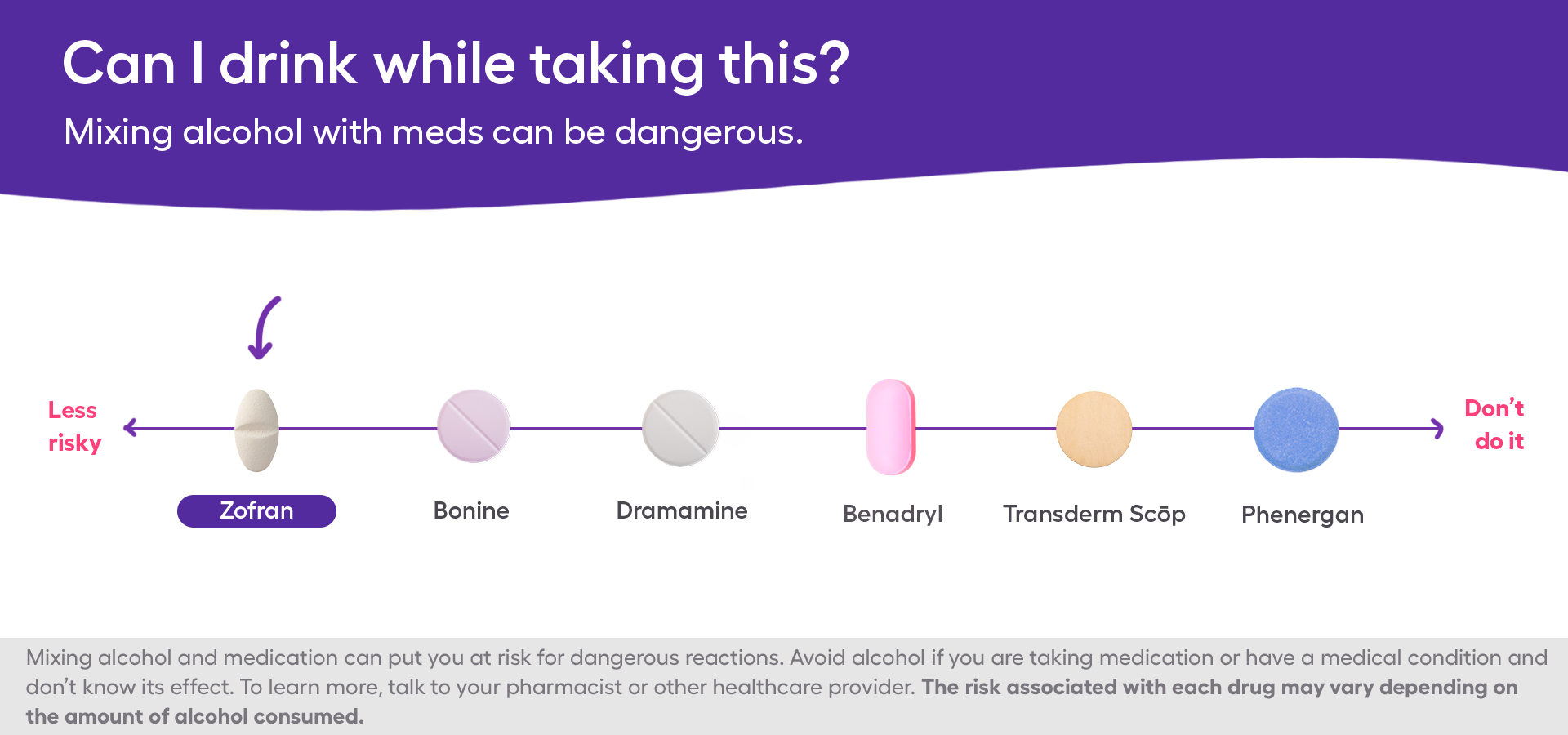
Many anti-nausea medications interact with alcohol in some way. However, ondansetron may be one of the few treatment options that doesn’t have a direct interaction with alcohol.
Common anti-nausea drugs that may interact with alcohol include:
- Dramamine (dimenhydrinate)
- Bonine (meclizine)
- Transderm Scōp (scopolamine)
- Phenergan (promethazine)
- Benadryl (diphenhydramine)
These medications work in different ways to manage nausea. Drugs like dimenhydrinate, meclizine, and diphenhydramine are first-generation antihistamines that can act as CNS depressants. In other words, they can slow brain activity, causing drowsiness and dizziness. Mixing these with alcohol could lead to severe CNS side effects and worsened drowsiness or dizziness.
No anti-nausea medication is truly unaffected by alcohol. Even ondansetron, which doesn’t have a direct interaction with alcohol, can still lead to increased side effects while drinking. The safest bet is to avoid mixing any antiemetic drug with alcohol unless a healthcare provider specifically says it’s okay.
The bottom line
Although there’s no direct interaction between Zofran and alcohol, it’s still best to use caution. Alcohol can worsen certain side effects of ondansetron, including drowsiness, dizziness, and headache. In severe cases, mixing the two could lead to heart rhythm problems or serotonin syndrome. Although some people may be able to drink in moderation on Zofran, it’s important to talk to a healthcare provider about alcohol use while taking Zofran.
- Zofran highlights of prescribing information, U.S. Food and Drug Administration (2025)
- Low-dose ondansetron: A candidate prospective precision medicine to treat alcohol use disorder endophenotypes, European Journal of Internal Medicine (2024)
- Alcoholic gastritis causes, symptoms & treatment, Alcohol.org (2025)
- Alcohol consumption and atrial fibrillation risk: an overview of systematic reviews and network meta-analysis, Drug and Alcohol Review (2026)
- Serotonin 5-HT3 receptor antagonists, LiverTox (2018)
- About moderate alcohol use, CDC (2025)
- Medically accurate: SingleCare’s Medical Review Board analyzes all of our content to confirm it’s in line with current medical advice.
- Evidence-based: Our content is sourced from reputable U.S.-based healthcare professionals and peer-reviewed research.
- Trustworthy: All of SingleCare’s content goes through a multi-phase review process by our writers, editors, and Medical Board in order to provide clear and credible information.