




 Search for articles or Rx savings


Key takeaways
Butternut squash isn’t just a colorful, autumnal gourd. It’s a rich source of many essential nutrients that could offer some impressive health benefits.
This versatile fruit is known for its high fiber content, making butternut squash an excellent food choice for supporting gut and heart health.
It’s also rich in many antioxidants that support healthy vision and immunity, including beta-carotene and vitamins A and C.


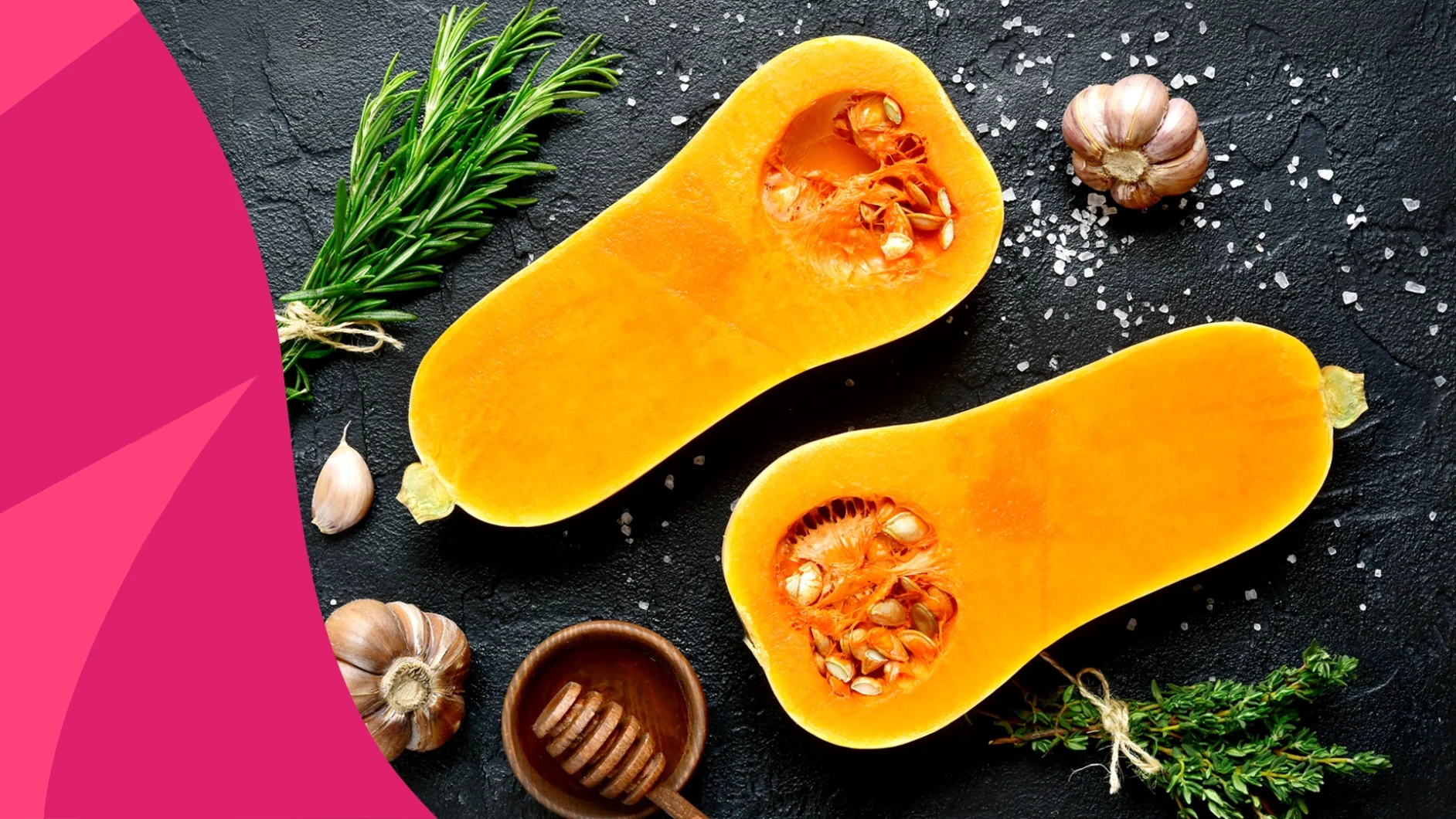
Butternut squash is a bell-shaped type of winter squash that’s related to pumpkin, acorn squash, and even zucchini. Since it’s in season during the fall and winter months, butternut squash is a popular food to incorporate into warming dishes like soups and holiday side dishes like casseroles or stuffings. Fortunately, you can typically find fresh (and frozen) butternut squash all throughout the year in most supermarkets.
A versatile fruit that’s often treated like a vegetable, butternut squash can be prepared raw or cooked. You can slice it into ribbons, chop it into cubes for roasting, or purée and mash it into a smooth consistency. Butternut squash is a type of gourd with tough skin that’s not typically eaten. However, the entire fruit is technically edible—from the skin to the seeds and all the orange flesh in between.
If you’re wondering why so many people enjoy butternut squash, it’s not just because it’s festive and vibrant. Butternut squash has a pleasant taste and texture, but there’s plenty of evidence suggesting it’s good for you, too. In addition to the sweet, nutty flavor, this squash is full of essential nutrients, which lend to a long list of possible health perks.
7 health benefits of butternut squash
Butternut squash is known for providing dietary fiber, antioxidants, vitamins, and more. Here’s what the nutrients found in butternut squash could do to support your overall well-being.
1. Provides dietary fiber
“My favorite benefit of butternut squash is its high fiber,” says Supriya Rao, MD, a quadruple board-certified physician in internal medicine, gastroenterology, obesity medicine, and lifestyle medicine. “Most Americans don’t get the recommended amount of dietary fiber.” Researchers estimate that upwards of 95% of Americans don’t eat enough fiber.
It’s common knowledge that fiber supports healthy digestion. “Fiber feeds healthy gut bacteria in your microbiome,” says William Li, MD, author of Eat To Beat Disease. This helps improve gut health, but fiber is essential for overall health too, Dr. Li adds.
So, how much fiber do you actually need? It depends on your age and sex. Women typically need 21 to 25 grams per day, while men typically need 30 to 38 grams per day. Plant-based foods are generally excellent sources of fiber, but some provide more of this essential nutrient than others. One cup of cooked butternut squash provides 6.56 grams of fiber—up to 31% the recommended daily value (DV).
2. Offers disease-fighting antioxidants
Butternut squash is an antioxidant-rich food, but why does this matter? “Antioxidants help protect your cells from damage and can help lower long-term risk of diseases,” Dr. Rao explains. Antioxidants work by scavenging free radicals, which are unstable molecules that can cause cellular damage when left unchecked.
Butternut squash is concentrated with carotenoids, a group of pigments naturally found in fruits and veggies like carrots and sweet potatoes. Specifically, butternut squash is high in beta-carotene, an orange pigment that gives butternut squash its vibrant hue and has potent antioxidant properties. What’s more, butternut squash provides several other antioxidants, including vitamins A, C, and E.
If you’re looking to maximize your antioxidant intake, opt to cook butternut squash. “The carotenoids in butternut squash are more bioavailable when it’s cooked,” says Jenna Volpe, RDN, registered dietitian and owner of Whole-istic Living in Austin, Texas. In other words, your body can absorb and use these nutrients more effectively.
3. Supports healthy vision
The abundance of antioxidants in butternut squash can trickle down into other benefits. For example, beta-carotene is beneficial for eye health, research has shown. “The carotenoids in butternut squash can help protect visual function and prevent night blindness,” Volpe says.
Another nutrient that can support eye health, vitamin A may help improve retinal function in people with age-related macular degeneration (AMD), an eye disease that can contribute to blindness. A serving of butternut squash—about one cup—provides up to 50% DV of vitamin A. That might also be because beta-carotene in butternut squash is converted into vitamin A in the body.
4. Strengthens the immune system
Vitamin C is commonly associated with supporting immune function, and butternut squash is full of it. In fact, one cup of cooked butternut squash provides 31 milligrams (mg) of vitamin C. Adults need between 75 and 120 mg of vitamin C daily, so a single serving of this squash can cover up to 31% DV.
Here’s how vitamin C contributes to immune health, according to research. For starters, vitamin C acts as an antioxidant, offering protection to cells in the immune system. It may also help prevent some respiratory viruses, such as the common cold, as well as reduce the duration and severity of cold symptoms.
The magnesium in butternut squash also lends to its immune-boosting potential, Dr. Rao adds. Magnesium has a lesser-known, but well-documented, connection to immune health: It plays a role in optimal immune function and regulating inflammation. Butternut squash contains 59.4 mg per serving, up to 19% DV for adults.
5. Reduces the risk of heart disease
Increasing your intake of fiber-rich foods like butternut squash has many perks. Fiber is notorious for supporting healthy digestion, but research has also linked high-fiber diets to heart health, metabolic health, reduced risk of some chronic diseases, and more.
Research has demonstrated significant associations between fiber intake and certain health markers, such as improved cholesterol and blood pressure. These findings suggest that adequate fiber intake may reduce the risk of heart disease.
6. Supports steady blood sugar levels
Research suggests that butternut squash may have anti-diabetic properties. It may have hypoglycemic activity, which refers to its blood sugar-lowering abilities. What’s more, the high-fiber content in butternut squash plays an important role in stabilizing blood sugar levels, Dr. Rao says.
7. Promotes weight management
Like many fruits and veggies, butternut squash is a naturally low-calorie food. On its own, a cup of cooked butternut squash contains just 82 calories. One analysis found that increased intake of fruits and vegetables has a positive effect on weight loss among women. Researchers theorized this could be due to the increase in dietary fiber, which is also correlated with weight loss.
Is butternut squash safe for everyone?
“Butternut squash is generally safe to eat,” Dr. Li says. “That said, anyone can have a food allergy, so individual sensitivities matter.” In addition to rare food allergies to butternut squash, there are known cases of hand dermatitis from handling it.
There may also be constraints for people with certain medical conditions. “Most people can eat butternut squash just fine, but those with kidney disease may need to limit it due to its potassium content,” Dr. Rao says. It’s never a bad idea to check in with a trusted healthcare provider to ensure butternut squash is safe for you.
Generally speaking, however, butternut squash is a nutritious food choice and part of a healthy eating pattern, Dr. Li says.
Butternut squash nutrition facts
It’s clear that butternut squash is a potent source of many nutrients, particularly fiber and antioxidants. Here’s a closer look at the nutrients found in one cup of cooked butternut squash, according to the U.S. Department of Agriculture (USDA):
- Calories: 82
- Carbohydrates: 21.5 grams (g)
- Fiber: 6.56 g
- Fat: 0.184 g
- Protein: 1.84 g
- Vitamin A: 1,140 micrograms (mcg)
- Vitamin C: 31 milligrams (mg)
- Vitamin E: 2.64 mg
- Magnesium: 59.4 mg
- Potassium: 582 mg
Both raw and cooked butternut squash provide an array of nutrients, but cooking it can make some of the nutrients easier for the body to absorb, Volpe says.
Bottom line: Is butternut squash good for you?
Chock full of nutrients and packed with potential benefits, butternut squash is good for you. It’s a nutritious fruit that supports a variety of bodily functions, such as healthy vision, immunity, blood sugar regulation, and more.
Though butternut squash is a winter squash, it’s usually available year-round. Frozen butternut squash is also a sound option, making this nutritious gourd more accessible outside of the colder months, Dr. Li says.
There are all sorts of ways to prepare butternut squash. You can cook it and use the purée for soups—this is Dr. Rao’s personal favorite dish. Roasted butternut squash prepared with a little drizzle of olive oil is another tasty way to serve it as a side dish. If raw butternut squash is more appealing to you, use a veggie spiralizer to cut it into ribbons and use them in a cold salad.
Ultimately, yes, butternut squash is good for you. It has a great taste, texture, and nutritional profile. Plus, it adds a nice pop of color to any meal.
- Closing America’s fiber intake gap, American Journal of Lifestyle Medicine (2016)
- Dietary fiber: Essential for a healthy diet, Mayo Clinic (2024)
- Squash, winter, butternut, cooked, baked, without salt, U.S. Department of Agriculture FoodData Central (2019)
- Nutritional benefits of lycopene and beta‐carotene: A comprehensive overview, Food Science & Nutrition (2024)
- Low-dose supplementation with retinol improves retinal function in eyes with age-related macular degeneration but without reticular pseudodrusen, Retina (2023)
- How butternut squash can promote good health, Cleveland Clinic (2025)
- Vitamin C fact sheet for consumers, National Institutes of Health Office of Dietary Supplements (2025)
- The role of vitamin C in human immunity and its treatment potential against COVID-19: A review article, Cureus (2023)
- A narrative review on the role of magnesium in immune regulation, inflammation, infectious diseases, and cancer, Journal of Health, Population and Nutrition (2023)
- Magnesium fact sheet for consumers, National Institutes of Health Office of Dietary Supplements (2021)
- The health benefits of dietary fibre, Nutrients (2020)
- Associations between dietary fiber intake and cardiovascular risk factors: An umbrella review of meta-analyses of randomized controlled trials, Frontiers in Nutrition (2022)
- Physicochemical, nutritional and functional properties of Cucurbita moschata, Food Science and Biotechnology (2020)
- A comprehensive critical assessment of increased fruit and vegetable intake on weight loss in women, Nutrients (2020)
- Increased dietary fiber is associated with weight loss among Full Plate Living program participants, Frontiers in Nutrition (2023)
- Hand dermatitis secondary to exposure to butternut squash, Case Reports in Dermatology (2022)