





Key takeaways
Consuming cranberries has been linked to a lower incidence of recurrent urinary tract infections (UTIs) and certain stomach infections.
Cranberries also offer various health benefits, including protection against cancer, cholesterol management, reduction of inflammation, and immune system support.
Cranberries are considered generally safe for everyone, but people on warfarin, with recurrent kidney stones, and scheduled for surgery should limit their intake.


Cranberries are most popular during the winter holidays, but there’s no reason you can’t enjoy them year-round. While no food is a cure-all for illness or a foolproof shield against diseases, swapping prepackaged snacks or breakfast bars for nutrient-rich fruit like cranberries is guaranteed to give your body a boost.
10 health benefits of cranberries
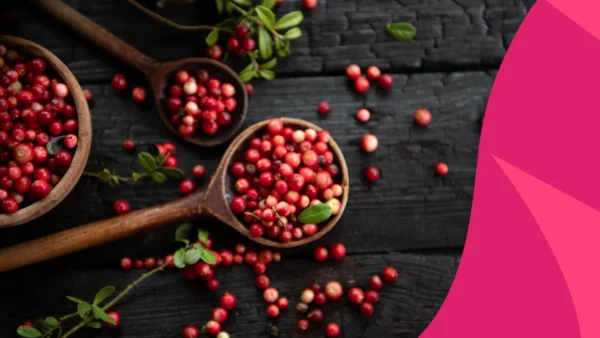
Cranberries are small, hard red berries that grow on low-lying shrubs and vines. They’re popular in winter months because they are harvested in the fall—and because their presence adds a beautiful jewel-toned pop to festive feasts. Cranberries aren’t sought out as a superfood like blueberries or avocados, but they still pack a healthy punch. Keep reading to learn all the potential health benefits of cranberries.
1. Prevent urinary tract infections (UTIs)
The most apparent and most science-backed health benefit of cranberries is that they help prevent UTIs. Research shows that cranberry consumption can cut the risk of recurrent UTIs by about 20% to 45%, with the strongest benefits seen in people who get repeat infections.
Here’s how a humble fruit can keep a UTI from forming: Cranberries contain plant compounds called proanthocyanidins (PACs). And PACs physically keep UTI-causing bacteria from adhering to the cells lining the bladder wall. “If bacteria can’t stick, they’re more likely to be flushed out in the urine instead of multiplying in the bladder and causing infection,” explains Amna Haq, RD, LDN, owner of The Inclusive Dietitian in Chicago, Illinois.
Of course, eating a small handful of cranberries each day might not provide enough PACs to keep a UTI away. Most studies on cranberries for UTI prevention required participants to ingest either 240–480 milliliters (mL)—about 1–2 cups—of 100 % cranberry juice or 500 milligrams (mg) of cranberry powder in capsule form per day, according to Allie Buttarazzi, MD, a double board-certified physician and co-owner of Maine Street Medical near Portland, Maine.
It’s also important to understand that cranberries cannot treat an infection once it develops. “You still need antibiotics for that,” Dr. Buttarazzi says.
2. Reduced risk of stomach infection
The same PACs that help prevent UTIs can help avoid certain stomach infections. Specifically, the PACs in cranberries ward off Helicobacter pylori (H. pylori), a common infection of the stomach lining that can cause stomach pain, nausea, vomiting, and other symptoms.
In one study, participants who drank two cups of high-potassium-acid (PAC) cranberry juice per day for 8 weeks had a 20% lower rate of H. pylori stomach infection than those given a placebo.
3. Protect against cancer
Emerging research suggests that regular cranberry consumption might help inhibit the growth of specific cancer cells. Specifically, a research review found data that cranberries may have protective effects against cancers of the esophagus, stomach, colon, bladder, and prostate, as well as glioblastoma and some lymphomas.
It’s important to understand that no single food can prevent cancer. But filling your plate with healthy, nutrient-dense foods with antioxidant and anticancer properties could help strengthen your body’s defenses against cancer growth.
4. Support a healthy pregnancy
“Since pregnancy can increase UTI risk, cranberry supplements can sometimes be suggested as a natural way to help prevent them,” Haq says. However, she warns that supplement safety can be an issue, so it’s important to consult with your healthcare provider before taking any new vitamins or supplements while pregnant.
As for eating fresh or frozen cranberries while pregnant? Experts say there isn’t much evidence to support pregnancy-specific UTI prevention, but there’s no harm in snacking on cranberries or adding cranberries to your daily smoothie. “If you enjoy them, they’re a perfectly healthy fruit to include,” Dr. Buttarazzi says.
5. Promote healthy sleep
“Cranberries contain polyphenols, and early research hints these antioxidants might support healthy sleep, but the evidence is still thin,” Dr. Buttarazzi says. Haq adds that cranberries also contain small quantities of melatonin, a hormone vital to sleep regulation.
Ultimately, the antioxidants and melatonin in cranberries might help support a healthy sleep schedule, but the quantities contained in a typical serving of cranberries are not enough to cause drowsiness. Both Dr. Buttarazzi and Haq say it’s safe to enjoy cranberries or cranberry juice at any time of day or night.
6. Reduce inflammation
Short-term inflammation is the body’s natural, healthy response to infections and injuries. However, inflammation that lingers may be linked to chronic diseases that cause symptoms like joint stiffness, fatigue, skin rashes, insulin resistance, or even brain fog.
If you’re living with chronic inflammation, an anti-inflammatory diet may help support your body’s natural healing process. Cranberry is a great natural source of quercetin, a flavonoid (plant pigment) with various anti-inflammatory properties. And while cranberries alone won’t cure inflammatory conditions like arthritis and asthma, adding them to your daily diet is a step in the right direction.
Wellness
7. Immune support
Cranberries, especially cranberry juice, are a good source of vitamin C, a key vitamin for good health. One of vitamin C’s key roles is fighting off sickness by supporting immune function. Just one cup of cranberry juice contains 23.5 mg of vitamin C. That’s more than 20% of your daily recommended intake.
Not a fan of juice? A cup of raw cranberries contains 14 mg of vitamin C, which still comprises about 16% of your daily recommended intake.
8. Manage cholesterol levels
Cholesterol levels change with age, but no matter how old you are, high LDL cholesterol (low-density lipoprotein) can be bad news for your heart. Cranberries might be able to help.
In one study of men with high LDL and a high body mass index (BMI), consuming low-calorie cranberry juice daily for 12 weeks resulted in significant decreases in LDL levels and specific inflammatory markers. In other words, simply adding cranberry juice to participants’ daily diets resulted in improved cholesterol control, a step toward better overall health.
9. Protects against cardiovascular disease
Cranberries support heart health in several ways. First, by lowering LDL cholesterol. Sky-high cholesterol levels can eventually lead to medical emergencies like a heart attack or stroke if left unchecked. But according to the American Heart Association (AHA), cranberries also contain antioxidants that may improve blood pressure. Both high cholesterol and high blood pressure contribute to poor cardiovascular health, so if you eat enough cranberries to control these risk factors, you’re also helping protect against heart disease.
10. Supports smooth digestion
Constipation has many possible causes, but a common one is low fiber intake. Though these tart little berries won’t move things along quite as fast as coffee or prunes, the AHA lists high fiber content as a health benefit of cranberries. Plus, cranberries offer a wealth of antioxidants, vitamins, and minerals that go along with the dose of fiber. Some research even suggests that cranberries can help regulate gut bacteria. In the end, eating more cranberries is a win for your gut health.
Are cranberries safe for everyone?
Cranberries are considered generally safe for everyone. They’re antioxidant-rich plant foods that contain fiber for easy digestion. “The exceptions show up when we’re talking about high amounts—think large volumes of juice, more than about four cups a day, or concentrated supplements,” Dr. Buttarazzi says.
She also says there are three situations that warrant limiting your cranberry intake:
- When you’re taking warfarin: Combining it with cranberries can increase the risk of bleeding for people taking warfarin, a generic prescription blood thinner.
- When you’re experiencing recurring kidney stones: Dr. Buttarazzi says that high cranberry intake can increase the risk of kidney stones, especially calcium-oxalate stones.
- The day before surgery: “Like aspirin, cranberries have a mild blood-thinning effect, so I advise patients to avoid big doses around surgery,” Dr. Buttarazzi says.
Cranberries nutrition facts
The Department of Agriculture (USDA) outlines the nutrients in a one-cup serving size for cranberries. Most people can safely eat a full serving size every day, though people with kidney problems should check with their healthcare providers to make sure this habit won’t increase their risk for kidney stones.
Cranberries can be eaten raw or cooked. Fresh cranberries can be pretty bitter, so many people prefer to eat them cooked or sweetened. Just be aware that sprinkling raw cranberries with sugar adds empty calories.
Here is the USDA’s snapshot of cranberries’ nutrition facts per one-cup serving:
- Calories: 46
- Fat: 0 grams (g)
- Carbohydrates: 12 g
- Fiber: 4 g
- Sugar: 4 g
- Protein: 1 g
- Calcium: 1 milligram (mg)
- Sodium: 2 mg
- Iron: 1 mg
Bottom line: What is the healthiest way to eat cranberries?
Adding cranberries to your diet may help protect against UTIs while supporting overall health. The trouble is that uncooked cranberries are tart and bitter, and cooked cranberry products, such as cranberry sauce, are often loaded with added sugar. Packaged dried cranberries often contain preservatives and a high sugar content.
So, what’s the best, healthiest way to add cranberries to your diet? Dr. Buttarazzi points out that most research on the health benefits of cranberries involved drinking cranberry juice or consuming cranberry supplements. Sticking to cranberry juice and healthcare provider-approved supplements can help you enjoy the benefits of cranberries without worrying about added sugar.
- Cranberries for preventing urinary tract infections, Cochrane Library (2023)
- Cranberries, U.S Department of Agriculture (USDA) Snap-Ed
- Can cranberries contribute to reduce the incidence of urinary tract infections? A systematic review with meta-analysis and trial sequential analysis of clinical trials, Journal of Urology (2017)
- Suppression of Helicobacter pylori infection by daily cranberry intake: A double‐blind, randomized, placebo‐controlled trial, Journal of Gastroenterology and Hepatology (2020)
- Cranberries and cancer: An update of preclinical studies evaluating the cancer inhibitory potential of cranberry and cranberry derived constituents, Antioxidants (2016)
- Dietary sources of melatonin, Nutrients (2017)
- Cranberry, Herbal Medicine: Biomolecular and Clinical Aspects, 2nd edition (2011)
- Recent advances in potential health benefits of quercetin, Pharmaceuticals (2023)
- Cranberry: chemical composition, antioxidant activity and impact on human health: overview, Molecules (2022)
- Vitamin C, National Institutes of Health (2025)
- Cranberry juice, unsweetened, USDA FoodData Central (2018)
- Low-calorie cranberry juice supplementation reduces plasma oxidized LDL and cell adhesion molecule concentrations in men, British Journal of Nutrition (2008)
- Be thankful for cranberries’ health benefits all year long, American Heart Association (2018)
- Medically accurate: SingleCare’s Medical Review Board analyzes all of our content to confirm it’s in line with current medical advice.
- Evidence-based: Our content is sourced from reputable U.S.-based healthcare professionals and peer-reviewed research.
- Trustworthy: All of SingleCare’s content goes through a multi-phase review process by our writers, editors, and Medical Board in order to provide clear and credible information.