




 Search for articles or Rx savings


Key takeaways
Combining amitriptyline and alcohol can increase central nervous system depression, leading to sedation and impaired functioning.
People at highest risk include older adults, those with liver problems, and individuals with substance use disorders.
Alternative antidepressants such as SSRIs may have fewer interactions with alcohol and could be better options for those who consume alcohol.


Amitriptyline is a tricyclic antidepressant commonly prescribed to treat depressive disorders, certain types of chronic pain (like fibromyalgia), and occasionally sleep issues. It works by increasing levels of specific neurotransmitters in the brain, particularly norepinephrine and serotonin. It’s typically taken daily, on a long-term basis. If you’ve just been prescribed amitriptyline, you might be wondering whether it’s ever okay to take part in happy hour while taking this medication.
Whether you’re heading to a wedding or celebrating a birthday, when the festive feeling strikes, it’s important to know whether you can safely mix your medication and your favorite spirit. This is especially true if you’re taking amitriptyline, a medication that requires special consideration when it comes to alcohol consumption.
Save up to 80% on Amitriptyline with SingleCare
Different pharmacies offer different prices for the same medication. SingleCare helps find the best price for you.


Can you drink while taking amitriptyline?
The amount of alcohol consumed is an important consideration. “This is dose dependent, both with the amount of alcohol consumed and the dosing of amitriptyline,” explains Tim Richardson, MD, Adult Psychiatrist at PrairieCare in Minneapolis, Minnesota. “A small amount of alcohol, one or two drinks, is generally not problematic, but avoiding alcohol is generally recommended.”
While amitriptyline itself is only harmful to the liver in rare cases, both alcohol and amitriptyline are metabolized by the liver. This means patients with liver impairment or kidney dysfunction should be especially careful when combining alcohol with amitriptyline.
What happens if you mix amitriptyline and alcohol?
When it comes to combining alcohol with amitriptyline, the main risk is sedation. While small amounts of alcohol may not present a problem in healthy patients, those who have liver or kidney issues should likely abstain from drinking alcohol while taking amitriptyline.
Because both alcohol and amitriptyline have sedating effects on the central nervous system, taking them together can amplify these effects. According to Paul Daidone, MD, Medical Director at True Self Recovery, this can lead to:
- Excessive drowsiness
- Dizziness
- Impaired motor coordination
- Slowed reaction times
- Inability to pay attention
- Respiratory depression (in rare cases)
“Amitriptyline works by blocking reuptake of norepinephrine and serotonin,” Dr. Richardson adds. “It also has antihistamine and anticholinergic effects, much like the medication Benadryl.” Similar to Benadryl, combining alcohol with amitriptyline can result in an overly sedated state, even blackouts in severe cases.
It’s also possible that alcohol can heighten the side effects of amitriptyline in some individuals. These negative effects include constipation, dry mouth, and weight gain.
Beyond physical side effects, this combination can also reduce the effectiveness of amitriptyline in treating mental health or even worsen symptoms of depression, as alcohol itself is a depressant. This means that even if you don’t feel tired, dizzy, or impaired when combining the two, it’s still not a license to go wild. “If patients are going to choose to drink alcohol with amitriptyline, less is always better,” advises Dr. Richardson.
Are certain people at greater risk of side effects?
While combining amitriptyline and alcohol can pose risks for anyone, certain populations are particularly vulnerable to severe side effects. The interaction between these substances can exacerbate underlying health conditions, so understanding these risk factors is crucial.
People who are at elevated risk when combining amitriptyline and alcohol are older adults, those with liver disease, and those with a substance use disorder. Even moderate levels of alcohol can lead to heightened effects in vulnerable subjects or patients of high-dose therapy, so it’s important to be fully informed. Those with seizure disorders may experience an additionally reduced seizure threshold if amitriptyline is combined with alcohol, increasing the risk of breakthrough seizures.
Older adults
Older adults face the highest risk of side effects due to their increased sensitivity to central nervous system depressants, according to Michael McGrath, MD, Chief Clinical Officer, Medical Director at The Ohana Hawaii. Since they are also at a higher risk of falls and cognitive impairment, this can be especially dangerous.
Reduced liver function
People with impaired liver function face an elevated risk because both alcohol and amitriptyline are metabolized by the liver. Reduced liver function slows drug clearance from the body, which can lead to higher blood concentrations of both substances. This significantly increases the risk of common side effects from the combination.
Alcohol use disorder
“Individuals with a history of substance use disorders may be at heightened risk of misuse or overdose, given the reinforcing euphoric effects of both substances when taken together,” advises James Lyons, MD, Physician at Synergy Houses in Austin, Texas.
Underlying health conditions
Those with cardiac issues, kidney problems, or other complex health conditions may also experience more severe interactions, as these individuals often have difficulties metabolizing both substances.
They are also likely to be taking multiple medications, which increases interaction risks. Their underlying health vulnerabilities can make them more susceptible to side effects, and they generally have increased sensitivity to the combined effects of amitriptyline and alcohol.
How long after taking amitriptyline can you drink alcohol?
Amitriptyline has a relatively long half-life, ranging from 10 to 28 hours, depending on the individual. Its active metabolite, nortriptyline, has an even longer half-life. This means the drug remains in your system for quite some time after taking it, says Dr. Daidone.
“When I am discussing risks related to tricyclic antidepressants with my patients, I stress that alcohol can magnify the side effects of tricyclic antidepressants and the effects that we associate with being ‘tipsy’ or drunk, like poor coordination and feeling sleepy,” says Sylvie Stacy, MD, Chief Medical Officer at Rehab.com. She also notes that setting limits ahead of time can help those who aren’t willing to completely abstain from alcohol: “For example, coming up with a plan for how much they’ll drink and over what period of time before they go to a party, rather than in the moment.”
If you have a celebratory toast in the future, planning ahead is the way to go:
- Wait at least 24 hours after your last dose
- For a further reduction in risk, wait 48 hours after your last dose
- Be aware that the medication reaches steady state (stable blood level) within about five days of regular use
It’s important to know that due to its prolonged systemic presence and the cumulative sedative effects when combined with alcohol, no specific ‘safe’ interval can be universally recommended. “Clinicians typically advise complete abstention from alcohol throughout therapy, especially during dose titration and in patients receiving moderate to high daily doses,” advises Dr. Lyons.
Which antidepressants are not affected by alcohol?
If you’re concerned about drinking alcohol while taking amitriptyline or other TCAs, there are alternative types of antidepressants that may have fewer or less severe interactions.
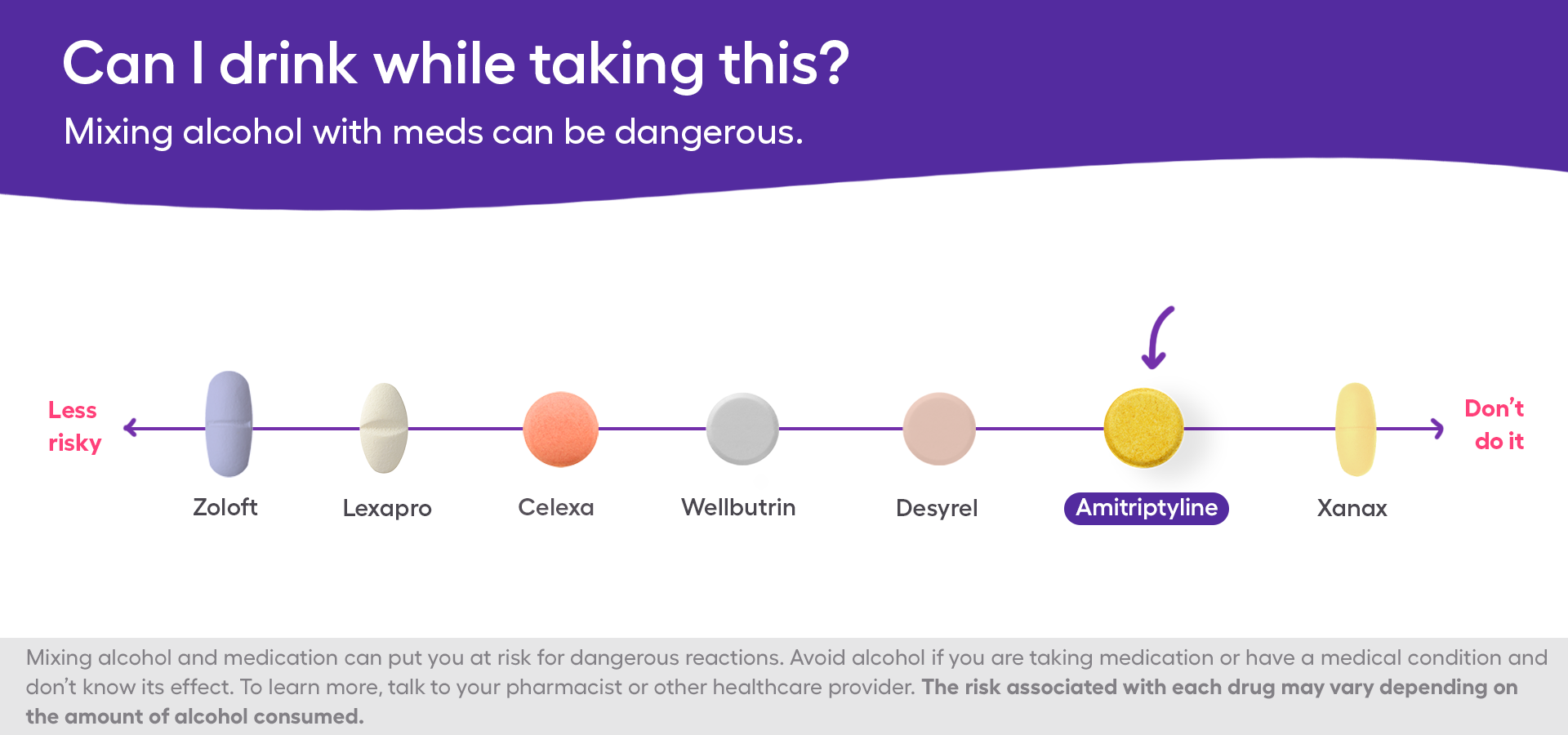
- Selective serotonin reuptake inhibitors (SSRIs), such as Zoloft (sertraline) or Lexapro (escitalopram), typically have fewer sedating effects and may be safer options for those who consume alcohol, says Dr. Stacy.
- Serotonin and norepinephrine reuptake inhibitors (SNRIs), like Effexor (venlafaxine) or Cymbalta (duloxetine), may also have less pronounced interactions with alcohol, says Dr. McGrath.
If you feel one of these options is a better option for managing your well-being, seek the medical advice of your healthcare provider first. Always change or taper medications for depression or pain relief under the supervision of a healthcare professional to ensure safety and minimize any withdrawal symptoms. Mixing alcohol with MAOIs is not recommended.
Finally, even if you do change meds, it’s important to continue to exercise caution when combining alcohol and antidepressants, as alcohol still reduces the therapeutic effect and aggravates depressive symptoms, notes Dr. Daidone.
The bottom line: Use caution
While the safest approach while taking amitriptyline is to avoid alcohol entirely, it may be possible for otherwise healthy individuals to enjoy the occasional cocktail at a party or glass of wine on a Friday night.
Mixing alcohol and amitriptyline increases the risk of excessive sedation, impaired coordination, slowed reaction times, and potentially serious side effects, especially in older adults, those with reduced liver function, and those who have substance abuse disorder.
If you have questions, your healthcare provider can help you navigate alcohol consumption habits while on amitriptyline. “This involves educating patients about the pharmacological rationale for avoiding concurrent use, identifying individual risk factors, and offering practical guidance on minimizing harm—such as spacing doses apart, limiting alcohol consumption to low-risk thresholds, and monitoring for signs of toxicity,” says Dr. Lyons.
- Amitriptyline (oral route), Mayo Clinic
- Side effects of amitriptyline for pain and migraine, NHS
- Amitriptyline tablets, Cleveland Clinic
- A review on alcohol: from the central action mechanism to chemical dependency, SciFlo Brazil (1992)
- Aging, the central nervous system, and mobility, The Journals of Gerontology Series A (2013)
- Hepatic clearance, Cancer Drug Design and Discovery (2008)
- Amitriptyline, StatPearls (2023)