




 Search for articles or Rx savings



Key takeaways
Bactrim (sulfamethoxazole/trimethoprim) is an antibiotic that’s often used to treat bacterial ear infections, bronchitis, and UTIs.
Oral Bactrim and alcohol do not have a well-established interaction with one another.
Drinking alcohol while taking Bactrim may worsen side effects like nausea or stomach upset, and can also slow your recovery, so it’s best to limit or avoid alcohol until you are feeling better.


Bactrim is a brand-name antibiotic containing two different ingredients, sulfamethoxazole and trimethoprim. It’s commonly prescribed to treat bacterial infections such as ear infections, bronchitis, certain types of pneumonia, traveler’s diarrhea, and urinary tract infections (UTI). While Bactrim and alcohol do not have a well-established interaction, it’s generally best to avoid drinking alcohol until you feel better. Here’s what you should know to make informed decisions about that glass of wine when taking antibiotics.
Save up to 80% on Bactrim with SingleCare
Different pharmacies offer different prices for the same medication. SingleCare helps find the best price for you.


Can you drink while taking Bactrim?
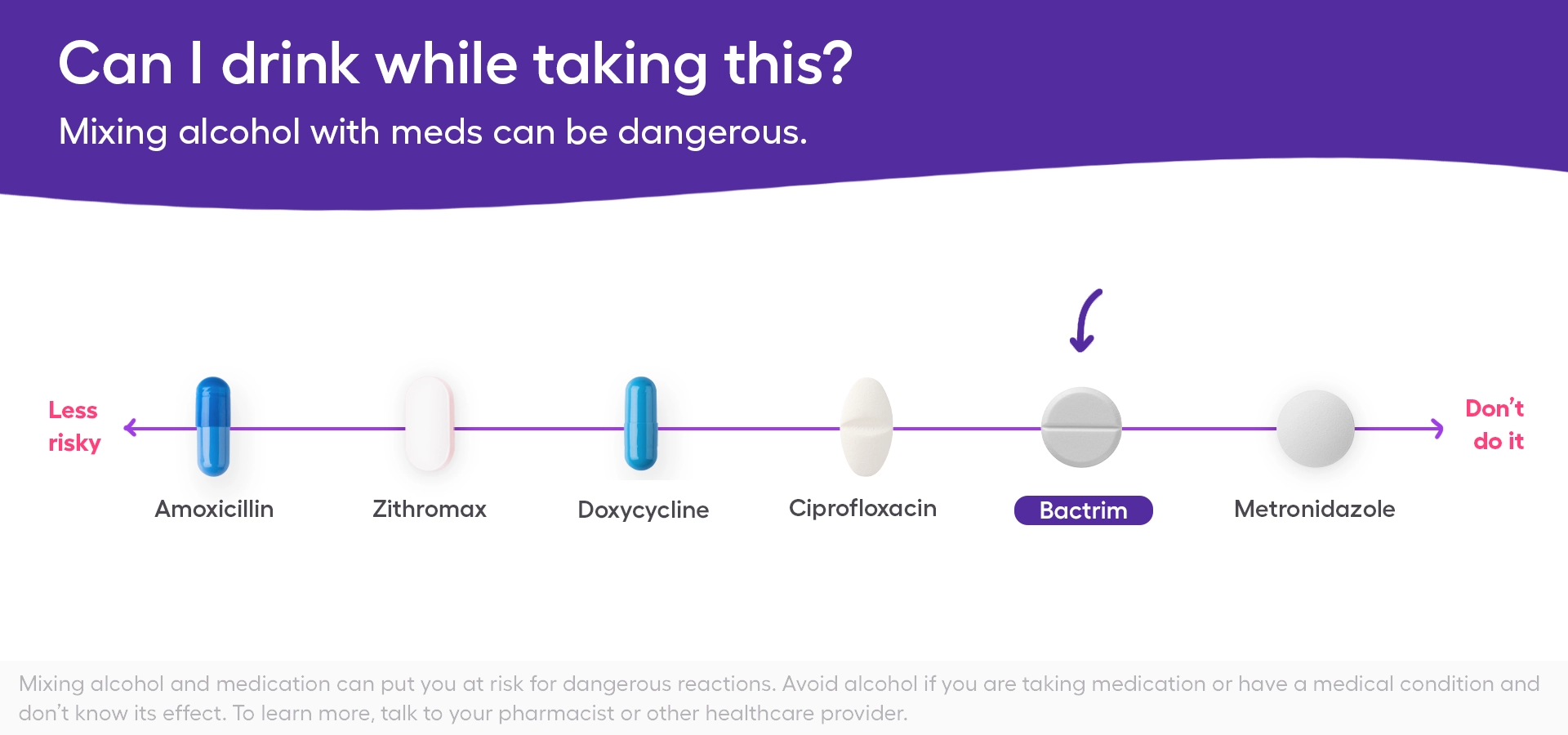
Many healthcare providers recommend avoiding alcohol during antibiotic use because it may worsen side effects and prolong recovery. However, in general, a small amount of alcohol (for example, 1 to 2 drinks) doesn’t cause serious side effects for the majority of people on antibiotic treatment.
While you could probably get away with one drink if you’re an otherwise healthy adult, Joanna Lewis, Pharm.D., founder of The Pharmacist’s Guide, says skipping alcohol to support your recovery, energy, sleep, and overall health is the better choice. What’s more, Bactrim commonly causes side effects like stomach upset, which alcohol could worsen.
What happens if you mix Bactrim and alcohol?
Mixing Bactrim with alcohol doesn’t always lead to negative consequences, but there are possible adverse effects and complications that might make you think twice about that cocktail (even if you’ve combined alcohol with other antibiotics in the past), says Shasawat Kumar, MD, internist with Medical Offices of Manhattan.
Risk of serious side effects
When you mix certain antibiotics with alcohol, you can create something called a disulfiram-like reaction. Disulfiram (brand name Antabuse) is a medication used to treat alcohol use disorder, designed to deter a person from using alcohol by making them feel incredibly sick if they drink while taking it.
However, other medications can cause a disulfiram-like reaction when combined with alcohol, most notably, metronidazole. This reaction is not associated with oral Bactrim and is not expected to occur when Bactrim and alcohol are combined. Some injectable forms of Bactrim may contain small amounts of alcohol, which could interact with the drug disulfiram.
Risk of acute liver injury
Bactrim is partly metabolized by your liver, and can increase your risk of liver-related complications. Although Dr. Kumar says acute liver injury from taking Bactrim is uncommon and usually mild, it can still happen, causing a slight elevation in liver enzymes, cholestatic jaundice, and—rarely—hepatitis or liver failure.
But when you combine Bactrim with alcohol intake (which is also metabolized by your liver), it may put you at increased risk of liver damage. “Because Bactrim is partly metabolized by the liver, regular or heavy drinking can put a lot of stress on the body [when you’re taking it],” says Dr. Lewis.
Are certain people at greater risk of side effects?
Some people are at a higher risk of side effects if they combine Bactrim with alcohol, such as people with a history of liver disease. Per Dr. Kumar, other people at high risk include:
- Older adults, who are more susceptible to the side effects of medications like Bactrim, because of their age
- People with a history of kidney impairment or kidney disease (Bactrim is also partly metabolized by the kidneys)
- People taking other medications that can interact with how Bactrim is metabolized, such as methotrexate or dofetilide
- People with an allergy to sulfa antibiotics (i.e., drugs containing sulfonamides)
There are also some people who are cautioned against taking Bactrim at all because it may not be safe for them, including:
- People with a history of drug-induced immune thrombocytopenia
- People with folate-deficient anemia
- Infants younger than 2 months of age
Seek medical advice from a healthcare professional if you experience adverse reactions after mixing alcohol and Bactrim.
How long after taking Bactrim can you drink alcohol?
When you’re getting to the end of your course of treatment with Bactrim, you might start wondering when you can drink alcohol again. Because Bactrim and alcohol do not have an established interaction, there is really no set amount of time you need to wait before having a drink. However, since both alcohol and Bactrim can cause side effects like stomach upset, and alcohol can affect the immune system, it’s best to wait until you feel better before drinking alcohol. If you have questions or concerns about your specific situation, check with your healthcare provider.
Which antibiotics are not affected by alcohol?
As we’ve noted, alcohol may affect your immune system, making it harder to recover from your illness and increasing your risk of common side effects from antibiotics like nausea and diarrhea. While it’s often best to avoid alcohol while recovering from illness, other antibiotics, such as amoxicillin and azithromycin aren’t known to have serious interactions with alcohol, and either of those antibiotics can also be used to treat many of the same conditions as Bactrim.
However, Dr. Lewis says tolerability can vary, and how you feel after combining alcohol and antibiotics really depends on what the drug is used for and the condition you’re trying to treat. If you don’t feel well when you combine them, skip the alcohol until you’re better.
The bottom line
While oral Bactrim and alcohol do not interact per se, it’s usually best to avoid drinking alcohol while recovering from a bacterial infection. Check with your healthcare provider for specific medical advice on your illness.
- Bactrim DS, PDR
- Fact versus fiction: A review of the evidence behind alcohol and antibiotic interactions, Antimicrobial Agents and Chemotherapy (2020)
- Bactrim-induced hepatotoxicity, Cureus (2024)
- Oxidative stress in alcohol-related liver disease, World Journal of Hepatology (2020)
- Bactrim, Sun Pharmaceutical Industries, Inc. (2025)
- Drug-induced thrombocytopenia, MedlinePlus (2025)
- Folate-deficiency anemia, MedlinePlus (2024)