Walking pneumonia
Walking pneumonia symptoms: What are the early signs of walking pneumonia?


Overview: What does walking pneumonia feel like?
Walking pneumonia is a mild bout of pneumonia. It’s an informal term that is no longer an official medical diagnosis, but it does describe a type of pneumonia that feels more like a bad cold or flu. Many people won’t even know they have walking pneumonia. They know they have something but might not consider it bad enough to stay home from work, school, or other daily activities. Most people won’t feel the need to talk to a doctor or do anything other than manage their symptoms with over-the-counter medications. For most people, symptoms will fade in a few days, but the coughing can persist for several weeks.
Key takeaways:
Walking pneumonia is a common health condition that can affect anyone regardless of age, sex, race, or ethnicity.
Early signs of walking pneumonia include cough, shortness of breath, low-grade fever, chills, and feeling tired and worn down.
Serious symptoms of walking pneumonia such as labored breathing may require immediate medical attention.
Walking pneumonia is caused by viral or bacterial infections. The bacteria Mycoplasma pneumoniae has historically been cited as the cause of walking pneumonia, but other pathogens can be responsible. You may be at risk for developing walking pneumonia symptoms if you are in crowded settings such as schools or nursing homes, such as school-aged children or their families.
Walking pneumonia requires a medical provider to make a diagnosis and determine treatment.
Symptoms of walking pneumonia do not always require treatment. They typically resolve without treatment within a few days or weeks, though coughing may last longer.
Treatment of walking pneumonia may include over-the-counter symptom medications for viral causes or antibiotics for bacterial causes. Read more about walking pneumonia treatments here.
Untreated walking pneumonia could result in complications like serious pneumonia, anemia, and worsening of pre-existing conditions such as asthma, chronic bronchitis, or emphysema.
Save on prescriptions for walking pneumonia with a SingleCare prescription discount card.
RELATED: Bronchitis vs. pneumonia
What are the early signs of walking pneumonia?
The earliest signs of walking pneumonia due to Mycoplasma pneumoniae are usually no signs at all. Once the infection starts, symptoms may not appear for a few weeks. During the entire incubation period, however, the infection can be spread to other people.
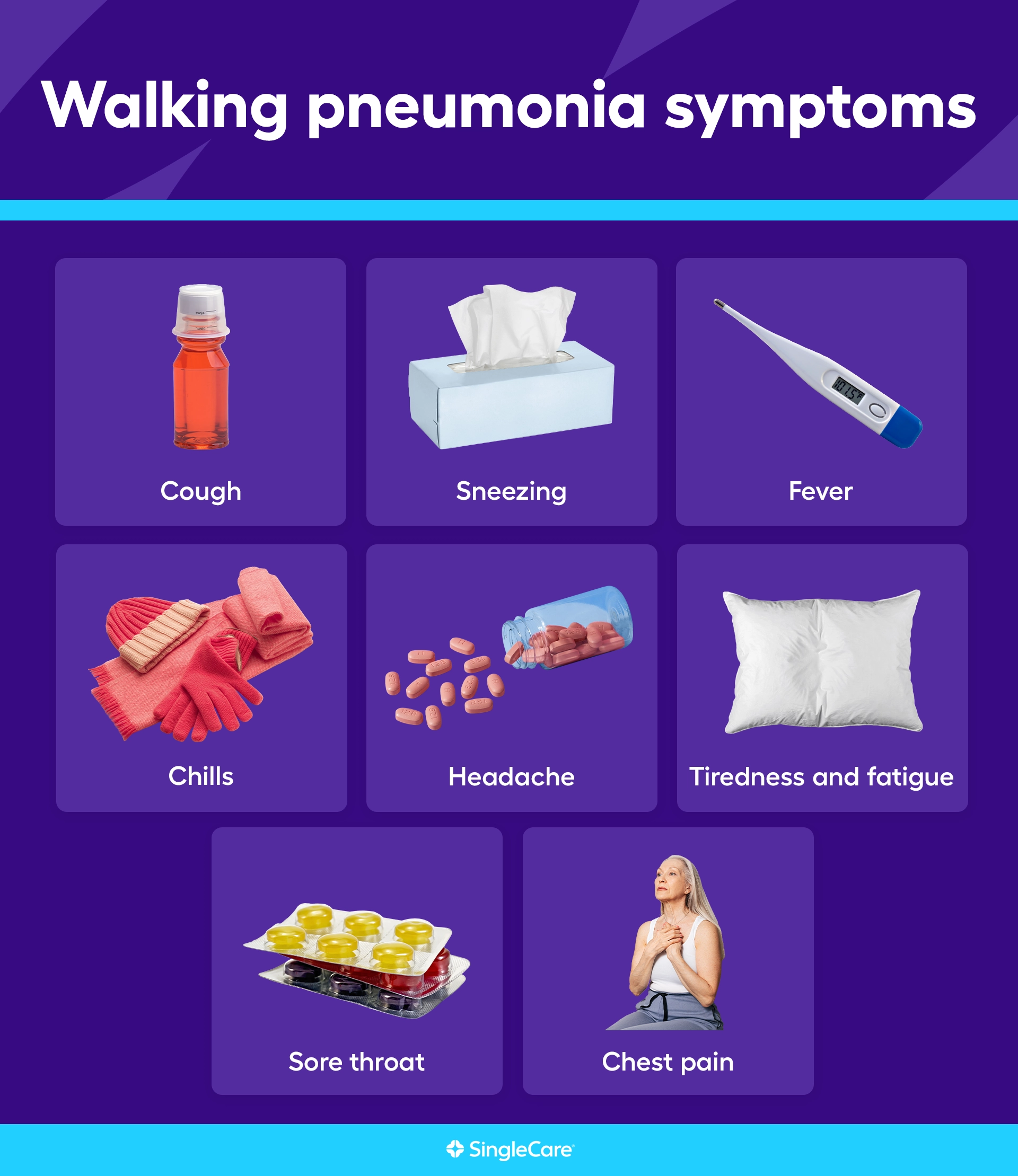
Once symptoms do appear, the most common early signs of walking pneumonia due to mycoplasma are:
Cough with or without phlegm
Sneezing
Fever
Chills
Headache
Tiredness and fatigue
Sore throat
Chest pain
Symptoms usually start improving in three to five days, though coughing can remain a problem for several weeks after that.
Other walking pneumonia symptoms
Walking pneumonia caused by Mycoplasma pneumoniae can also cause other symptoms, such as:
Ear pain
Skin rash
Nasal congestion
Vomiting
Loss of appetite
Upset stomach or stomach pain
Fast breathing
Difficulty breathing
Walking pneumonia symptoms in kids
Most pneumonia infections begin as upper respiratory tract infections, usually of the throat. They then sometimes spread into the lungs to cause pneumonia. Children with walking pneumonia due to Mycoplasma pneumoniae may start with a chest cold, swollen sinuses, or sore throat. Young children (younger than the age of 5) may start with cold symptoms. Once the infection spreads to the lungs, however, children have the same symptoms of walking pneumonia as adults.
Walking pneumonia vs. COVID symptoms
COVID can cause pneumonia, so its symptoms are very similar to more typical pneumonia or walking pneumonia. Most COVID cases are mild and can feel like a cold or walking pneumonia. Some cases of COVID pneumonia, however, can be severe and even life-threatening. While walking pneumonia and mild cases of COVID pneumonia aren’t always easily distinguished, severe pneumonia symptoms no matter what the cause requires immediate and even emergency medical attention.
| Walking pneumonia | COVID-19 | |
| Shared symptoms |
|
|
| Unique symptoms |
|
|
RELATED: How to tell if your coronavirus symptoms are mild, moderate, or severe
Stages of walking pneumonia: How can I tell which one I have?
Walking pneumonia caused by Mycoplasma pneumoniae has two stages: an incubation stage followed by symptomatic illness. The infection first goes through an asymptomatic incubation phase. There may be some signs of infection like a runny nose or sore throat, but full-blown symptoms typically start only after a few weeks after the initial infection. During the entire incubation phase, however, the infected person can pass the infection to others. Since symptoms are absent or only very mild, most people don’t know they’ve been infected in this first stage. There’s no question, however, of infection once symptoms erupt. Depending on the severity of the infection, symptoms may begin to improve about three to five days after they first appear.
RELATED: Is pneumonia contagious? Who is at risk and how to prevent it
When to see a doctor for walking pneumonia symptoms
Healthcare professionals are in general agreement that pneumonia no matter how mild should be diagnosed and treated by a medical professional. There is a chance that any lung infection could worsen into a serious lung disease. Unlike infections of the upper respiratory tract, pneumonia often has symptoms such as hacking coughs, deep coughs, trouble breathing, fast breathing, and wheezing. These symptoms often indicate that the lungs are infected. There is no need to panic if the symptoms are mild, but it’s a good idea to make sure things don’t get worse by getting a medical evaluation. If symptoms worsen, breathing becomes difficult, or the fever gets high, it’s certainly time to get medical attention.
A healthcare provider typically diagnoses pneumonia by performing a medical exam, listening to the lungs, and sometimes taking a chest X-ray. The healthcare provider will also clip a small device to the end of a finger to measure oxygen saturation. That measurement will help to classify the severity of pneumonia as mild, moderate, or severe. Blood tests and sputum (coughed-up phlegm) culture may also be performed to identify the pathogen causing the lung disease.
Complications of walking pneumonia
Many cases of walking pneumonia, particularly viral cases, will get better without any treatment. Still, it’s a good idea to get medical attention for any lung infection. Untreated walking pneumonia could result in complications such as:
Serious pneumonia
Asthma attacks
Worsening of pre-existing conditions
Anemia in cases of mycoplasma pneumoniae
Severe and even life-threatening skin reactions in cases of mycoplasma pneumoniae
How to treat walking pneumonia symptoms
Although some cases of walking pneumonia go away without any intervention, it’s a good idea to get medical help if any lung infection is suspected. A doctor will treat pneumonia caused by bacteria with antibiotics. Treatment will usually require several days of dosing. The choice of antibiotic will vary depending on the suspected bacterial pathogen, but the most commonly used for atypical pneumonia are macrolide antibiotics (such as azithromycin), fluoroquinolone antibiotics, and tetracyclines. Symptoms generally improve very rapidly once antibiotics are started, but the full course of antibiotics is required to make sure the infection doesn’t come back to life.
Some people, however, will choose to manage their symptoms. If they are mild, symptoms can be effectively treated with over-the-counter symptom medications, including pain relievers such as Motrin (ibuprofen), decongestants, nasal steroids, cough medicines, antihistamines, expectorants, and throat lozenges. Many come combined in various cold and flu products.
Whether antibiotics or store-bought symptom remedies are used, home remedies go a long way to helping manage symptoms:
Drink plenty of fluids
Rest (but not necessarily bed rest)
Use a heating pad or warm compress to ease sore chest muscles
Wash hands regularly and do not share glasses or utensils to avoid spreading the infection
To prevent a common bacterial cause of severe pneumonia called Streptococcus pneumoniae, make sure you’re updated on your pneumonia vaccines, which are recommended for children younger than 5 years old and adults 65 years and older, as well as other individuals at increased risk. Use SingleCare to get discounts on Prevnar 20, Prevnar 13, and Pneumovax 23.
RELATED: Vaccines for older adults | Does Medicare cover pneumonia shots?
Most importantly, get medical help
For many people, depending on the cause, nothing needs to be done for walking pneumonia to get better. That’s good news. However, there’s a chance pneumonia could worsen or cause other problems. No matter how mild the symptoms, then, lung infections need medical attention. Pay attention to specific symptoms such as hacking coughs or trouble breathing. The infection may in the end be nothing to worry about, but it’s better to be told that by a doctor rather than risk the infection becoming something to worry about.
FAQs about walking pneumonia symptoms
How long does walking pneumonia usually last?
Once symptoms appear, it can take a few days to a couple of weeks for symptoms to resolve. Coughing, however, could go on for several weeks after all other symptoms have faded.
Does walking pneumonia go away on its own?
For some people, walking pneumonia goes away without treatment. In other cases, however, mild cases of pneumonia may worsen. If a lung infection is suspected, then, always get medical attention … even if the symptoms are mild.
What are the symptoms of walking pneumonia after COVID?
Walking pneumonia can be caused by several pathogens including bacteria and viruses. That includes COVID. Pneumonia, including mild pneumonia, is just one stage of a COVID infection. Additionally, someone with COVID or just getting over COVID may get another lung infection from a different pathogen. Walking pneumonia after a bout with COVID has the same symptoms as other cases of walking pneumonia. However, the risks of developing a more serious case of pneumonia may be greater, so get medical attention to be safe.
RELATED: Compare COVID-19 vaccines
What are the symptoms of walking pneumonia vs. COVID?
Walking pneumonia and mild COVID share many of the same symptoms. Walking pneumonia can be caused by a COVID infection. That’s one reason to see a doctor. Some people with a COVID infection may experience symptoms not typical of walking pneumonia, though, such as diarrhea, excessive fatigue, loss of smell, loss of taste, labored breathing, or a high fever.
What can be mistaken for walking pneumonia?
People with walking pneumonia typically experience mild symptoms that can easily be mistaken for cold or flu symptoms. However, there is a small risk that walking pneumonia could develop into more serious pneumonia, so be prepared to get immediate medical attention if symptoms get worse, the fever gets high, or it becomes hard to breathe.
What’s next? Additional resources for people with walking pneumonia symptoms
Test and diagnostics
Diagnosis and management of community-acquired pneumonia in adults, American Family Physician
Treatments
Atypical pathogens and challenges in community-acquired pneumonia, American Family Physician
Diagnosis and management of community-acquired pneumonia in adults, American Family Physician
Is pneumonia contagious? Who is at risk and how to prevent it, SingleCare
Walking pneumonia in children, Stanford Medicine
Scientific studies and clinical trials
Case report: walking pneumonia in novel coronavirus disease (COVID-19): mild symptoms with marked abnormalities on chest imaging, The American Journal of Tropical Medicine and Hygiene
More information on related health conditions
Common cold treatments and medications, SingleCare
COVID pneumonia, Cleveland Clinic
Features, evaluation, and treatment of coronavirus (COVID-19), StatPearls
How to tell if your coronavirus symptoms are mild, moderate, or severe, SingleCare
Mycoplasma pneumoniae infections, Centers for Disease Control and Prevention (CDC)
Subscribe to our savings newsletter
Health education, drug info, wellness & more
By clicking 'Subscribe', I agree to SingleCare's Terms & Conditions.








