





Key takeaways
Without proper management, asthma can significantly impact quality of life, leading to frequent hospitalizations and even death.
Some brand-name asthma inhalers cost over $500 without insurance, but you can save with insurance, coupons, patient assistance programs, and more.
Insurance coverage for asthma treatments, including inhalers, varies by plan. While most plans cover at least a portion of the cost, eligibility and out-of-pocket expenses can differ significantly.


Approximately 28 million Americans have asthma, according to the Asthma and Allergy Foundation of America, including close to 5 million children. In fact, it’s the leading chronic disease in children younger than 18 years of age. If not properly managed, asthma can drastically impact quality of life, causing frequent hospitalizations and even death. An average of 10 Americans die each day from unmanaged asthma.
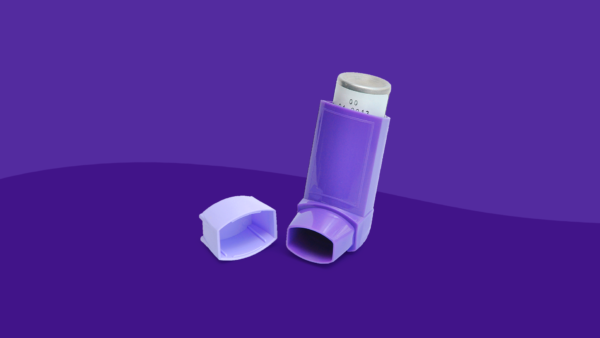
Asthma inhaler devices deliver medicine through your mouth and into your lungs as you take a deep breath. This allows the medication to reach the lungs quickly, open the airways, and reduce swelling and mucus to allow for easier breathing. We’ll cover the different types of asthma inhalers, the cost of brand-name inhalers, and how to save money when purchasing your inhaler.
Does insurance cover asthma inhalers?
In general, most insurance plans, including Medicare and Medicaid, will at least partially cover the cost of some asthma treatments. Coverage and costs vary by plan—not all inhalers will be covered by every plan and the out-of-pocket costs depend on the specific plan. You should always check with your insurance provider prior to filling your prescription so you can plan accordingly.
Your healthcare provider will likely have to show that the prescribed asthma inhaler is medically necessary for your insurance to cover the drug costs. Your insurance plan might also require prior authorization for coverage. If your insurance plan’s formulary doesn’t include your prescribed asthma inhaler, talk to your healthcare provider about submitting an appeal.
How much do inhalers cost with insurance?
The cost of an inhaler with insurance varies by provider, plan, and coverage stage. For example, even if your Medicare Part D plan covers your inhaler, you might have to pay 100% out of pocket until you reach your Part D deductible.
Another factor that affects inhaler prices with insurance is your plan’s formulary. Each insurance plan has its own drug formulary, which ranks drugs in a tier system. The lower the tier, the less you’ll pay for the drug. Generic inhalers like albuterol are usually low-tier drugs and, therefore, have a lower copay or coinsurance. Brand-name inhalers like Symbicort are usually placed on a higher tier and are more expensive.
How much do inhalers cost without insurance?
Payel Gupta, MD, a triple board-certified allergy, asthma, and immunology specialist of Mount Sinai Medical Center and SUNY Downstate Medical Center in New York City, says asthma inhalers can be separated into two different categories—quick-relief medications (short-acting inhalers) and control medications (long-acting inhalers).
Short-acting inhalers, or rescue inhalers, help when you’re experiencing asthma symptoms or when your asthma is not under control. This medication should only be used as needed—ideally, you’d never have to use it. Everyone with asthma, whether mild or severe, should be prescribed a rescue inhaler. Inhalers of this category include short-acting beta agonists, such as albuterol inhalers. There is also a newer rescue inhaler, Airsupra, that combines a short-acting beta agonist with a corticosteroid.
Long-acting inhalers, or maintenance inhalers, help with the inflammation in your airways in cases of moderate to severe asthma. These inhalers are not designed to provide quick relief in the event of an asthma attack. Instead, they should be taken daily to help manage and control long-term asthma symptoms. Depending on the prescribed medication, this may mean once daily or multiple times per day. Inhalers of this category include long-acting beta agonists, inhaled corticosteroids (steroids), and combination inhalers that contain both a long-acting beta agonist and corticosteroid.
The cost per inhaler will typically vary based on the type of inhaler it is and whether it’s a brand-name or generic drug.
Asthma inhalers price list |
|||
|---|---|---|---|
| Drug name | Generic available? | Cost per brand-name inhaler without insurance (unless otherwise noted as a generic) | Free coupons |
| Short-acting beta agonists | |||
| Ventolin HFA (albuterol sulfate HFA) | Yes | $88 per 18 gm inhaler of 108 (90 base) mcg/actuation | Save on Ventolin HFA |
| Xopenex (levalbuterol tartrate) | Yes | $107 per 15 gm inhaler of 45 mcg/actuation | Save on Xopenex |
| Short-acting beta agonists and inhaled corticosteroid combination inhalers | |||
| Airsupra (albuterol/budesonide) | No | $670 per 10.7 gm inhaler of 90-80 mcg/actuation | Save on Airsupra |
| Long-acting corticosteroids | |||
| Alvesco (ciclesonide) | No | $422 per 6.1 gm inhaler of 160 mcg/actuation | Save on Alvesco |
| Arnuity Ellipta (fluticasone furoate) | No | $296 per one inhaler of 30 blisters of 100 mcg | Save on Arnuity Ellipta |
| Asmanex HFA (mometasone furoate) | No | $230 per 13 gm inhaler of 100 mcg/actuation | Save on Asmanex HFA |
| Qvar Redihaler (beclomethasone dipropionate HFA) | No | $414 per 10.6 gm inhaler of 80 mcg/actuation | Save on Qvar Redihaler |
| Flovent | Yes | $424 per 12 gm inhaler of 110 mcg/actuation of generic fluticasone propionate HFA (brand-name Flovent is no longer available) | Save on fluticasone propionate HFA |
| Long-acting beta agonists | |||
| Serevent Diskus (salmeterol xinafoate) | No | $552 per one inhaler of 60 blisters of 50 mcg | Save on Serevent Diskus |
| Inhaled corticosteroid and long-acting beta agonist combination inhalers | |||
| Breo Ellipta (fluticasone furoate/vilanterol) | Yes | $547 per inhaler of 60 blisters of 50–25 mcg | Save on Breo Ellipta |
| Dulera (mometasone furoate/formoterol fumarate dihydrate) | No | $489 per 13 gm inhaler of 200-5 mcg/actuation | Save on Dulera |
| Symbicort (budesonide/formoterol fumarate dihydrate) | Yes | $495 per 10.2 gm inhaler of 160-4.5 mcg/actuation | Save on Symbicort |
| Advair HFA (fluticasone propionate/salmeterol) | Yes | $530 per 12 gm inhaler of 115-21 mcg/actuation | Save on Advair HFA |
* Prescription drug prices often change. These are the most accurate medication prices at the time of publishing.
In general, the cost of short-acting inhalers tends to be cheaper per inhaler than long-acting maintenance inhalers that are designed for everyday use, although this isn’t always the case. Despite their high cost, regular use of a long-acting inhaler can drastically reduce the medical costs associated with asthma, including emergency room visits and hospitalizations.
RELATED: 5 early signs of asthma
How to save on inhaler costs
Inhalers are an important part of the treatment and management of asthma. However, many come at a high cost as a result of the lack of generic drugs on the market, which is commonly due to patents on the brand-name versions.
Once these patents expire, pharmaceutical companies are able to start getting approval from the Food and Drug Administration (FDA) for new patents on generic versions. This will likely help drive down the cost of these inhalers and give people more affordable options.
In the meantime, there are numerous ways to save on your inhaler costs, some of which require you to meet certain eligibility requirements, while others don’t.
1. SingleCare coupons
SingleCare offers discounts on many prescription medications, including asthma inhalers. These free discounts are available for use at thousands of participating pharmacy locations. You can access SingleCare coupons by using the SingleCare app, by searching for your coupon on the SingleCare website, or simply showing your SingleCare prescription discount card to your pharmacy. In some cases, a SingleCare coupon will be cheaper than using your insurance, so you should always check the SingleCare price before picking up your prescription at your local pharmacy.
RELATED: How does SingleCare work?
2. Manufacturer coupons
Manufacturers sometimes offer coupons and rebates to help reduce the costs associated with brand-name prescription medications. Contact the manufacturer or pharmaceutical company directly to determine whether coupons are available and if you meet their eligibility requirements.
3. Patient assistance programs
Drug manufacturers and nonprofit organizations often offer patient assistance programs to provide discounted or free medications to patients with annual incomes under a specific dollar amount. These programs generally have strict eligibility requirements, which vary by program.
4. Health insurance
Most insurance plans will cover the cost of some asthma inhalers, although the specific inhalers that are covered will vary. Your cost may also depend on whether you have met your deductible for the year. Check on your coverage prior to filling your prescription so you know what to expect.
Keep in mind that your insurance company may require prior authorization for certain inhalers. If your insurance plan doesn’t cover your prescribed inhaler, talk to your healthcare provider about submitting an appeal.
RELATED: How to get health insurance
5. Medicaid
Medicaid provides health insurance coverage to Americans with limited income. If you’re unable to afford commercial health insurance, you may qualify for Medicaid. Copays for asthma medications through Medicaid will vary. Eligibility requirements for Medicaid vary depending on the state you live in. Check with your state’s Medicaid office or website to determine whether you are eligible.
RELATED: Can I use SingleCare if I have Medicaid?
6. Medicare
Medicare is a health insurance program for adults 65 years and older and younger people with certain disabilities. In order to get your asthma inhaler covered, you will need to have Medicare prescription drug coverage through a Medicare Advantage Plan (Part C) with drug coverage or a stand-alone Medicare drug plan (Part D).
Your Medicare costs for inhalers will vary depending on the plan you choose and the coverage stage you’re in. Be sure to review the plan’s drug formulary to ensure your prescribed inhaler is covered and to verify out-of-pocket costs before enrolling in a Medicare plan.
RELATED: Are prescriptions covered by Medicare?
7. Medicare Part D Extra Help
Medicare Extra Help is an assistance program that helps people with limited income and resources pay Medicare prescription drug plan costs, such as monthly premiums, yearly deductibles, and prescription copays. To qualify for Extra Help, you must have Medicare prescription drug coverage and meet certain eligibility requirements based on your income and resources.
RELATED: Who qualifies for Medicare Extra Help? How to apply
8. Compare pharmacy prices
The cost of prescription medications will fluctuate depending on the pharmacy. To find the lowest price, you can call several pharmacies and ask what their retail price is. If you plan to use your insurance, you will likely have to show the pharmacy your prescription before they will provide a price.
For a quick price comparison, SingleCare’s website and app allow you to compare discounts at pharmacies near you. Just type in the name of your prescription drug and your ZIP code to see a list of current drug prices at pharmacies in your area.
RELATED: How much do pharmacy prices really vary?
Other asthma costs to consider
“If you have moderate or severe asthma, you’ll need to see your doctor more regularly to check on your treatment plan. However, you should only need a yearly check-in if you have mild asthma,” Dr. Gupta says. “In addition to the costs of your routine office visits and prescription medications, testing will also be done at least annually to see how your lungs are doing—this adds an additional cost to your asthma treatment plan.”
According to a 2018 study, the average annual medical cost of asthma was $3,266 per person. This total annual cost per person was then broken down into the following:
- Prescription medications accounted for an average of $1,830 of the total annual cost per person.
- Office visits accounted for approximately $640 of the total annual cost per person.
- Hospitalizations accounted for approximately $529 of the total annual cost per person.
- Hospital-based outpatient visits accounted for approximately $176 of the total annual cost per person.
- Emergency room visits accounted for approximately $105 of the total annual cost per person.
Long-acting maintenance inhalers are effective in the long-term treatment and management of asthma when taken as prescribed. However, the high out-of-pocket costs can lead to poor adherence, ultimately leading to complications that require office visits, emergency room visits, and hospitalizations. In fact, when taken regularly, long-acting maintenance inhalers can help lower the medical costs associated with your asthma treatment. On the other hand, short-acting rescue inhalers are crucial for quick treatment during asthma attacks.
RELATED: Can you use an expired inhaler?
Even with proper medication adherence and additional cost-saving methods, the total cost of asthma can be a financial burden for many. Talk to your healthcare provider about alternative inhaler options and possible side effects. They will help determine if a less expensive inhaler may work for the treatment of your asthma symptoms.
“It’s important to know that with proper management, your asthma doesn’t have to impact your daily life or keep you from doing the things you enjoy,” Dr. Gupta says. “Asthma symptoms can be controlled by avoiding triggers and using asthma medication as prescribed.”
- Allergy facts, Asthma and Allergy Foundation of America (2025)
- Frequently asked questions on patents and exclusivity, Food and Drug Administration (2020)
- Eligibility policy, Centers for Medicare & Medicaid Services
- Apply for Medicare Part D Extra Help program, Social Security Administration
- The economic burden of asthma in the United States, 2008-2013, Annals of the American Thoracic Society (2018)
- Medically accurate: SingleCare’s Medical Review Board analyzes all of our content to confirm it’s in line with current medical advice.
- Evidence-based: Our content is sourced from reputable U.S.-based healthcare professionals and peer-reviewed research.
- Trustworthy: All of SingleCare’s content goes through a multi-phase review process by our writers, editors, and Medical Board in order to provide clear and credible information.