





Key takeaways
Mental health challenges are common among older adults, with 1 in 4 seniors facing mental health problems like depression, anxiety, loneliness, and cognitive decline.
Effective treatments for mental health issues in seniors include medication, therapy, support groups, and lifestyle adjustments.
Preventing mental health issues involves maintaining health habits like regular exercise, eating a balanced diet, adequate sleep, mindfulness practices, and staying socially connected. Engaging in hobbies and community activities also helps reduce stress and maintain cognitive function.
Seniors face barriers to mental health care, such as stigma, transportation issues, and cultural/language challenges. Senior centers, telehealth services, and community organizations can help overcome these obstacles and connect older adults to necessary mental health support.


Mental health is vital to overall well-being, especially in the later years of life. Issues like social isolation and chronic ailments impact emotions, sometimes leading to mental illness. A survey by the Substance Abuse and Mental Health Services Administration (SAMHSA) revealed that a staggering 1 in 4 older adults is grappling with a mental health issue.
Common mental health challenges seniors face
As people get older, mental health challenges can become more common, often linked to things like health issues or big life changes. For older adults, conditions like depression, anxiety, cognitive decline, loneliness, and grief can take a toll on daily life.
Recognizing these challenges is an important first step in finding the right support. With the proper care, older adults can manage these issues and improve their overall well-being.
Depression
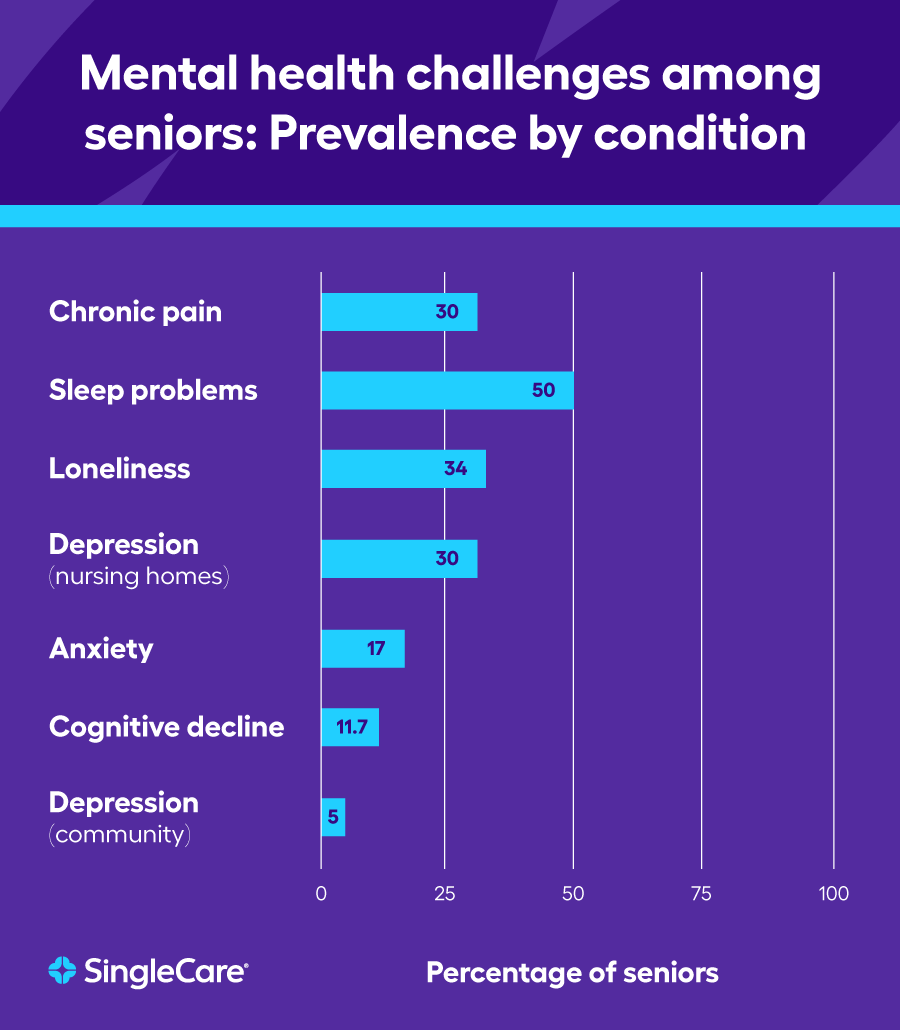
Depression impacts more than 2 million Americans older than 65 years old. Seniors managing chronic medical conditions are at an increased risk of developing clinical depression. It’s important to remember that depression isn’t just about feeling sad—it’s a medical condition that can be treated. Of the various types of antidepressants available, older adults are typically prescribed SSRIs, like Lexapro, or SNRIs, such as Effexor XR, though many other types of antidepressants may be helpful.
Anxiety
One in five older adults struggle with anxiety. Worries about finances, losing their independence, or being alone are common. Major life changes can make those experiencing anxiety feel even worse.
Commonly prescribed medications for anxiety in older adults include buspirone (BuSpar), which is typically well-tolerated, and certain SSRIs like sertraline (Zoloft) or escitalopram (Lexapro), which are often preferred due to their lower risk of side effects compared to older sedatives.
Loneliness
One-third of people older than 60 report feeling lonely, and research suggests this becomes more common with age. Loneliness isn’t just an emotional burden—it’s a health concern, too. Linked with depression and anxiety, loneliness has been thought to even lead to heart disease.
Grief
Grief becomes more frequent as people age, with nearly 70% of adults aged 65 and older having experienced a significant loss within the last 2.5 years. It’s important to get help if the weight of the feeling of grief is overwhelming.
Sleeping problems
Nearly 50% of adults older than 65 struggle with insomnia or other sleep issues. Poor sleep can make it harder to manage other health challenges, which is why addressing sleeping problems early on is so important. Medications such as trazodone are commonly prescribed to help improve sleep quality; however, it is often recommended that melatonin and good sleep hygiene are first tried.
Chronic pain
Living with chronic pain can take a toll on mental health—nearly 20% of adults older than 65 face this challenge. Chronic pain has been linked with higher rates of depression, Alzheimer’s disease and other dementias, disability, suicide, and substance abuse. Older adults may be prescribed medications like acetaminophen (Tylenol), duloxetine (Cymbalta), or gabapentin (Neurontin) for pain relief.
Warning signs
Warning signs of mental health challenges look different for everyone, but there are a few common signals to watch for:
- Withdrawing from social activities or isolating from others
- Neglecting personal hygiene or home responsibilities
- Changes in sleeping or eating habits
- Mood swings or not getting along with friends and family
Signs may evolve over time, so early awareness is key. If you notice any of these changes in yourself or a loved one, it’s important to seek help.
Prevention
As the saying goes, “An ounce of prevention is worth a pound of cure.” While older adults may face a higher risk of mental health challenges, building healthy habits often ward off major complications. Here are some ways to protect your mental health as you age:
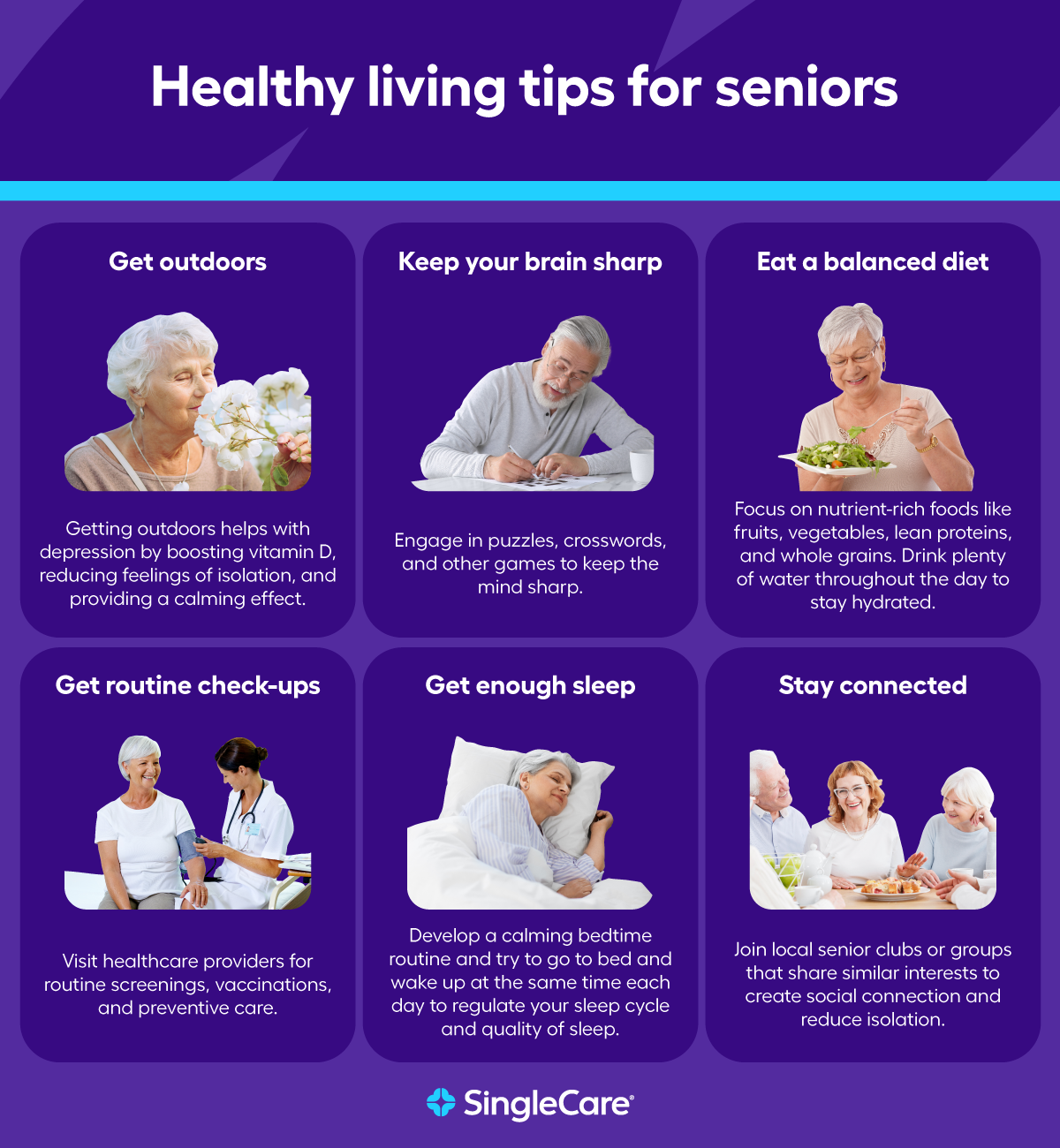
- Maintaining healthy habits, including diet and exercise.
- Getting enough sleep.
- Staying in touch with friends and family and maintaining a support network.
- Engaging in activities and hobbies that lower stress levels.
- Practicing mindfulness and gratitude through simple activities like journaling or meditation.
Treatment strategies
If you or a loved one is noticing signs of mental health challenges, the good news is that there are many treatment strategies available. Some options to consider are:
Medical management
Talking to a healthcare provider about symptoms can help identify the best approach. Sometimes medications or therapies are needed to address specific conditions like depression or anxiety.
Counseling and therapy
Professional therapists and counselors can provide tools to help manage emotions and reduce stress. Many therapy options are available these days, from in-person visits at an office or in your own home to virtual options over the computer or phone.
Support groups
Connecting with others who share similar experiences can be comforting and empowering, leaving you feeling less lonely in your situation. Many local organizations and online communities are specifically designed for seniors.
Lifestyle adjustments
Encouraging healthy habits like exercise, a balanced diet, and adequate sleep can be part of a holistic treatment plan.
Professional mental health services
Mental health treatment is never one-size-fits-all. There are many professionals and services specifically designed to improve mental health in older adults, such as psychologists, psychiatrists, social workers, and geriatric mental health specialists.
Therapy and counseling
Therapy and counseling are similar concepts, and while the terms are often used interchangeably, there are some differences:
- Therapists are more likely to focus on addressing mental health conditions on an ongoing basis.
- Counselors tend to help with short-term challenges, such as coping with a specific loss or adjusting to new life changes.
Aging adults can use counseling and therapy alone or in combination with other mental health care services. There are also different types of therapy and counseling options available such as individual therapy, group therapy, and family counseling.
Telehealth services
Telehealth connects patients and providers remotely through technology. Seniors and caregivers can find telemedicine providers online or through their physician’s office. Check with insurance and member services for coverage details and how to make an appointment. These services also often offer flexible video or text support and are ideal for those with mobility or transportation issues. Always check the platform’s security, licensing, and coverage.
Medication management resources
Medications may be necessary for mental conditions that are impacting a senior’s daily life. Often, a provider will prescribe medication as part of a medical plan that includes psychotherapy.
Depending on the situation, medications can be prescribed for short-term relief or long-term management.
Common medications
Prescription medications may help improve mood and decrease anxiety. Seniors may take selective serotonin reuptake inhibitors (SSRIs), like sertraline and citalopram, for depression in older adults. Benzodiazepines, such as lorazepam, diazepam, or alprazolam, are sometimes prescribed for anxiety symptoms; however, they’re generally avoided for older adults.
Medication management may be difficult for people with cognitive or functional impairments. Pharmacies sometimes offer pill packs for those who may have trouble remembering their medications. The pharmacist should also check each medication to minimize side effects and interactions.
RELATED: Seniors’ guide to medication management
Managing side effects
As helpful as medications may be, side effects are always a possibility. Lipid-lowering drugs (known as statins), which are commonly prescribed to lower cholesterol, have been linked to psychological side effects like anger and irritability, anxiety or depression, violent thoughts, and trouble sleeping, as well as memory loss and confusion.
However, statins aren’t the only cause for concern. Other medications that may cause mental health concerns include:
- Corticosteroids can lead to mental health side effects such as mood swings, depression, anxiety, and, in some cases, psychosis.
- Parkinson’s medications like Sinemet, Mirapex, and ropinirole can have side effects of hallucinations, confusion, depression, and impulse control disorders.
- Seizure medications, such as lamotrigine, gabapentin, and phenytoin, can cause mental health side effects, including depression, anxiety, aggression, irritability, and hyperactivity.
- Opioid pain relievers like oxycodone can lead to emotional side effects such as depression, anxiety, and an increased risk of mood swings and irritability.
- GLP-1 agonists, including Ozempic and Wegovy, can lead to psychiatric side effects such as anxiety, depression, and, in some cases, suicidal thoughts.
Just because medications may affect mental or emotional health doesn’t mean they will. People who are worried about side effects from prescription drugs should talk to their healthcare providers.
Community support and resources
Social networks are critical for people dealing with mental health issues. Thankfully, there is a range of options available to help stay connected.
Senior centers
Many communities have senior centers. These facilities provide events and information for residents usually older than 65, serving as gathering places, which combats social isolation and loneliness. They also often provide recreational activity opportunities to help promote mental and physical well-being.
Support groups
Support groups provide a safe space for seniors to share their experiences and find guidance. They can offer connection, comfort, and guidance through hard times from those who have experienced it themselves.
Online support groups
Online support groups are ideal for people who live in remote rural areas or do not have access to transportation. You can connect with others through video chat, message boards, or live text-chat.
In-person support groups
In-person support groups offer face-to-face interaction for people who may want to get out and connect with those who are local. This can help create a sense of community.
Those who want to find a support group should talk to their healthcare providers or contact their local aging advocacy group, such as the Area Agency on Aging. Churches and religious organizations can also direct individuals to in-person meetings.
Self-care and healthy living
Staying active as you age can be challenging, but it’s one of the best ways to maintain both physical and mental health. Whether through exercise, mindful practices, or maintaining a balanced diet, these habits can help you live a healthier, more vibrant life.
Physical activity and exercise
Staying active is important as you age, even through physical changes like stiffer joints, slowed reflexes, and decreased bone density.
By the age of 65, many people have arthritis or have had joint replacements, while others have heart or lung diseases that affect endurance. These conditions may make exercise difficult, but exercise slows the aging process.
Research also shows that exercise is an effective treatment for some mental health conditions.
The Centers for Disease Control and Prevention (CDC) currently recommends the following types of exercise for adults aged 65 and older:
- Moderate aerobic activity, such as dancing, hiking, or swimming, for 150 minutes per week
- Strengthening exercises, such as weight lifting or pilates, two days per week
- Balance activities like yoga at least once weekly
All three types of activities engage the mind and body for overall health.
The SilverSneakers program offers a variety of online fitness classes from home or at different locations across the United States. The program may be included in some Medicare Advantage or Medicare Supplement plans, so make sure to check and see if you qualify.
Nutrition and healthy eating
What you eat has a huge impact on mental health, especially as you age. A balanced diet rich in lean protein, whole grains, fruits, and vegetables helps prevent nutrient deficiencies linked with depression or cognitive decline.
Certain vitamins and minerals are necessary for brain health, including:
- Magnesium
- Zinc
- Selenium
- Manganese
- B vitamins
- Omega-3 fatty acids
Supplements can help people who struggle to get these nutrients from food alone. Staying hydrated is also vital for seniors since dehydration exacerbates feelings of anger, confusion, and fatigue. Talk to your doctor about whether supplements may be a good option for you.
Good sleep
Getting a good night’s sleep is important for the mind and body. People older than 60 need eight hours of sleep per night, but good sleep may be difficult for those with conditions such as nocturia or sleep apnea.
Those with trouble sleeping should talk to their doctors. Over time, lack of sleep can worsen mental and emotional problems. In addition, mental and emotional problems themselves can negatively impact your ability to get a good night’s sleep.
Practicing mindfulness
Mindfulness is a powerful tool for improving mental and emotional well-being. Whether it’s through meditation, breathing exercises, or focusing on being present in the moment, practicing mindfulness can help decrease symptoms of:
- Loneliness
- Depression
- Anxiety
- Stress
- Sleep problems
Engaging in hobbies
Hobbies aren’t just fun—they’re good for the brain! Staying engaged in creative, social, or physical activities can help maintain cognitive function and help seniors find joy in their everyday lives.
Financial resources
There are a few ways to pay for mental health services. Some people use their insurance benefits, while others may turn to free or low-cost options.
Medicare and Medicaid coverage
Medicare and Medicaid may cover healthcare visits and many medications for mental health prescribed by a licensed medical provider.
Private insurance
Seniors with private or secondary insurance may have additional coverage. Private insurance companies may pay for therapies such as acupuncture for depression. Since every plan is unique, seniors should ask their insurer for details.
Low-cost or free mental health services
Seniors on fixed incomes may worry about the cost of treatment. The good news is some groups offer free or low-cost services. Many nonprofit, community-based clinics offer assistance, including with mental health treatment.
In addition, some providers charge sliding-scale fees based on a person’s finances.
Family and caregiver resources
Mental health issues impact more than just the person suffering from the condition. Fortunately, resources are available for families and caregivers, too.
Educating family members
Family members can learn about mental health problems by:
- Attending support groups
- Talking to mental health professionals
- Researching online, using reliable sources
- Communicating with their family members to understand their needs
The National Alliance on Mental Illness is an excellent family resource. They offer a free, eight-week “Family-to-Family” class where friends and family can learn from professionals.
Caregiver support resources
Caregiving can be physically and emotionally demanding. Caregiver burnout is a real concern, but luckily there are resources specifically designed to support caregivers.
Caregivers can find support through hospital support groups, community centers, churches and religious organizations, and senior centers. There are also many online tools and support networks just for caregivers.
Respite care options
When caregivers need a break or become unable to provide care for a brief time, respite care can fill the gap. Respite choices for seniors with mental health issues include:
- Adult daycare centers
- In-home care by paid professionals or volunteers
- Memory care facilities
- Residential care homes
Long-term care and assisted living options
Assisted living facilities may be the right choice when seniors require more support than family members can provide at home. Some things to consider are the facility’s medical services, staff availability, safety, and overall comfort.
Legal resources
When people cannot make choices for themselves, the legal system may step in. Courts may appoint guardians or conservators to help manage their finances, healthcare decisions, or living arrangements. Families dealing with an adult who may need legal help should talk with an attorney.
Elder abuse
Older adults with mental health issues are more vulnerable to mistreatment. Government agencies and law enforcement can step in and help, regardless of whether the abuse is financial, emotional, or physical.
Every state has a reporting hotline for Adult Protective Services. Police departments and local senior groups can also direct families to the right resources for elder abuse-related legal assistance and therapy.
Government agencies and services
Two valuable resources exist for older adults with mental health concerns.
The Eldercare Locator connects people to local support services for help with meals, transportation, and caregivers.
The Disability Information and Access Line (DIAL) helps individuals with legal assistance, housing, transportation, Medicaid, and more.
In addition, each state has an Aging and Disability Resource Center (ADRC) and an Area Agency on Aging that provides mental health resources for seniors.
Challenges in accessing mental health services
Accessing mental health care isn’t always straightforward for seniors. Transportation, cultural barriers, and even stigma can make it harder to receive the needed help, but there are ways to address these challenges.
Overcoming stigma
Older adults and their loved ones may feel a stigma around mental illness. They might see mental health issues as a sign of weakness or failure, leading to shame about their symptoms and reluctance to seek help.
Healthy open discussions can combat the stigma associated with mental health.
Transportation and mobility issues
Reliable transportation may also be an issue for seniors trying to get help. Wheelchair use, inability to drive, poor vision, or limited access to public transportation makes getting treatment difficult.
The good news is that some organizations offer transportation assistance, and mental health services often have telehealth options.
Language and cultural barriers
Non-native speakers and those from different cultural backgrounds often need help communicating their needs or understanding resources. Bilingual healthcare providers, interpreter services, and language translation apps help people overcome language barriers.
- Supporting the mental health needs of older adults, Substance Abuse and Mental Health Services Administration (SAMHSA)
- Depression in older adults: More facts, Mental Health America (2024)
- Any anxiety disorder, National Institute of Mental Health
- Estimating the prevalence of dementia and mild cognitive impairment, JAMA Neurology (2022)
- Dissociative effects of age on neural differentiation, Journal of Neuroscience (2024)
- Loneliness and social isolation interventions for older adults: a scoping review of reviews, BMC Public Health (2020)
- Do we become more lonely with age?, Journal of Psychological Sciences (2024)
- Social isolation and loneliness increase the risk of death from heart attack, stroke, American Heart Association Scientific Statement (2022)
- Bereavement among African American and white older adults, Journal of Aging and Health (2007)
- Sleep in the aging population, Sleep Medicine Clinics (2017)
- Chronic pain among adults, Centers for Disease Control and Prevention (2023)
- Chronic pain among middle-aged and older adults, Journal of Pain (2024)
- The effects of gratitude interventions, Einstein Sao Paulo (2023)
- Mood, personality, and behavior changes during treatment with statins, Drug Safety Case Reports (2015)
- Psychiatric adverse effects of corticosteroids, Mayo Clinic Proceedings (2006)
- Impact of behavioral side effects on the management of Parkinson patients treated with dopamine agonists, Clinical Parkinsonism & Related Disorders (2021)
- Seizure medications and mood, Epilepsy Foundation (2022)
- Mood and anxiety symptoms in persons taking prescription opioids: a systematic review with meta-analyses of longitudinal studies, Pain Medicine (2022)
- Psychiatric adverse events associated with GLP-1 receptor agonists: a real-world pharmacovigilance study based on the FDA adverse event reporting system database, Frontiers in Endocrinology (2024)
- Area agencies on aging, Eldercare Locator
- Arthritis and joint replacement service, Stanford Medicine Health Care
- Exercise attenuates the major hallmarks of aging, Rejuvenation Research (2015)
- Effect of exercise for depression, BMJ, (2024)
- What counts as physical activity for older adults, CDC (2023)
- SilverSneakers
- Dietary nutrient deficiencies and risk of depression, Nutrients (2023)
- A good night’s sleep, National Institute on Aging (2020)
- Mindfulness-based interventions for older adults, Mindfulness (N Y) (2016)
- NAMI family-to-family, National Alliance on Mental Illness
- National Adult Protective Services Association
- Insomnia in the elderly: A review, Journal of Clinical Sleep Medicine (2018)
- Mental health of older adults, World Health Organization (2023)
- Disability information and access line (DIAL), Administration for Community Living
- Aging and disability resource centers, Administration for Community Living (2017)
- Medically accurate: SingleCare’s Medical Review Board analyzes all of our content to confirm it’s in line with current medical advice.
- Evidence-based: Our content is sourced from reputable U.S.-based healthcare professionals and peer-reviewed research.
- Trustworthy: All of SingleCare’s content goes through a multi-phase review process by our writers, editors, and Medical Board in order to provide clear and credible information.